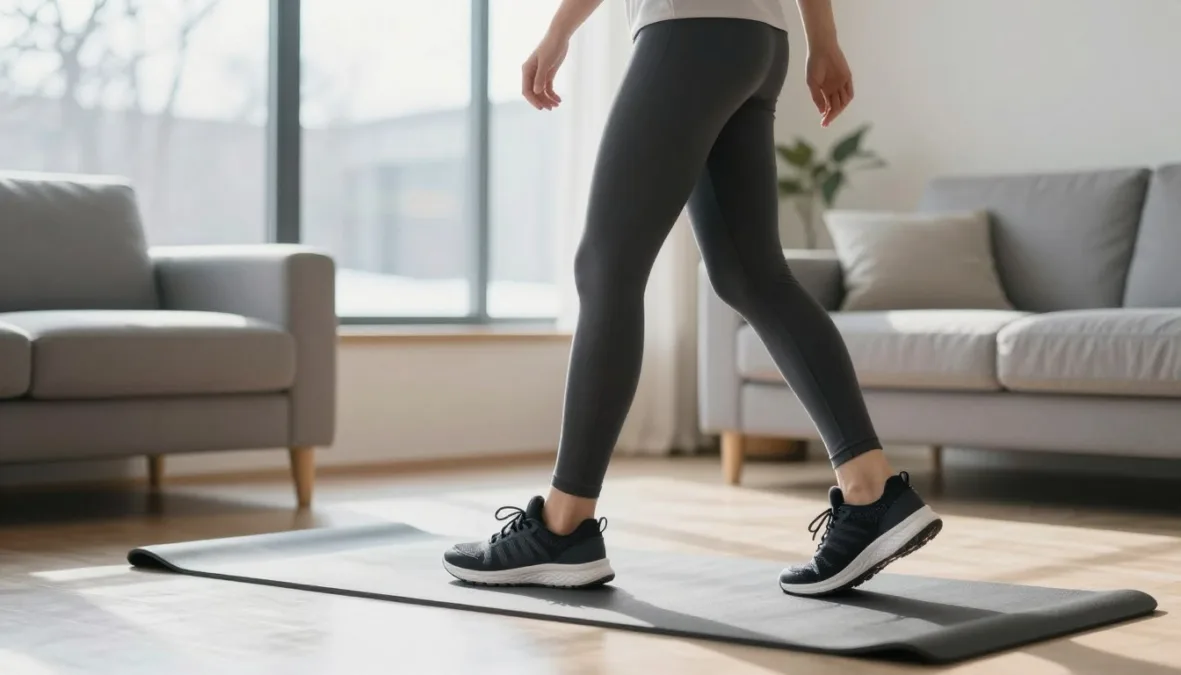
Indoor walking workouts for beginners in winter 2026 provide an accessible, joint-friendly method to maintain cardiovascular health and physical energy without stepping into freezing weather. These home routines rely on rhythmic pacing, low-impact footing, and small-space navigation to deliver effective movement sessions. Consistent indoor steps support daily circulation, elevate mood during shorter daylight hours, and protect knee and ankle joints from icy outdoor impacts.
Selecting the right indoor routine depends on available floor space, current mobility levels, and personal comfort. Beginning with gentle steps and manageable sessions establishes a sustainable habit that can expand across the winter season.
Indoor walking workouts for beginners in winter 2026: preparation and joint care
Creating a safe walking path indoors requires clearing rugs, electrical cords, and low furniture to allow unhindered movement. Adequate room ventilation and supportive athletic shoes protect feet and joints across hard flooring surfaces.
Every indoor walking session benefits from structured movement transitions. A proper warm-up involves gentle shoulder rolls, ankle rotations, and slow marching in place to increase blood flow gradually. Concluding each session with a relaxed cool-down that features easy heel taps and slow, deep breathing helps return heart rates to resting levels smoothly.
Safety note: Discontinue exercise immediately if dizziness, chest tightness, joint pain, or unusual shortness of breath occurs. Always consult a qualified healthcare professional before beginning a new physical activity routine, especially when managing chronic health conditions or recovering from an injury.
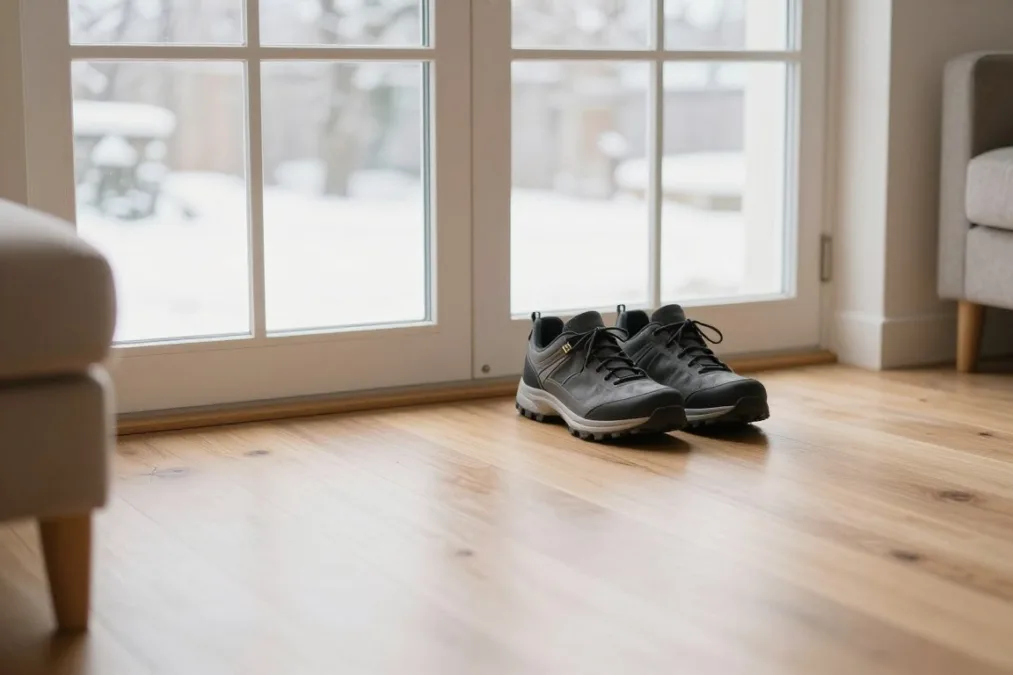
Dedicated footwear and an unobstructed floor area establish a reliable foundation for home exercise.
Gentle indoor walking routines for foundational endurance
Initial winter walking sessions prioritize smooth rhythms and minimal joint stress. These entry-level workouts focus on steady movement patterns that fit comfortably into modest living rooms or compact studio apartments.
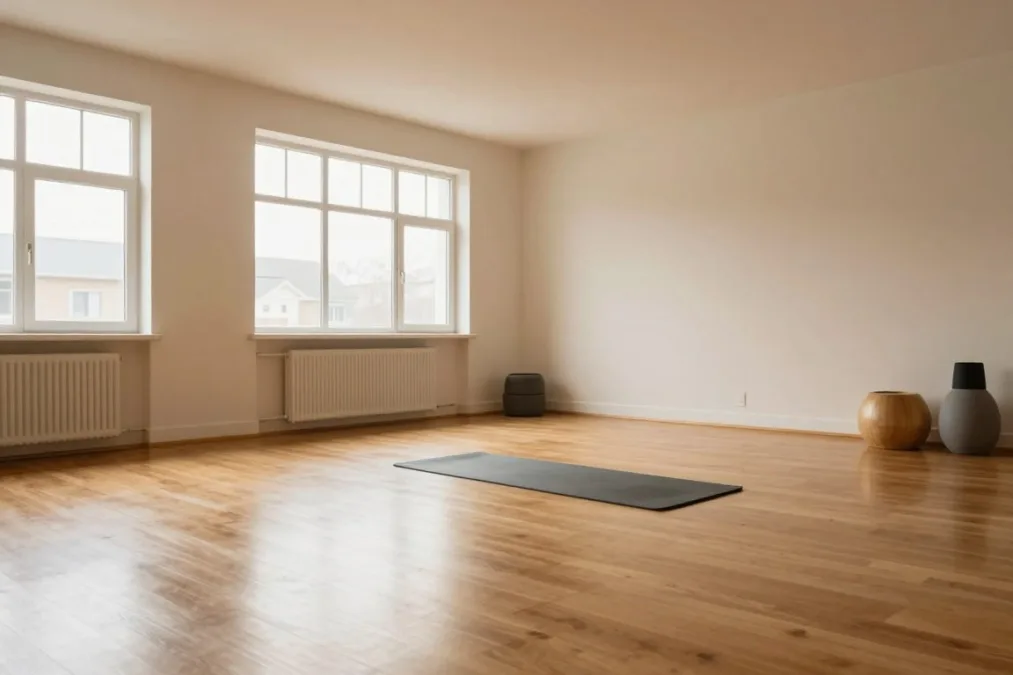
Gentle step routines make home exercise accessible without requiring specialized equipment.
Living Room Gentle Stride
Short duration suited for an effortless daily start. Step rhythmically forward and backward across a cleared area, letting arms swing naturally at the sides. Intensity stays light on the talk test, allowing full spoken sentences without pause. No-equipment option relies on flat indoor shoes and natural arm momentum.
Side-to-Side Tap and Step
Brief duration that trains lateral stability. Step to the right, tap the left toe beside the right foot, then step to the left and tap the right toe while keeping knees softly bent. Effort registers as light-to-moderate, maintaining steady conversational breathing. No-equipment option utilizes body weight and smooth carpet or floor traction.
Hallway Circulation Walk
Short duration focused on continuous forward and reverse strides along an interior corridor. Walk steadily toward the end of the hall, pivot gently, and pace back while keeping tall posture and relaxed shoulders. Intensity allows comfortable speech throughout the walk. No-equipment option needs only an unobstructed hallway runner or bare floor.
Alternating between forward steps and lateral taps encourages diverse muscle activation without sudden twists. Taking deliberate, soft steps reduces impact forces through the hips, lower back, and knees.
Rhythmic indoor walking sessions for tone and stamina
Adding upper-body patterns and varied stepping heights gently elevates the cardiovascular workout while keeping both feet close to the floor. These moderate low-impact routines build stability and posture without requiring extra gear.
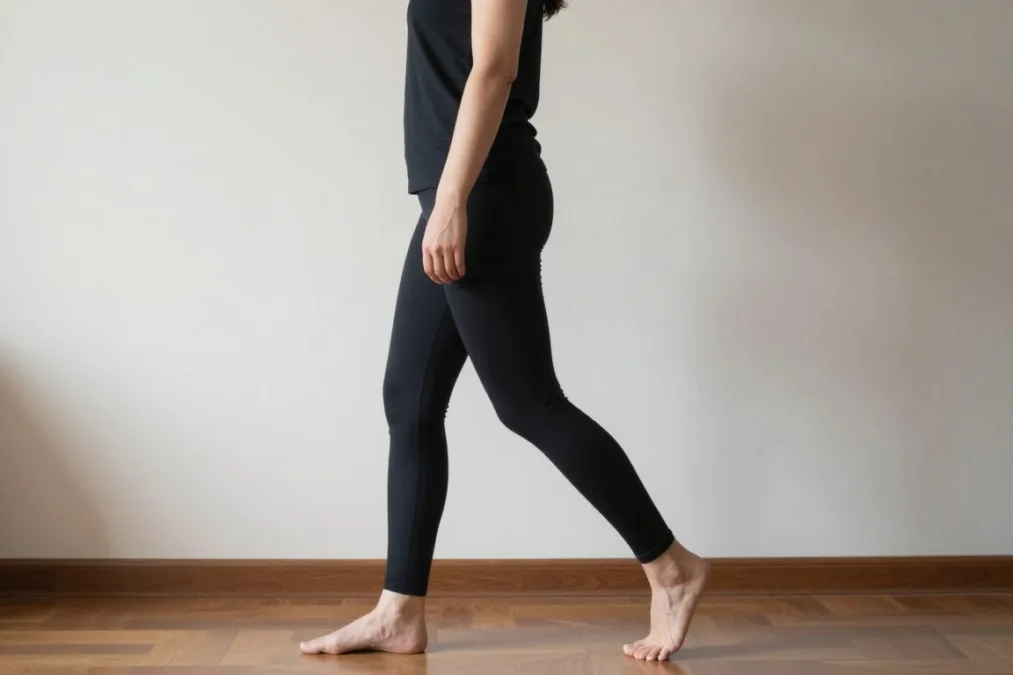
Coordinating arm movements with steady strides enhances total-body engagement indoors.
March and Arm Sweep Cadence
Duration: Short session suitable for mid-morning activity. March gently in place while sweeping arms upward in an arc to chest height and lowering them in rhythm with alternating feet. Intensity cue reflects a moderate effort where speaking requires slight pauses between sentences. No-equipment option requires no hand weights, relying solely on controlled shoulder and arm movement.
High-Knee Low-Impact Step Routine
Duration: Brief, focused session that activates the core. Lift one knee to a comfortable hip-level height, lower softly to the ball of the foot, and alternate sides while maintaining an upright spine. Intensity registers at a steady moderate level on the exertion scale, keeping breath active but controlled. No-equipment option uses unweighted movement with hands resting lightly on hips for balance.
Figure-Eight Spatial Walk
Duration: Moderate session designed for small rooms. Pace a gentle figure-eight pattern around two visual floor markers, shifting weight smoothly around the curves to enhance coordination. Intensity allows conversational breathing with noticeable warmth in the leg muscles. No-equipment option uses two ordinary household objects like slippers as turn markers.
Wall-Supported Posture Walk
Duration: Short duration targeted at spinal alignment and stability. Stand near a sturdy wall for occasional fingertip balance while marching in place and maintaining an open chest and drawn-in core. Intensity remains at a gentle, reassuring level where talking feels natural and easy. No-equipment option uses a plain wall or solid doorframe for balance assistance.
| Routine Name | Intensity Level | Primary Space | Movement Focus |
| Arm Sweep | Moderate | Living room | Upper body coordination and fluid joint mobility. |
| High-Knee Step | Moderate | Exercise mat | Core activation and hip flexor engagement. |
| Figure-Eight | Comfortable | Compact room | Rotational balance and smooth directional changes. |
| Wall Posture | Light | Hallway wall | Spine alignment and joint-friendly stability. |
Interval indoor walking sessions and safe winter progression
Interval formats alternate between comfortable pacing and slightly brisker steps to develop endurance without overloading delicate connective tissues. Structuring home walks around manageable intervals keeps workouts engaging during long winter weeks.
Household surfaces offer convenient support for steady, low-impact stride routines.
Low-Impact Tempo Interval Walk
Duration: Moderate express session. Alternate between a relaxed walking pace and a slightly quicker cadence, repeating the pattern across several comfortable cycles. Intensity shifts between light effort and a moderate tempo where talking becomes brief rather than continuous. No-equipment option utilizes natural cadence changes rather than treadmills or incline machinery.
Kitchen Counter Rhythm Stride
Duration: Short session ideal during kitchen tasks. Stand alongside a sturdy kitchen counter, placing light fingertips on the edge while stepping forward, backward, or in place with rhythmic heel-to-toe rolls. Intensity stays light to moderate, allowing steady speech without breathlessness. No-equipment option uses standard counter height for confidence and posture control.
Steady-Pace Winter Recovery Walk
Duration: Short calming session designed for restorative days. Walk at a deliberate, unhurried pace across any open indoor space, focusing on smooth exhalations and gentle arm sways. Intensity remains very light on the talk test, making conversation effortless from start to finish. No-equipment option requires only flat indoor footwear and comfortable clothing.
Systematic Progression and Intensity Adjustments
Progressing safely throughout the winter season involves gradual adjustments rather than sudden leaps in effort. Walkers can increase total daily steps by adding an extra round of gentle pacing or incorporating broader arm movements before attempting faster tempos. When feeling fatigued or managing joint stiffness, reducing the knee lift height or shortening stride length keeps the routine productive and joint-friendly.
Pacing indicator: The talk test serves as an effective self-monitoring tool. Working at a beginner pace means speaking a short sentence without gasping for air; if speech breaks down mid-phrase, slow down the stride immediately to restore balanced breathing.
Frequently asked questions about beginner winter walking
How often should beginners perform indoor walking workouts during winter?
Beginners can practice indoor walking workouts on most days of the week, alternating between active sessions and lighter recovery walks. Consistency matters more than session length, so short daily practices help build a dependable winter routine. Listening to joint feedback indicates when a dedicated rest day is advisable.
What footwear works best for indoor walking sessions on hard surfaces?
Clean athletic sneakers with cushioned soles and supportive arches offer the best protection on tile or hardwood floors. Walking in bare feet or loose socks increases slippage hazards and places unnecessary strain on plantar fascia tissues. A dedicated pair of indoor running or walking shoes maintains cleanliness and arch support.
Can indoor walking replace outdoor walking during cold weather months?
Indoor walking provides comparable cardiovascular benefits to outdoor walking while removing the hazards of ice, windchill, and uneven pavement. Incorporating arm movements and varied step cadences keeps heart rates in healthy conditioning zones indoors. This approach preserves physical fitness until outdoor walking conditions become comfortable again.
How can walkers tell if an indoor routine matches appropriate beginner intensity?
Appropriate beginner intensity produces mild warmth and slight breath elevation while still allowing clear, complete sentences during conversation. Experiencing intense breathless gasping or sharp joint pain signals that the pace is too rapid and must be scaled back. Sustainable progress relies on moderate exertion that leaves walkers energized rather than depleted.
What indoor space adjustments help maintain safety during winter walking?
Clearing a level pathway of area rugs, pet toys, and loose furniture prevents accidental trips during repetitive footwork. Adequate lighting and non-restrictive clothing further reduce movement obstacles in compact living areas. Keeping a sturdy chair or countertop nearby provides quick balance assistance whenever needed.
Next steps for consistent indoor walking
Indoor walking offers an adaptable, low-impact strategy to maintain physical vitality and joint comfort through the coldest months. Choosing one or two favorite routines from this collection establishes a steady habit without physical strain or complex equipment. Consistent daily steps at a comfortable pace keep winter activity rewarding, joint-friendly, and completely sustainable.

Priyanka Pandey
Senior Research Editor · Top10Sense
Priyanka specializes in tech, consumer products, and digital trends. She combines hands-on testing, vendor interviews, and database research to create trustworthy “Top 10” rankings. Her work has been referenced by industry blogs and brand report pages.