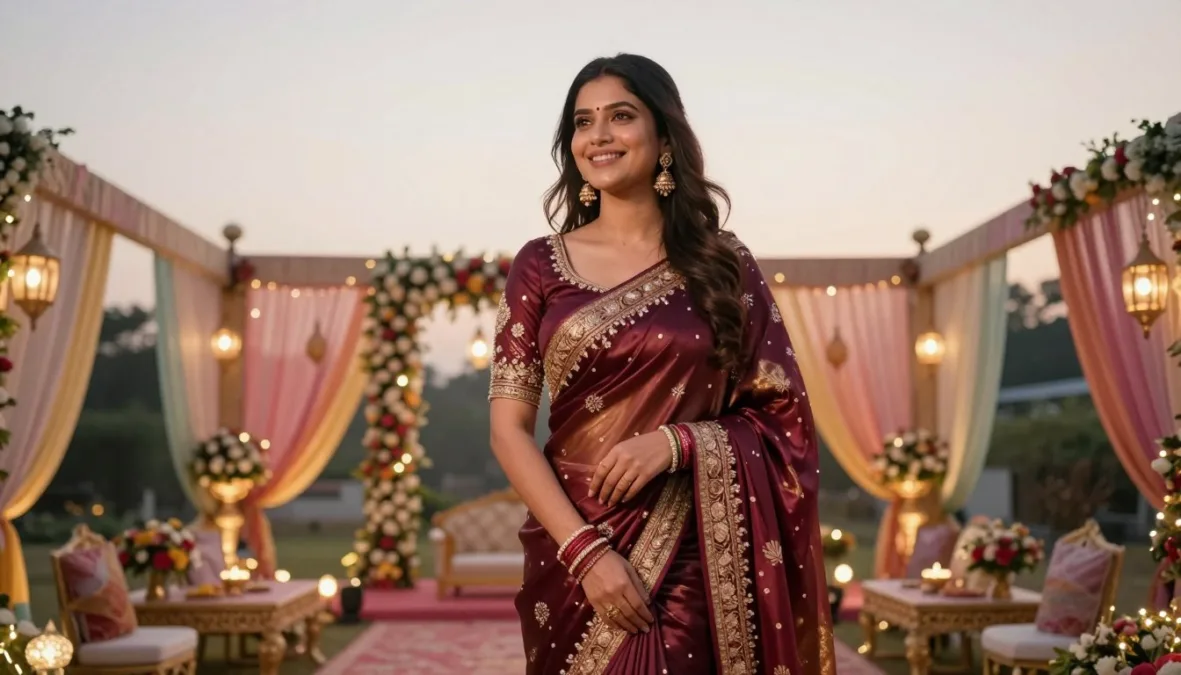
The strongest winter wedding guest choices for women in India in 2026 include silk and brocade lehengas, full-sleeve sarees, jacketed kurta sets, and pre-draped sarees, chosen to suit each function. A pre-draped saree is a saree with its pleats and pallu arranged or stitched in advance to make dressing simpler.
Your invitation, venue, and schedule all shape what feels right to wear. This list starts with outfit options, then helps you decide how to match your look to each function and stay comfortable in the season. Choose for the celebration you are attending, not just the photograph you have in mind.
Key Takeaways
- Match the formality of your outfit to the invitation.
- Choose a silhouette that lets you move and sit comfortably.
- Use layers to adapt your outfit to cooler conditions.
- Keep the function, venue, and schedule in mind.
- Try on your full outfit and footwear before the event.
Check the invitation for the function’s dress code before settling on a look.
Top 10 Winter Wedding Guest Outfits for Women in India 2026
A guest who wants one versatile shortlist can start with a saree, lehenga, Anarkali, kurta set, sharara, or a contemporary gown. Different functions call for different levels of movement, structure, and formality, so treat each look as a starting point.
Choose the guest outfit that fits the invitation and the way you want to take part. A wedding guest can adapt these ideas to a daytime gathering, an evening celebration, or a formal ceremony.
- Silk saree with a full-sleeve blouse: a polished choice when you want a traditional silhouette with a more covered blouse.
- Structured lehenga with a jacket blouse: a defined shape for a formal function where coordinated pieces feel appropriate.
- Brocade Anarkali: a long, flared outfit for a guest who prefers a single garment over a skirt-and-blouse pairing.
- Kurta set with a jacket: a tailored option when you want a composed look with separates.
- Cape lehenga: a skirt-and-blouse silhouette with a cape for a statement entrance.
- Draped skirt set: a contemporary alternative to a saree, with a skirt and a draped top or dupatta.
- Embroidered sharara: a flared-leg set suited to a guest who wants a festive two-piece outfit.
- Pre-draped saree: a practical saree silhouette when you want prepared pleats and pallu.
- Velvet dupatta with a silk outfit: a way to add a rich accent without choosing velvet for every piece.
- Contemporary gown with Indian embroidery: an option for a reception or a dress code that welcomes fusion fashion.
Listed prices show how specific garments can differ in fabric and handwork. Andaaz Fashion lists an olive-green embroidered georgette flared lehenga for $170 and a sage-green organza lehenga with cutdana hand embroidery for $1,183. These are individual listings, not a measure of what a guest should spend.
| Listed outfit | Fabric and detail | Listed price |
|---|---|---|
| Olive-green flared lehenga | Georgette, embroidered | $170 |
| Sage-green lehenga | Organza, cutdana hand embroidery | $1,183 |
| Cream-beige cocktail saree | Georgette, sequined embroidered | $124 |
| Trombone-yellow saree | Organza, nakshi hand embroidery | $739 |
Use a listing to compare details on a particular garment, not to rank every outfit style or set a spending target.
A saree, lehenga, and gown can all suit a wedding guest, but the invitation sets the level of formality. A jacketed kurta or Anarkali can be a useful alternative when you prefer a more covered shape. Let the event guide the choice before you settle on a fabric or embellishment.
Treat any listed price as a snapshot of that particular garment, not a budget benchmark for every outfit.
Winter Wedding Fabrics and Silhouettes That Stay Comfortable
India’s peak wedding season falls between November and February, so a winter guest look should account for the season as well as the event. Venue matters: a celebration may be indoors, outdoors, or split between both. Plan for the setting you will actually attend, rather than assuming every winter wedding feels equally cold.
Silk, brocade, and other textiles can shape the formality and feel of an outfit. Indian textile traditions include regional weaving and embroidery, with contemporary designers adapting established techniques. The Victoria and Albert Museum’s overview of Indian textiles and techniques offers background on these materials and their continuing influence.
Match the Outfit to India’s Winter Wedding Season
The November-to-February wedding season gives you a useful planning window, not a single dress formula. A lehenga choli comprises a long skirt, fitted blouse, and dupatta, while a saree creates a different draped silhouette. Pick the shape that suits your plans for sitting, walking, and joining the celebration.
Think about the schedule as well as the venue. If you will spend time outside, a layer can make a sleeveless or lighter outfit more adaptable. For an indoor ceremony, the room and dress code may matter more than the month alone.
Keep Summer Guest Dressing Separate
The winter list is not a summer wardrobe. Summer weddings call for lighter, breathable clothing and fewer cold-weather layers, especially when you expect to be outdoors. A lined outfit or heavy fabric may feel less comfortable in a warm setting.
For a summer Indian wedding, choose breathable fabrics and a silhouette that leaves room for airflow. Keep the invitation’s level of formality in view, then leave winter-focused layers at home unless the venue calls for them.
Casual Looks That Still Feel Wedding-Ready
Casual weddings suit restrained embellishment and polished separates, such as a simple saree or a well-finished kurta set. Keep the styling intentional: neat finishing and a coordinated dupatta can make a relaxed outfit feel ready for a celebration.
A casual dress code does not mean everyday clothes will suit every event. If the invitation gives a specific code, follow it; if it feels unclear, ask the hosts what level of dressing they have in mind.
When a wedding is held in summer, choose for heat and airflow instead of treating a winter outfit as a year-round formula.
Mehendi Looks for Daytime Functions
For a daytime mehendi, choose a cheerful outfit that feels easy to wear while henna is being applied. Comfort at the hands matters as much as the color or embroidery. Pick a shape that lets you sit without tugging at the sleeves or hem.
Printed fabrics can bring energy to a daytime celebration without relying on dense decoration. Pearl embroidery adds a delicate finish, while breathable georgette can feel light and easy to wear. Choose the detail that fits the invitation and your own comfort.
Three outfit combinations can keep the look festive without making it hard to settle in for henna:
- A printed kurta set with a simple dupatta and comfortable bottoms.
- A georgette outfit with light embroidery and a relaxed fit.
- A pearl-embroidered ensemble with a skirt or trousers that allow easy movement.
Keep jewelry away from the area where henna is being applied, and avoid accessories that make it difficult to rest your hands. A dupatta can add color, but it should not need constant adjusting while you sit.
Mehendi dress codes vary. Some hosts welcome bright prints and relaxed styling, while others ask guests to dress more formally. Use the invitation as your guide, and choose shoes that let you walk comfortably between seating and activity areas.
Before choosing sleeves or jewelry, make sure your hands and forearms can stay still without pulling at the outfit.
Sangeet Outfits Built for Dancing
A sangeet outfit should look festive in motion, not just while you are standing still. Movement comes first when you expect to dance. Ease of movement matters more than adding another embellishment.
Sequins can catch the light as you move, while shimmer georgette adds a lighter, fluid finish. A draped skirt set can also bring motion to a festive look without requiring a traditional saree drape. Sequins, shimmer georgette, and draped skirt sets can each suit a dance-focused celebration.
Choose one feature to carry the look, such as a shimmering fabric or a swaying skirt. If you combine several highly decorated pieces, the outfit can feel busy and may distract from its shape.
Try this movement check before the event:
- Raise both arms to check that the blouse and sleeves stay comfortable.
- Take several dance steps to see whether the hem and dupatta stay clear.
- Sit down in the outfit to check that the waistband and skirt remain comfortable.
Move at the pace you expect on the dance floor, not only through a single careful step. A skirt that clears your shoes and a dupatta that stays put will make it easier to enjoy the function.
If the skirt or dupatta catches during the movement check, adjust the drape before wearing it out.
Wedding Ceremony Looks with Formal Structure
A wedding ceremony calls for a polished silhouette, such as a structured lehenga or a well-fitted pre-draped saree. Considered structure helps the outfit feel formal without adding unnecessary detail. A pre-draped style can simplify preparation while keeping the saree silhouette.
Structured lehengas create a defined skirt-and-blouse shape, while pre-draped sarees offer prepared pleats and pallu. A traditional Indian saree is typically six to nine yards long, so check how its drape and fit work with your height and blouse before the ceremony.
A pre-draped saree can be helpful if you want a saree look without arranging every pleat yourself. Check its fastenings and the pallu position, then make sure you can walk naturally. A structured lehenga may suit you better if you prefer a skirt that stays in place.
Choose a blouse that supports the silhouette and feels secure when you sit or stand. Embroidery can add formality, but the fit should remain comfortable through the ceremony and any time spent greeting family.
Red is a traditional bridal color in many Hindu weddings, so check the couple’s preferences before choosing a solid bright-red ceremony look. The meaning of a color can vary between families and celebrations, and a guest’s outfit should respect the hosts’ wishes.
Check that the blouse, closures, and drape stay secure when you sit and stand.
Reception Outfits with Rich Color and Controlled Shine
For an evening reception, a rich color and a structured blouse can make a look feel polished without relying on all-over embellishment. One strong detail gives an outfit focus. Choose a single standout feature instead of making every part compete for attention.
A saree can offer a fluid formal shape, while a lehenga gives you a skirt-and-blouse silhouette. A contemporary gown with Indian embroidery may suit a reception whose dress code welcomes fusion styles. Let the invitation set the level of formality before choosing your format.
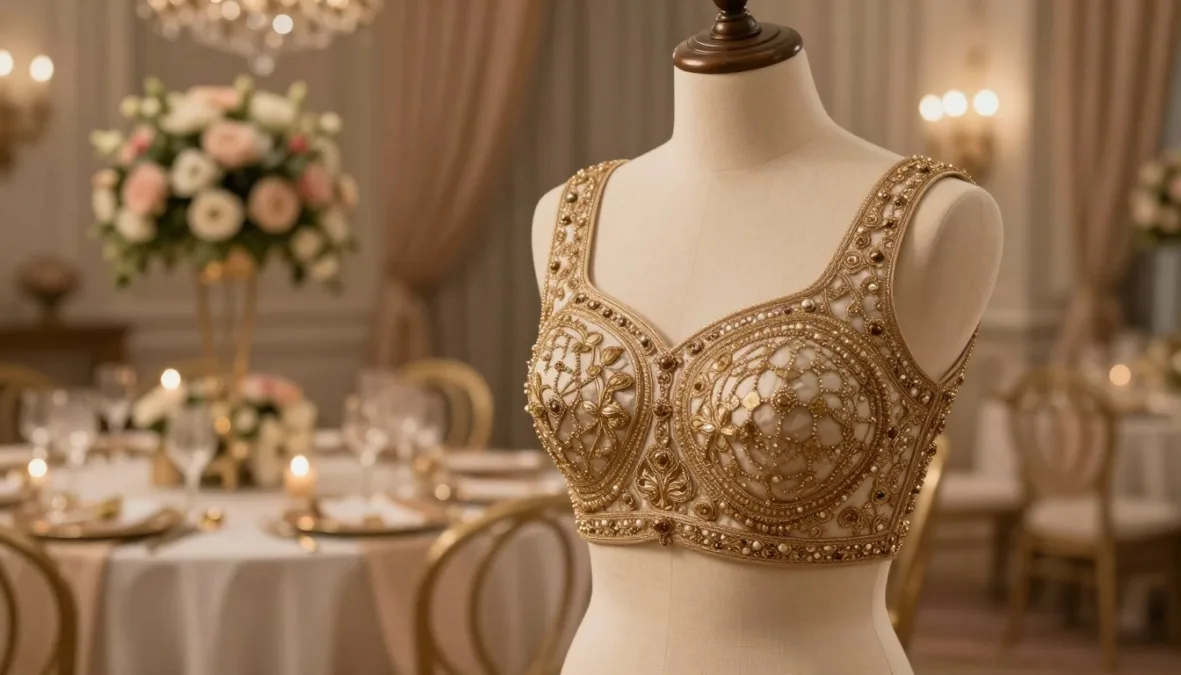
Pair a structured blouse with a richer shade, then keep the remaining details controlled. Gold can be an accent in the embroidery or jewelry, rather than a reason to add shine across every piece.
Velvet can bring depth to a reception outfit, while a silk saree or a tailored gown can feel more streamlined. Black may suit some receptions, but traditions and preferences differ. Follow the couple’s dress code when it gives guidance, and avoid assuming one color works for every celebration.
A polished evening outfit does not need several statement details. A considered blouse, a well-chosen shade, and one focal point can make the look feel complete without overwhelming its shape.
Let the invitation and the couple’s preferences settle any color choice that may be culturally sensitive.
Layering Strategies for Warmth and Polish
A purposeful layer can add warmth while making the outfit feel complete. Keep it intentional, so the added piece works with the fabric and shape rather than looking improvised. Velvet can be an accent instead of an entire outfit.
Silk, brocade, and velvet are heavier fabric choices that can suit winter weddings. Velvet can also appear in a smaller area, giving an outfit texture without covering every piece. Check that the layer sits comfortably over the outfit you plan to wear.
Add Velvet Where It Complements the Outfit
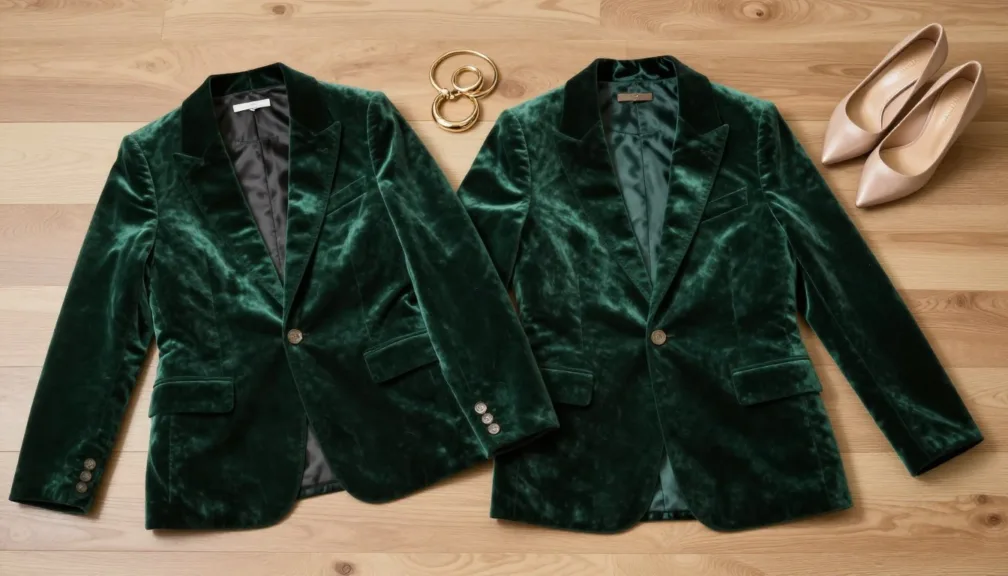
A velvet dupatta can add a rich surface over a silk outfit, while a velvet lehenga border gives the skirt a defined edge. A velvet jacket layered over silk adds a more structured finish. These uses let you bring in velvet without building the whole look around it.
Keep the rest of the outfit simple if the velvet piece has strong texture or embroidery. That balance helps the layer look connected to the outfit rather than like a separate cold-weather extra.
Layer Silk and Brocade with a Jacket, Dupatta, or Cape
A silk or brocade outfit can take a jacket over a kurta, an embroidered dupatta wrapped over the outfit, or a cape over a lehenga blouse. Choose a layer that stays comfortable across your shoulders and does not pull at the base garment.
| Layer | Where it goes | Outfit base |
|---|---|---|
| Jacket | Over a kurta | Silk or brocade kurta set |
| Embroidered dupatta | Wrapped over the outfit | Silk or brocade outfit |
| Cape | Over a lehenga blouse | Lehenga with blouse |
Each layer changes how the outfit moves, so check how it falls when you reach, turn, and sit. A jacket should not restrict your arms, and a dupatta should not need frequent adjustment.
Try the full layer with the outfit before the event to check that it stays in place as you move.
Winter Wedding Colors for Guest Outfits
Winter guest palettes can draw on deep reds, plums, greens, and warm metallics. Start with a family of shades that suits your taste and the event. No color is automatically right for every wedding guest or celebration.
Deep red, vermilion, maroon, and wine form a group of rich red shades. They range from brighter and more vivid to darker and more muted, giving you several ways to approach a red-based outfit.
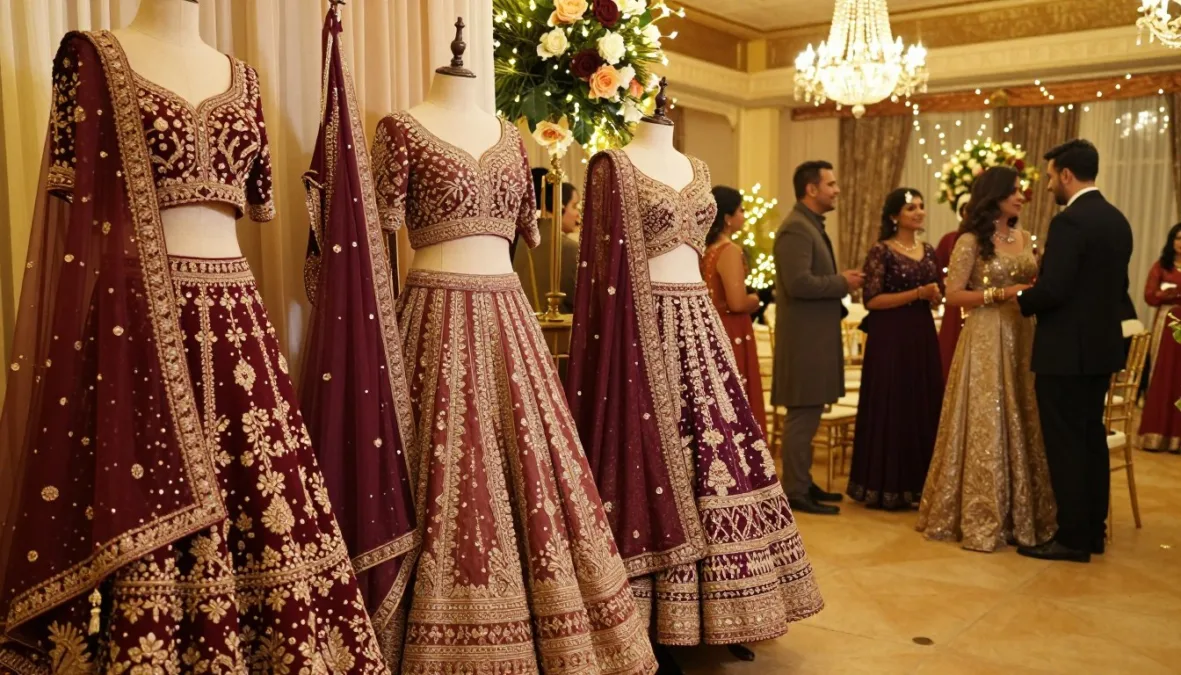
Purple and plum offer a cooler, deeper alternative within the same broad family of strong colors. Emerald and forest green create a green palette, with emerald tending to look more vivid and forest green more subdued.
Antique gold and bronze bring warmth without requiring a bright metallic finish. These shades can appear in embroidery, borders, accessories, or a full outfit. Choose how much metallic detail you want based on the invitation and the rest of your look.
Color trends can offer ideas, but your guest outfit should still suit the event and the couple’s preferences. A shade that feels appropriate for one ceremony may not fit another family’s dress code. Keep the outfit’s overall effect in mind, not just a color name.
Use the invitation’s palette or the couple’s guidance to resolve any uncertainty about a specific shade.
2026 Hindu Wedding Dates to Check Before Choosing a Look
Check the invitation’s confirmed date first, since outfit plans depend on the actual wedding schedule. Use the date list as a reference, not as a rule for every family. The listed auspicious Hindu wedding dates do not set a universal calendar for every family or ceremony.
The Ummed Hotels’ 2026 list includes auspicious dates across several months. It also notes that Chaturmas, from August to October, is typically avoided for major Hindu wedding ceremonies. Families may follow different traditions and preferred calendars.
| Months | Listed 2026 dates | Calendar note |
|---|---|---|
| January and February | January 15, 23, 25, 28; February 5, 6, 8, 10, 12, 14, 19, 20, 21, 24, 25, 26 | Auspicious Hindu wedding dates on the list |
| March through June | March 2, 3, 4, 7, 8, 9, 11, 12; April 15, 20, 21, 25, 26, 27, 28, 29; May 1, 3, 5, 6, 7, 8, 11, 12; June 21, 22, 23, 24, 25, 26, 27, 29 | Auspicious Hindu wedding dates on the list |
| July, August through October, November, and December | July 1, 6, 7, 11; November 21, 24, 25, 26; December 2, 3, 4, 5, 6, 11, 12 | Chaturmas from August to October is typically avoided for major Hindu wedding ceremonies |
A date reference can help you organize travel and prepare for the events you will attend. It cannot replace a family’s own religious guidance. Check the invitation and host instructions before making plans around any date shown here.
Use these three steps to confirm the schedule before choosing outfits:
- Confirm the wedding date on the invitation.
- Check the family’s preferred panchang.
- Plan outfits around the functions and venue.
Confirm the wedding schedule with the family, since the invitation and preferred panchang guide your plans.
Confirm date and function details with the family before making a final outfit plan.
Conclusion
The best guest look is the one that fits the celebration and lets you take part comfortably. A thoughtful outfit should work for the function, feel right at the venue, and let you sit, walk, and enjoy the day.
Before the event, check the invitation and try on the complete outfit, including footwear. That final fitting can reveal a slipping drape, a tight blouse, or shoes that need replacing.
Check the invitation, try on the complete outfit and shoes, and make any fit adjustments before the wedding.
FAQ
Can a guest wear a gown to an Indian winter wedding?
How many outfits should I plan for a multi-day Indian wedding?
Can I wear a pre-draped saree if I have never worn a saree before?
What footwear works well with a lehenga at a winter wedding?
Is velvet too heavy for a daytime wedding function?
Are 2026 auspicious wedding dates the same for every Hindu family?

Priyanka Pandey
Senior Research Editor · Top10Sense
Priyanka specializes in tech, consumer products, and digital trends. She combines hands-on testing, vendor interviews, and database research to create trustworthy “Top 10” rankings. Her work has been referenced by industry blogs and brand report pages.