The Times Square Ball Drop on New Year’s Eve 2026 stands as one of the most recognizable public celebrations in the world, marking the midnight transition at the historic crossroads of Midtown Manhattan. General public street viewing is completely free of charge, requires no paid tickets or reservations, and operates entirely on a first-come, first-served basis through established New York City Police Department checkpoints.
Whether traveling to Midtown Manhattan in person or tuning in from home, careful preparation decides the quality of the experience. Understanding the rigid public pen system, entry restrictions, broadcast channels, and the historic heritage behind the illuminated sphere allows spectators to navigate the day smoothly.
Historic Origins and Evolution of the Tradition
The tradition of gathering in Midtown Manhattan to celebrate the new year began long before the creation of the modern crystal orb. Adolph Ochs, the publisher of The New York Times, initiated the celebration at One Times Square in 1904 with a rooftop fireworks display to inaugurate the newspaper’s new headquarters.
Fact 1 centers on the creation of the first official ball drop. When city authorities banned the midnight fireworks displays due to burning embers falling onto the street, Ochs commissioned the first illuminated sphere in 1907. That original design was crafted from iron and wood, fitted with 100 light bulbs, and lowered from the building flagpole to signal the stroke of midnight.
Fact 2 highlights the only historical period when the descent was officially suspended. During World War II, dimout regulations in New York City prevented the illuminated spectacle in both 1942 and 1943. Crowds still congregated in Times Square for a brief minute of silence followed by the sound of chimes ringing from sound trucks, maintaining the civic ritual under wartime constraints.
The ball has dropped in Times Square every single year since 1907, with exceptions occurring only during the mandatory wartime blackouts of 1942 and 1943.
Engineering, Crystal Craftsmanship, and the 2026 Sphere
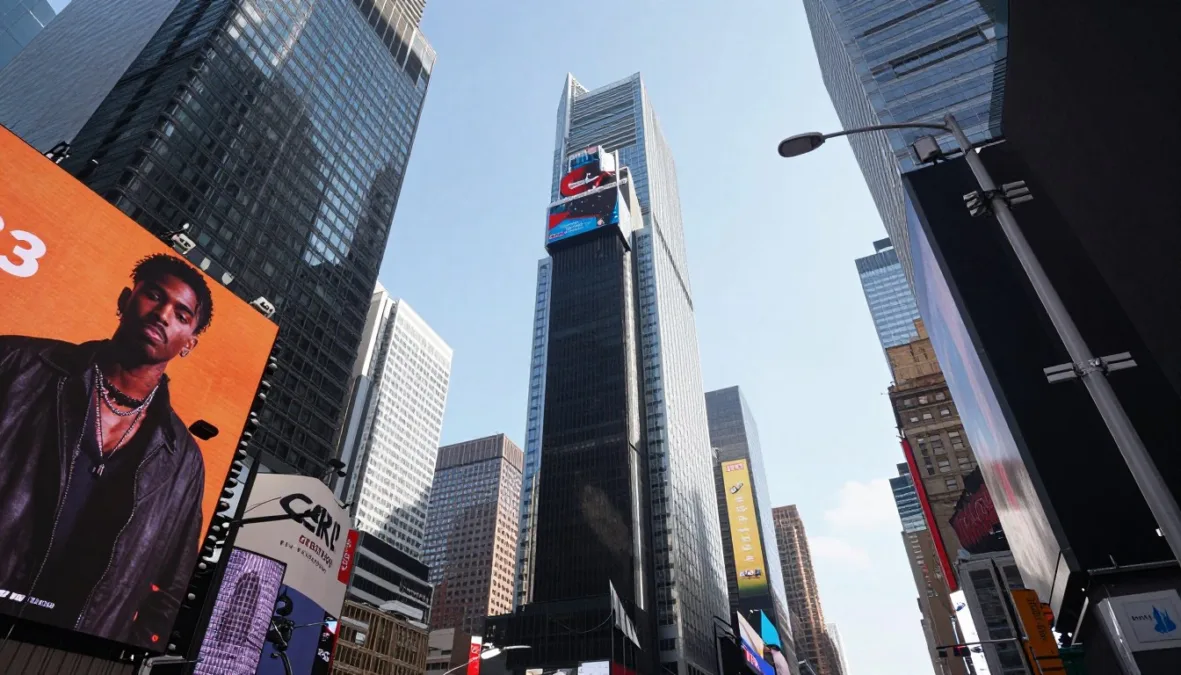
Modern engineering has transformed the sphere from a modest iron shell into a geodesic marvel suspended high above One Times Square. Designed to withstand winter winds and severe temperature fluctuations, the apparatus relies on computerized synchronization to coordinate its 60-second descent precisely with the arrival of the new year.
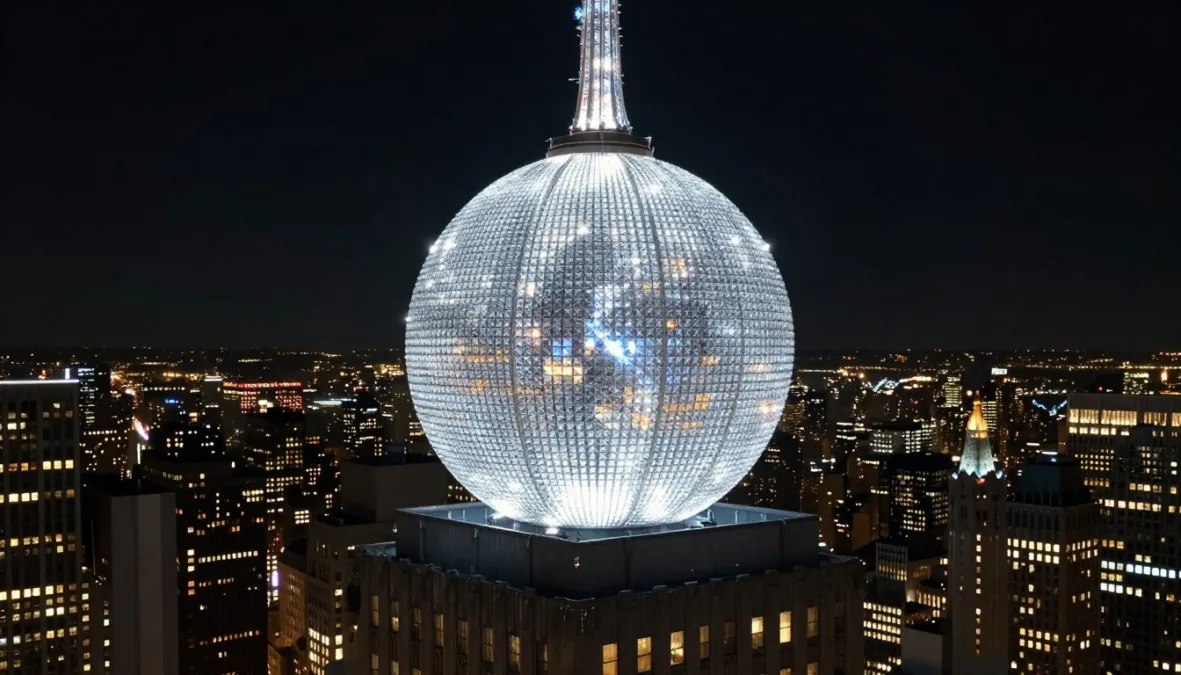
Fact 3 involves the physical scale and illumination power of the contemporary sphere. The standard modern ball spans twelve feet in diameter and weighs nearly twelve thousand pounds, covered by thousands of crystal exterior triangles. These faceted panels contain exterior LEDs capable of generating millions of distinct colors and patterns that shift continuously throughout the evening.
Fact 4 connects the 2026 event to national commemorative milestones. The year 2026 marks the United States Semiquincentennial, celebrating the 250th anniversary of the signing of the Declaration of Independence. The Times Square Alliance and collaborating designers periodically introduce custom crystal themes, such as the Constellation Ball motifs, and official decorative programs for 2026 will celebrate this historic American anniversary.
| Era | Primary Structure | Lighting Source | Historical Milestone |
| 1907 | Iron and Wood | Incandescent Bulbs | Inaugural celebration replacing Midtown fireworks |
| 1942-1943 | Suspended | Dimout Chimes | Wartime citywide blackout observation |
| 2026 | Geodesic Crystal | Exterior LEDs | United States Semiquincentennial commemoration |
Times Square Ball Drop on New Year’s Eve 2026 Public Access and Admission
Public access to the core viewing plazas along Broadway and Seventh Avenue remains completely free and open to all visitors. The municipal government of New York and the Times Square Alliance do not sell public admission tickets, and any third party offering paid street entry passes is operating a scam.
Fact 5 establishes that all public street space operates on a pure walk-in basis without reservations. Private parties, nearby restaurants, and adjacent hotels sell independent hospitality tickets within their own indoor premises, but these private admissions do not grant open access to the police-managed outdoor viewing corridors on the street level.
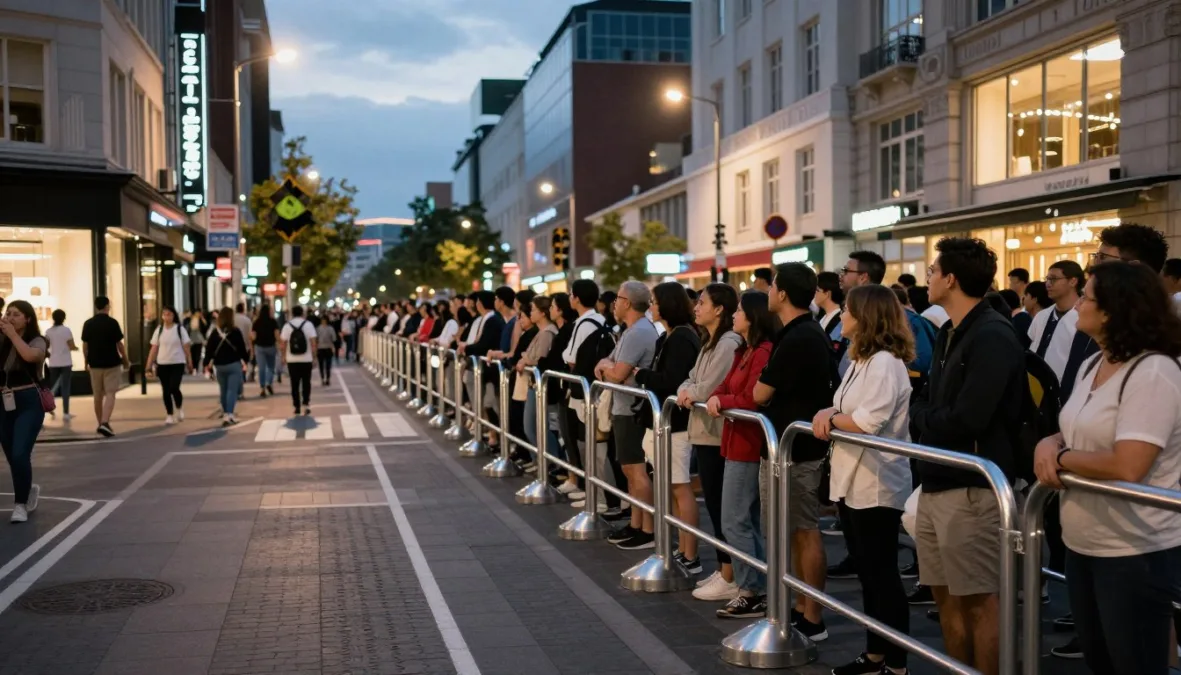
Fact 6 governs security screenings and entry regulations established by the New York City Police Department. Spectators must pass through security checkpoints equipped with metal detectors before entering designated viewing pens. Backpacks, large duffel bags, folding chairs, umbrellas, coolers, and alcoholic beverages are strictly forbidden inside the viewing pens, and once a spectator leaves an assigned pen, re-entry is prohibited.
Leaving a secured viewing pen for any reason forfeits the viewing position immediately, as public pens do not permit re-entry once vacated.
Arrival Strategy, Street Closures, and Subway Navigation
Entering the heart of Midtown on December 31 requires early arrival and complete reliance on public transit systems. Vehicular traffic shuts down across central Manhattan hours ahead of the evening program, making street parking and rideshare drop-offs impossible near the perimeter.
Fact 7 outlines the timeline for street closures and crowd arrival patterns. Closures typically initiate in the morning around 42nd Street and progress northward past Central Park South as spectator density grows. Visitors seeking prime sightlines close to One Times Square arrive during the late morning, and surrounding pens close sequentially as each section reaches maximum safe capacity.
Fact 8 involves Metropolitan Transportation Authority transit adjustments across the theater district. Subway lines provide the most reliable transit, but riders should expect specific station entrances and exits to close to control passenger flow beneath Times Square. Walking from stations outside the immediate perimeter, such as Columbus Circle, Bryant Park, or Rockefeller Center, provides an efficient approach toward entry checkpoints.
- Arrive in the late morning to early afternoon to access viewing areas located closest to the southern end of the corridor.
- Avoid driving, as cross streets between Sixth and Eighth Avenues close to all vehicular traffic early in the day.
- Exit the subway at surrounding neighborhood stations and approach security lines on foot from outer avenues.
The Midnight Drop, Confetti Wishes, and Official Broadcasts
The culmination of New Year’s Eve in Times Square pairs the descent of the illuminated sphere with massive civic traditions. As the final minute approaches, the crowd begins the countdown that leads directly into the midnight celebration.
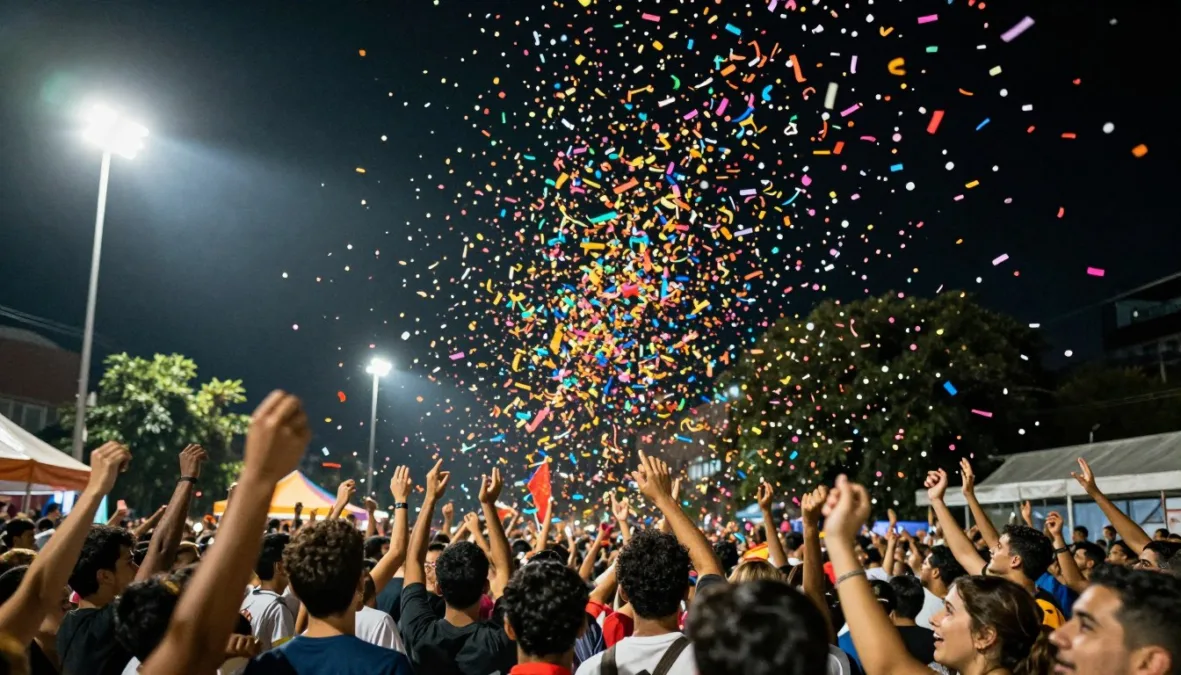
Fact 9 addresses the midnight drop and the release of commemorative confetti. At precisely 11:59 PM, the ball begins its descent down the flagpole atop One Times Square, completing the movement as the clock strikes midnight. Tons of confetti flutter over the avenues, including thousands of handwritten notes collected from visitors at the Times Square New Year’s Eve Wishing Wall.
Fact 10 covers broadcast coverage, digital streaming, and accessibility services for spectators worldwide. Commercial-free digital livestreams air across official online portals managed by the Times Square Alliance, while commercial television networks broadcast synchronized live specials. Designated accessibility viewing areas accommodate visitors with disabilities, though spaces remain limited and require early arrival at dedicated perimeter entrances.
Online Streaming Options
Official, commercial-free webcasts stream continuously on mobile devices and connected televisions, offering multiple camera angles and stage coverage.
Accessibility Accommodations
Dedicated viewing zones for individuals with physical mobility needs operate near the perimeter, subject to standard police security protocols.
Frequently Asked Questions About the 2026 Ball Drop
Do visitors need tickets for the outdoor street viewing in Times Square?
Outdoor street viewing in Times Square requires no tickets or reservations. Public viewing pens are free of charge and operate entirely on a first-come, first-served basis through municipal checkpoints.
What time should spectators arrive to see the ball drop in person?
Spectators aiming for viewing locations close to One Times Square arrive in the late morning or early afternoon. Surrounding viewing areas fill gradually throughout the day, and access closes once individual blocks reach safe capacity.
Are public restrooms available inside the viewing pens?
Public portable restrooms are not provided inside the police viewing pens along Broadway and Seventh Avenue. Visitors who exit their assigned pen to locate off-site facilities cannot re-enter the secured area.
Where can viewers watch the official commercial-free livestream?
The Times Square Alliance streams the event live online without commercial interruption through its official web platforms and mobile portals. Major television networks also broadcast the midnight countdown during their scheduled holiday coverage.
Preparing for December 31 in New York City
The annual gathering at One Times Square remains a defining civic tradition combining historic craftsmanship, strict urban security, and worldwide broadcast access. Because street closures, security perimeters, and performance schedules finalize during late autumn, visitors should check official updates from the Times Square Alliance, the NYPD, and the MTA before finalizing travel plans for December 31, 2026.

Priyanka Pandey
Senior Research Editor · Top10Sense
Priyanka specializes in tech, consumer products, and digital trends. She combines hands-on testing, vendor interviews, and database research to create trustworthy “Top 10” rankings. Her work has been referenced by industry blogs and brand report pages.