
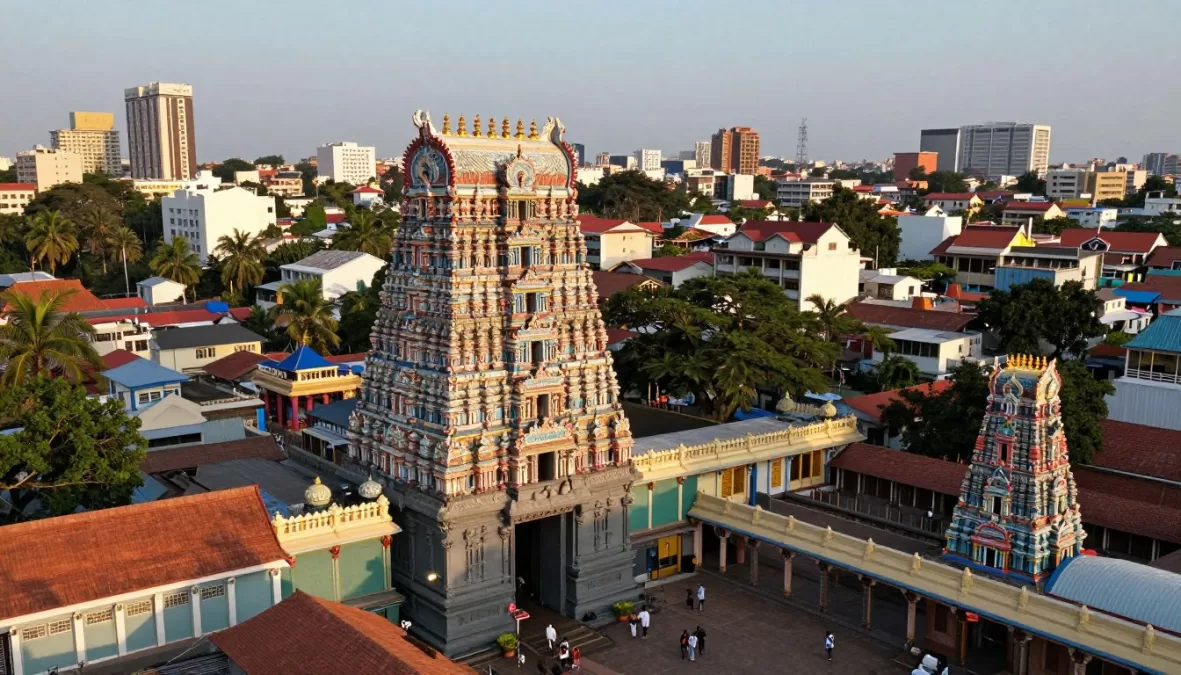

Chennai stands as a testament to South India’s rich spiritual heritage. The city houses magnificent temple structures that have witnessed centuries of devotion.
These sacred places showcase the architectural brilliance of Tamil Nadu. Each temple tells stories of ancient dynasties and timeless faith traditions.
From towering gopurams to serene sanctums, the famous temples in Chennai offer profound experiences. Visitors encounter divine artistry blended with living worship practices that continue today.
Get Your Free Chennai Temple Guide
Download our comprehensive visiting guide with temple etiquette, best visiting times, and cultural insights to make your spiritual journey memorable.
Kapaleeshwarar Temple: The Heart of Mylapore

Historical Background and Significance
The Kapaleeshwarar Temple dominates the ancient Mylapore neighborhood. This temple dedicated to Lord Shiva dates back over 300 years old in its current form.
Historical records suggest an older shrine existed here for more than a millennium. The Portuguese destroyed the original structure in the 16th century.
The temple was rebuilt during the Vijayanagara period. Local rulers and devotees restored this sacred place to its former glory through dedicated efforts.

Architectural Marvel and Design
The temple gopuram rises to 120 feet and showcases Dravidian architecture at its finest. The tower features thousands of colorful stone sculptures depicting various deities.
The main shrine houses Lord Shiva in the form of Kapaleeshwarar. Adjacent stands the shrine of Goddess Karpagambal, representing divine feminine energy.
The temple complex spreads across several acres. Visitors find numerous smaller shrines, a sacred water tank, and ornate pillared halls throughout the compound.

Festivals and Religious Practices
The annual Brahmotsavam festival attracts thousands of devotees. This ten-day celebration occurs during the Tamil month of Panguni, typically March or April.
Daily rituals begin before sunrise with morning prayers. The temple hosts six worship sessions throughout the day, each accompanied by traditional music.
The Arubathimoovar festival honors 63 Shaivite saints. Devotees participate in special processions carrying deity images through Mylapore’s ancient streets.
Visiting Information and Guidelines
The temple opens at 6:00 AM and closes at 10:00 PM daily. Morning hours between 6:00 AM and 9:00 AM offer peaceful darshan experiences.
Traditional dress codes apply here. Men should wear dhoti or pants with shirts, while women prefer sarees or salwar kameez for temple visits.
Photography restrictions exist in certain sanctum areas. Visitors must remove footwear before entering, with designated storage facilities available at the entrance.

Parthasarathy Temple: Ancient Vaishnavite Heritage

Temple History and Origins
This ancient temple stands as one of the oldest in Chennai. The Pallavas constructed this sacred place in the 8th century, making it over 1,200 years old.
The temple dedicated Lord Krishna as Parthasarathy, meaning Arjuna’s charioteer. This name references Krishna’s role in the Mahabharata epic.
The Vijayanagara kings expanded the temple complex significantly. Their contributions enhanced both the architectural grandeur and religious importance of this site.

Architectural Features and Layout
The temple showcases classic Pallava architecture with later additions. Five forms of Lord Vishnu receive worship here in separate shrines within the complex.
The main sanctum features Lord Parthasarathy in a standing posture. The deity holds a conch and discus, representing divine protection and cosmic order.
Intricate stone carvings adorn pillared halls throughout the temple. These depict scenes from Hindu mythology, particularly episodes from Krishna’s life story.

Religious Significance and Traditions
The temple dedicated Lord Vishnu holds special importance for Vaishnavites. Devotees believe that worship here grants spiritual liberation and worldly prosperity.
The presiding deity appears with a unique mustache. Local legend explains this feature represents Krishna’s promise to a devotee who requested this distinctive appearance.
Annual festivals celebrate Krishna’s divine pastimes. The Vaikunta Ekadasi festival draws massive crowds seeking passage through the sacred gateway to liberation.
Festivals and Special Occasions
The Panguni Brahmotsavam spans ten days in March or April. Elaborate processions carry the deity through Triplicane streets on different vahanas or vehicles.
Krishna Jayanthi celebrates Lord Krishna’s birthday with great enthusiasm. Devotees observe fasting and participate in midnight celebrations marking the auspicious birth time.
The annual Pavithrotsavam purifies the temple and deities. Priests perform special rituals using sacred threads and holy water during this important ceremony.

Visitor Practical Information
The temple welcomes visitors from 6:00 AM to 12:00 PM and 4:00 PM to 9:00 PM. Morning darshan provides a serene spiritual experience with fewer crowds.
Located in Triplicane, the temple sits near the city center. Public transportation and auto-rickshaws provide easy access to this historical site.
Free entry makes this temple accessible to all visitors. Donations support temple maintenance and traditional worship practices that continue for over a millennium.

Vadapalani Murugan Temple: Modern Pilgrimage Center

Temple Foundation and Development
The Vadapalani Murugan Temple represents a relatively recent addition to Chennai’s temple landscape. This temple dedicated Lord Murugan began as a small shrine in the 1890s.
Annaswami Nayakar established this sacred place under a sacred tree. His devotion and the deity’s perceived miracles attracted growing numbers of worshippers over the years.
The temple underwent massive expansion throughout the 20th century. Today it stands as one of the most visited temples in Chennai, drawing millions annually.

Architectural Style and Structure
The temple blends traditional and modern architectural elements. The five-tiered rajagopuram features contemporary construction techniques while maintaining classical Dravidian aesthetics.
The main sanctum houses Lord Murugan in a standing posture. The deity holds the sacred vel spear, symbolizing divine wisdom that destroys ignorance and evil.
Spacious mandapams accommodate thousands of devotees during festivals. Modern facilities including queue systems ensure smooth darshan even during peak visiting times.

Religious Importance and Beliefs
Devotees believe the Vadapalani temple possesses special powers for wish fulfillment. Many film industry personalities and sports figures visit seeking divine blessings before important events.
The temple dedicated Lord Murugan attracts those seeking solutions to life problems. Special prayers address health concerns, career advancement, and marriage proposals.
Kavadi Attam performances mark deep devotion during festival periods. Devotees carry ornate structures on shoulders, fulfilling vows made to the deity during difficult times.
Major Festivals and Celebrations
Thai Poosam represents the grandest festival at this temple. Celebrated in January or February, it honors Lord Murugan’s receipt of the divine vel from Goddess Parvati.
Skanda Sashti commemorates Murugan’s victory over evil forces. Six days of special prayers and processions recreate the divine battle through traditional storytelling and rituals.
Panguni Uthiram celebrates the divine marriage of Murugan. Thousands gather to witness special ceremonies and participate in the colorful festive atmosphere throughout the temple.

Visiting Details and Amenities
The temple opens at 5:30 AM and remains accessible until 10:00 PM. Special darshan timings operate during major festivals with extended hours for devotee convenience.
Located in the Vadapalani neighborhood, the temple connects well via Chennai Metro. The Vadapalani metro station sits within walking distance, making access convenient for visitors.
The temple provides modern amenities including parking facilities and refreshment areas. Free prasadam distribution occurs during specific times, continuing the tradition of sacred food sharing.

Ashtalakshmi Temple: Goddess of Eight Prosperities

Temple Establishment and Concept
The Ashtalakshmi Temple stands uniquely on the Chennai seashore. Constructed in 1974, this relatively modern temple introduces an innovative worship concept to South India.
The temple dedicated Goddess Lakshmi in eight manifestations. Each form represents different types of prosperity that devotees seek in their lives.
Sri Chandrasekharendra Saraswati of Kanchi Kamakoti Peetham inspired this temple. His vision created a comprehensive approach to worshipping the goddess of abundance and fortune.

Unique Architectural Design
The temple features a three-tiered gopuram with contemporary styling. Unlike traditional temples, each level houses separate shrines for Lakshmi’s eight forms.
Devotees ascend through different levels to worship each manifestation. This vertical design creates a unique pilgrimage experience within a single structure.
The location provides stunning views of the Bay of Bengal. The combination of spiritual atmosphere and natural beauty creates an exceptional worship environment.

Eight Forms of Lakshmi Worshipped
Adi Lakshmi represents the primordial form of the goddess. Devotees seek her blessings for spiritual wealth and divine grace through dedicated prayers.
Dhana Lakshmi bestows material wealth and financial prosperity. Business owners and professionals particularly venerate this form for success in their endeavors.
Dhanya Lakshmi governs agricultural abundance and food security. Farmers and those concerned with nutrition seek her divine intervention for plentiful harvests.

Gaja Lakshmi appears with elephants showering water. This form symbolizes royalty and power, attracting devotees seeking authority and leadership qualities.
Santana Lakshmi blesses devotees with progeny and family welfare. Couples desiring children and harmonious family life regularly worship this benevolent form.
Veera Lakshmi represents courage and strength. Those facing challenges or requiring bravery in difficult situations seek her protective blessings.
Vijaya Lakshmi grants victory and success in endeavors. Students, competitors, and professionals pray for triumph in their respective fields of activity.
Vidya Lakshmi bestows knowledge and wisdom. Students and scholars particularly revere this form during examination periods and academic pursuits.
Religious Practices and Rituals
Daily worship includes systematic prayers to all eight forms. Priests conduct elaborate poojas following Vaishnava traditions with Sanskrit hymns and offerings.
Friday holds special significance for Lakshmi worship. Enhanced rituals and larger crowds mark this auspicious day throughout the year.
Devotees often perform Sahasranama Archana, reciting a thousand names of Lakshmi. This practice brings spiritual merit and material benefits according to traditional beliefs.

Festival Calendar and Events
Navaratri celebrations last nine nights honoring the divine feminine. Special decorations and extended worship hours mark this important festival period in autumn.
Varalakshmi Vratam attracts thousands of women devotees. This special occasion for married women seeks family prosperity and husband’s wellbeing through devoted worship.
Deepavali transforms the temple into a luminous spectacle. The festival of lights celebrates Lakshmi’s special day with elaborate decorations and special rituals.
Visitor Information and Access
The temple opens from 6:30 AM to 12:00 PM and 4:00 PM to 8:00 PM. Morning visits offer pleasant sea breezes and peaceful darshan experiences.
Located on the East Coast Road, the temple sits approximately 10 kilometers from central Chennai. Auto-rickshaws and taxis provide convenient transportation to this coastal location.
The seaside setting provides opportunities for peaceful reflection. Many visitors combine temple worship with walks along the adjacent beach area.

Plan Your Chennai Temple Journey
Exploring Chennai’s sacred temples requires thoughtful planning. Understanding the best routes and timing enhances your spiritual experience significantly.
Most temples welcome visitors throughout the day. However, morning hours typically offer cooler weather and more intimate darshan opportunities with smaller crowds.
Need Help Planning Your Temple Tour?
Our local experts can design a personalized temple visiting itinerary based on your interests, time availability, and spiritual preferences. Get authentic cultural insights and practical guidance.
Or call us directly at +91 44 1234 5678

Kalikambal Temple: Goddess of Protection

Historical Background and Origins
The Kalikambal Temple sits in the heart of George Town’s commercial district. This ancient temple dates back over 300 years old, serving as a spiritual anchor in Chennai’s busiest area.
The temple dedicated Goddess Kali in her protective form. Local merchants and traders established this sacred place seeking divine protection for their business activities.
The temple survived numerous historical challenges including colonial period disruptions. Continuous devotion from the community ensured its preservation through changing times.

Temple Architecture and Features
The temple showcases traditional South Indian temple design adapted to urban constraints. The modest gopuram reflects the commercial district’s space limitations while maintaining sacred aesthetics.
The main sanctum houses Goddess Kalikambal in a powerful standing posture. Adjacent shrines honor Lord Kamateswarar, linking this temple to both Shakti and Shaiva traditions.
Ornate ceiling paintings depict various mythological scenes. These artworks survived centuries, offering glimpses into historical temple decoration styles of Tamil Nadu.

Religious Significance and Worship
Devotees believe the goddess provides powerful protection against negative forces. Business owners particularly seek her blessings before starting new commercial ventures.
The temple also serves as a center for Shakti worship in Chennai. Regular tantric rituals honor the goddess’s fierce aspect while seeking her benevolent intervention.
Friday worship attracts the largest crowds to this sacred place. Special abhishekams and poojas mark this auspicious day with enhanced ritual activities.
Festivals and Special Occasions
Navaratri represents the most significant festival celebrated here. Nine nights of special worship honor the divine feminine in various manifestations.
Aadi Pooram festival in July or August draws thousands of devotees. This celebration marks an auspicious day for Shakti worship with special processions.
Monthly Amavasya or new moon days hold particular importance. Devotees perform special rituals seeking relief from ancestral karma and personal obstacles.

Practical Visiting Information
The temple opens at 5:30 AM and closes at 9:30 PM daily. Early morning hours before business district crowds gather offer peaceful worship opportunities.
Located near Parry’s Corner in George Town, the temple sits amidst bustling commercial activity. The contrast between sacred space and busy marketplace creates a unique urban temple experience.
Parking challenges exist due to the commercial area location. Visitors often use public transportation or walk from nearby parking areas to reach the temple.

Mundakakanni Amman Temple: Village Goddess Heritage

Temple Origins and Legend
The Mundakakanni Amman Temple in Thiruverkadu preserves ancient village goddess worship traditions. This temple believed to be over 1,000 years old, representing pre-Brahmanical religious practices of Tamil Nadu.
Local legends connect the goddess to regional protective deities. Village communities historically depended on her for agricultural prosperity and disease protection.
The temple maintained its folk traditions despite urban expansion. Today it stands as an important link to Tamil Nadu’s grassroots spiritual heritage.

Architectural Style and Setting
The temple exhibits typical village goddess shrine characteristics. Simple structures prioritize accessibility and community gathering over ornate architectural displays.
The open courtyard design accommodates large festival gatherings. This architectural choice reflects the communal nature of village goddess worship practices.
Sacred trees within the compound hold religious significance. These natural elements integrate ancient nature worship with goddess veneration.

Worship Practices and Rituals
The temple dedicated goddess receives offerings of camphor and vermillion. Devotees follow traditional village worship methods passed down through generations.
Animal sacrifice historically occurred here, though practices have evolved. Today, symbolic offerings largely replace older ritual methods while maintaining spiritual intent.
Women devotees play central roles in worship here. The goddess particularly addresses concerns about family welfare, childbirth, and protection from illness.
Cultural Significance and Festivals
Annual temple festivals blend folk traditions with classical Hindu practices. Village communities organize these events, maintaining strong cultural continuity.
Fire-walking ceremonies mark significant festival occasions. Devotees demonstrate their faith through these intense physical acts of devotion and spiritual commitment.
The Aadi month celebrations hold special importance here. This period dedicated to goddess worship sees increased ritual activity and community participation.

Visiting Details and Cultural Notes
The temple welcomes visitors throughout the day with flexible timings. However, festival periods offer the most culturally rich experiences for visitors interested in folk traditions.
Located in Thiruverkadu on Chennai’s outskirts, the temple requires dedicated travel. This journey itself becomes part of the pilgrimage experience to this authentic village shrine.
Visitors should respect local customs and traditional worship methods. This temple offers insights into Tamil Nadu’s diverse spiritual landscape beyond classical temple traditions.

Marundeeswarar Temple: Divine Healing Center

Historical Foundation and Legend
The Marundeeswarar Temple stands as one of the oldest temples around Chennai. Historical evidence suggests this temple existed for over 1,200 years, with roots in the Pallava period.
The temple dedicated Lord Shiva as the divine physician or healer. Local tradition holds that worshipping here provides relief from chronic ailments and health concerns.
Ancient legends connect this place to a Chola king’s miraculous healing. The grateful monarch expanded and beautified the temple after recovering from a serious illness.

Temple Architecture and Layout
The temple showcases classic Dravidian architecture from multiple historical periods. Successive dynasties contributed architectural elements, creating a layered historical monument.
The five-tiered gopuram features intricate sculptural work. These carvings depict various mythological scenes related to Shiva’s healing aspects and divine powers.
The large temple tank adds to the sacred atmosphere. This water body historically provided ritual bathing facilities and represented purifying elements in worship practices.

Healing Traditions and Beliefs
The temple became renowned for miraculous healing experiences. Devotees seeking relief from ailments visit this sacred place with deep faith and devotional offerings.
Special prayers address specific health concerns. The temple priests perform targeted rituals for different conditions based on traditional Shaivite healing practices.
Holy ash or vibhuti from this temple receives particular reverence. Devotees believe this sacred substance carries Lord Shiva’s healing blessings when applied with devotion.
Religious Significance and Worship
The temple dedicated Lord Shiva attracts devotees throughout Tamil Nadu. Its reputation as a healing shrine draws those exhausted by medical treatments seeking divine intervention.
Monday holds special significance for Shiva worship here. Enhanced rituals and larger crowds mark this auspicious day each week throughout the year.
The Pradosham timings on the 13th day after new and full moons attract devoted worshippers. These specific periods amplify the temple’s spiritual potency according to tradition.

Major Festivals and Events
Maha Shivaratri represents the grandest celebration at this temple. All-night worship and special rituals mark this most sacred Shaivite festival honoring Lord Shiva.
The annual Brahmotsavam spans several days with elaborate processions. Different vahanas carry the deity through Thiruvanmiyur’s streets, blessing the entire neighborhood.
Monthly Pradosham celebrations maintain continuous festive energy. These regular events ensure frequent opportunities for enhanced worship and community gathering.

Visitor Information and Guidelines
The temple opens at 6:00 AM and closes at 12:30 PM, reopening from 4:00 PM to 9:00 PM. Early morning visits provide peaceful darshan before daytime crowds arrive.
Located in Thiruvanmiyur along the beach road, the temple enjoys excellent connectivity. Public buses and auto-rickshaws provide convenient access from various parts of the city.
Traditional dress codes apply as with most Chennai temples. Devotees should prepare for potential queues during festival periods and auspicious days.

Vel Murugan Temple: Devotion on the Hill

Temple Establishment and Location
The Vel Murugan Temple occupies a prominent hilltop position. This relatively modern temple was established in the late 20th century on historically significant Jain Hills.
The location choice reflects traditional Tamil preference for hillside Murugan shrines. Elevated positions symbolize the deity’s victory over evil forces according to religious belief.
The temple developed from a small shrine into a major pilgrimage center. Devoted efforts by spiritual organizations transformed this location into an important worship destination.

Architectural Design and Features
The temple architecture emphasizes accessibility despite the hilltop location. Well-maintained steps lead devotees upward, making the spiritual journey achievable for most visitors.
The main shrine features Lord Murugan in his powerful standing form. The deity’s vel or divine spear receives special veneration as a symbol of spiritual wisdom.
Panoramic views reward those who climb to the temple. The elevated position provides stunning vistas of Chennai city, creating a memorable worship environment.

Religious Practices and Traditions
The temple dedicated Lord Murugan follows traditional Tamil Shaivite worship methods. Daily rituals include multiple pooja sessions accompanied by devotional hymns and offerings.
Tuesdays and Fridays attract increased devotional activity. These days hold special significance for Murugan worship throughout Tamil Nadu’s spiritual calendar.
Devotees often perform circumambulation around the hilltop. This pradakshina practice represents reverence and dedication to the deity through physical spiritual effort.
Festival Calendar and Celebrations
Thai Poosam celebration transforms the temple into a vibrant festival center. Devotees carry kavadi offerings up the hillside steps, demonstrating their devotion through ritual endurance.
Skanda Sashti commemorates Murugan’s divine victory over demonic forces. Six days of special worship include recitation of Tiruppugazh hymns praising the deity’s qualities.
Panguni Uthiram celebrates the divine marriage with elaborate ceremonies. The festival attracts devotees seeking blessings for marriage and family harmony.

Visiting Practical Details
The temple welcomes visitors from early morning to evening hours. The climb requires moderate physical fitness, though the pace can be adjusted to individual capability.
Located in Sholinganallur area, the temple requires specific transportation. Auto-rickshaws and taxis provide the most convenient access to the hilltop shrine base.
Visitors should wear comfortable footwear for the climb, removing them before entering the sanctum. The hilltop position offers cooler temperatures compared to Chennai’s plains.

Madhya Kailash Temple: Twin Divine Powers

Unique Temple Concept and History
The Madhya Kailash Temple presents an unusual theological concept. This temple dedicated both Lord Shiva and Lord Vishnu equally, bridging traditional sectarian divisions.
Established in the mid-20th century, this temple reflects modern Hindu unity movements. The founders envisioned a worship space transcending historical Shaiva-Vaishnava distinctions.
The temple name itself suggests balance between divine powers. Madhya means middle or central, indicating the harmonious integration of both major Hindu traditions.

Architectural Integration and Design
The temple architecture blends elements from both Shaiva and Vaishnava traditions. This integration appears in sculptural motifs, ritual spaces, and overall design philosophy.
The main sanctum houses both deities with equal prominence. Neither tradition dominates, creating visual and spiritual balance throughout the temple complex.
Modern construction techniques support traditional aesthetic elements. The result provides comfortable worship facilities while maintaining sacred atmosphere and religious authenticity.

Worship Practices and Rituals
Daily rituals honor both deities according to their traditional requirements. Priests trained in both agama traditions conduct ceremonies that respect each deity’s specific worship protocols.
Devotees can participate in worship directed to either or both deities. This flexibility attracts people from various Hindu backgrounds seeking comprehensive divine blessings.
The temple promotes philosophical unity alongside ritual practice. Regular discourses emphasize the underlying oneness of divine manifestations despite outward differences.
Religious Significance and Philosophy
The temple represents an important theological statement. By housing both Shiva and Vishnu, it challenges historical sectarian boundaries within Hinduism.
Many devotees appreciate this integrated approach to worship. Those who revere both deities find this temple particularly meaningful for comprehensive spiritual practice.
The temple philosophy emphasizes divine unity over theological distinctions. This message resonates with contemporary Hindus seeking inclusive spiritual paths.

Festival Celebrations and Events
The temple celebrates major festivals from both traditions. Maha Shivaratri and Vaikunta Ekadasi receive equal emphasis in the annual religious calendar.
Monthly celebrations honor specific aspects of each deity. This ensures regular festival participation opportunities throughout the year for diverse devotees.
Special interfaith programs promote religious harmony. The temple organizes educational events that explore commonalities across Hindu philosophical schools.
Visiting Information and Access
The temple maintains regular hours accommodating working devotees. Morning and evening worship sessions attract steady participation from the Adyar community.
Located in residential Adyar, the temple enjoys excellent connectivity. The peaceful neighborhood setting provides a contemplative atmosphere for worship.
The temple welcomes spiritual seekers regardless of sectarian background. This inclusive approach makes it particularly appealing to modern urban worshippers.

Kandaswamy Temple: Ancient Murugan Shrine

Historical Background and Antiquity
The Kandaswamy Temple stands as one of the oldest Murugan temples in the Chennai region. Historical records trace this sacred place back several centuries through multiple ruling dynasties.
The temple dedicated Lord Murugan received patronage from Chola kings. Their contributions established the architectural foundation that subsequent rulers enhanced over time.
Local communities maintained continuous worship throughout history. This unbroken devotional tradition preserved the temple’s spiritual significance through political upheavals and social changes.

Architectural Heritage and Features
The temple architecture reflects classic Tamil temple design principles. Stone carvings throughout the structure demonstrate skilled craftsmanship from historical periods.
The gopuram showcases weathered sculptures telling Murugan’s mythological stories. These ancient artworks provide valuable insights into historical religious art traditions of South India.
The temple complex includes several smaller shrines dedicated to related deities. This arrangement follows traditional Tamil temple spatial organization reflecting theological relationships.

Religious Importance and Worship
The temple holds deep significance for Tamil Murugan devotees. Many believe prayers here possess special efficacy due to the site’s ancient spiritual potency.
Traditional worship methods continue unchanged for generations. This continuity connects modern devotees with centuries of religious practice at this sacred location.
The temple priests maintain hereditary worship traditions. Their family lineages served this shrine for generations, preserving authentic ritual knowledge and practice.
Festival Traditions and Celebrations
Thai Poosam represents the premier festival celebration here. The ancient traditions associated with this event attract devotees seeking authentic religious experiences.
Skanda Sashti rituals follow centuries-old patterns at this temple. The continuity of traditional practice makes these celebrations particularly meaningful for orthodox devotees.
Monthly Krittikai star days draw dedicated worshippers. These occasions sacred to Murugan provide regular opportunities for enhanced worship throughout the year.

Cultural Significance and Legacy
The temple represents an important cultural heritage site for Chennai. Its antiquity provides tangible connection to the region’s deep religious history.
Local identity closely intertwines with this ancient shrine. Neighborhood communities maintain strong emotional and spiritual bonds with their ancestral worship place.
The temple architecture serves as an educational resource. Students and researchers study its features to understand historical temple construction and religious art.
Visitor Practical Information
The temple welcomes visitors during standard worship hours. Morning sessions offer peaceful darshan in this historically significant spiritual environment.
Located in Kandanchavadi area, the temple requires some navigation through local streets. Auto-rickshaws provide convenient access from main roads to this neighborhood shrine.
Visitors should approach with cultural sensitivity appropriate to this ancient site. The temple maintains traditional practices that visitors should respectfully observe and honor.

Cultural and Spiritual Significance of Chennai Temples

Temples as Cultural Anchors
Chennai’s temples function as vital cultural preservation centers. These sacred places maintain traditional art forms including music, dance, and ritual practices passed through generations.
Classical Carnatic music thrives within temple environments. Daily worship incorporates devotional songs that preserve ancient musical traditions and Tamil poetic forms.
Temple festivals showcase traditional performing arts. Bharatanatyam dance and dramatic presentations communicate religious stories while entertaining and educating community members.
Architectural Heritage Preservation
The temples represent South India’s architectural evolution over centuries. From ancient Pallava structures to modern adaptations, these buildings document changing construction techniques and aesthetic preferences.
Stone carving traditions survive through temple maintenance and restoration. Skilled artisans continue hereditary crafts, ensuring traditional sculptural knowledge transfers to future generations.
Temple architecture influences contemporary design across Tamil Nadu. The iconic gopuram shape and intricate detailing inspire modern architects seeking culturally rooted aesthetic expressions.

Social and Community Functions
Temples serve as primary community gathering spaces throughout Chennai. Religious celebrations bring together people across social and economic boundaries in shared spiritual experience.
Many temples operate charitable programs serving local populations. Free food distribution, educational initiatives, and healthcare services extend religious institutions’ social impact beyond worship.
Marriage ceremonies and life-cycle rituals typically occur in temple settings. These occasions connect personal milestones with sacred spaces and divine blessings.
Economic Impact and Tourism
Temple tourism contributes significantly to Chennai’s economy. Domestic and international visitors support local businesses including hotels, restaurants, and handicraft shops around temple areas.
Traditional craft industries depend on temple-related demand. Flower vendors, incense makers, and religious item sellers sustain livelihoods through continuous temple visitor flow.
Cultural tourism centered on temple heritage attracts global attention. Chennai’s spiritual landmarks position the city as an important destination for those seeking authentic South Indian experiences.

Spiritual Diversity and Religious Harmony
Chennai temples represent various Hindu theological traditions peacefully coexisting. Shaiva, Vaishnava, and Shakta temples share the urban landscape, demonstrating religious pluralism.
Many temples welcome visitors regardless of religious background. This openness promotes interfaith understanding and cultural exchange in increasingly diverse urban environments.
Temple festivals often attract participation from broader communities. Neighbors of different faiths sometimes join celebrations, appreciating cultural spectacle while respecting religious significance.
Modern Challenges and Adaptation
Urban development pressures affect temple preservation efforts. Balancing heritage protection with city growth requires careful planning and community engagement.
Temples adapt to contemporary needs while maintaining traditions. Modern amenities like queue systems and digital donation methods coexist with ancient ritual practices.
Younger generations engage with temple traditions in evolving ways. Educational programs and digital outreach help maintain religious connections despite changing lifestyles.

Essential Guidelines for Temple Visitors

Dress Code and Appearance
Modest clothing represents basic respect in temple environments. Men typically wear shirts with pants or traditional dhoti, while women choose sarees or salwar kameez.
Shoulders and knees should remain covered when entering sacred areas. Avoid revealing or tight-fitting clothing that might be considered inappropriate in religious contexts.
Some temples provide clothing for those dressed inappropriately. However, visitors should plan ahead to dress respectfully rather than depending on temple facilities.
Behavior and Conduct
Maintain quiet demeanor within temple premises. Loud conversations disturb those engaged in prayer and meditation seeking peaceful spiritual experiences.
Remove footwear before entering temple buildings. Designated areas outside provide shoe storage, though visitors should watch their belongings.
Photography rules vary across temples. Always ask permission before taking pictures, especially near sanctums where photography might be prohibited.
Important Cultural Considerations
- Non-Hindus can usually enter outer areas but may face restrictions in inner sanctums
- Menstruating women traditionally avoid temple visits during their period
- Avoid pointing feet toward deities or sitting with outstretched legs
- Circumambulation should proceed clockwise around sanctums
- Accept prasadam with the right hand, considering it sacred blessed food
Worship Participation Guidelines
Visitors can observe rituals without necessarily participating. Watching respectfully from designated areas allows cultural learning without inappropriate involvement.
Those wishing to participate should follow others’ lead. Temple staff and fellow devotees usually help newcomers understand basic ritual procedures.
Donations remain voluntary but support temple maintenance. Contribution boxes are available, though visitors should never feel pressured to donate.
Best Times to Visit
Early morning hours between 6:00 AM and 9:00 AM offer peaceful experiences. Fewer crowds and cooler temperatures make this ideal for contemplative visits.
Evening darshan times between 6:00 PM and 8:00 PM feature elaborate rituals. The ceremonial atmosphere provides engaging cultural experiences though crowds increase.
Avoid major festival days unless specifically seeking that experience. Extreme crowds during festivals can overwhelm first-time visitors unfamiliar with temple environments.

Practical Preparation Tips
Carry minimal valuables when visiting temples. Secure storage may not always be available for bags and electronics during worship.
Bring small denomination currency for offerings and donations. Temple shops and vendors may have limited change for large bills.
Plan adequate time for each temple visit. Rushing through diminishes the experience and shows disrespect for the sacred space and those worshipping there.
Health and Safety Considerations
Stay hydrated especially during hot weather when visiting outdoor temple areas. Many temples have water facilities though carrying bottled water remains advisable.
Watch your step on uneven temple floors and staircases. Ancient structures may have worn surfaces requiring careful navigation.
Be aware of your surroundings in crowded festival situations. Keep children close and maintain awareness of exits in dense gathering areas.

Temple Food Culture and Prasadam Traditions

Sacred Food Traditions
Temple prasadam represents food blessed by deities and shared with devotees. This sacred cuisine forms an integral part of worship experience across Chennai’s temples.
Preparation follows strict purity guidelines and traditional recipes. Temple kitchens maintain cleanliness standards and use specific ingredients considered spiritually appropriate.
Different temples offer characteristic prasadam items. Each temple’s special food offerings reflect local traditions and the preferences attributed to presiding deities.
Common Prasadam Varieties
Sweet prasadam dominates temple food offerings. Kesari or semolina pudding, pongal, and laddu are common items distributed after worship rituals.
Savory items like tamarind rice and curd rice also appear as prasadam. These foods can be consumed immediately or taken home for family members.
Holy water or theertham accompanies many prasadam distributions. Devotees consider this blessed water spiritually purifying and health-promoting.

Popular Temple Prasadam Items
- Pongal – sweet rice pudding with jaggery and ghee
- Kesari – semolina-based sweet colored with saffron
- Laddu – round sweet balls made with gram flour
- Appam – fermented rice pancakes with sweet edges
- Vadai – savory lentil fritters served with chutney
- Puliyodarai – tangy tamarind rice with spices
- Thayir Sadam – cooling curd rice with mild seasoning
Ritual Significance of Prasadam
Prasadam carries spiritual significance beyond nutritional value. Devotees believe consuming blessed food transfers divine grace and spiritual merit.
The ritual of accepting prasadam follows specific etiquette. Recipients use their right hand and consume at least a small portion as a sign of devotional acceptance.
Sharing prasadam with family members extends blessings to loved ones. Many devotees bring home portions for those unable to visit the temple personally.
Temple Annadanam Programs
Many Chennai temples operate free food distribution programs called annadanam. These initiatives serve thousands of meals daily regardless of visitors’ economic status.
Annadanam reflects core Hindu principles of hospitality and charity. Donors sponsor meals gaining spiritual merit while providing practical assistance to those in need.
The meals typically feature simple South Indian vegetarian cuisine. Rice, sambar, vegetable curries, and rasam comprise standard annadanam offerings.

Festive Special Foods
Festival occasions feature elaborate special prasadam items. These unique preparations appear only during specific celebrations, making them highly anticipated treats.
Some temples become famous for particular festival foods. Devotees time visits specifically to receive these special prasadam items during annual celebrations.
The variety and quality of festival prasadam demonstrates devotion. Temples invest significant resources to provide memorable culinary experiences during important religious occasions.
Practical Information for Visitors
Prasadam distribution typically follows major worship sessions. Visitors should inquire about specific timing to receive these blessed food offerings.
Most temple prasadam is vegetarian following Hindu dietary principles. Visitors with specific allergies should exercise caution as ingredient lists may not be available.
Some temples sell prasadam items in addition to free distribution. Purchasing supports temple operations while allowing visitors to take home larger quantities.

Temple Art and Classical Music Traditions

Sculptural Art Heritage
Chennai temples showcase centuries of sculptural evolution. Stone carvings depict gods, goddesses, mythological scenes, and daily life from various historical periods.
The Dravidian sculptural style emphasizes intricate detail and symbolic meaning. Every carved figure serves religious and educational purposes beyond mere decoration.
Temple gopuram sculptures tell complete mythological stories. These vertical narratives educate viewers about religious texts through visual artistic expression.

Gopuram Sculptures
Tower carvings depict multiple deity forms and mythological episodes. These elaborate sculptures served as visual religious education for historically illiterate populations.

Ceiling Paintings
Interior ceiling paintings use traditional pigments and techniques. These artworks survived centuries, providing glimpses into historical artistic styles and religious iconography.

Bronze Artwork
Bronze deity images and ritual objects demonstrate advanced metallurgy. The lost-wax casting technique produced exquisite pieces still used in temple worship today.
Carnatic Music in Temples
Classical Carnatic music forms an essential component of Chennai temple worship. Daily rituals incorporate devotional songs in traditional ragas and talas.
Temple musicians maintain hereditary musical traditions. Families served as temple musicians for generations, preserving authentic performance styles and rare compositions.
Many temples host regular music concerts during festival seasons. These performances feature renowned artists offering their talents as devotional service.
Dance and Dramatic Arts
Bharatanatyam dance originated as temple worship art form. Though now primarily performed on stage, some temples still maintain traditional dance offerings to deities.
Religious dramas or koothu present mythological stories dramatically. These performances combine education and entertainment while maintaining devotional character.
Temple festivals showcase various traditional performing arts. These occasions provide rare opportunities to witness authentic cultural expressions in their original religious contexts.

Literary and Poetic Traditions
Tamil devotional poetry resonates throughout Chennai temples. Ancient compositions by saints like Appar and Sundarar continue as living worship elements.
Temple inscriptions preserve historical Tamil literature and language. These stone records document linguistic evolution and provide valuable historical information.
Devotional recitation competitions occur during festival periods. These events encourage younger generations to learn and appreciate classical religious poetry.
Contemporary Art Preservation Efforts
Modern initiatives work to preserve traditional temple arts. Documentation projects record techniques before they disappear with aging master artisans.
Some temples operate schools teaching classical arts. These institutions train new generations in music, dance, and sculpture under traditional guru-shishya methods.
Government and private organizations support temple art conservation. Restoration projects employ traditional methods to preserve artistic heritage for future generations.

Conclusion: Chennai’s Living Spiritual Heritage

The famous temples in Chennai represent more than architectural monuments. These living institutions continue serving spiritual, cultural, and social functions that have sustained Tamil Nadu communities for centuries.
Each temple contributes uniquely to Chennai’s cultural fabric. From ancient Pallava shrines to modern hilltop temples, this diversity reflects the city’s evolving spiritual landscape.
Visiting these sacred places offers profound cultural insights beyond tourism. Travelers encounter authentic expressions of faith that have shaped South India’s civilization throughout history.
The temples preserve traditional arts, architecture, and ritual knowledge. Their continued vitality ensures that future generations inherit these irreplaceable cultural treasures.
Chennai’s temple heritage faces both opportunities and challenges in contemporary times. Balancing preservation with modernization requires thoughtful approaches respecting tradition while accommodating current needs.
Whether seeking spiritual fulfillment, cultural education, or architectural appreciation, Chennai’s temples welcome all visitors. These sacred spaces offer transformative experiences that connect human aspirations with timeless divine presence.
Begin Your Chennai Temple Journey
Let us help you experience the spiritual heart of Chennai. Our local guides provide authentic temple experiences with deep cultural understanding and practical assistance for memorable visits.


Priyanka Pandey
Senior Research Editor · Top10Sense
Priyanka specializes in tech, consumer products, and digital trends. She combines hands-on testing, vendor interviews, and database research to create trustworthy “Top 10” rankings. Her work has been referenced by industry blogs and brand report pages.