

The half-hour situational comedy remains one of the most resilient storytelling formats in modern entertainment. Exceptional examples of the Top 10 Sitcoms of All Time balance sharp script construction, distinct character voices, and an instinctive understanding of everyday social dynamics. When these elements align, individual episodes turn into cultural touchstones that outlast the broadcast eras that birthed them.
Evaluating the medium requires separating fleeting ratings spikes from lasting artistic and societal significance. Enduring classics continually reward rewatching, inspire future creators, and maintain emotional resonance across generations of viewers. A critical ranking brings clarity to how these landmark productions expanded the boundaries of comedic television.
Core Standards for Ranking the Greatest Sitcoms
Determining the most accomplished comedies in broadcast history demands a consistent set of critical benchmarks. The medium thrives on a rare alchemy of writing discipline, performance chemistry, and structural innovation.
While popularity reflects immediate market interest, genuine greatness requires sustained cultural relevance and creative execution. The selections highlighted below earned their positions through rigorous appraisal across four core disciplines.
| Dimension | Focus | Key Attribute | Long-Term Evaluation Metric |
| Writing | Structure | Wit | Tight multi-plot resolution and timeless comedic dialogue. |
| Ensemble | Chemistry | Dynamic | Flawless comedic timing across distinct archetypes. |
| Culture | Impact | Language | Introduction of idioms, customs, and lasting social debate. |
| Longevity | Replay | Freshness | Sustained humor on subsequent viewings years after release. |
By applying these balanced criteria, each title demonstrates exceptional achievement in both craft and audience connection. Historical context remains vital, highlighting how specific shows dismantled prevailing limitations of their time.
10. Arrested Development
Premiering in 2003 on Fox, Arrested Development revolutionized American episodic comedy through intricate structural ambition. Created by Mitchell Hurwitz, the show follows the eccentric Bluth family whose real estate empire collapses under federal fraud charges, leaving level-headed son Michael to manage the chaos.
The series features an extraordinary ensemble cast including Jason Bateman, Jessica Walter, Jeffrey Tambor, Will Arnett, Tony Hale, Portia de Rossi, David Cross, Michael Cera, and Alia Shawkat, with deadpan voiceover narration by executive producer Ron Howard. Walter’s portrayal of matriarch Lucille Bluth and Arnett’s work as aspiring magician Gob created instantly legendary characterizations.

The primary strength of the production lies in its visual running gags, layered foreshadowing, and intricate callbacks that reward close audience attention.
By abandoning the conventional multi-camera setup and traditional studio laugh track, the program set an entirely new template for serialized single-camera comedy. Its density of humor, relentless pacing, and uncompromising refusal to spoon-feed jokes justify its spot among the finest comedic experiments ever broadcast.
9. The Mary Tyler Moore Show
Debuting in 1970 on CBS, The Mary Tyler Moore Show introduced a revolutionary perspective to prime-time television. Created by James L. Brooks and Allan Burns, the series chronicled Mary Richards, a single, independent professional woman navigating life and career in a Minneapolis television newsroom.
The legendary ensemble featured Mary Tyler Moore alongside Ed Asner as news director Lou Grant, Gavin MacLeod as Murray Slaughter, Ted Knight as pompous anchor Ted Baxter, Betty White as Sue Ann Nivens, Valerie Harper as Rhoda Morgenstern, and Cloris Leachman as Phyllis Lindstrom. The cast exhibited remarkable synchronicity, allowing humor to arise naturally from workplace friction and adult friendship.
- Refined the workplace dynamic as a modern surrogate family unit.
- Maintained grounded, character-driven storytelling with authentic emotional honesty.
- Established an elite standard for writing that spun off multiple successful programs.
The program deserves inclusion for normalizing modern female autonomy on television while perfecting the workplace sitcom format. Its emotional maturity, sharp satire of local journalism, and indelible series finale cemented its historic legacy.
8. All in the Family
First broadcast in 1971 on CBS, All in the Family fundamentally reshaped the boundaries of what commercial television could address. Developed by Norman Lear and Bud Yorkin from the British series Till Death Us Do Part, the narrative centered on the working-class Bunker household in Queens, New York.
Carroll O’Connor delivered a defining performance as Archie Bunker, a bigoted blue-collar patriarch repeatedly challenged by a changing world. He was matched by Jean Stapleton as the compassionate Edith, Sally Struthers as daughter Gloria, and Rob Reiner as progressive son-in-law Michael Stivic. The actors elevated ideological disputes into compelling dramatic comedy.
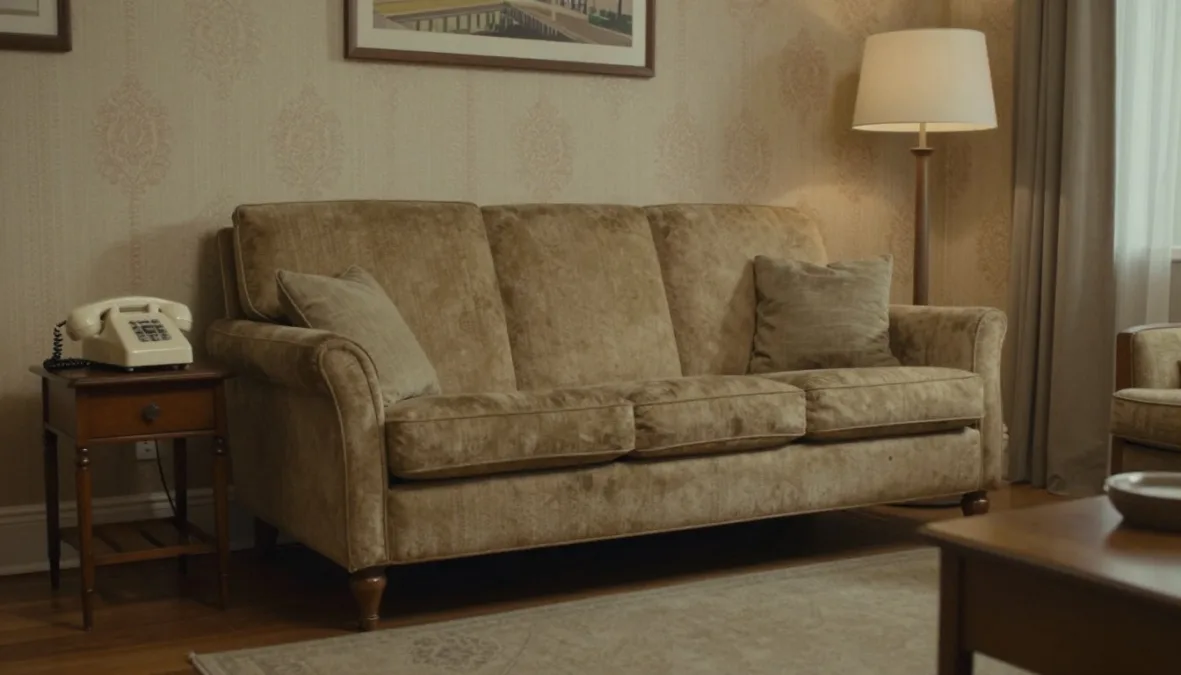
The series confronted racism, class friction, war, and political polarization directly, replacing escapist programming with immediate cultural relevance.
Norman Lear demonstrated that a sitcom could serve as an unflinching mirror to a divided nation without losing laughter. Its historic critical acclaim, fearless scripts, and profound influence on modern television satire secure its high standing.
7. The Golden Girls
Airing from 1985 to 1992 on NBC, The Golden Girls challenged television industry conventions regarding demographic appeal and narrative vitality. Created by Susan Harris, the plot centered on four mature women sharing a home in Miami, Florida, navigating romance, career shifts, and aging.
The production assembled an unmatched quartette of stage and screen veterans: Bea Arthur as the acerbic Dorothy Zbornak, Betty White as the naive Rose Nylund, Rue McClanahan as the glamorous Blanche Devereaux, and Estelle Getty as the razor-tongued Sophia Petrillo. Their rhythm transformed everyday kitchen conversations into masterclasses of verbal delivery.
Lyrical Dialogue
The scripts offered rapid-fire punchlines anchored in distinct comedic perspectives, blending physical slapstick with dry intellectual wit.
Social Bravery
Episodes addressed marriage equality, healthcare challenges, elder care, and social stigmas with direct compassion and dignity.
Decades after its final season, the series sustains immense international popularity and universal appeal across demographics. Its exceptional craft, vibrant female empowerment, and brilliant comedic timing make it an undeniable high point of the genre.
6. Friends
Premiering in 1994 on NBC, Friends defined an entire generation of television and established the gold standard for twentieth-century peer-group comedies. Creators David Crane and Marta Kauffman developed the series around six twenty-somethings forging careers and romantic lives in Manhattan.
The collective chemistry of Jennifer Aniston, Courteney Cox, Lisa Kudrow, Matt LeBlanc, Matthew Perry, and David Schwimmer remains peerless in modern television history. Perry’s innovative cadence as Chandler Bing and Schwimmer’s virtuosic physical comedy as Ross Geller anchored complex comedic situations.

- Unmatched ensemble chemistry that sustained audience investment for ten consecutive seasons.
- Seamless integration of ongoing romantic arcs within self-contained comedic episodes.
Artistic Strengths
- Tremendous cultural ubiquity, influencing fashion, hair trends, and conversational slang worldwide.
- Remarkable streaming longevity that continuously attracts younger generations of viewers.
Global Impact
Few programs in television history achieved comparable international resonance and syndication success. The series perfected the hanging-out sitcom model, making its inclusion on any definitive ranking essential.
5. Cheers
Running from 1982 to 1993 on NBC, Cheers demonstrated how formal discipline and exceptional ensemble writing can turn a single setting into a rich universe. Created by Glen and Les Charles alongside James Burrows, the show explored the daily lives of employees and patrons at a Boston bar where everybody knows your name.
Ted Danson anchored the narrative as recovered alcoholic and former baseball pitcher Sam Malone. The rotating cast featured Shelley Long as Diane Chambers, Rhea Perlman as Carla Tortelli, Nicholas Colasanto as Coach, Woody Harrelson as Woody Boyd, George Wendt as Norm Peterson, John Ratzenberger as Cliff Clavin, and Kelsey Grammer as Dr. Frasier Crane.
The show perfected will-they-won’t-they romantic tension while gracefully replacing central cast members without diminishing script sharpness.
The production maintained sustained critical and commercial excellence across eleven seasons and dozens of awards. Its warm camaraderie, architectural set design, and timeless wit establish it as a monumental achievement in episodic comedy.
4. The Simpsons
Debuting as a standalone series in 1989 on Fox, The Simpsons expanded the creative landscape of both animation and adult satire. Created by Matt Groening and developed alongside James L. Brooks and Sam Simon, the series depicts the daily misadventures of a dysfunctional working-class family in the fictional town of Springfield.
The prolific voice cast—featuring Dan Castellaneta, Julie Kavner, Nancy Cartwright, Yeardley Smith, Hank Azaria, and Harry Shearer—brought hundreds of distinct townspeople to life. Castellaneta’s Homer Simpson transformed into a global comedy icon whose foibles captured universal human weaknesses.

- Unparalleled density of literary references, cinematic parodies, and rapid visual jokes per minute.
- Comprehensive world-building that satirized modern politics, corporate greed, organized religion, and education.
- Redefined animated broadcasting for adult audiences, paving the way for numerous future series.
During its creative peak, the program achieved a level of comic invention that remains virtually unmatched across all media. Its enduring vocabulary, philosophical depth, and international footprint ensure its status among television’s greatest achievements.
3. I Love Lucy
Broadcasting on CBS from 1951 to 1957, I Love Lucy established the foundational architecture of the modern American situation comedy. Created by Jess Oppenheimer, Madelyn Pugh, and Bob Carroll Jr. alongside its stars, the premise chronicled the comical schemes of Lucy Ricardo to enter show business despite the objections of her bandleader husband Ricky.
Lucille Ball provided a masterclass in physical comedy, facial expression, and clowning that remains the standard of the medium. Desi Arnaz played opposite her with musical charm and straight-man precision, supported by Vivian Vance and William Frawley as loyal landlords and conspirators Ethel and Fred Mertz.
Desi Arnaz pioneered the use of three synchronized 35mm cameras before a live studio audience, creating the technical standard for comedy broadcasting.
Beyond technical brilliance, the program delivered brilliant comedic timing in legendary set-pieces like the chocolate factory and the grape stomping vat. It proved the viability of syndication and created an enduring blueprint followed by generations of television producers.
2. M*A*S*H
Airing from 1972 to 1983 on CBS, M*A*S*H brought an unprecedented synthesis of broad humor and tragic reality to prime-time television. Developed by Larry Gelbart from the 1970 feature film and novel, the narrative focused on the staff of the 4077th Mobile Army Surgical Hospital during the Korean War.
Alan Alda starred as Chief Surgeon Hawkeye Pierce, delivering a tour de force performance that balanced anti-authoritarian jokes with profound war weariness. The celebrated cast featured Wayne Rogers, McLean Stevenson, Loretta Swit, Gary Burghoff, Larry Linville, Mike Farrell, Harry Morgan, David Ogden Stiers, and Jamie Farr.
Tonal Balancing
The series transitioned seamlessly between uproarious physical farce and sobering surgical drama within the span of a single scene.
Narrative Audacity
Episodes experimented with real-time clocks, point-of-view perspectives, and documentary interviews, consistently expanding sitcom parameters.
The series finale remains the most-watched broadcast of an episodic scripted series in American history. Its humanitarian heart, social commentary, and emotional bravery elevate it to the highest tier of broadcast art.
1. Seinfeld
Airing on NBC from 1989 to 1998, Seinfeld stands as the crowning creative peak of situational comedy. Created by Larry David and Jerry Seinfeld, the series rejected conventional sentimentality in favor of meticulous urban observations, operating under the famous backstage rule of no hugging, no learning.
The core cast featured Jerry Seinfeld as a fictionalized version of himself, Julia Louis-Dreyfus as the assertive Elaine Benes, Jason Alexander as the neurotic George Costanza, and Michael Richards as the eccentric neighbor Cosmo Kramer. Each performer developed an idiosyncratic comedic language that meshed seamlessly with Larry David’s cynical worldview.
The production mastered the art of interweaving three or four disparate narrative threads, converging them into brilliant, unexpected climaxes in the final minutes.
The show contributed dozens of phrases to the modern English lexicon while demonstrating that character flaws make better comedy than unearned sentiment. Its structural perfection, comedic density, and permanent disruption of broadcast conventions make it the single greatest sitcom ever created.
Cultural Significance Across Sitcom Generations
The Top 10 Sitcoms of All Time trace the broader evolution of communal American storytelling over the last seven decades. From early black-and-white family portraits to post-modern workplace satires, these shows captured shifting social mores with clarity.
Television comedies offer valuable historical records of changing cultural norms, fashion, interpersonal etiquette, and domestic arrangements. When examining these landmark programs across successive eras, distinct creative shifts emerge.
- Evolution from traditional nuclear family settings toward chosen families and professional newsrooms.
- Replacement of moralistic resolutions with sophisticated irony, anti-heroes, and self-referential humor.
- Transitions from standard proscenium stages toward dynamic single-camera and animated formats.
Regardless of the decade, the core appeal remains the intimacy of the format. A half-hour comedy invites characters directly into living spaces, forging deep familiarity between audiences and fictional figures.
Frequently Asked Questions
What defines a situational comedy compared to other television formats?
A situational comedy relies on recurring characters placed in a familiar, fixed environment where humorous complications arise from their interactions. Unlike sketch shows or serialized dramas, episodes traditionally center on self-contained dilemmas resolved within a half-hour structure.
Why did older sitcoms frequently utilize studio laugh tracks?
Early television broadcasts adapted the multi-camera technique from live theatrical stages, recording before studio audiences to capture spontaneous reactions. When technical errors or editing cuts disrupted audio continuity, sound engineers introduced sweetening tracks to maintain an even acoustic presentation.
How does a single-camera sitcom differ from a multi-camera sitcom?
Multi-camera sitcoms film on constructed soundstage sets before a live audience, employing three or four cameras simultaneously with theatrical lighting. Single-camera series film more like cinematic movies on closed sets or real locations, providing creators greater freedom for subtle visual humor and rapid pacing.
What factors determine whether a sitcom ages well over decades?
Longevity depends primarily on timeless character dynamics, universally relatable human neuroses, and sophisticated writing that avoids over-reliance on fleeting pop culture references. Shows built on rich personal flaws and disciplined narrative structures sustain laughter regardless of when they are watched.
The Enduring Magic of Sitcom Television
The finest television comedies transcend their original broadcast schedules by providing audiences with comfort, intellectual delight, and shared cultural references. Whether dissecting societal taboos, finding absurdity in ordinary conversations, or exploring unconventional family bonds, the half-hour comedy continues to mirror our collective humanity. These landmark productions remain essential viewing, showcasing the profound artistic potential of the comedic craft.

Priyanka Pandey
Senior Research Editor · Top10Sense
Priyanka specializes in tech, consumer products, and digital trends. She combines hands-on testing, vendor interviews, and database research to create trustworthy “Top 10” rankings. Her work has been referenced by industry blogs and brand report pages.