
The artificial intelligence revolution has reached unprecedented heights. Global companies are pouring billions into AI technology. This massive investment wave is reshaping entire industries.
Tech giants and enterprise leaders recognize AI as the cornerstone of future growth. Their financial commitments reflect this strategic imperative. The competition for AI dominance has never been more intense.
This comprehensive analysis reveals which companies are leading the charge. We examine their investment strategies, key initiatives, and market positioning. Understanding these leaders helps decode the future of technology and business.
Understanding the AI Investment Landscape
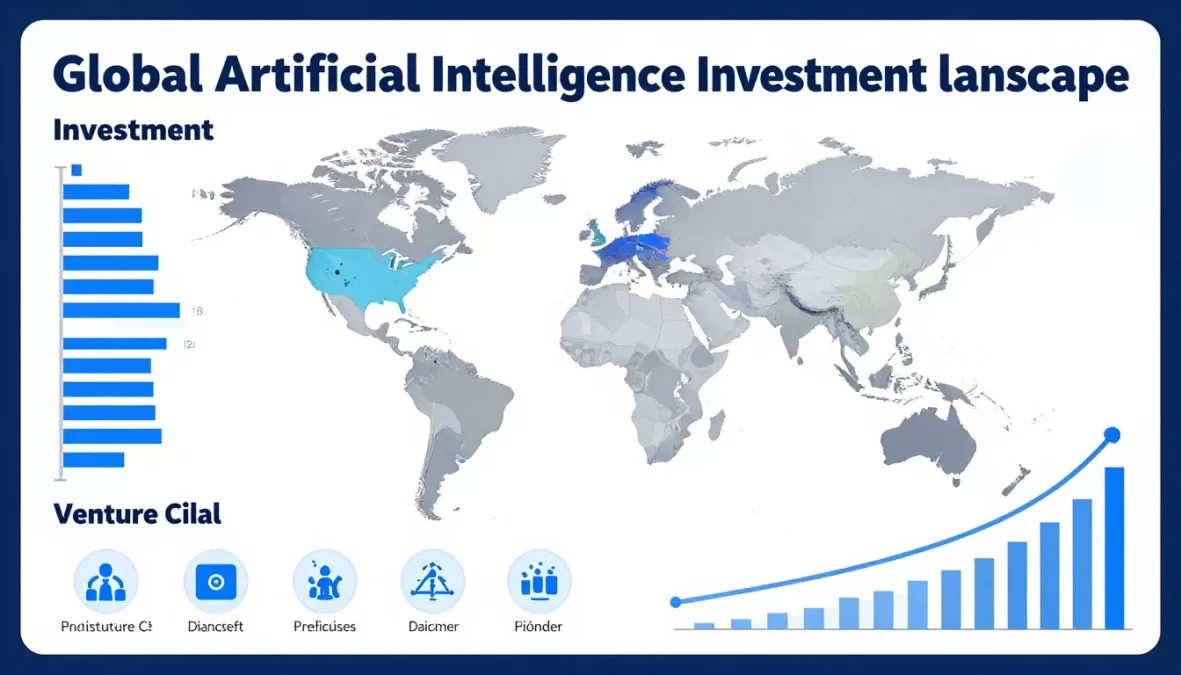
The global market for artificial intelligence has exploded beyond initial projections. Companies invested over $200 billion in AI development during 2024. This figure represents a 35% increase from the previous year.
Investment flows into multiple critical areas. Infrastructure development consumes significant capital. Cloud services and processing power require massive resources.
Enterprise applications drive substantial spending across industries. Companies seek competitive advantages through AI solutions. The technology transforms business operations fundamentally.
Infrastructure Investments
- Data center expansion and modernization
- Specialized AI processing chips
- Cloud computing infrastructure
- Network capacity upgrades
- Energy efficiency solutions
Development Focus Areas
- Foundation models and large language models
- Machine learning applications
- Natural language processing systems
- Computer vision technology
- AI safety and governance frameworks
The concentration of investment among leading companies creates significant market dynamics. These firms shape industry standards and development trajectories. Their strategic decisions influence the entire technology ecosystem.
1. Microsoft – Leading Enterprise AI Investment
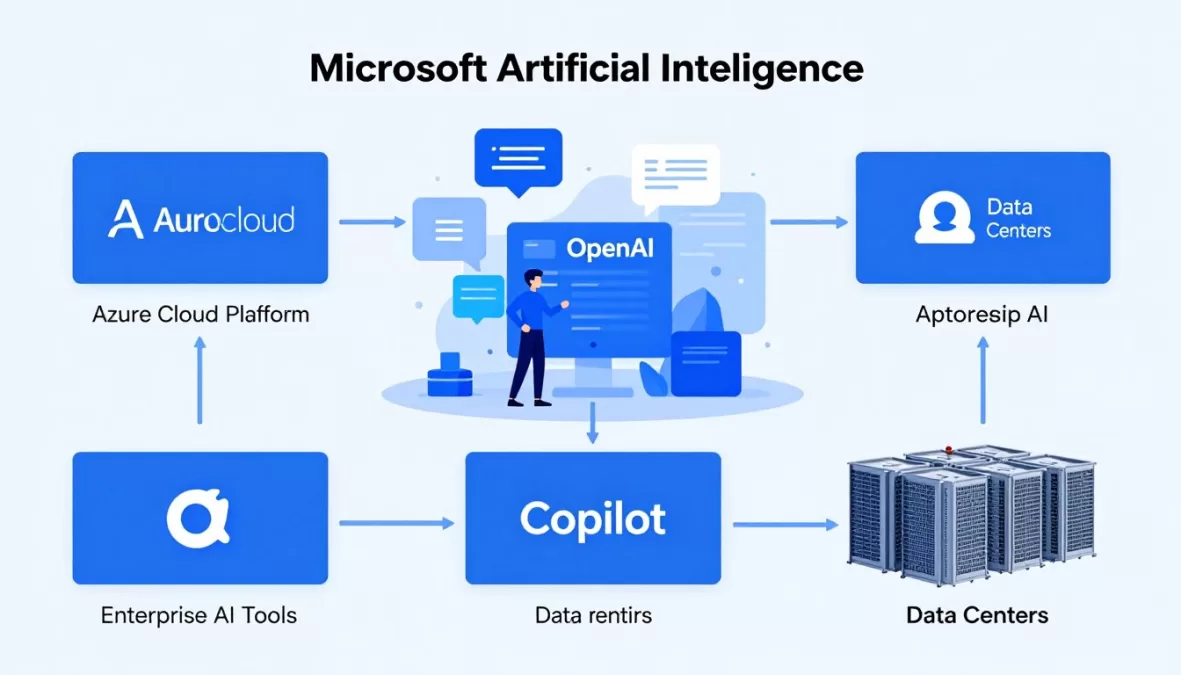
Microsoft stands as the world’s largest artificial intelligence investor. The company committed over $13 billion to OpenAI through 2024. This partnership transformed the entire AI industry landscape.
Azure cloud services form Microsoft’s AI infrastructure backbone. The platform powers countless enterprise applications. Companies worldwide rely on Microsoft’s processing power for their AI solutions.
Key Investment Highlight: Microsoft’s $13+ billion investment in OpenAI represents the largest single AI partnership in history, giving them exclusive access to GPT models and technology integration across all products.
Strategic AI Initiatives
The integration of AI across Microsoft’s product portfolio accelerates rapidly. GitHub Copilot revolutionizes software development. Microsoft 365 Copilot transforms workplace productivity.
Azure AI services provide comprehensive solutions for enterprise clients. The platform offers pre-built models and custom development tools. Businesses of all sizes access cutting-edge AI capabilities.
- OpenAI partnership and GPT integration
- Azure AI infrastructure expansion
- Copilot suite across all products
- Enterprise AI solutions development
- AI research laboratory investments
- Responsible AI framework development
Future Investment Strategy
Microsoft plans continued aggressive investment through 2025 and beyond. The company focuses on infrastructure expansion. New data centers will support growing AI demands.
The strategy emphasizes enterprise adoption and practical applications. Microsoft positions AI as essential business infrastructure. Their investment 2025 roadmap includes enhanced cloud services and model development.
2. Alphabet (Google) – AI Research Pioneer
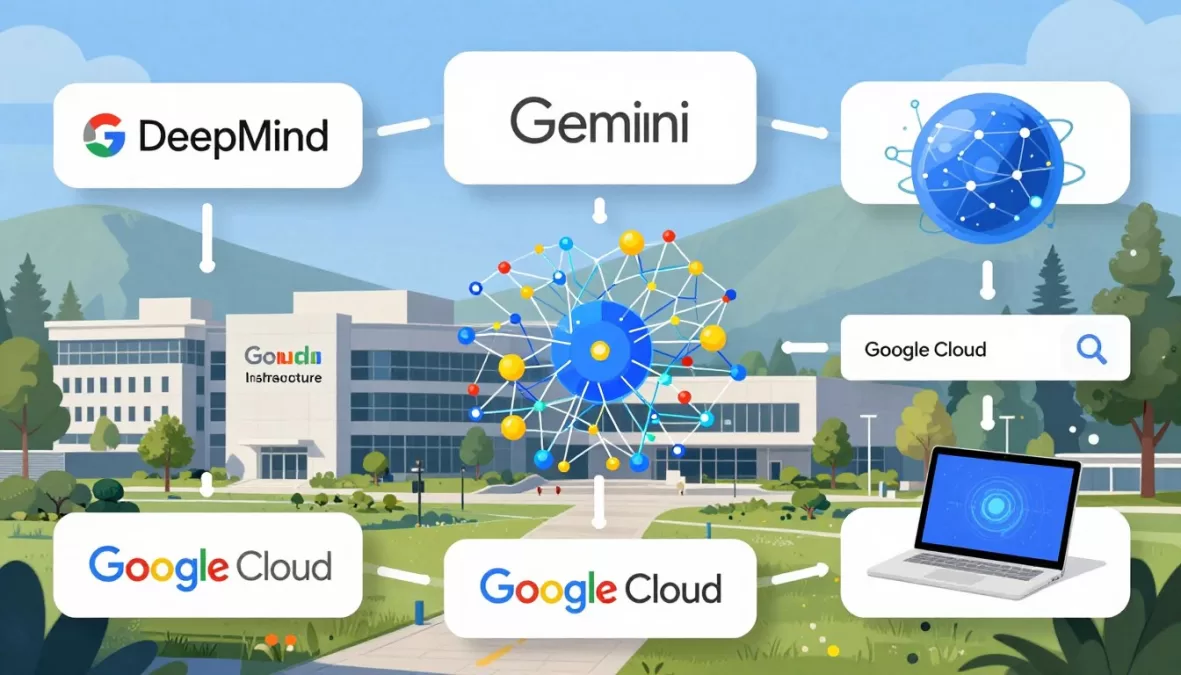
Alphabet invests approximately $40 billion annually in research and development. A substantial portion targets artificial intelligence advancement. The parent company maintains multiple AI-focused divisions.
Google’s AI investments span decades of continuous innovation. The company pioneered fundamental machine learning technologies. Their research papers shape the entire field’s direction.
DeepMind and Research Excellence
DeepMind represents one of technology’s most valuable acquisitions. The London-based research laboratory pushes AI boundaries continuously. Their breakthroughs in protein folding changed scientific research forever.
The development of AlphaFold demonstrated AI’s transformative potential. Scientists worldwide now access protein structure predictions. This advancement accelerates drug discovery and medical research.
Gemini Model Development
Google’s Gemini model competes directly with GPT technology. The company invested billions in foundation models development. Their approach emphasizes multimodal capabilities and integration.
- DeepMind research operations
- Gemini model development
- Google Cloud AI services
- Search algorithm enhancement
- Tensor Processing Units (TPU) manufacturing
- YouTube AI integration
- Android AI features
- Quantum AI research
Google Cloud provides enterprise customers with advanced AI tools. The platform competes aggressively in the business market. Companies leverage Google’s infrastructure for their AI applications.
3. Amazon – Cloud and Commerce AI Leader
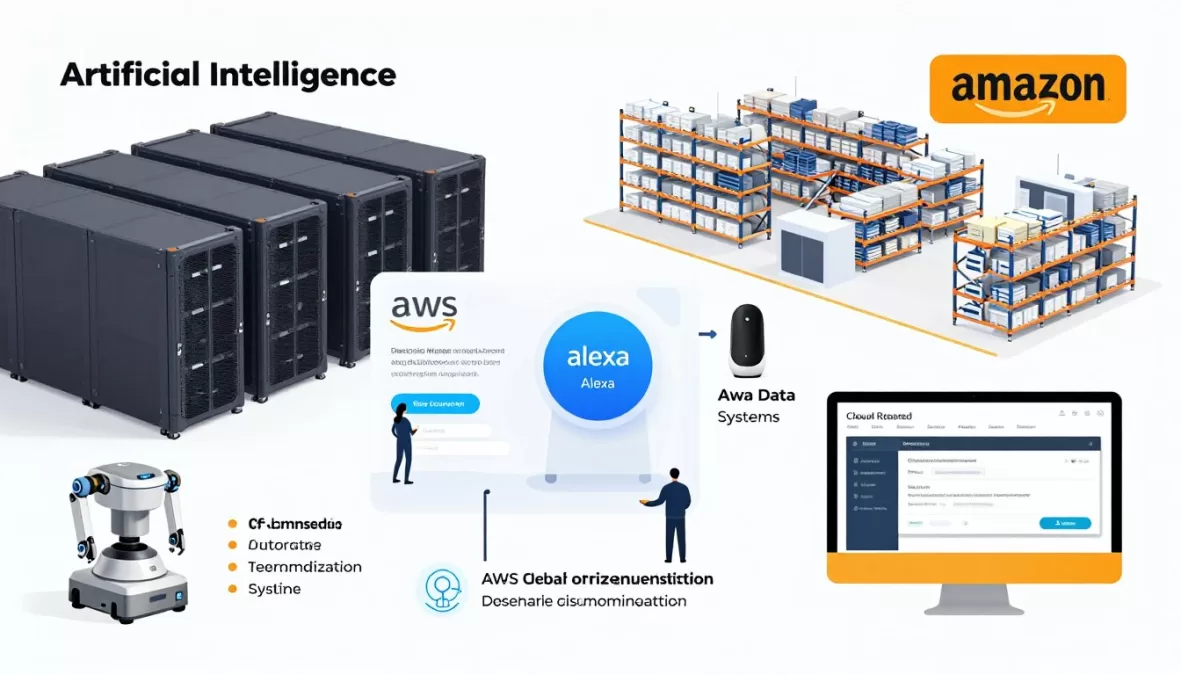
Amazon’s AI investment exceeds $30 billion annually across multiple divisions. AWS cloud services dominate the infrastructure market. The company revolutionizes retail through artificial intelligence applications.
The e-commerce giant applies AI throughout its entire operation. Warehouse automation relies on sophisticated robotics. Delivery optimization uses advanced algorithms continuously.
AWS AI Services Leadership
Amazon Web Services provides the foundation for countless AI applications. The platform serves millions of users globally. Companies build their AI solutions on AWS infrastructure.
AWS offers comprehensive machine learning tools and services. SageMaker simplifies model development and deployment. Businesses of all sizes access enterprise-grade AI capabilities.
- AWS infrastructure expansion and AI services
- Anthropic partnership and investment
- Alexa voice assistant advancement
- Fulfillment center automation technology
- Recommendation engine development
- Amazon Go cashier-less store technology
Retail AI Innovation
Amazon’s recommendation systems generate billions in additional revenue. The technology predicts customer preferences with remarkable accuracy. Shopping experiences become increasingly personalized.
The company invested heavily in Anthropic’s Claude AI model. This strategic partnership diversifies Amazon’s AI capabilities. The investment strengthens their competitive position against Microsoft and Google.
Download: 2025 AI Investment Landscape Report
Get exclusive access to our comprehensive 45-page report analyzing AI investment trends, emerging technologies, market forecasts, and strategic insights from industry leaders. Trusted by Fortune 500 companies.
4. Meta (Facebook) – Social AI and Metaverse Investment
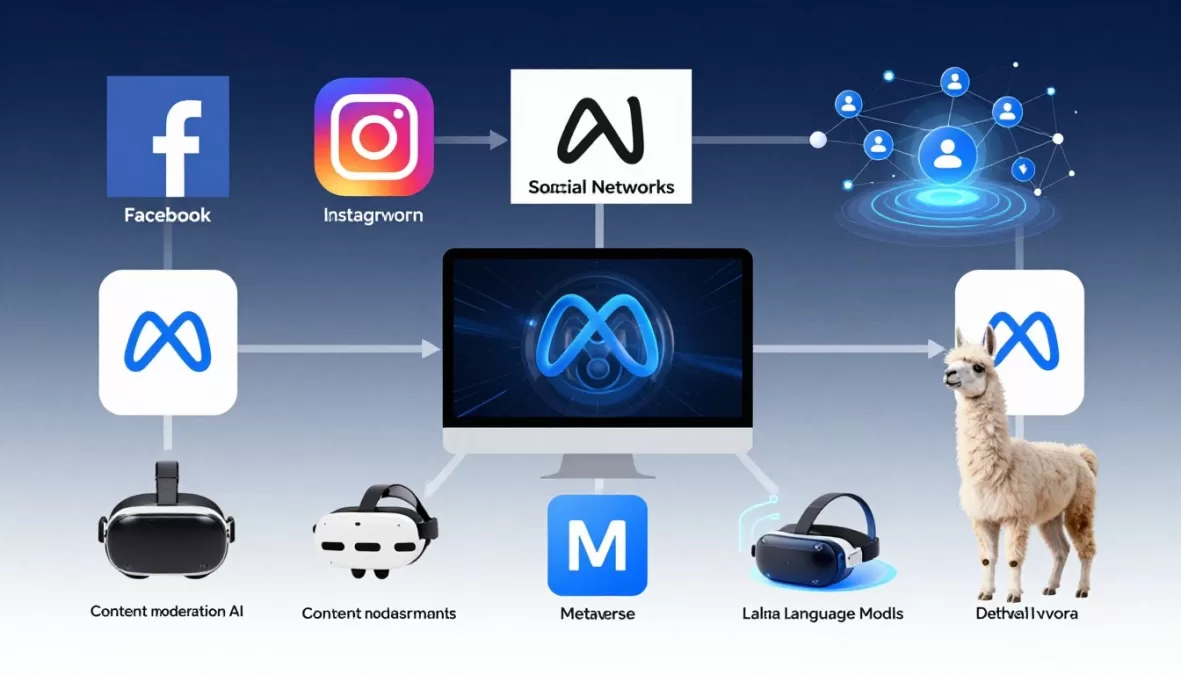
Meta invests over $20 billion annually in artificial intelligence and reality labs. The company renamed itself to reflect metaverse ambitions. AI forms the foundation of their future vision.
Facebook and Instagram rely entirely on AI algorithms. Content recommendation drives user engagement. The technology analyzes billions of interactions daily.
Open Source AI Strategy
Meta released Llama language models as open-source technology. This strategy differs dramatically from competitors. The company believes open development accelerates innovation.
Thousands of developers now build applications using Llama models. The ecosystem grows rapidly around Meta’s technology. This approach creates indirect competitive advantages.
- Llama foundation models development
- Reality Labs and metaverse AI
- Content moderation systems
- Recommendation algorithm advancement
- Virtual reality AI integration
- AI research laboratory expansion
Reality Labs Investment
Meta’s Reality Labs division consumes billions in annual investment. The technology requires sophisticated AI for immersive experiences. Virtual worlds demand real-time processing and intelligence.
The company develops AI for social interaction in virtual spaces. Natural language processing enables realistic conversations. Computer vision creates seamless augmented reality experiences.
5. Apple – On-Device AI Innovation

Apple approaches artificial intelligence differently from cloud-focused competitors. The company emphasizes on-device processing and privacy. Their investment strategy prioritizes user experience over market share.
The development of Apple Silicon enables sophisticated AI capabilities. Neural engines process machine learning tasks efficiently. Users benefit from AI features without compromising privacy.
Apple Silicon and AI Integration
Apple designs custom chips specifically for AI workloads. The M-series processors include dedicated neural engines. This hardware enables real-time machine learning on personal devices.
Siri improvements continue through ongoing investment. The voice assistant becomes more capable with each iOS release. Natural language understanding advances steadily.
Privacy-First Approach: Apple’s AI strategy prioritizes on-device processing, keeping personal data secure while delivering advanced features. This differentiates them from cloud-dependent competitors.
- Apple Silicon neural engine development
- Siri natural language processing
- On-device machine learning frameworks
- Camera computational photography AI
- Health monitoring algorithms
- Privacy-preserving AI technologies
The camera systems showcase Apple’s AI excellence. Computational photography produces stunning images automatically. Users capture professional-quality photos without technical knowledge.
6. NVIDIA – AI Hardware Infrastructure Dominance
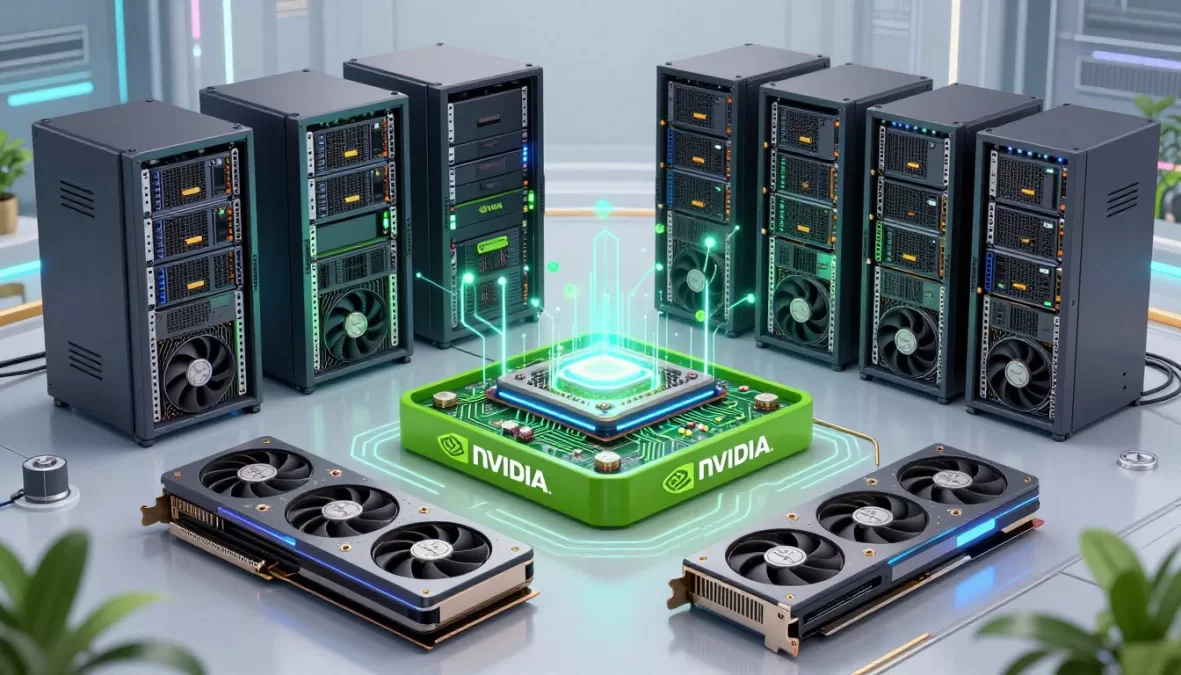
NVIDIA controls over 80% of the AI chip market. The company’s graphics processing units became essential for AI training. Their technology powers most artificial intelligence applications worldwide.
Investment in research and development exceeds $7 billion annually. NVIDIA continuously advances processing capabilities. Each new generation delivers exponential performance improvements.
GPU Market Leadership
The H100 and upcoming chips set industry standards. Companies worldwide queue for NVIDIA hardware. Demand far exceeds current production capacity.
Data centers depend entirely on NVIDIA infrastructure. Cloud providers purchase billions in processors annually. The company’s technology enables the AI revolution fundamentally.
- Advanced GPU architecture development
- CUDA software platform maintenance
- Data center solutions and services
- AI software tools and frameworks
- Automotive AI system development
- Healthcare imaging AI applications
Beyond Hardware Sales
NVIDIA expands into complete AI solutions. The company offers software platforms and consulting services. This strategy creates deeper customer relationships.
Partnerships with every major technology company strengthen market position. NVIDIA’s ecosystem becomes increasingly comprehensive. The firm evolves from hardware vendor to AI platform provider.
7. Tesla – Autonomous Driving AI Pioneer
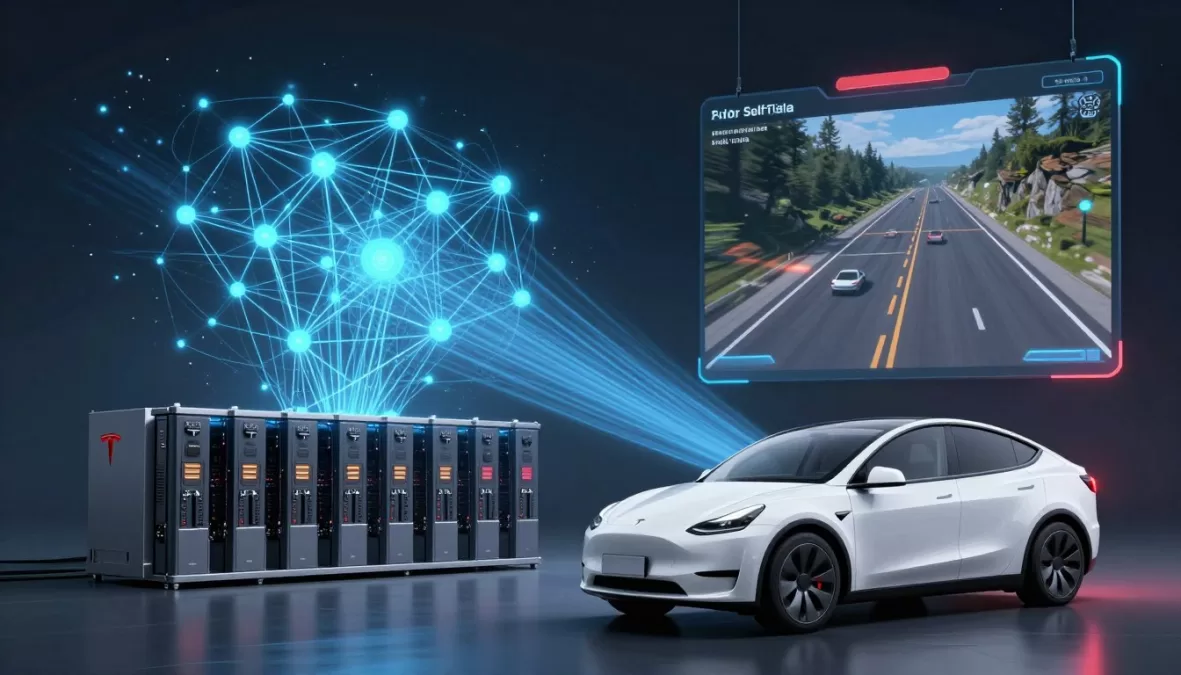
Tesla invests billions specifically in autonomous driving artificial intelligence. The company built custom AI infrastructure for vehicle training. Their approach differs fundamentally from traditional automotive manufacturers.
Full Self-Driving technology requires massive computational resources. Tesla’s fleet provides real-world training data continuously. This advantage accelerates development significantly.
Dojo Supercomputer Development
Tesla designed Dojo specifically for AI training at scale. The custom supercomputer processes petabytes of driving data. This infrastructure investment exceeds $1 billion.
The system trains neural networks using real-world driving scenarios. Tesla’s approach emphasizes vision-based autonomy. Cameras replace expensive sensor arrays used by competitors.
- Dojo supercomputer construction and operation
- Full Self-Driving neural network development
- Vision-based autonomous driving technology
- Fleet learning data collection
- Manufacturing automation AI
- Battery optimization algorithms
Manufacturing facilities incorporate extensive AI automation. Robots work alongside AI systems for quality control. Production efficiency improves continuously through machine learning.
8. Taiwan Semiconductor Manufacturing Company (TSMC)
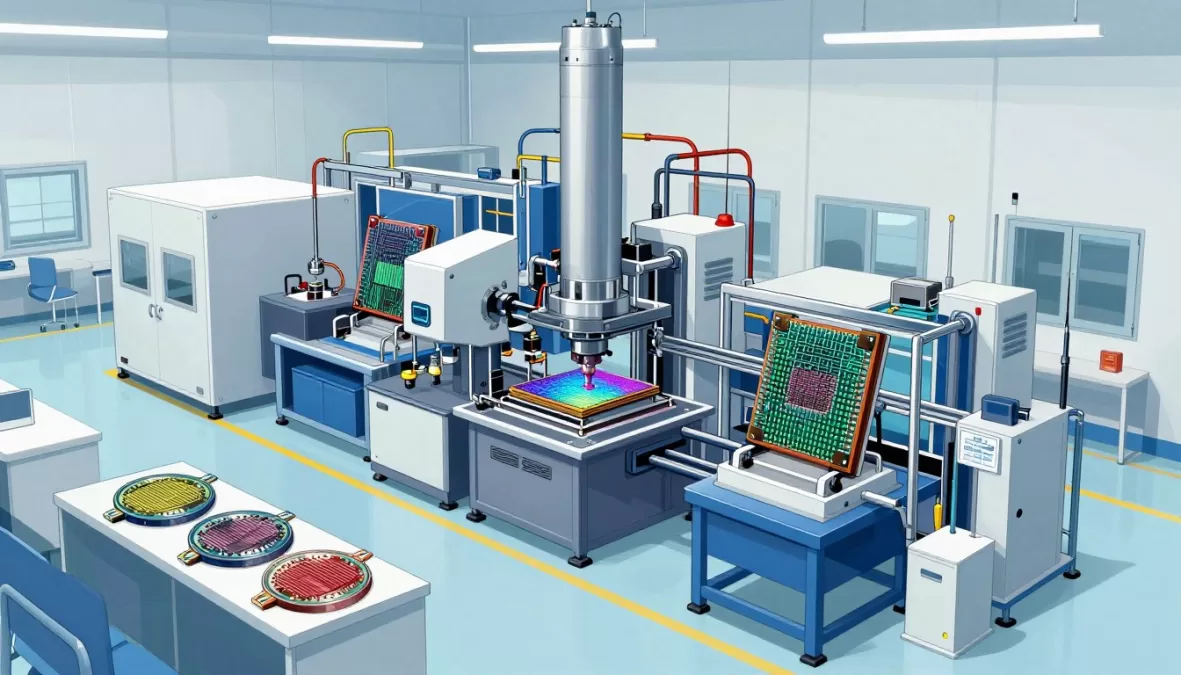
Taiwan Semiconductor Manufacturing Company produces chips for every major AI company. The world’s largest semiconductor manufacturer invests over $40 billion annually. Their advanced fabrication capabilities enable cutting-edge AI processors.
TSMC manufactures processors for Apple, NVIDIA, AMD, and countless others. The company’s technology leadership proves essential for AI advancement. Without TSMC’s capabilities, modern AI would not exist.
Advanced Process Technology
The company leads in nanometer-scale manufacturing processes. Their 3nm technology sets industry standards. Competitors struggle to match TSMC’s technical achievements.
Investment in next-generation fabrication plants continues aggressively. New facilities in Arizona expand production capacity. The strategy addresses supply chain concerns and geopolitical considerations.
- Advanced 3nm and 2nm process development
- Fabrication facility expansion globally
- AI chip manufacturing specialization
- Research and development in new materials
- Partnership with major technology companies
- Supply chain infrastructure investment
Taiwan Semiconductor’s parent company maintains strategic importance for global technology. The firm’s processing power enables the entire AI industry. Their investment 2025 plans include continued capacity expansion.
9. Samsung – Diversified AI Technology Investment
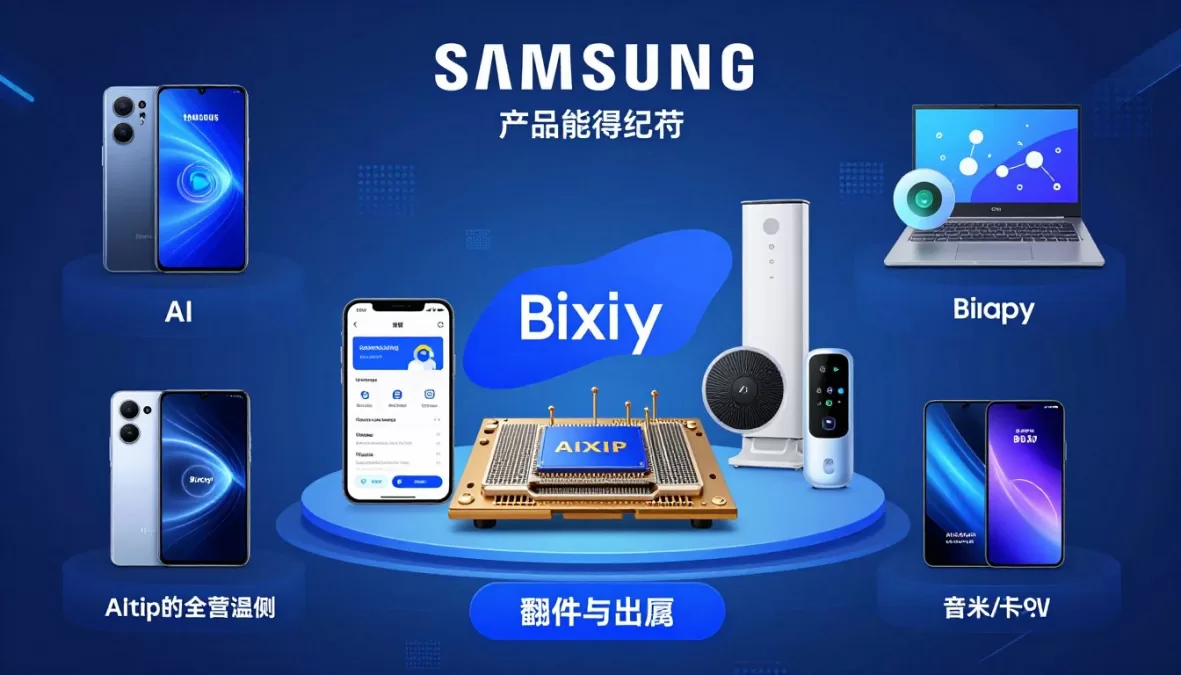
Samsung invests approximately $22 billion annually in research and development. The Korean conglomerate pursues AI across consumer electronics and semiconductors. Their diversified approach covers the entire technology stack.
The company manufactures AI chips while developing consumer applications. This vertical integration provides unique competitive advantages. Samsung competes simultaneously with multiple technology giants.
Semiconductor and Consumer AI
Samsung’s semiconductor division competes directly with TSMC and Intel. The firm produces memory chips essential for AI systems. Their manufacturing capacity serves global demand.
Consumer products incorporate increasingly sophisticated AI features. Smartphones use machine learning for photography and performance. Smart home devices learn user preferences automatically.
- AI chip design and manufacturing
- Bixby voice assistant development
- Smartphone AI feature integration
- Smart home ecosystem intelligence
- Display technology AI enhancement
- 5G and AI convergence research
The company’s investment strategy emphasizes practical consumer applications. AI improves everyday product experiences. This approach differentiates Samsung from pure enterprise-focused competitors.
10. Alibaba – Chinese AI and Cloud Investment Leader
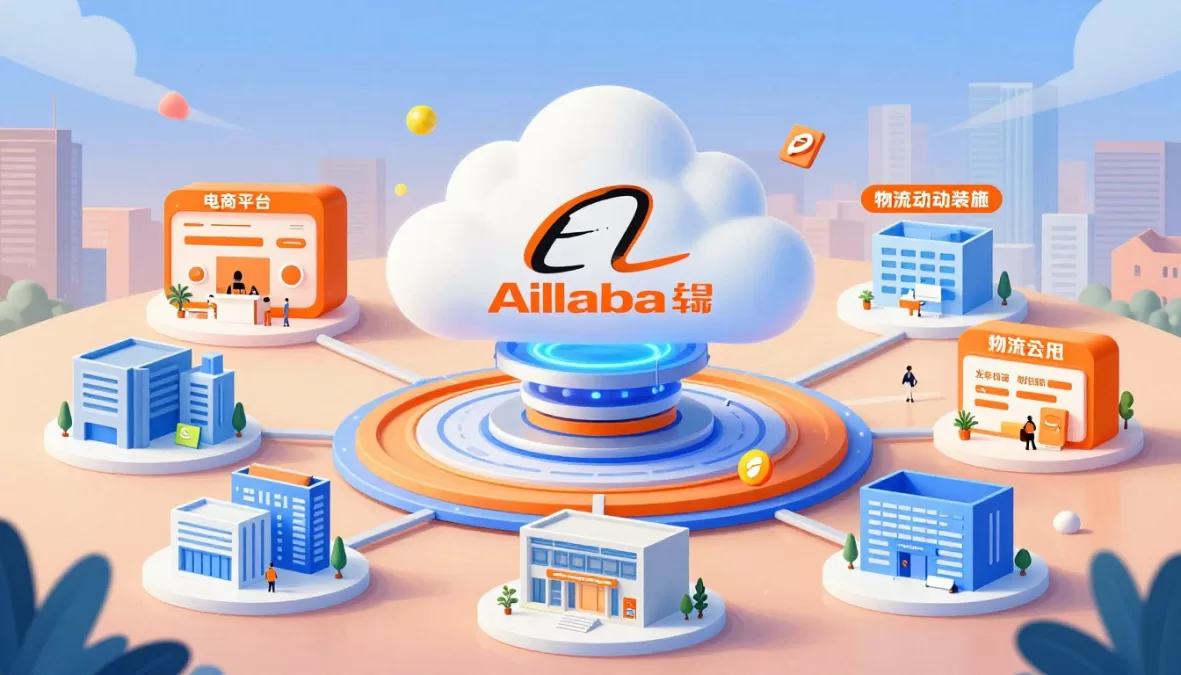
Alibaba represents China’s largest artificial intelligence investor. The company spends over $15 billion annually on technology development. Their cloud services dominate the Asian market.
E-commerce operations leverage AI extensively for recommendations and logistics. Alibaba’s technology serves billions of transactions annually. The scale of their operations demands sophisticated artificial intelligence.
Alibaba Cloud Expansion
The cloud division provides AI infrastructure throughout Asia. Businesses rely on Alibaba’s platform for machine learning applications. The service competes with AWS and Azure in regional markets.
The company developed proprietary language models for Chinese applications. These foundation models serve unique linguistic and cultural requirements. Investment in natural language processing continues aggressively.
- Alibaba Cloud AI services expansion
- E-commerce recommendation systems
- Logistics optimization algorithms
- Tongyi Qianwen language model development
- Payment fraud detection AI
- Smart retail technology innovation
Alibaba’s position in the world’s largest consumer market provides enormous advantages. Data from millions of users trains increasingly sophisticated models. The company’s AI capabilities continue advancing rapidly.
Common Trends Among Top AI Investors
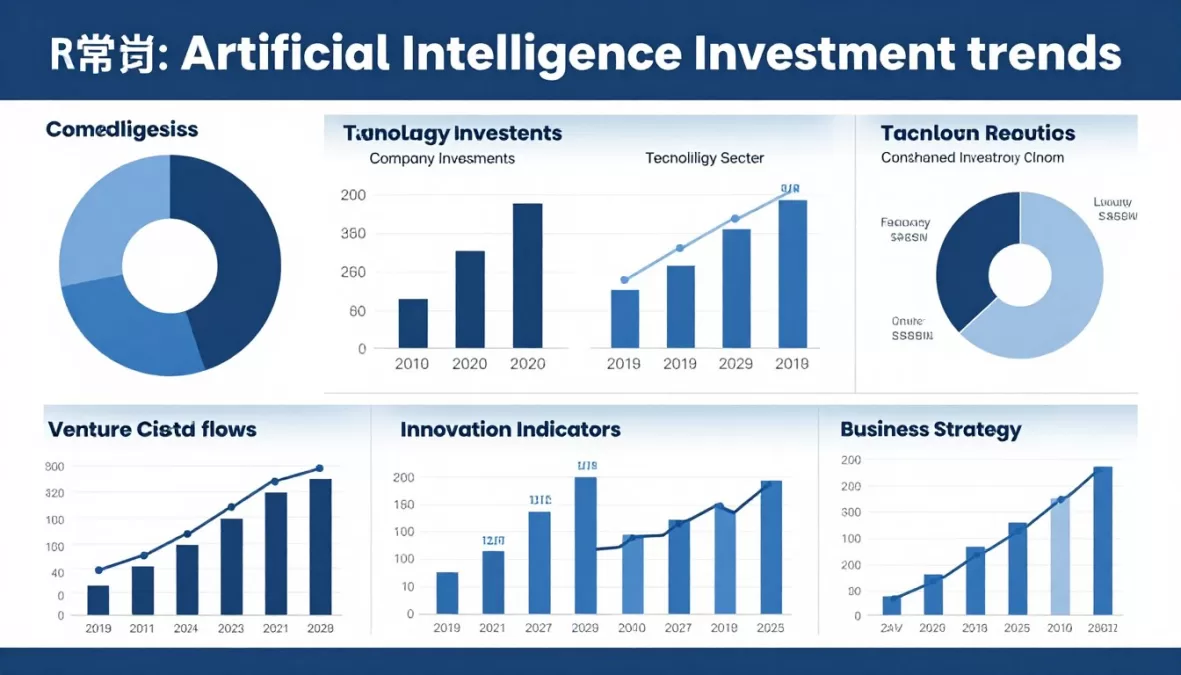
Analysis of these leading companies reveals consistent investment patterns. Understanding these trends provides strategic insights. The commonalities define the AI industry’s future direction.
Infrastructure as Foundation
Every major investor prioritizes infrastructure development. Data centers and processing power require enormous capital. Companies recognize that AI capabilities depend fundamentally on computational resources.
Cloud services form the backbone of modern AI deployment. Businesses demand scalable, reliable infrastructure. The largest firms invest billions in data center construction and expansion.
Infrastructure Focus
- Data center expansion
- Processing power increases
- Network capacity upgrades
- Energy efficiency improvements
Research Investment
- Foundation model development
- Algorithm advancement
- Safety research
- Academic partnerships
Application Development
- Enterprise solutions
- Consumer products
- Industry-specific tools
- Integration platforms
Strategic Partnerships and Acquisitions
Leading companies pursue partnerships aggressively. Microsoft’s OpenAI relationship exemplifies this strategy. Collaborations accelerate development and market penetration.
Acquisitions bring talent and technology quickly. Companies purchase AI startups regularly. This strategy supplements internal development efforts effectively.
Vertical Integration Strategies
Many investors pursue complete technology stacks. Control over hardware, software, and services provides competitive advantages. Companies like Apple and Samsung demonstrate this approach’s value.
Vertical integration enables optimization across the entire product ecosystem. Performance improves when companies control every layer. This strategy requires massive capital investment but delivers long-term benefits.
Market Implications and Future Outlook

Concentrated AI investment among these giants creates significant market dynamics. Their combined spending shapes the entire industry’s trajectory. Smaller companies struggle to compete against such resources.
The competitive advantage gap widens continuously. Companies without substantial AI investment face existential challenges. Every industry sector feels this technology’s transformative impact.
Investment Concentration Concerns
Critics worry about technology concentration among few companies. These firms wield enormous influence over AI development. Their decisions affect billions of users and countless businesses.
Regulatory scrutiny increases as AI capabilities expand. Governments worldwide consider oversight frameworks. The balance between innovation and regulation remains contentious.
Emerging Opportunities
Despite concentration, opportunities exist throughout the ecosystem. Specialized applications serve niche markets effectively. Smaller firms compete through focus and expertise.
Open-source models democratize access to AI technology. Developers worldwide build innovative applications. The software layer remains accessible despite infrastructure concentration.
Growth Drivers
- Enterprise digital transformation
- Consumer AI adoption
- Healthcare applications
- Autonomous systems deployment
- Scientific research acceleration
Investment 2025 Outlook
Analysts project continued investment growth through 2025. Companies will spend over $300 billion on AI technology. Infrastructure expansion remains the primary focus.
Competition intensifies as capabilities mature. Market leaders defend their positions aggressively. New entrants must offer differentiated value propositions.
Global Competition Dynamics
Geographic competition shapes investment strategies significantly. United States companies lead current spending. Chinese firms invest heavily to close the technology gap.
European companies focus on specific niches and regulatory frameworks. Different regions pursue distinct AI strategies. This geographic diversity creates varied development paths.
The Future of AI Investment
The Top 10 Companies Investing the Most in AI demonstrate unprecedented financial commitment. Their combined investment exceeds hundreds of billions annually. This capital fuels rapid technological advancement.
These technology leaders shape artificial intelligence’s future fundamentally. Their strategic decisions influence entire industries. Understanding their approaches provides crucial business insights.
The concentration of AI investment raises important questions about market structure. However, the technology’s transformative potential justifies massive capital deployment. Companies investing today position themselves for tomorrow’s opportunities.
Artificial intelligence investment will continue accelerating through this decade. The companies profiled here lead this transformation. Their strategies reveal where technology and business converge most powerfully.
Ready to Develop Your AI Investment Strategy?
Our enterprise AI consulting team helps organizations navigate the complex artificial intelligence landscape. We provide strategic guidance, vendor evaluation, implementation planning, and ROI optimization for companies investing in AI technology.
Consultation Includes:
- AI readiness assessment
- Technology stack recommendations
- Vendor comparison analysis
- Implementation roadmap development
- ROI projection modeling
- Risk mitigation strategies

Priyanka Pandey
Senior Research Editor · Top10Sense
Priyanka specializes in tech, consumer products, and digital trends. She combines hands-on testing, vendor interviews, and database research to create trustworthy “Top 10” rankings. Her work has been referenced by industry blogs and brand report pages.