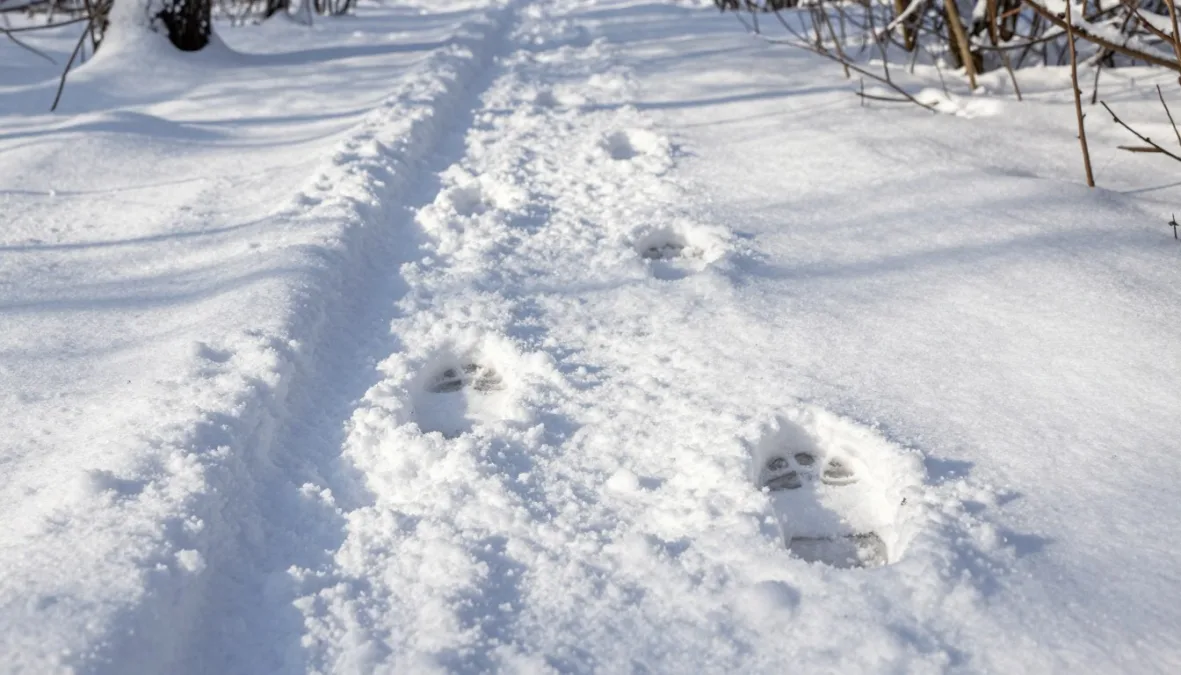
Fresh powder and packed drifts offer an ideal canvas for observing wild animal activity during cold months. Identifying animal tracks in snow requires examining print size, claw presence, toe counts, and overall gait patterns across the winter landscape.
Substrate moisture, snow depth, and freeze-thaw cycles alter how prints settle in the ground. Clear identification depends on matching individual foot imprints with broader trail patterns and nearby habitat cues.
Reading Animal Tracks in Snow and Winter Conditions
Snow conditions alter footprints rapidly, turning sharp toe prints into broad, unidentifiable depressions within hours. Cold, dry powder collapses inward around a footstep, while wet packing snow preserves sharp outlines of pads, nails, and dewclaws.
Sunlight, thermal changes, and blowing wind distort tracks after an animal passes through. Direct sunlight melts track edges, expanding a domestic cat imprint until it resembles a bobcat print, while wind fills depressions and rounds off crisp ridges. Observers must assess whether a depression represents fresh passage or an older, enlarged footprint.
Inspect tracks protected under conifer canopies or along shaded north-facing slopes where snow crystals stay frozen. These sheltered areas preserve the original boundaries, pad contours, and claw marks without thermal melting.
Canid Footprints: Coyote, Red Fox, and Domestic Dog
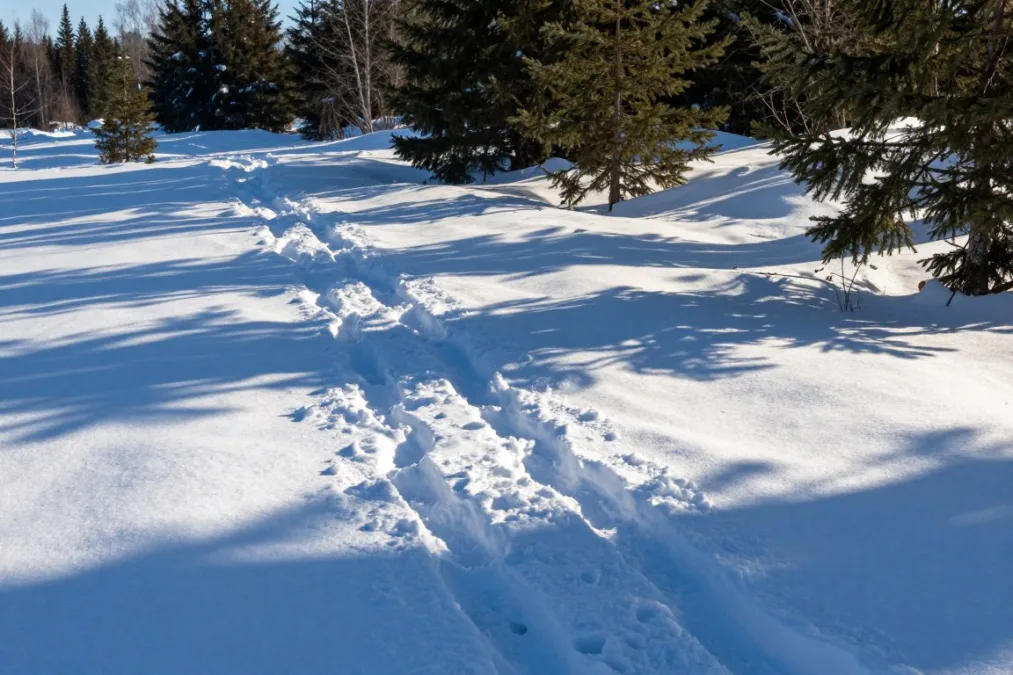
Canine footprints feature four toes on both front and hind feet, prominent non-retractable claw marks, and a single lobes-up heel pad. Telling wild canids from domestic dogs requires observing trail trajectory, negative space between pads, and footprint symmetry.
Coyote and fox trails show purpose and energy conservation, moving in straight, deliberate lines through snowy fields. Domestic dogs meander, loop back on their steps, and show wide, splayed toes with rounded footprints. Coyotes produce oval prints measuring 2.5 to 3.5 inches long, while red foxes leave dainty, fur-padded impressions roughly 2 to 2.5 inches in length with a distinct transverse ridge of hair in the heel impression.
- Oval print outline with narrow outer toes tightly aligned forward
- Clear X-shaped negative space between the central pad and toe pads
- Linear straddle with rear feet landing directly in front prints
- Claw marks positioned sharp, close, and pointing straight ahead
Wild Canid Traits (Coyote & Fox)
- Rounder print profile with splayed outer toes angled outward
- Heel pad overlaps the plane of the outer toes, blocking the X-pattern
- Wandering, irregular gait showing wide straddle and side-to-side steps
- Claw marks blunt, thick, and splayed outward from the foot
Domestic Dog Traits
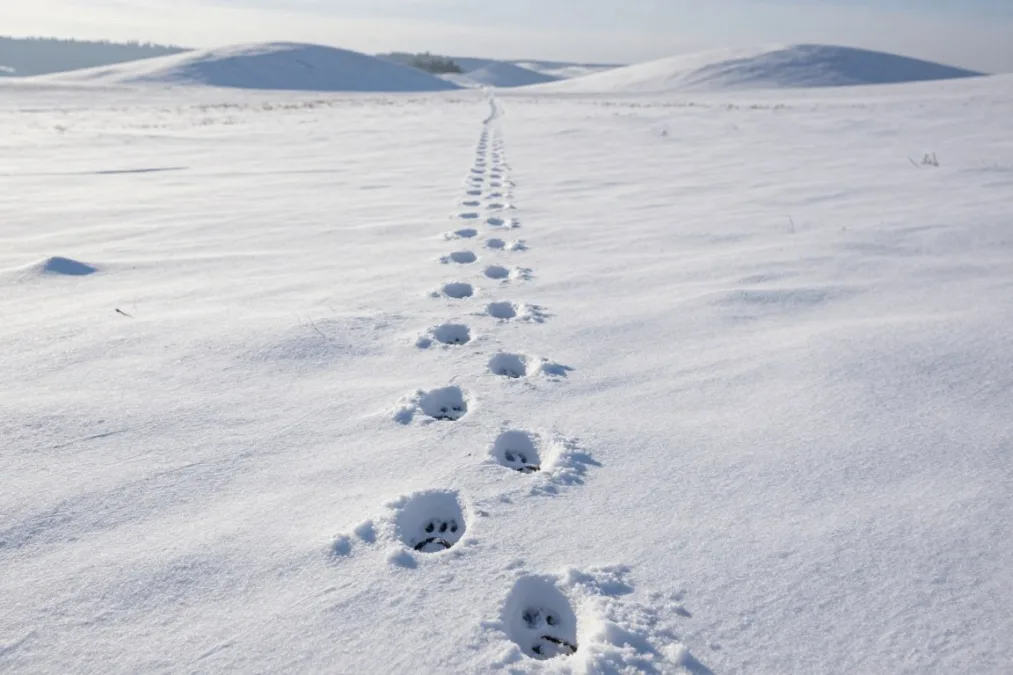
Felid Prints: Bobcat and Mountain Lion
Wild feline tracks display round silhouettes, four toes on each foot, and a broad heel pad with two lobes at the top and three lobes at the base. Unlike canids, cats walk with retracted claws, meaning clear prints rarely show any nail marks.
Bobcat tracks measure between 1.5 and 2.5 inches wide, appearing common along rocky ledges, brush piles, and frozen stream banks. Mountain lion tracks look significantly larger, measuring 3 to 4.5 inches across, with wide-set toes arranged asymmetrically like human fingertips. Both species utilize direct registering, where the hind foot steps neatly into the imprint left by the front foot to save energy and reduce noise in deep snow.
- Leading toe placement creates an asymmetrical alignment that distinguishes cat tracks from symmetrical dog tracks.
- The trapezoidal heel pad dominates the track, taking up more than half the total print area.
- The negative space between the heel pad and toes forms a curved, C-shaped crest rather than an X-shape.
- Step length remains consistent, showing deliberate walking or stalking gaits across frozen terrain.
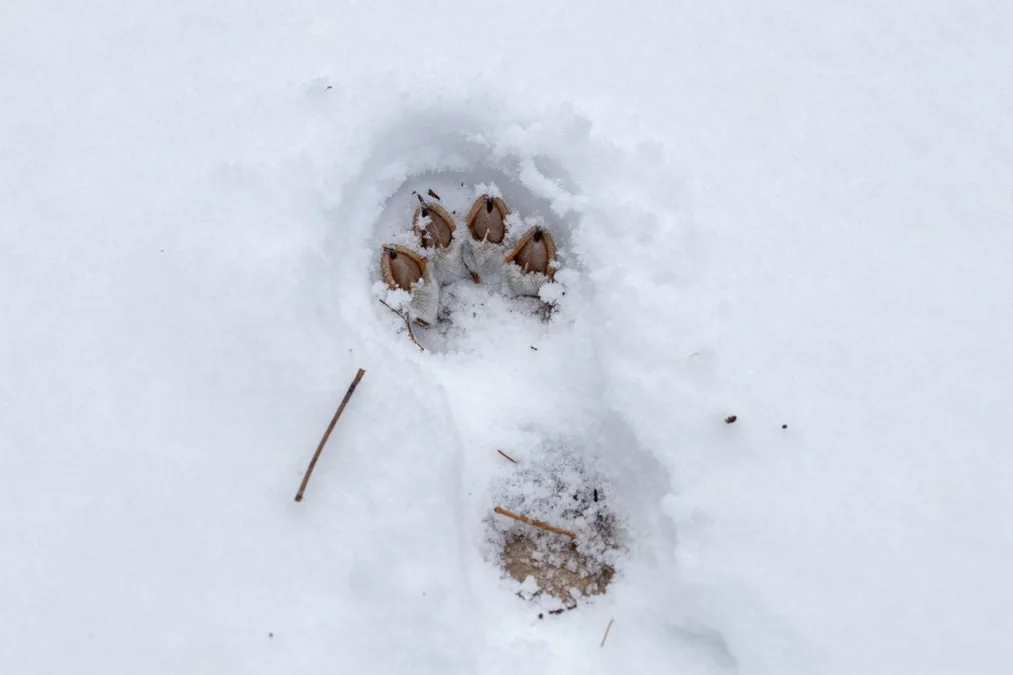
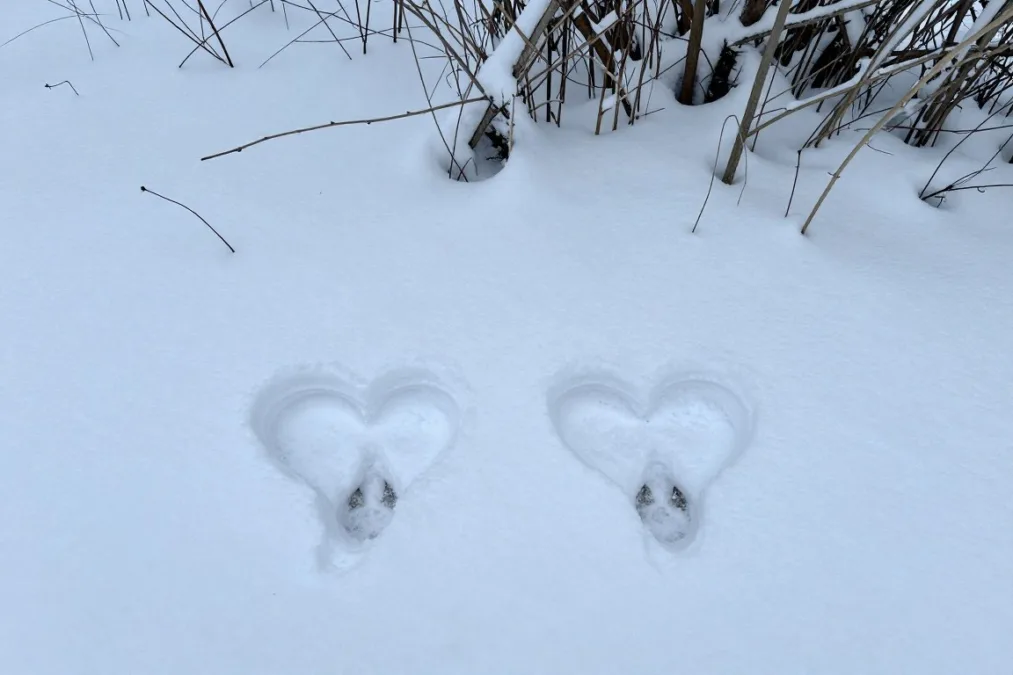
Hoofed Wildlife: White-Tailed Deer Prints
White-tailed deer leave two-toed cloven hoof impressions that rank among the most common winter prints in woods and suburban borders. In firm conditions, the track forms an upside-down heart shape measuring 2 to 3.5 inches long, pointed sharply at the front and rounded at the base.
Snow depth alters how deer tracks appear. In shallow powder, the hooves remain tight and parallel, but in deep drifts, the hooves splay outward to gain purchase, creating a wide V-shape. Deep snow also forces the two small, round dewclaws behind the hoof to press into the snow, leaving twin dots behind the main impression that casual observers sometimes mistake for wild boar tracks.
Look for drag marks between hoof prints in deep snow. Deer frequently drag their hooves forward when moving through crusty drifts, creating continuous parallel grooves connecting individual footsteps.
Small Mammals: Cottontail Rabbit and Tree Squirrel
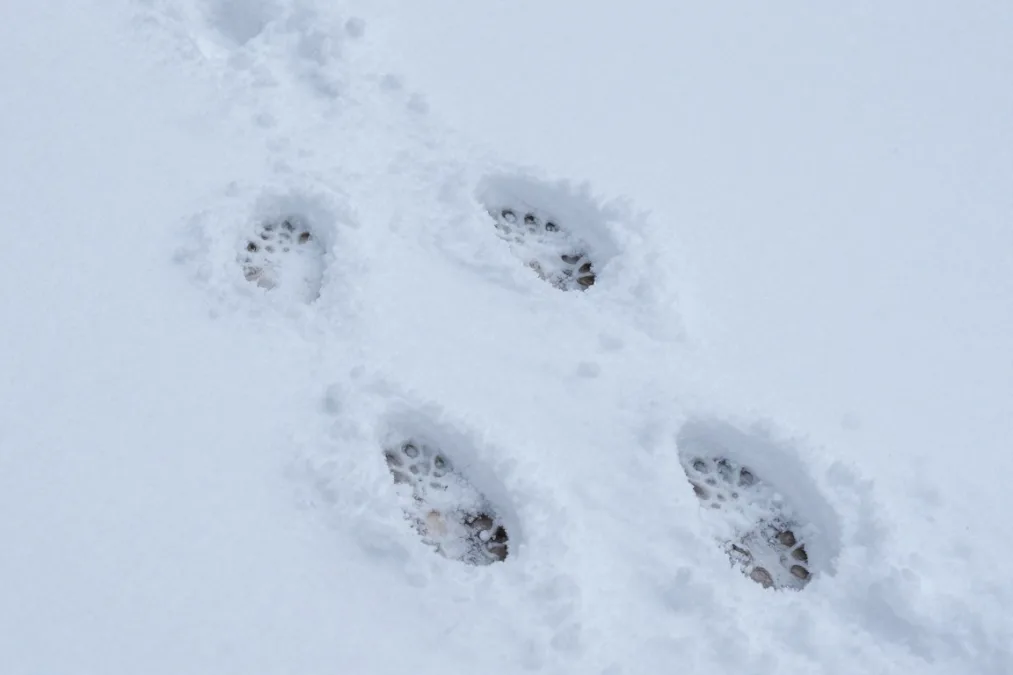
Rabbits and tree squirrels travel with a bounding or galloping gait, placing their smaller front feet down first before swinging their larger hind feet ahead. This movement leaves track groupings where the rear foot imprints appear in front of the front foot imprints.
Telling these two common backyard tracks apart relies on comparing front foot placement and habitat direction. Cottontail rabbits place their small, staggered front feet down one behind the other, followed by long, parallel hind feet. Tree squirrels land with their front feet side by side in pairs, producing a squarish block pattern, and their trails invariably lead directly to the base of a tree trunk.
Cottontail Rabbit Patterns
Front foot imprints sit staggered behind two long, narrow hind foot marks. The overall track cluster forms an elongated Y-shape pointing in the direction of travel.
Tree Squirrel Patterns
Front feet land side by side directly behind two broad, splayed hind feet. Five slender toe impressions show on each hind foot, forming a distinct U-shaped or boxy cluster.
Plantigrade Walkers: Raccoon and Black Bear
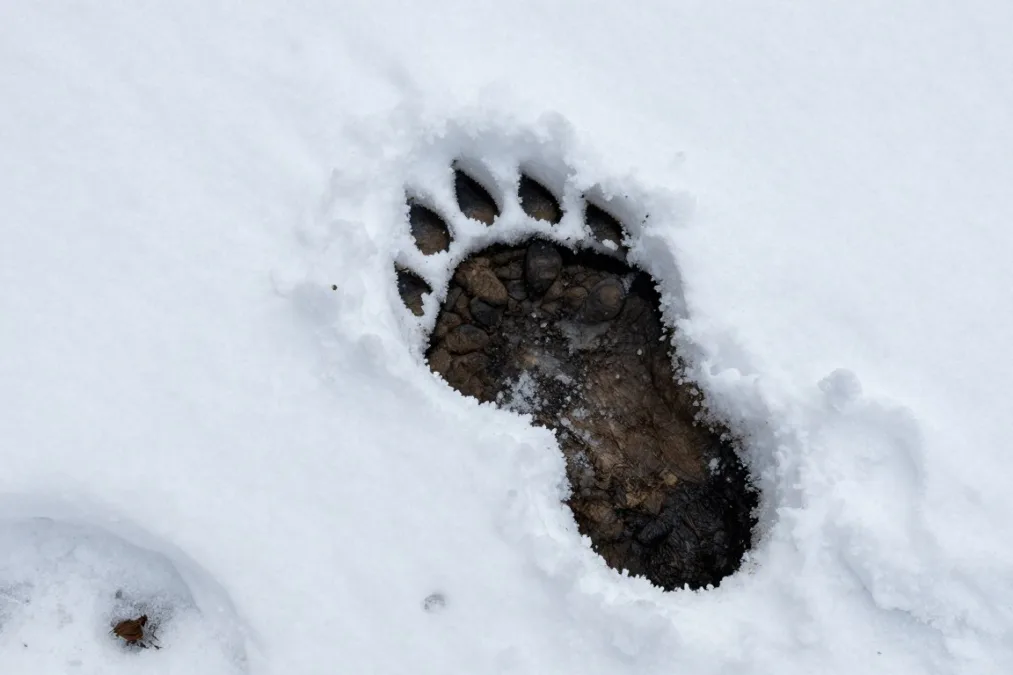
Plantigrade species walk flat on the soles of their feet, pressing the full length of the heel pad into the ground alongside five distinct toes. This foot structure produces imprints that bear a resemblance to miniature or oversized human hands and feet.
Raccoons leave tracks measuring 2 to 3 inches long that show long, bulbous, dexterous toes paired with visible claw marks. Black bears leave enormous prints, with front paws measuring 4 to 5 inches across and elongated rear paws stretching 7 to 9 inches long. Bears occasionally leave dens during mild winter intervals, leaving heavy, wide-straddling tracks with five blunt toe impressions lined straight across the front of a wide foot pad.
- Raccoon tracks usually show front and hind feet placed side by side in pacing pairs along waterways and hollow logs.
- The inner toe on a bear track is the smallest, which sits opposite to human foot anatomy where the big toe is largest.
- Bear rear tracks display a prominent, human-like heel imprint that sinks deep into soft drifts.
- Raccoon toe pads leave distinct C-shaped curves and spread widely like open fingers in wet slush.
Field Comparison Guide for Confusing Snow Tracks
Distinguishing similar tracks requires measuring print length, counting visible toes, checking for claw tips, and identifying walking gaits. When weather blurs subtle details, combining these physical markers narrows down species with high confidence.
| Species | Track Length | Toes Showing | Claws Visible | Key Field Differentiator |
| Coyote | 2.5-3.5 in | 4 toes | Yes | Tight oval shape with distinct X-pattern in negative space |
| Domestic Dog | 1.5-4.5 in | 4 toes | Yes | Round splayed shape with wide meandering trail pattern |
| Red Fox | 2.0-2.5 in | 4 toes | Yes | Narrow print with dense hair ridge across the heel pad |
| Bobcat | 1.5-2.5 in | 4 toes | Rarely | Asymmetrical round shape with three lobes on heel base |
| Mountain Lion | 3.0-4.5 in | 4 toes | Rarely | Large pad area with wide gap between toes and heel |
| White-Tailed Deer | 2.0-3.5 in | 2 hooves | No | Upside-down heart profile with dewclaws in deep drifts |
| Cottontail Rabbit | 1.0-3.5 in | 4-5 toes | Yes | Staggered front prints behind long, parallel hind feet |
| Tree Squirrel | 1.0-2.5 in | 4-5 toes | Yes | Paired front prints landing side by side leading to trees |
| Raccoon | 2.0-3.0 in | 5 toes | Yes | Hand-like impressions with long, slender finger pads |
| Black Bear | 5.0-9.0 in | 5 toes | Yes | Massive flat heel impression with short, blunt claws |
Winter Wildlife Tracking Ethics and Safety Advice
Tracking animals requires maintaining distance from wild creatures that face severe caloric stress during freezing conditions. Pushing animals out of sheltered bedding spots forces them to expend valuable fat reserves needed for survival.
Always back away immediately if a trail leads toward a den, active bed site, or fresh kill cache. Carry bear spray in mountain lion and bear country, even in late winter, and check snowpack stability before following trails onto steep slopes where avalanches occur.
Never follow predator tracks forward toward the animal. Track backwards along the trail to observe where the animal came from, investigate past feeding behavior, and avoid surprising wildlife in dense cover.
Frequently Asked Questions About Identifying Tracks in Snow
How can domestic dog tracks be told apart from coyote tracks in snow?
Coyote prints form narrow ovals with tight, forward-pointing toes and straight walking lines. Dog prints show wide, round footprints with splayed toes, blunt nails, and wandering paths.
Why do some cat tracks show claw marks in winter?
Cats normally retract their claws while walking, but they extend them for traction on steep icy crusts or during sudden leaps. Melting snow can also produce small ice fissures at the toe tips that mimic claw imprints.
How does melting snow change the appearance of animal tracks?
Warm temperatures cause footprint edges to slump outward and expand in diameter. A small fox track can swell to the size of a large dog print after several hours in direct sunlight.
What does direct registering mean in animal tracking?
Direct registering occurs when an animal places its rear foot directly into the impression made by its front foot. This stepping habit saves energy and leaves a single neat line of prints instead of separate front and rear marks.
Mastering Winter Track Identification
Reading footprints in snow unlocks a detailed record of wildlife movement across frozen landscapes. By combining pad measurements, toe arrangements, gait patterns, and awareness of weather distortion, observers can identify species accurately while preserving animal safety throughout the winter season.

Priyanka Pandey
Senior Research Editor · Top10Sense
Priyanka specializes in tech, consumer products, and digital trends. She combines hands-on testing, vendor interviews, and database research to create trustworthy “Top 10” rankings. Her work has been referenced by industry blogs and brand report pages.