The Christmas Eve Full Moon 2026 reaches astronomical peak illumination at 01:28 UTC on December 24, 2026, coinciding closely with lunar perigee to form a recognized supermoon. Observers across the Americas experience this peak during the evening hours of December 23, while Europe, Africa, and Asia witness the event directly on December 24. A high celestial arc through winter skies delivers exceptionally long nocturnal visibility from dusk until dawn.
Clear line-of-sight toward the eastern horizon at sunset provides the most striking views as the lunar disk emerges into twilight. Atmospheric clarity, local topography, and weather patterns ultimately dictate the overall quality of individual observing sessions. Careful planning around local moonrise times allows casual viewers and astrophotographers alike to capture the holiday display under optimal conditions.
Exact Timing and the Shifting Global Calendar
Astronomical full moons occur at a single, precise moment in time when the Moon stands directly opposite the Sun in celestial longitude. Local clock times and official calendar dates naturally vary depending on geographic location relative to the Prime Meridian.
Fact 1: Peak Illumination Occurs at 01:28 UTC on December 24
According to NASA celestial ephemeris calculations, the exact moment of the December full moon phase occurs at 01:28 Coordinated Universal Time (UTC) on December 24, 2026. At this instantaneous alignment, the lunar surface facing Earth receives total solar illumination. To the human eye, the lunar disk appears fully illuminated throughout the entire night surrounding this specific peak, as well as on the preceding and following evenings.
Astronomers calculate lunar phases by tracking the angular separation between the center of the Sun and the center of the Moon as viewed from Earth. A phase angle of zero degrees defines syzygy, the straight-line configuration responsible for the true astronomical full phase. Because this event happens at an exact instant rather than over an extended span, observing the moon at any hour near peak time provides an essentially complete disk.
Fact 2: Time Zones Shift the Calendar Date Between Christmas Eve and December 23
The universal timestamp means that observers in the Western Hemisphere celebrate the exact full moon on the evening of December 23, 2026. In North American time zones, 01:28 UTC on December 24 corresponds to 8:28 PM Eastern Standard Time, 7:28 PM Central Standard Time, 6:28 PM Mountain Standard Time, and 5:28 PM Pacific Standard Time on December 23. Viewers in these regions still enjoy a virtually complete lunar sphere climbing high throughout Christmas Eve night on December 24.
Observers in the Eastern Hemisphere, spanning Europe, Africa, Asia, and Australasia, experience the technical peak on December 24 itself. In London, the precise phase arrives at 1:28 AM GMT on Christmas Eve morning, while Tokyo marks the alignment at 10:28 AM JST on December 24. Understanding these offsets prevents confusion when comparing local skywatching schedules against international astronomical tables.
| Region | Local Date | Local Peak Time | Primary Viewing Window |
| US Pacific | Dec 23, 2026 | 5:28 PM PST | Evening of December 23 through dawn of December 24 |
| US Mountain | Dec 23, 2026 | 6:28 PM MST | Evening of December 23 through dawn of December 24 |
| US Central | Dec 23, 2026 | 7:28 PM CST | Evening of December 23 through dawn of December 24 |
| US Eastern | Dec 23, 2026 | 8:28 PM EST | Evening of December 23 through dawn of December 24 |
| Western Europe | Dec 24, 2026 | 1:28 AM GMT | Night of December 23 through Christmas morning |
| Eastern Asia | Dec 24, 2026 | 10:28 AM JST | Dusk on Christmas Eve through dawn on December 25 |
Regardless of local timezone boundaries, the visual difference across a twelve-hour window remains imperceptible without specialized instruments. Planning an observing session around local sunset and moonrise yields the most dramatic views of the rising disk.
Lunar Orbit, Perigee, and Supermoon Realities
The Moon moves along an elliptical path rather than a circular orbit around Earth, causing the distance between the two bodies to change continuously throughout each monthly cycle. When full phase coincides with the Moon approaching its closest point to Earth, the event meets the criteria for a supermoon.
Fact 3: Proximity to Lunar Perigee Earns the Supermoon Label
The moon orbit reaches perigee, its closest point to Earth, within roughly twenty-four hours of the December 2026 full phase. Renowned astrophysicist Fred Espenak maintains widely cited catalogs defining a supermoon as any full moon occurring when the center of the Moon is within ninety percent of its closest approach to Earth. The December full moon easily clears this threshold, ranking as an official perigee-syzygy event in modern astronomical ephemerides.
At perigee, the Moon sits approximately twenty-eight thousand miles closer to Earth than it does at apogee, its most distant point. This orbital proximity produces stronger gravitational tidal forces, known as perigean spring tides. Coastal areas often observe slightly broader tidal ranges during the days surrounding this holiday alignment.
Fact 4: Visual Size Differences Remain Subtle to the Naked Eye
Popular media often exaggerates the dramatic appearance of a supermoon, leading some viewers to expect an enormous object dominating the sky. In physical reality, a perigee full moon appears about seven to eight percent larger in diameter and roughly fifteen percent brighter than an average full moon. When compared against an apogee micromoon, the size difference reaches roughly fourteen percent, which is comparable to the diameter difference between a United States quarter and a nickel.
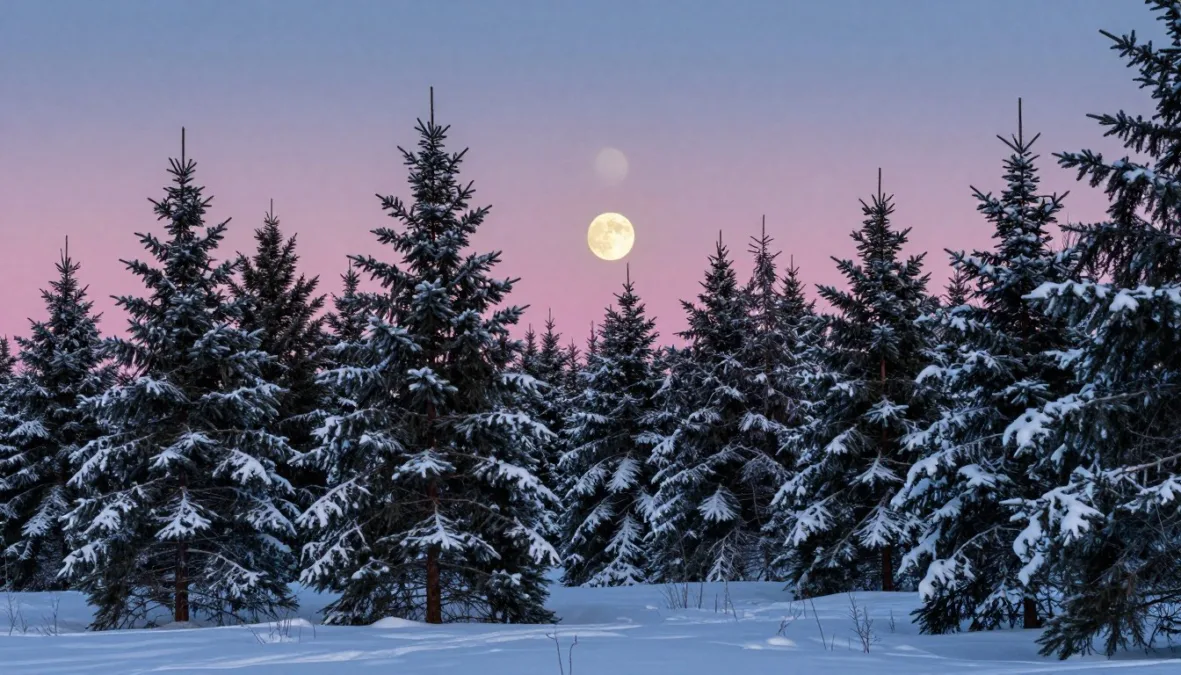
Because the human brain lacks an absolute ruler in the open sky, this slight enlargement is almost impossible to identify with the unaided eye alone without a direct side-by-side comparison. The heightened brightness remains the more noticeable physical characteristic, casting vivid illumination across snow-covered winter landscapes. Telescopic astrophotographers measuring lunar angular diameter can verify the scale increase with precision tools.
A supermoon appears measurably brighter in clear skies, but casual viewers should not expect a gigantic optical spectacle spanning half the horizon. Appreciating the subtle increase in lunar luminance provides a realistic and rewarding observing perspective.
Understanding these orbital mechanics helps skywatchers separate genuine astronomical physics from sensationalized internet claims. The true reward lies in witnessing the seasonal harmony of orbital mechanics over the course of a peaceful winter night.
Cold Moon Traditions and Historical Folklore
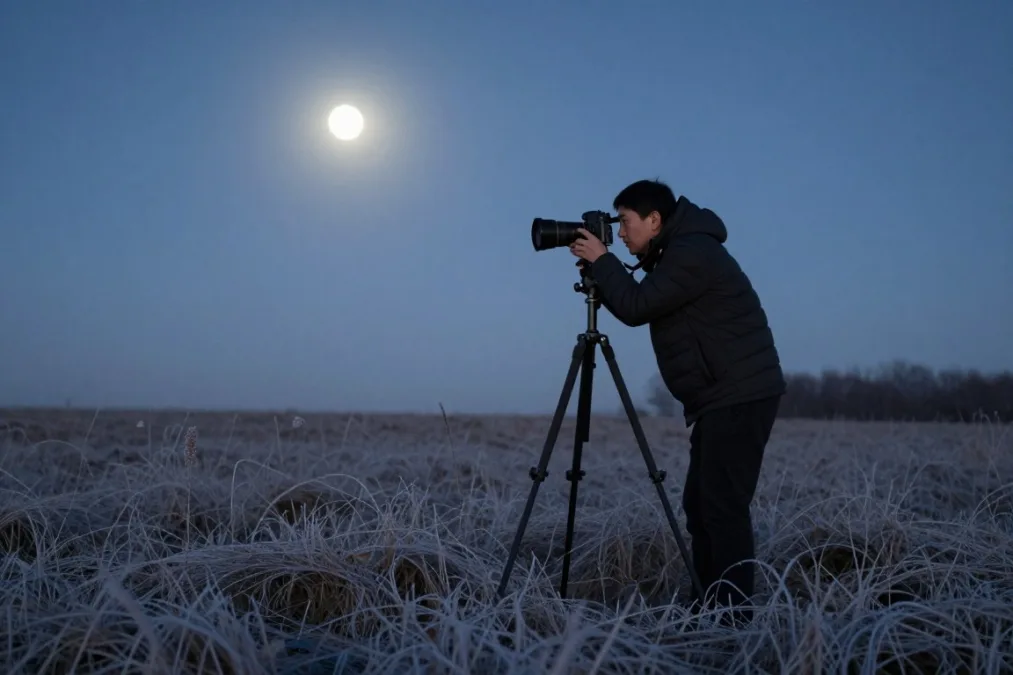
Human civilizations have named seasonal moons for millennia to track agrarian cycles, weather shifts, and ceremonial calendars. While modern astronomy relies on mathematical coordinates, traditional naming customs enrich the cultural tapestry surrounding December full moons.
Fact 5: The Cold Moon Heritage and Seasonal Significance
In North American folklore and historic publications like the Farmers’ Almanac, the December full moon carries the traditional moniker of the Cold Moon. This name stems from indigenous Native American traditions, particularly among Algonquian-speaking peoples, who used natural indicators to mark seasonal transitions. The name directly reflects the arrival of frigid winter temperatures and deep nocturnal frosts across the Northern Hemisphere.
Other regional Native American tribes developed parallel descriptive names based on survival rhythms and environmental markers. Historical records document designations such as the Drift Clearing Moon and the Frost Exploding Trees Moon among northern woodland cultures. These titles anchored community life, signaling periods for preserving firewood, securing food stores, and gathering inside shelters.
Fact 6: Long Night Moon and Alternative Historic Titles
Another prominent historic name for the December full moon is the Long Night Moon, a title rooted in celestial mechanics. Because the winter solstice falls just days prior, the nights surrounding late December represent the longest darkness intervals of the year. The moon sits above the horizon for an extensive duration, aptly fulfilling the descriptive nature of this traditional title.
European folklore offers complementary names rooted in ancient Anglo-Saxon and pagan calendars, such as the Oak Moon and the Moon Before Yule. The Moon Before Yule signaled preparations for midwinter winter solstice festivals before the widespread adoption of modern Christmas traditions. The Oak Moon symbolizes endurance, referencing the sturdy sacred oak trees that retain their withered leaves through harsh winter storms.
Cold Moon
Named by northern indigenous traditions to mark the arrival of severe winter temperatures and frozen terrain across northern latitudes.
Long Night Moon
Reflects the extended nocturnal presence of the moon during the longest nights of the year immediately following the winter solstice.
Moon Before Yule
Originates in early European solstice traditions, celebrating midwinter festivities and seasonal endurance through the symbolic sacred oak.
Distinguishing cultural lore from astronomical physics allows observers to appreciate both historic folklore and exact orbital mechanics. Each naming tradition provides historical insight into how ancestral societies navigated the harsh challenges of midwinter life.
Winter Solstice Trajectory and Sky Position
The seasonal position of the Sun dictates the apparent pathway of the full moon across the heavens throughout the year. Because a full moon always stands directly opposite the Sun in the sky, late December full moons exhibit dramatic orbital geometry.
Fact 7: The Winter Solstice Grants an Unusually High Celestial Path
Around the winter solstice, the Sun sinks to its lowest midday elevation of the entire year in the Northern Hemisphere sky. Because the full moon sits opposite the Sun, it achieves its highest nocturnal elevation across the celestial dome during this exact seasonal period. Observers in northern latitudes will watch the Christmas Eve Full Moon 2026 climb near the zenith, towering overhead around midnight.
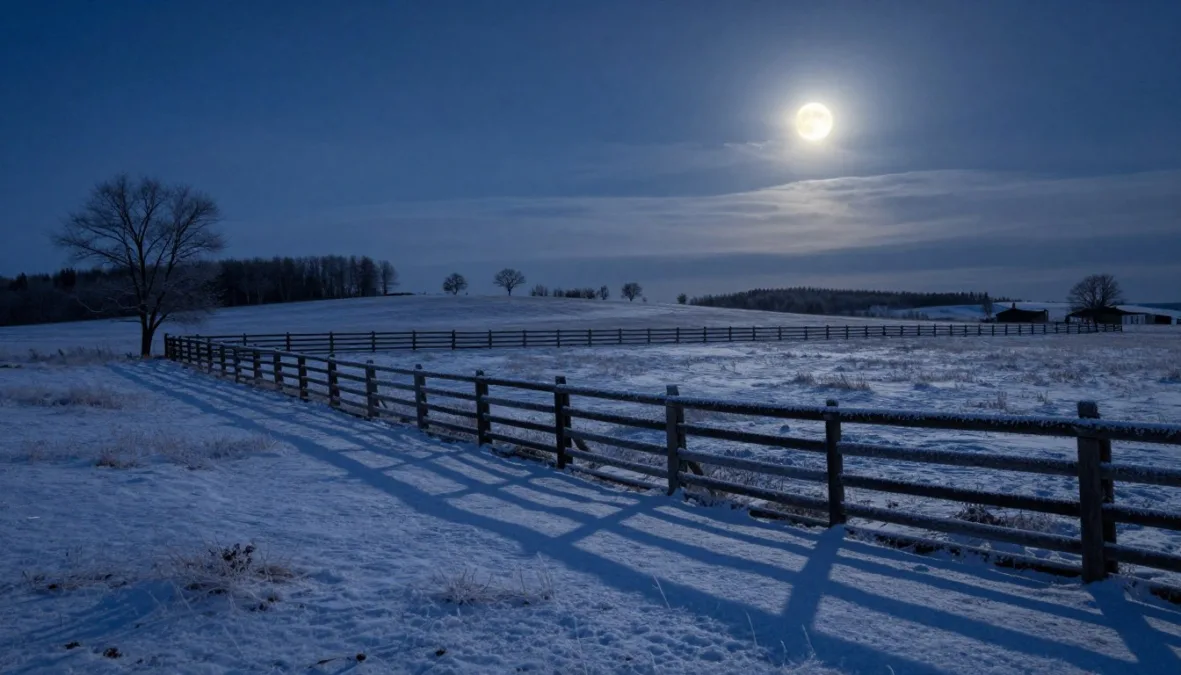
This high celestial altitude reduces the thickness of atmospheric layers through which lunar light must travel to reach the observer’s eye. As a consequence, moonlight appears exceptionally crisp, white, and piercingly sharp once the orb ascends past local obstructions. Shadows cast on the ground below appear remarkably short and starkly defined, resembling midday sunlight inverted into monochrome tones.
Fact 8: Opposing the Sun Means Maximum Darkness Exposure
The opposition geometry creates an inverse relationship between day length and lunar visibility. On the shortest days of the year, the Sun sets early and rises late, allowing the full moon to command the night sky for fourteen to fifteen continuous hours in mid-northern latitudes. The Moon rises in the northeast roughly at sunset and sets in the northwest near sunrise.
In regions near or north of the Arctic Circle, extreme axial tilt produces unusual polar day and night patterns. In these northern latitudes, the December full moon can remain continuously above the horizon for multiple consecutive days, mimicking the midnight sun phenomenon in reverse. This unique orbital configuration provides sustained nocturnal illumination across remote polar wilderness areas.
Because the full moon always opposes the Sun, winter full moons travel along the same high celestial pathway that the summer Sun occupies during June. This geometric inversion ensures that midwinter full moons deliver the longest stretches of unbroken nocturnal illumination.
Southern Hemisphere observers experience the complementary opposite of this celestial geometry. For viewers in Australia, South Africa, or South America, the December full moon tracks relatively low along the northern horizon, reflecting their concurrent summer solstice conditions.
Observing Conditions, the Horizon Effect, and Optics
Viewing a supermoon requires minimal technical preparation, making it accessible to observers of all experience levels. Understanding basic atmospheric effects and optical principles helps maximize the visual impact of the event.
Fact 9: Horizon Viewing and the Moon Illusion
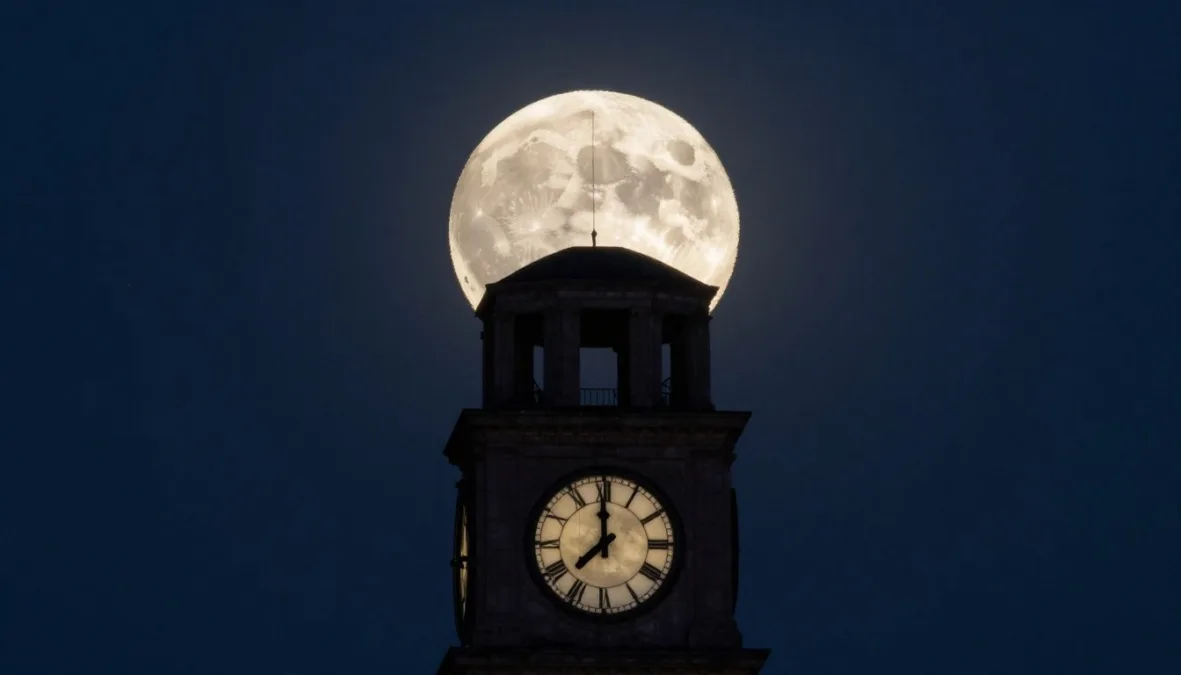
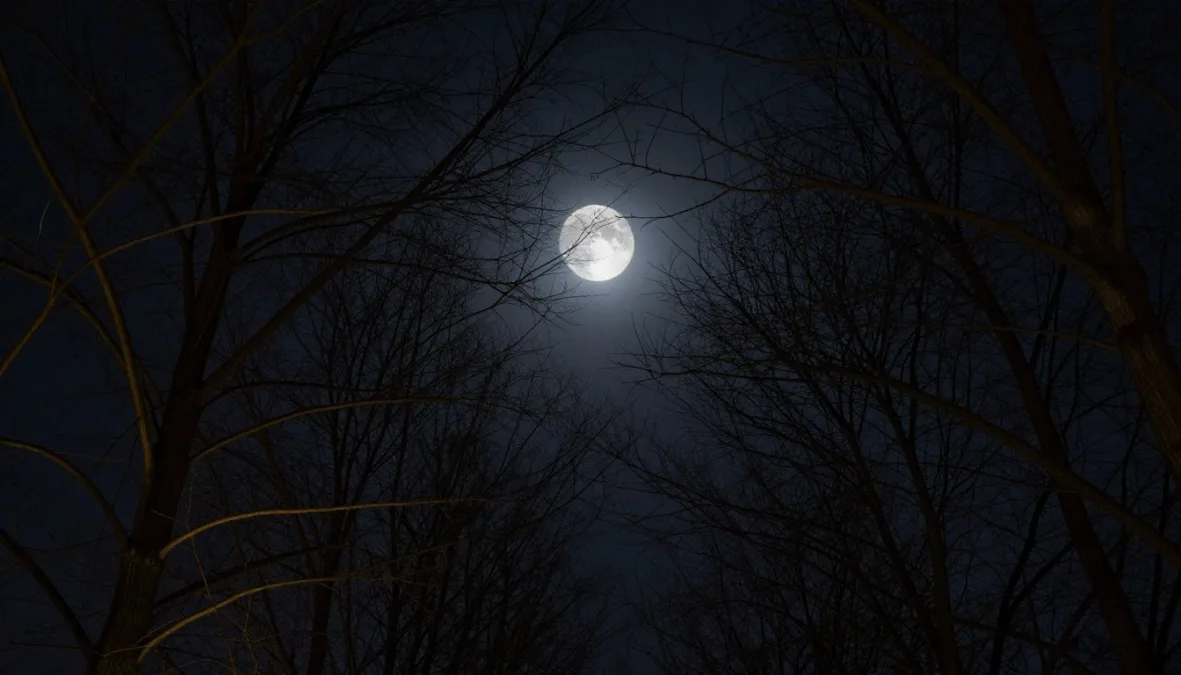
The most visually striking time to observe the full moon occurs immediately during moonrise or moonset. When the lunar disk hovers near the horizon, a well-known psychological phenomenon called the moon illusion makes it appear substantially larger than when it sits high overhead. Visual context provided by terrestrial reference points, such as distant trees, mountains, and architectural structures, tricks the brain into perceiving a colossal sphere.
In addition to the optical illusion, low-horizon viewing offers rich warm color tones. Rayleigh scattering filters out shorter blue wavelengths as lunar light travels through a thick column of Earth’s atmosphere, allowing warmer amber and golden hues to reach the viewer. Arriving at an observing location fifteen minutes before local moonrise offers the chance to watch this dramatic color transition unfold in real time.
Fact 10: Equipment, Weather Conditions, and Urban Light
No special astronomical optical equipment is required to appreciate the December full moon display. The naked eye easily resolves major lunar maria, the dark basaltic plains created by ancient volcanic floods, contrasting against the brilliant highland anorthosite crust. Standard binoculars with seven-power or ten-power magnification reveal finer details along the lunar limb, including major impact craters like Tycho and Copernicus.
Unlike faint deep-sky nebulae and distant galaxies, full moons easily punch through severe urban light pollution, making the event viewable from dense city centers. Local weather conditions remain the primary obstacle, as dense winter overcast or heavy snowfall can completely obscure the sky. Consulting high-resolution satellite cloud forecasts helps observers determine whether a short drive outside regional cloud decks is worthwhile.
- Find an unobstructed vantage point facing the east-northeast horizon approximately twenty minutes before local sunset.
- Dress in layered thermal garments to protect against midwinter wind chills during extended stationary observing periods.
- Use compact binoculars to examine ray systems extending from younger impact craters across the illuminated surface.
- Monitor local cloud cover forecasts to locate pockets of clear atmospheric conditions along approaching weather fronts.
- Allow eyes a few minutes to adapt to ambient night light away from direct vehicular headlights and handheld screens.
Whether viewed from a bustling city sidewalk or a secluded alpine meadow, the celestial display offers a contemplative holiday connection to the wider cosmos. A calm, clear winter night provides an ideal setting to pause and reflect on natural orbital rhythms.
Frequently Asked Questions
What time is the Christmas Eve Full Moon 2026?
Astronomical peak illumination occurs globally at 01:28 UTC on December 24, 2026. In the Americas, this exact alignment translates to the evening hours of December 23, while Europe, Africa, and Asia mark the peak on December 24.
Why is the December 2026 full moon classified as a supermoon?
The December 2026 full moon qualifies as a supermoon because full phase coincides with the Moon reaching lunar perigee within ninety percent of its closest approach to Earth. This proximity places the Moon thousands of miles nearer than its average orbital distance.
Do viewers need a telescope to see the Cold Moon?
Special optical equipment is unnecessary because the illuminated lunar disk is completely visible to the naked eye. Basic binoculars help reveal distinct surface craters and dark basaltic plains without requiring complicated equipment setups.
Why does the full moon appear higher in winter skies?
The full moon sits directly opposite the Sun in celestial coordinates. Because the Sun sits at its lowest midday altitude during the winter solstice season, the opposing full moon climbs to its highest celestial trajectory across the night sky.
Does light pollution ruin full moon viewing?
Urban light pollution does not ruin full moon observing because the lunar disk produces intense natural illumination that cuts through artificial city glow. Overcast weather and cloud cover remain the only significant obstacles to a successful viewing session.
Observing the December 2026 Celestial Alignment
The Christmas Eve Full Moon 2026 brings together the seasonal tradition of the Cold Moon, the orbital proximity of a perigee supermoon, and the towering celestial pathway of the winter solstice. Checking local moonrise schedules and dressing warmly helps skywatchers make the most of this holiday alignment. Clear skies will reveal a brilliant nocturnal spectacle that illuminates the midwinter landscape from dusk until dawn.

Priyanka Pandey
Senior Research Editor · Top10Sense
Priyanka specializes in tech, consumer products, and digital trends. She combines hands-on testing, vendor interviews, and database research to create trustworthy “Top 10” rankings. Her work has been referenced by industry blogs and brand report pages.