Joining a community science survey like the first Christmas Bird Count in 2026 offers newcomers a welcoming entry into wildlife conservation without requiring expert identification skills. Established by the National Audubon Society, each Christmas Bird Count relies on volunteer observers of all backgrounds to census winter birds within defined geographic boundaries. Novice observers provide essential eyes and ears in the field, helping survey groups detect birds that might otherwise go unnoticed.
Local winter conditions, territory topography, and individual physical stamina determine the best approach for each participant. Survey teams divide into walking parties, driving routes, or residential feeder watches to track diverse North American bird species. Thoughtful preparation and early communication with local organizers create an enjoyable and safe field survey.
Finding and Joining an Official Count Circle
Every bird count operates inside a designated count circle managed by an assigned volunteer organizer known as a compiler. Understanding how these geographic circles function is the initial step toward joining the annual winter tradition.
Tip 1: Locate a Local Circle
Audubon hosts an interactive map on its official website displaying active count locations across North America. Search nearby territories well ahead of time to find counts scheduled during the December and January period.
Tip 2: Contact the Compiler Early
Reach out directly to the circle compiler to register your interest and receive specific meeting instructions. Compilers organize route logistics, assign teams, and match newcomers with seasoned observers.
Tip 3: Choose an Observation Role
Decide whether to join a field party traversing a territory or participate through a home feeder watch. Feeder observers count birds from home if their residence falls strictly inside the official count circle.
Do not simply arrive in a park and tally sightings independently on count day. Compilers must designate specific routes within the circle to prevent duplicate counting and maintain rigorous science standards. Early registration allows the compiler to balance group sizes across open fields, woodlands, and urban parks.
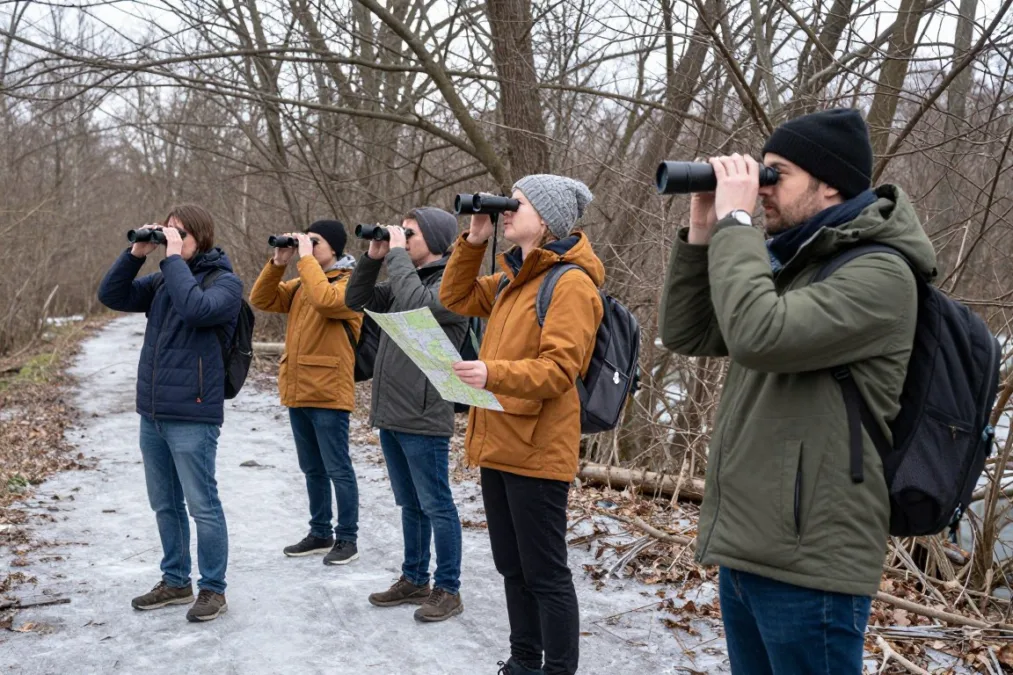
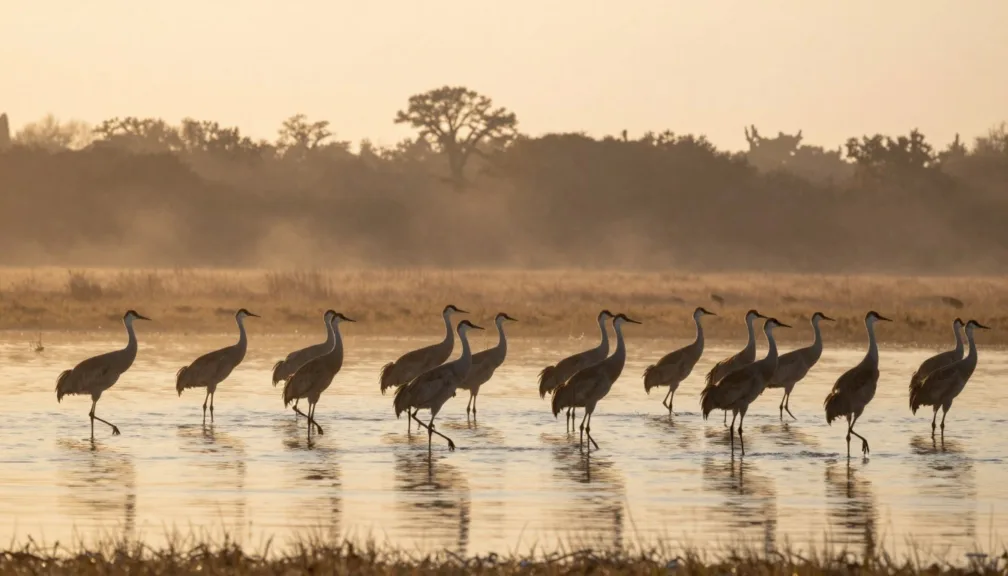
Circle compilers establish specific routes across varied habitats to distribute observers evenly.
Packing Practical Field Gear and Identification Tools
Participating in an organized count does not require expensive optical equipment or specialized outdoor gear. Selecting warm, versatile clothing and basic viewing tools keeps the day comfortable across changing winter weather.
Tip 4: Dress in Quiet, Weather-Resistant Layers. Winter field surveys often involve moving at a slow pace punctuated by long standing stops. Wear moisture-wicking base layers, an insulating middle fleece or sweater, and a wind-blocking outer shell. Choose wool or synthetic socks paired with sturdy, insulated walking boots, and pack warm gloves that still permit nimble finger movement for writing notes.
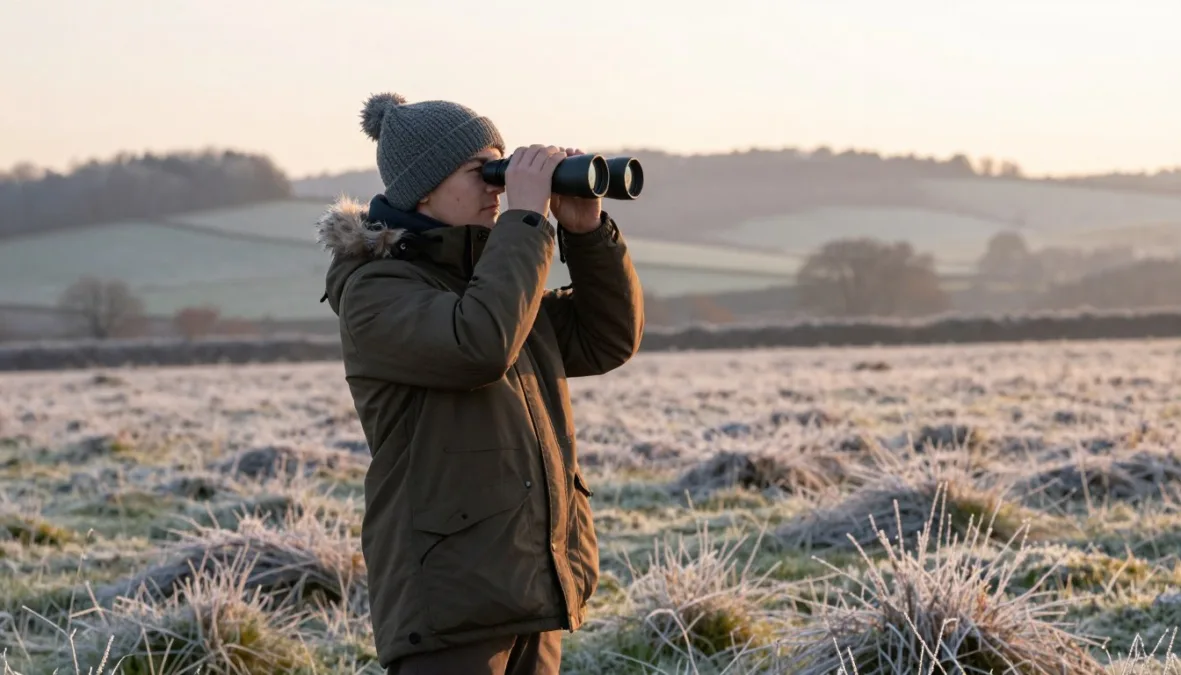
Tip 5: Carry Basic Optics and Field Reference Guides. A dependable pair of binoculars with standard magnification provides clear views of plumage markings and branch silhouettes. High-end spotting scopes are not required for beginners, as team leaders often carry heavier optics for distant waterfowl or raptors. Download an offline bird identification app to your mobile phone or pack a compact regional pocket guide to help verify field marks.
Keep mobile phones warm in an interior coat pocket to prevent battery depletion in sub-freezing temperatures, and carry a small physical notepad with a pencil that writes reliably in cold or damp conditions.
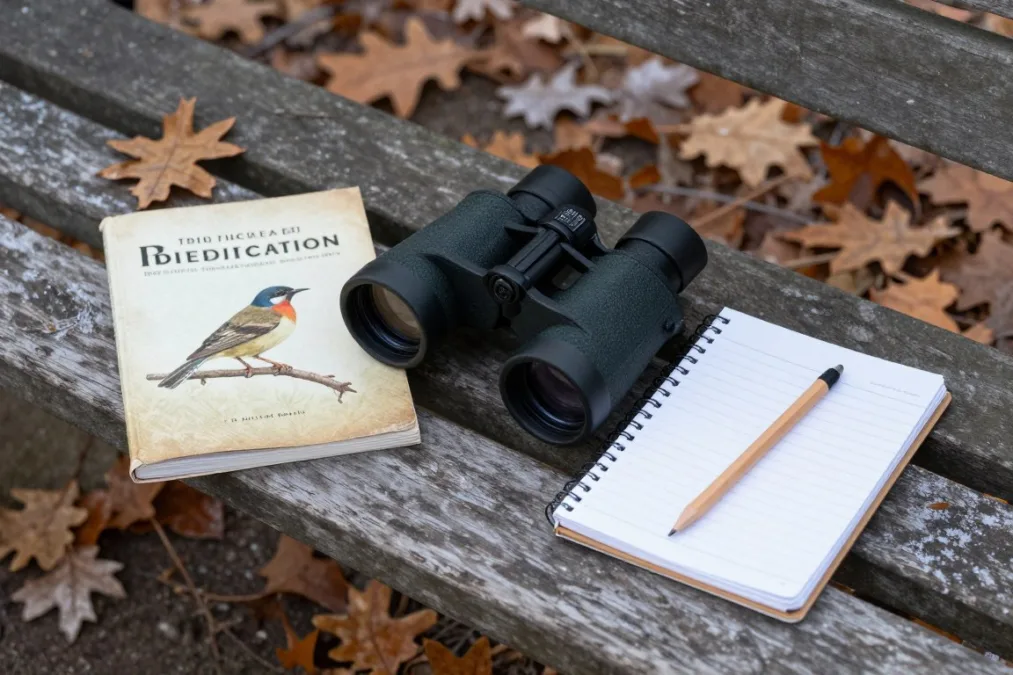
Modest binoculars and a compact field guide provide all the technical support needed for field surveys.
Navigating Your First Christmas Bird Count in 2026 in the Field
Count day unites volunteers across diverse experience levels to census wild birds systematically. Beginners play a vital role in group efficiency by expanding the visual search radius along each route.
- Tip 6: Partner with Experienced Observers. Compilers intentionally place first-time participants alongside veteran birders. Listen carefully as seasoned leaders detect subtle calls, point out flight silhouettes, and discuss distinguishing field marks in dense brush.
- Tip 7: Focus on Spotting and Movement Detection. Never hesitate to speak up when noticing movement, an unfamiliar silhouette, or an odd sound. Your primary job as a novice observer is spotting birds; your teammates will gladly assist with identification.
- Tip 8: Assist with Counting and Tally Keeping. When large flocks of common birds appear, team members share counting duties by estimating groups or tracking individuals. Offering to carry the tally sheet or manage digital entry frees experienced observers to scan tree lines and distant wetlands.
Ornithologist Frank Chapman initiated this tradition over a century ago to replace holiday hunting with a wildlife census. Today, cooperation between newcomers and skilled observers honors that conservation heritage while building personal field skills.
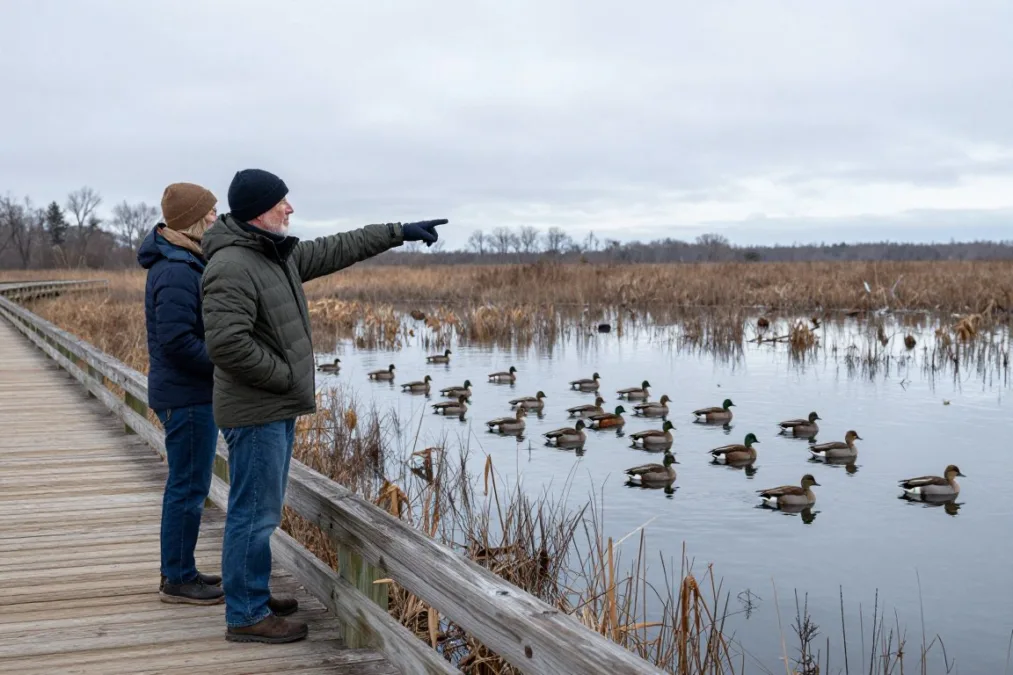
Working alongside seasoned birders helps newcomers build field identification skills naturally.
Recording Sighting Data and Maintaining Field Ethics
Scientific value depends on accurate documentation and responsible field conduct. Government agencies like the U.S. Fish and Wildlife Service, along with independent researchers, use Audubon Christmas Bird Count results alongside breeding bird surveys to assess long-term bird conservation trends.
Tip 9: Record Specific Sightings with Discipline. Log exact numbers rather than vague estimates whenever possible. If an unusual or out-of-season species appears, write down precise physical details, habitat notes, and the exact time of observation. Compilers submit unusual bird species documentation for regional review, so detailed field notes assist in verifying rare sightings.
Tip 10: Prioritize Wildlife Welfare and Safety. Maintain a respectful distance from roosting nocturnal birds, feeding flocks, and fragile winter habitats. Always respect private property boundaries by remaining on public rights-of-way unless the compiler secured written landowner permission in advance.
| Focus Area | Observer Action | Field Best Practice |
| Data Precision | Tally Birds | Record exact counts or agreed group estimates. |
| Rare Species | Document Notes | Photograph birds or sketch distinguishing marks. |
| Land Access | Check Boundaries | Remain on established public paths and trails. |
| Flock Welfare | Maintain Space | Avoid flushing roosting birds in freezing weather. |

Careful field tallying provides reliable baseline data for long-term wildlife population studies.
Frequently Asked Questions
Does joining a count require an entry fee?
Participation in the Audubon Christmas Bird Count is free for all field observers and feeder watchers. The National Audubon Society eliminated participant registration fees to welcome broad public involvement in community science.
Can someone participate without leaving home?
Homeowners can conduct a feeder count if their yard sits entirely within an established count circle boundary. Contact the local compiler to confirm circle boundaries and receive standardized feeder tally forms.
What happens if severe winter weather strikes on count day?
Compilers monitor local road conditions and weather forecasts to decide whether to proceed or reschedule. Many counts run through light snow or rain, but severe storms prompt compilers to use designated backup dates.
How does Christmas count data support conservation?
Researchers combine winter count numbers with summer breeding bird surveys to track population declines and range shifts across decades. This century-long dataset guides habitat protection strategies implemented by wildlife agencies and conservation organizations.
Stepping into Community Conservation
Participating in an annual winter bird count connects observers directly to an enduring continent-wide wildlife survey. Contacting a regional compiler and dressing thoughtfully for winter conditions prepares any novice for a productive day in the field. Your watchful presence on count day contributes meaningful observations that help protect bird populations for generations to come.

Priyanka Pandey
Senior Research Editor · Top10Sense
Priyanka specializes in tech, consumer products, and digital trends. She combines hands-on testing, vendor interviews, and database research to create trustworthy “Top 10” rankings. Her work has been referenced by industry blogs and brand report pages.