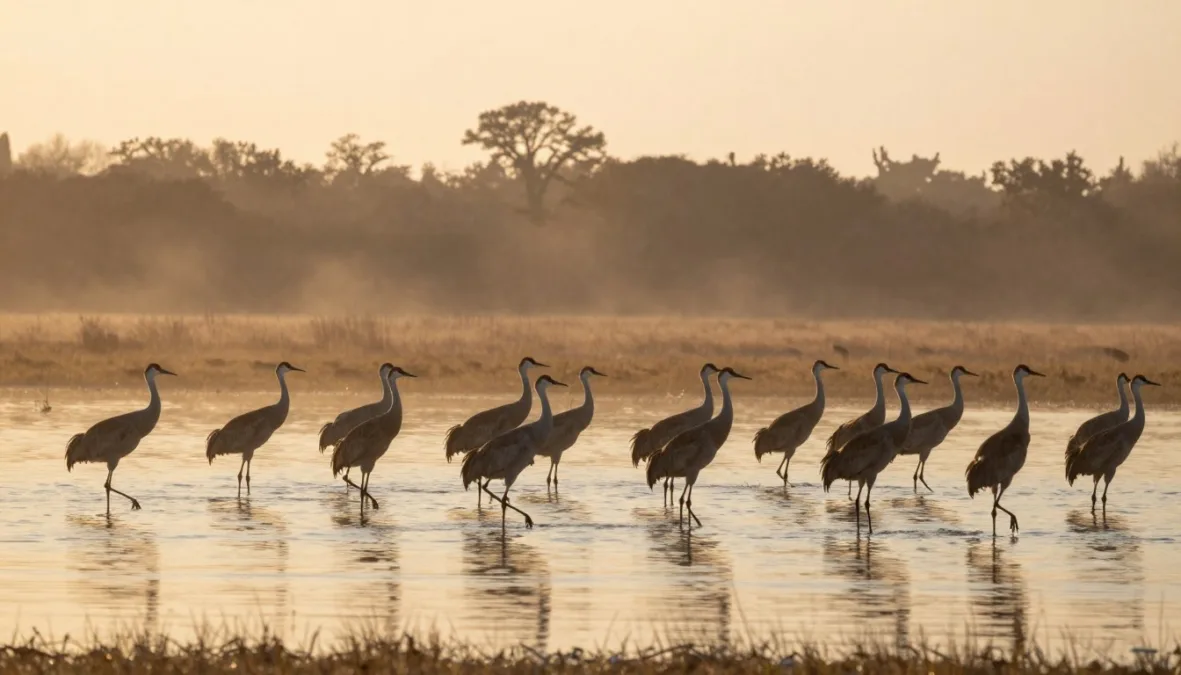
Observing sandhill cranes during late autumn and early winter reveals one of the most compelling avian spectacles across North America. Selecting among the Top 10 Places to See Sandhill Cranes in the USA in November and December 2026 requires understanding the distinction between northern migratory staging stopovers and southern wintering grounds. Prime locations combine shallow roosting waters with nearby agricultural foraging fields, creating environments where thousands of these large gray birds gather before cold fronts push flocks southward.
Regional temperatures, wetland depths, and food availability determine the exact timing and density of crane congregations each season. Staging areas in the upper Midwest hold massive numbers through early fall, yet freezing marsh waters in late November prompt birds to move toward southern valleys and coastal basins. Checking local refuge conditions before traveling helps travelers align expectations with seasonal wildlife movements.
1. Jasper-Pulaski Fish and Wildlife Area, Indiana
Jasper-Pulaski Fish and Wildlife Area in northwest Indiana serves as the primary staging stopover for the Eastern Population of sandhill cranes during their southward journey. Enormous flocks converge on the shallow palustrine marshes before spreading across nearby harvested grain fields to feed each morning. Numbers build steadily throughout autumn, typically peaking in mid to late November before cold weather prompts birds to continue southward toward wintering grounds.
The site features a dedicated observation platform overlooking Goose Pasture, equipped with viewing scopes that provide clear sightlines without disturbing the resting flocks. Visiting during the hour before sunrise or the hour leading up to sunset delivers the most dramatic activity, as thousands of cranes take flight in coordinated waves. Late-season visitors in December can still encounter lingering groups, provided open water remains accessible across the wetland complex.
Freezing temperatures in early December often freeze the shallow roosting marshes, accelerating the departure of lingering flocks toward southern states.
2. Bosque del Apache National Wildlife Refuge, New Mexico
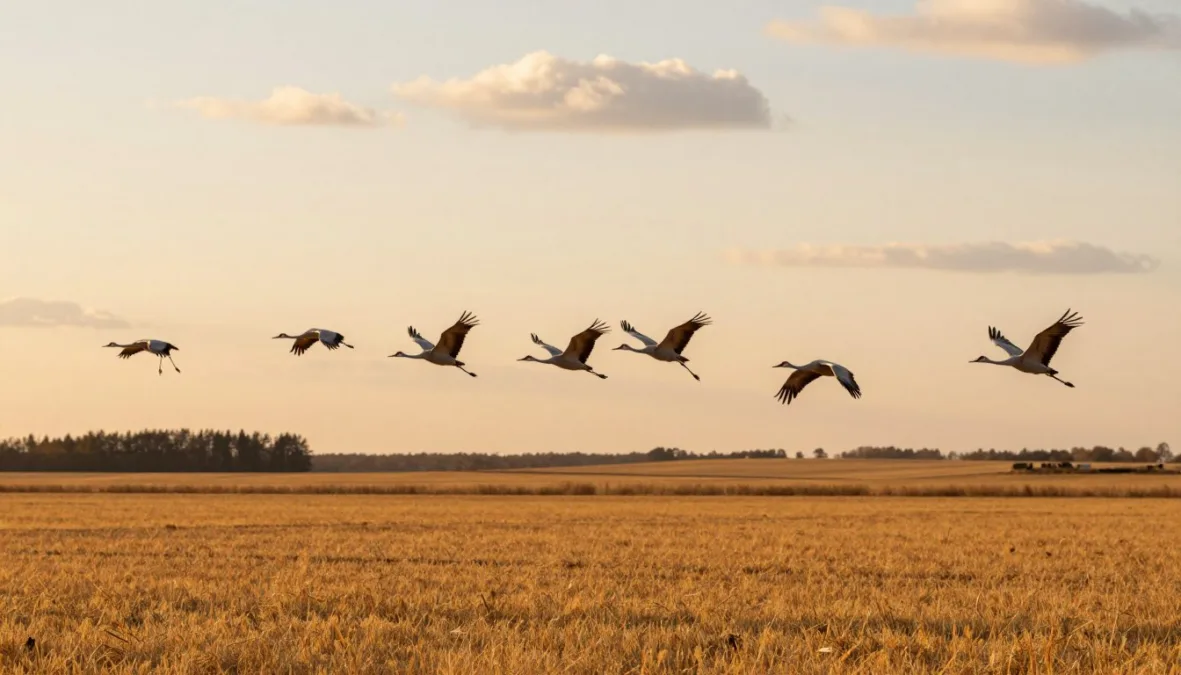
Bosque del Apache National Wildlife Refuge along the Rio Grande corridor represents a premier wintering destination for the Rocky Mountain population of sandhill cranes. Unlike northern stopovers that empty out when winter arrives, this refuge welcomes birds that stay throughout November, December, and January. Carefully managed seasonal wetlands and grain impoundments provide secure night roosts and abundant daytime food resources.
The daily rhythm at Bosque del Apache creates exceptional viewing opportunities along the designated auto-tour loop and photography blinds. Thousands of cranes roost overnight in shallow water to deter predators, then take flight in unison at dawn against the backdrop of the Chupadera Mountains. During midday hours, cranes loaf along the ditch banks and forage throughout active agricultural plots before returning to the water at dusk.
- Dawn flyouts provide clear views as roosting cranes depart shallow marshes for agricultural feeding areas.
- The northern and southern auto-tour routes offer roadside pullouts positioned near active foraging units.
- Refuge walking trails require visitors to stay behind marked boundary cables to prevent flushing resting birds.
3. Wheeler National Wildlife Refuge, Alabama
Wheeler National Wildlife Refuge along the Tennessee River serves as a vital wintering sanctuary for cranes traveling along the eastern migration corridor. Flocks begin arriving in late November, with numbers growing throughout December as northern marshes freeze over. The refuge encompasses backwater embayments, mudflats, and managed agricultural fields that sustain diverse waterfowl species alongside the cranes.
The refuge visitor center features an enclosed observation building with expansive picture windows and spotting scopes overlooking open water and feeding fields. An adjacent boardwalk leads through riparian woodland to an elevated photo blind, allowing quiet approaches to resting birds. Because this location functions as an established wintering ground rather than a brief stopover, viewing conditions remain steady throughout December.
The enclosed observation building allows visitors to observe large wintering groups in comfort during brisk or rainy December afternoons.
4. Hiwassee Wildlife Refuge, Tennessee
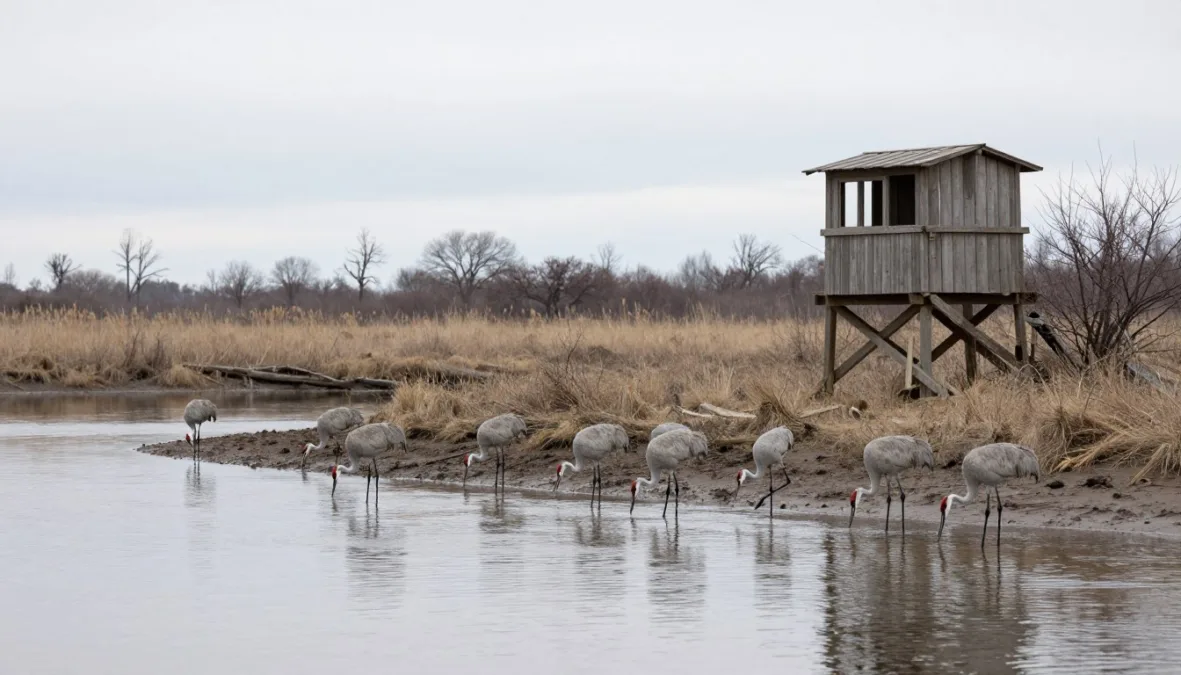
Hiwassee Wildlife Refuge sits at the confluence of the Hiwassee and Tennessee Rivers, providing a major combination of migration stopover and winter habitat. Tens of thousands of sandhill cranes congregate around the 2,500-acre refuge, utilizing the river islands for secure night roosting. Activity intensifies significantly from late November through December as northern populations reach this southern staging hub.
Visitors view the concentration from an elevated wooden gazebo situated on a ridge overlooking the expansive river flats. Spotting scopes and telephoto lenses prove valuable here, as birds often gather across open flats several hundred yards from public vantage points. Official refuge regulations restrict public access onto the refuge grounds proper during the winter months, protecting the flocks from human disturbance.
- Arrive at the viewing gazebo before daybreak to observe birds lifting off from river sandbars.
- Monitor nearby agricultural lands along state routes where family groups feed during the middle of the day.
- Respect seasonal sanctuary closures that keep boats and pedestrian foot traffic away from sensitive island roosts.
5. Haehnle Sanctuary and Waterloo Recreation Area, Michigan
The Phyllis Haehnle Memorial Sanctuary, managed by the Michigan Audubon Society alongside the Waterloo Recreation Area, is a prominent autumn staging ground in southern Michigan. The extensive Mud Lake marsh complex attracts sandhill cranes from across the Great Lakes region before they embark on longer migratory flights. Numbers climb rapidly during late October and early November, filling the marsh with loud, resonant calls.
Viewing success in late November and December depends heavily on freeze conditions. In milder years, hundreds of cranes linger into December, resting on marsh vegetation and flying to nearby agricultural fields to glean leftover grains. A hillside viewing terrace provides wide vistas across the emergent wetland, allowing spectators to watch evening return flights without intruding into fragile nesting and roosting habitat.
Sustained freezing temperatures in southern Michigan will lock the marsh in ice, causing the majority of birds to depart southward within twenty-four hours.
6. Whitewater Draw Wildlife Area, Arizona
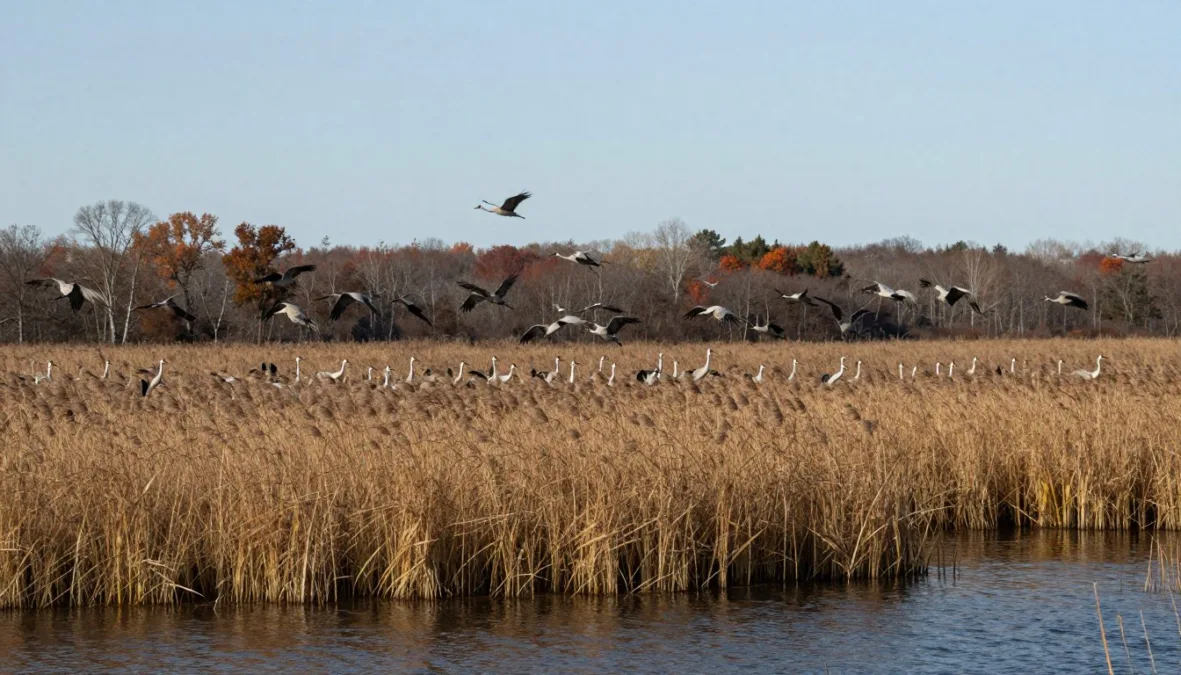
Whitewater Draw Wildlife Area in southeastern Arizona provides an essential winter haven for tens of thousands of sandhill cranes within the Sulphur Springs Valley. The site features shallow, seasonal playa lakes that retain water through the winter, offering ideal roosting depth for birds seeking safety from coyotes. Cranes arrive in early November and remain throughout December and January in dense numbers.
The property includes level walking paths, benches, and viewing platforms positioned along the water impoundments. The daily schedule here contrasts slightly with other locations; cranes fly out to surrounding cornfields at daybreak, return to the water by mid-morning to drink and loaf, and remain visible throughout the middle of the day. This behavior makes Whitewater Draw an accommodating destination for daytime observation.
Morning Schedule
Flocks depart the water at dawn for nearby fields, returning between mid-morning and noon to rest in the shallows.
Afternoon Gathering
Birds spend early afternoon preening and socializing in open water before taking secondary feeding flights before dusk.
7. Paynes Prairie Preserve State Park, Florida
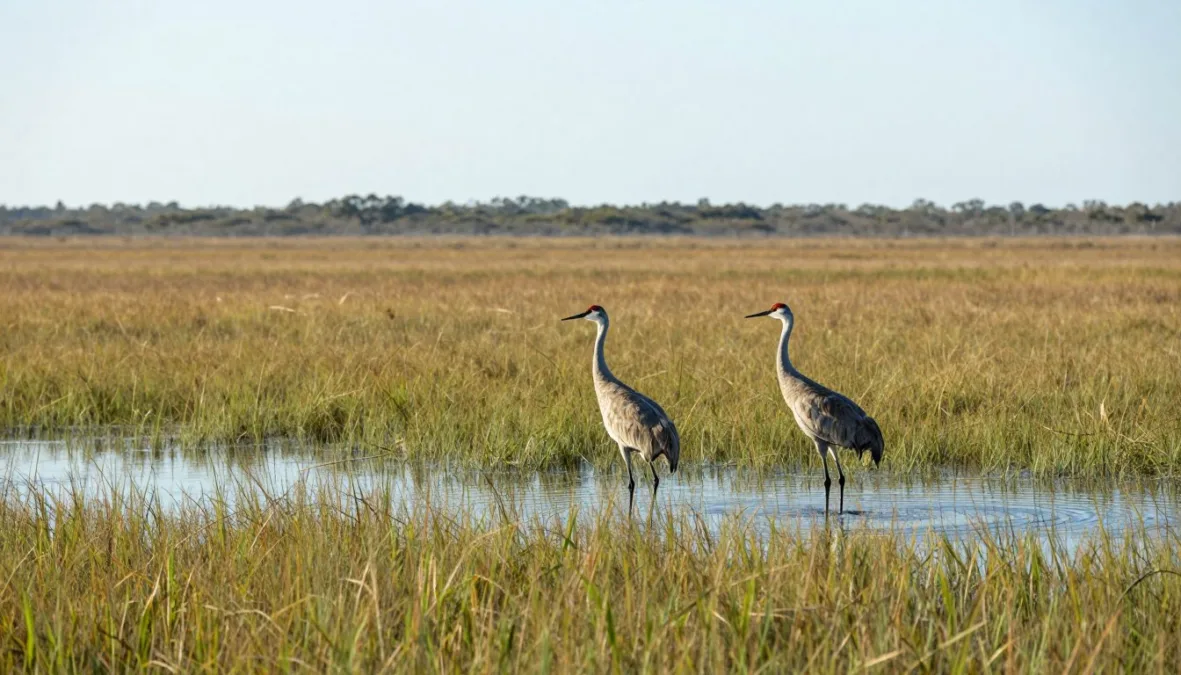
Paynes Prairie Preserve State Park near Gainesville represents a primary southern terminus for sandhill cranes that spend the winter in the southeastern United States. The park protects an expansive freshwater savanna and wet prairie basin that hosts resident Florida sandhill cranes alongside thousands of migratory greater sandhill cranes arriving from the north. Migratory flocks settle into the prairie throughout November and remain stationary throughout December.
Viewing is productive from the fifty-foot observation tower on the prairie rim, as well as along the La Chua Trail, which extends onto the basin floor. The juxtaposition of wintering cranes with native wildlife, including wild horses, bison, and alligators, makes Paynes Prairie distinct from agricultural Midwest viewing sites. Cool morning breezes across the prairie basin provide comfortable conditions for extended walking and bird observation.
Walking the boardwalks during early morning allows observers to hear distinct vocalizations distinguishing larger migratory subspecies from smaller resident Florida cranes.
8. Woodbridge Ecological Reserve, California
Woodbridge Ecological Reserve, situated in the Central Valley near Lodi, preserves critical wetland habitat for sandhill cranes migrating along the Pacific Flyway. Both greater and lesser sandhill cranes winter across this region, utilizing flooded farm pastures and managed wetlands from October through winter. November and December offer prime viewing as seasonal rains fill local basins and wintering numbers reach their peak.
The reserve features an accessible viewing pavilion along Woodbridge Road, providing clear vantage points for observing cranes coming in to roost as twilight approaches. Local wildlife agencies often host structured docent-led tours that explain water management practices and crane behavior. The flat terrain of the Central Valley produces expansive sunset skies, framing descending flocks against vibrant evening colors.
- The public viewing area along Woodbridge Road offers elevated sightlines across flooded fields.
- Docent-led walks provide access to restricted interior paths during select weekend dates in winter.
- Late afternoon visits present optimal lighting for photography as cranes glide into shallow roosting ponds.
9. Goose Pond Fish and Wildlife Area, Indiana
Goose Pond Fish and Wildlife Area in southwestern Indiana spans more than nine thousand acres of restored wetlands and prairie habitat. This expansive property acts as an intermediate staging stopover and, in mild years, a wintering territory for thousands of sandhill cranes. Arrivals accelerate through November, with substantial numbers lingering into December when food supplies and open water endure.
The visitor center rests on a high bluff overlooking the property, offering sweeping views across dozens of managed wetland units. A network of county roads crisscrosses the property, facilitating auto-based birding that minimizes disturbance to birds feeding along agricultural borders. Observers frequently locate mixed flocks containing sandhill cranes and various dabbling duck species resting together across open pools.
An extensive network of accessible county roads allows visitors to search different wetland cells by vehicle during colder December days.
10. Crex Meadows Wildlife Area, Wisconsin
Crex Meadows Wildlife Area in northwestern Wisconsin stands out as one of the largest intact wetland and brush prairie complexes in the upper Midwest. As an early-to-mid autumn staging ground, Crex Meadows concentrates immense numbers of sandhill cranes that roost in vast sedge marshes. During early November, visitors can still encounter significant gatherings as birds prepare for their southward flights.
By late November and December, viewing at Crex Meadows depends strictly on winter weather severity. Severe cold snaps and heavy snowfall will freeze the shallow marshes, prompting prompt mass departures southward toward Indiana and Tennessee. For travelers visiting during early November 2026, the refuge auto-tour route and observation blinds deliver an authentic wilderness staging experience before true winter takes hold.
Plan northern Wisconsin crane outings for early November, as deep freezes in late November typically cause flocks to vacate the region entirely.
Finding the Top 10 Places to See Sandhill Cranes in the USA in November and December 2026
Choosing an optimal destination among the Top 10 Places to See Sandhill Cranes in the USA in November and December 2026 requires balancing geographic convenience with migratory timing. Upper Midwestern destinations like Crex Meadows, Haehnle Sanctuary, and Jasper-Pulaski function primarily as autumn staging stopovers where crane activity peaks before winter freezes the water. In contrast, locations in New Mexico, Arizona, Alabama, Florida, and California offer stable wintering populations that remain throughout December and January.
Evaluating each destination based on access type, primary role, and prime operational months clarifies where to direct travel plans. The following comparison highlights key functional distinctions across these premier viewing locations.
| Location | Refuge Role | Peak Timing | Primary Viewing Method |
| Jasper-Pulaski | Staging Stopover | November | Elevated viewing platform overlooking Goose Pasture roosting grounds |
| Bosque del Apache | Wintering Ground | Nov to Jan | Auto-tour loop and photography blinds along managed marsh pools |
| Wheeler NWR | Wintering Ground | Dec to Jan | Enclosed observation center with spotting scopes and woodland blind |
| Hiwassee Refuge | Staging & Winter | Late Nov to Dec | Public gazebo overlooking river islands and extensive mudflats |
| Haehnle Sanctuary | Staging Stopover | Early to Mid Nov | Hillside terrace overlooking Mud Lake marsh and surrounding fields |
| Whitewater Draw | Wintering Ground | Nov to Feb | Flat gravel trails and benches bordering shallow playa waters |
| Paynes Prairie | Wintering Ground | Dec to Jan | Observation tower and boardwalk trails traversing wet prairie floor |
| Woodbridge Reserve | Wintering Ground | Nov to Dec | Public viewing pavilion and scheduled docent-guided walking tours |
| Goose Pond | Staging & Winter | Nov to Dec | Blufftop visitor center and driveable public county road network |
| Crex Meadows | Staging Stopover | Early Nov | Self-guided auto route through sedge marshes and brush prairie |
Frequently Asked Questions
What is the best time of day to observe sandhill cranes?
Dawn and dusk offer the most dramatic viewing as thousands of cranes commute between night roosts and daytime feeding fields. Arriving thirty minutes before sunrise allows observers to witness mass flyouts, while late afternoon visits capture returning flocks settling into the water.
How does cold weather affect crane migration in November and December?
Freezing temperatures freeze shallow roosting wetlands, which forces cranes to move southward to locate open water and accessible food. Mild late autumn weather encourages birds to linger at northern staging areas, whereas early severe freezes prompt rapid departures.
What optics and gear should visitors bring for crane viewing?
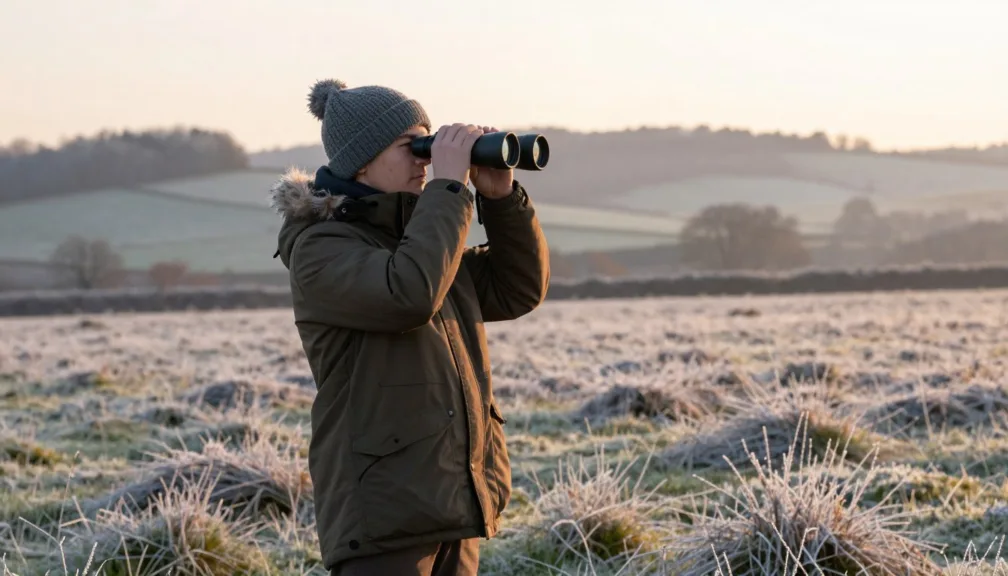
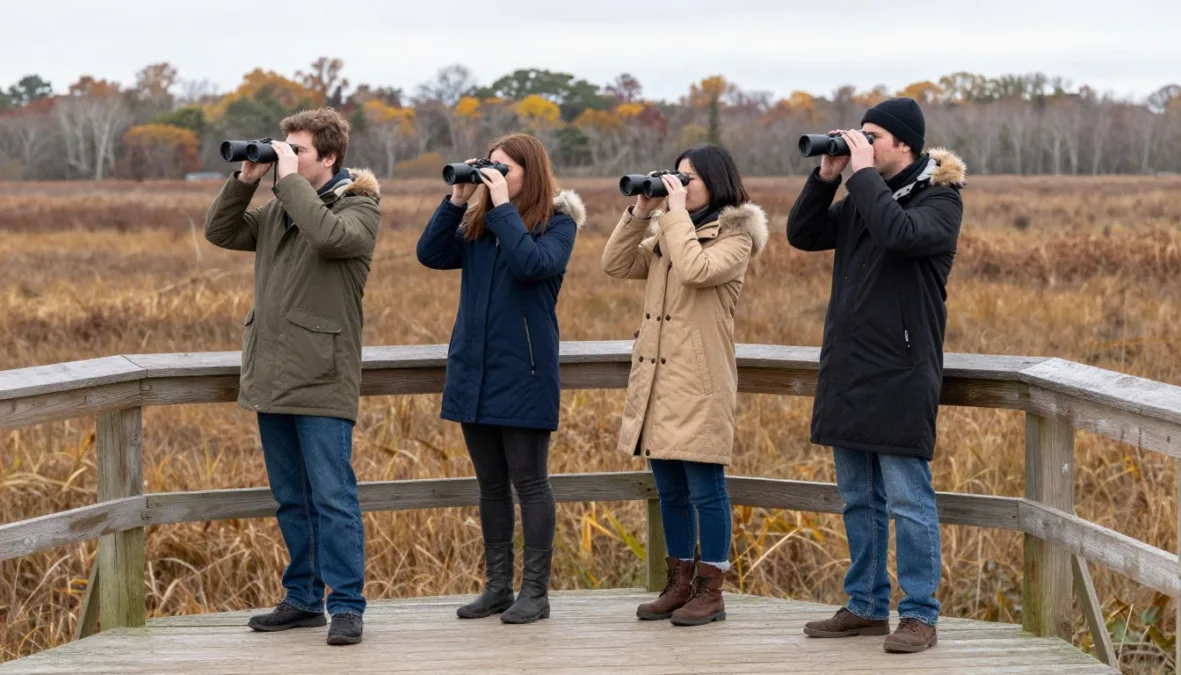
Binoculars and spotting scopes are essential for scanning wide marshlands without approaching too closely. Warm, layered clothing and sturdy footwear help maintain comfort during extended morning and evening vigils in chilly wetland climates.
What viewing etiquette should birders follow around sandhill cranes?
Remain inside designated blinds, platforms, or vehicles to prevent flushing resting or feeding birds. Keep noise levels minimal and avoid sudden movements, as stressed cranes expend valuable energy reserves necessary for migration.
Preparing for Late-Fall Crane Excursions
Experiencing the seasonal gathering of sandhill cranes in late autumn and early winter provides insight into North American wildlife migration patterns. Selecting between northern staging stopovers in November and southern wintering wetlands in December aligns travel plans with natural bird movements. Checking local wetland water levels and refuge field updates prior to departure helps ensure rewarding viewing throughout the season.

Priyanka Pandey
Senior Research Editor · Top10Sense
Priyanka specializes in tech, consumer products, and digital trends. She combines hands-on testing, vendor interviews, and database research to create trustworthy “Top 10” rankings. Her work has been referenced by industry blogs and brand report pages.