Effective no-jump apartment workouts build cardiovascular stamina, muscular strength, and joint mobility by maintaining continuous physical tension rather than relying on explosive bounces. Grounded movements protect shared living environments from sound transmission and keep impact minimal while still challenging major muscle groups. Controlled tempo, deliberate footwork, and steady core engagement allow high training intensity without transferring thumps or structural vibrations to downstairs neighbors.
Selecting the right indoor exercise routine depends on ceiling clearance, flooring materials, and personal joint tolerance. Incorporating versatile movements tailored to individual physical capabilities and room layouts helps maintain regular physical activity during cold winter months.
Setting Up a Quiet Apartment Workout Space
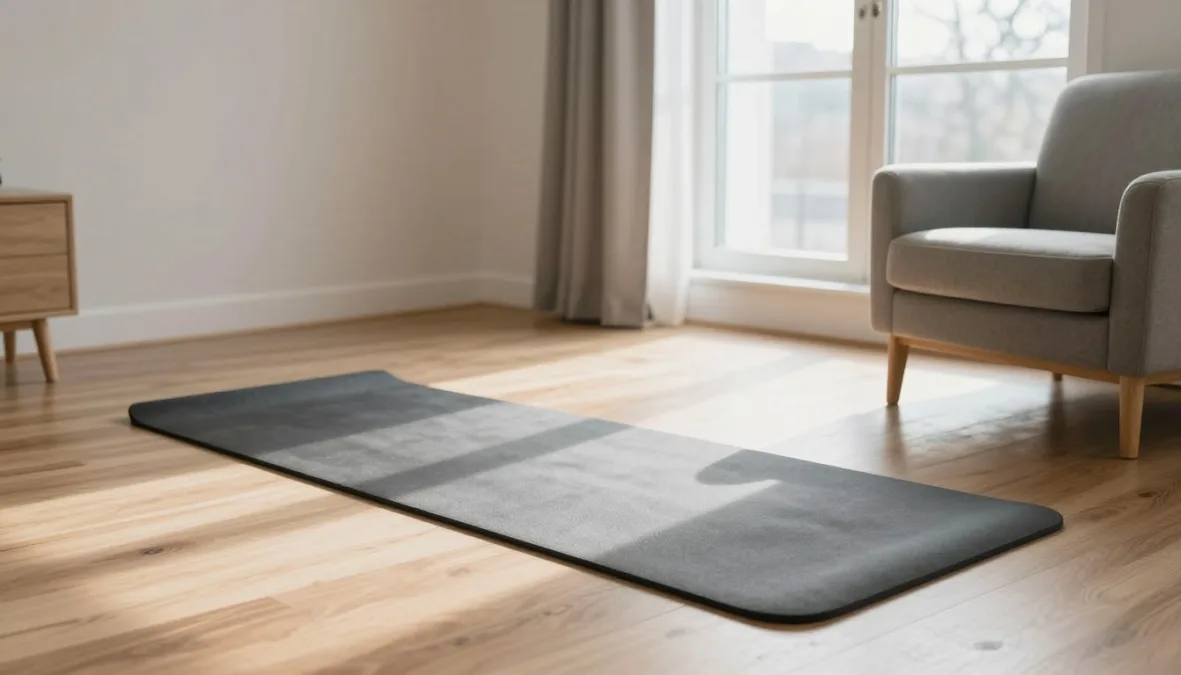
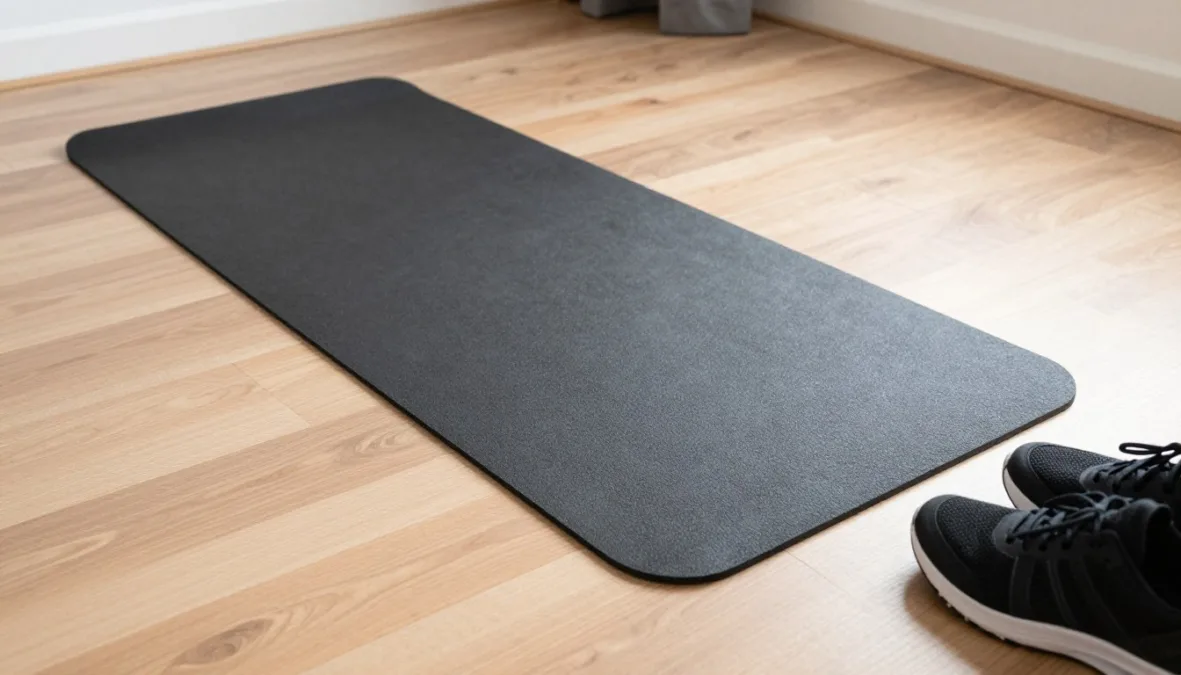
Creating an acoustically friendly workout zone prevents friction with neighbors while protecting flooring from moisture and scuffs during winter indoor sessions. Hardwood and laminate subfloors naturally amplify vibrations, turning small footsteps into loud thuds in the unit below. Placing high-density exercise mats or folded blankets across high-traffic floor areas dampens ground contact sound.
Working out in grip socks or clean indoor sneakers with soft rubber soles cushions heel impact without compromising stability. Clear away coffee tables, area rug edges, and loose cords to provide an unhindered footprint roughly the length of a standard fitness mat. Maintaining adequate airflow by cracking an interior door balances warm indoor heating during intense exertion.
Layering a dense rubber utility mat beneath a standard foam yoga mat adds acoustic absorption and cushions joints on hard apartment subfloors.
Low-Impact Indoor Warm-Up Sequence
Cold winter temperatures stiffen muscles and connective tissue, making a deliberate, grounded warm-up essential before starting bodyweight training. Elevating body temperature indoors requires smooth, flowing movements that avoid rapid pounding or sudden shifts. Gentle joint circles and torso rotations lubricate synovial joints and prepare the cardiovascular system for continuous work.
Perform each preparatory drill with smooth breathing and steady muscular control. Dedicate enough time to each movement to create warmth in the shoulders, spine, hips, and ankles.
- Shoulder Rolls and Arm Sweeps: Stand tall and rotate shoulders backward in wide circles, transitioning into slow overhead reaches that expand the rib cage.
- Standing Hip Openers: Lift one knee toward hip height, rotate the thigh outward in a smooth semi-circle, and set the foot down without a sound.
- Torso Rotations with Reach: Plant both feet wide, pivot slightly on the back ball of the foot, and reach across the chest while engaging the abdominal wall.
- Ankle Mobilizers and Calf Pumps: Alternate peeling each heel off the carpet slowly, flexing the calves and warming up the feet without bouncing.
1. Standing Low-Impact Cardio March and Reach
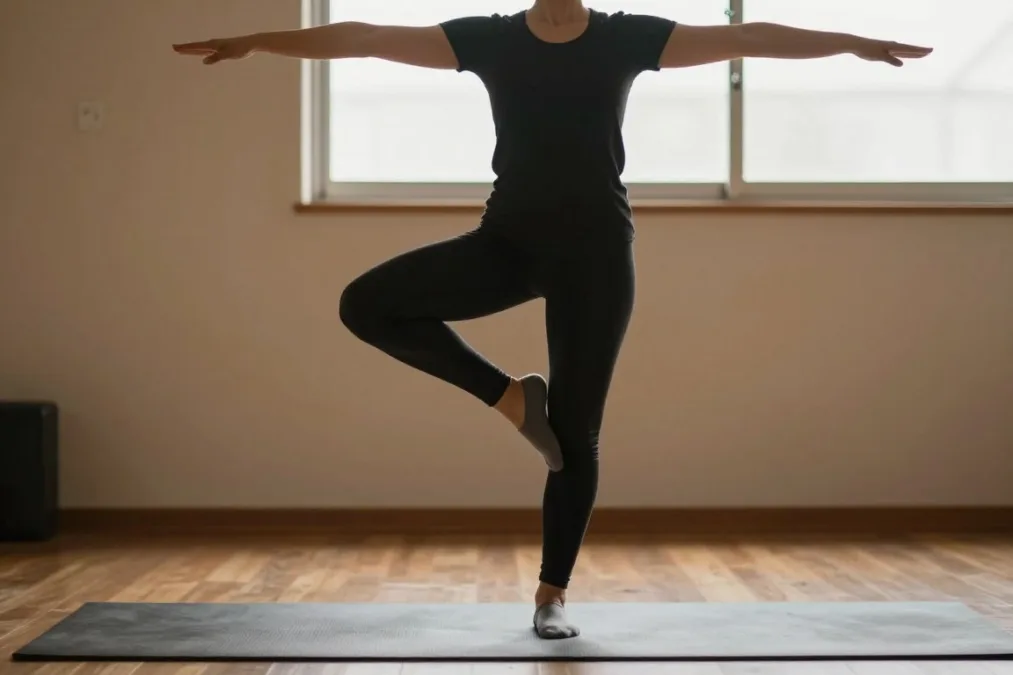
The standing low-impact cardio march elevates heart rate through dynamic limb extension while keeping one foot anchored to the floor at all times. This movement targets the hip flexors, quadriceps, rectus abdominis, and anterior shoulders. It requires only standing space and zero equipment, making it ideal for compact studio apartments.
Begin standing with feet hip-width apart and arms relaxed at your sides. Drive the right knee upward toward hip level while simultaneously pressing both hands toward the ceiling. Lower the right foot with a silent toe-to-heel roll, then immediately repeat the motion with the left knee. Maintain a steady cadence that raises breathing rate while avoiding any audible footfall.
Continue this rhythmic pattern across several unbroken minutes or until moderate cardiovascular fatigue develops. Beginners can keep knee lifts low, while advanced exercisers can deepen abdominal engagement by pulling elbows down to meet the rising knee.
Roll down through the ball of the foot to the heel on every step to eliminate dull thumps against the floorboards.
2. Bodyweight Box Squats to Chair
Box squats using a sturdy living room chair build lower-body strength and reinforce safe hip-hinge mechanics without stressing knee joints. The primary muscles engaged include the gluteus maximus, quadriceps, hamstrings, and stabilizing core musculature. This exercise requires a standard dining chair or bench and a small patch of floor space.
Stand facing away from the chair with feet slightly wider than shoulder width and toes angled slightly outward. Hinge at the hips and bend knees simultaneously, lowering hips backward with control until seated lightly on the chair edge. Pause briefly without relaxing core tension, then drive through the mid-foot and heels to return to an upright standing posture.
Execute multiple sets of controlled repetitions until the thighs feel fatigued. Maintain an upright chest position throughout the ascent to protect the lower back.
Strengths
- Removes joint shearing stress by guiding proper hip mechanics.
- Eliminates ground vibration because the chair arrests downward momentum.
- Provides built-in stability for individuals recovering balance confidence.
Considerations
- Requires an unyielding, stable seat that will not slide backward.
- Can limit range of motion for taller individuals if the seat is too low.
3. Wall Plank with Controlled Shoulder Taps
Wall planks paired with alternating shoulder taps develop anti-rotational core stability and upper-body endurance without requiring floor contact. This movement strengthens the transverse abdominis, serratus anterior, deltoids, and upper back. It uses vertical wall space, leaving floor area clear for small living rooms.
Stand facing a bare wall roughly two paces away, placing hands flat against the drywall at shoulder height and shoulder width. Walk feet back until the body forms a straight diagonal line from heels to crown while bracing the abdominal wall. Lift the right hand slowly from the wall to touch the left shoulder, keeping hips completely square, then return it quietly before repeating on the opposite side.
Maintain this slow alternating tap for multiple steady cycles until the shoulder stabilizers tire. Step feet closer to the baseboard to reduce leverage for beginners, or move feet farther back to increase resistance.
Keep the hips completely steady during hand transitions to force the deep core to stabilize the torso without rotating.
4. Lateral Skater Glides with Floor Sliders
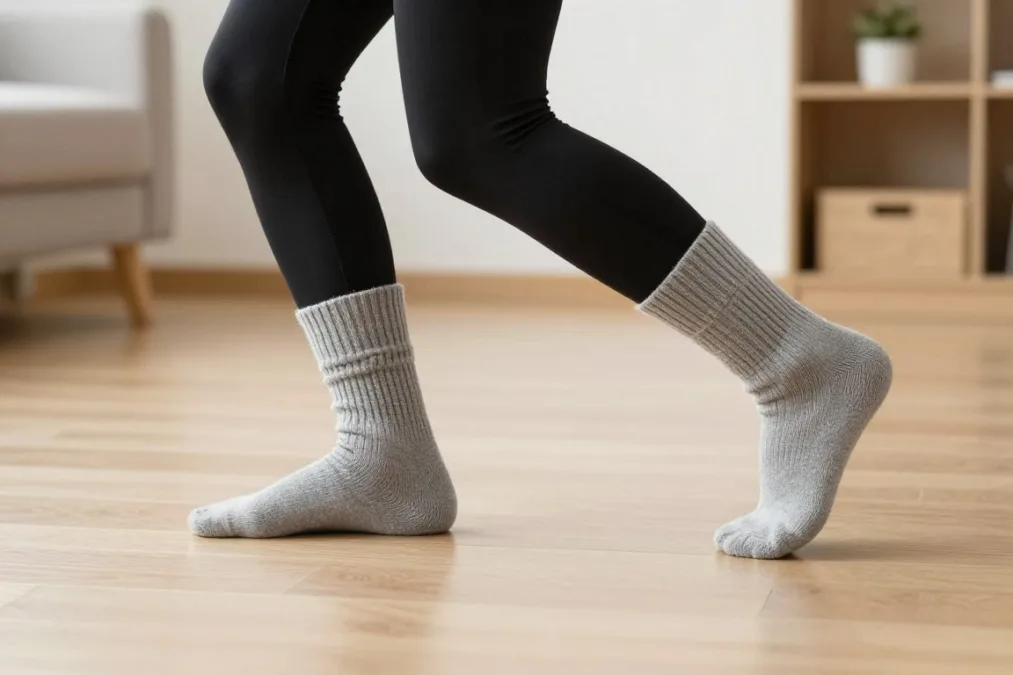
Lateral skater glides deliver high-intensity cardiovascular conditioning and hip abductor strengthening by swapping jumping bounds for smooth, sliding friction. The exercise targets the gluteus medius, inner thighs, quadriceps, and core balance systems. Equipment needs are minimal: hard floors require two microfiber towels or thick socks, while carpeted rooms work best with smooth plastic sliders.
Begin in a shallow athletic quarter-squat with feet hip-width apart and weight centered on the left leg. Slide the right foot outward laterally across the floor, extending the leg while keeping the left knee tracking over the left toes. Pull the right foot smoothly back to center using the inner thigh, then immediately transfer weight and glide the left leg outward.
Perform these continuous sliding repetitions across several rounds to build cardiovascular stamina. Keep the torso leaned slightly forward with a neutral spine to maintain balanced glute tension.
- Maintains constant contact with the floor.
- Produces zero impact shock or acoustic vibrations.
- Keeps continuous tension on stabilizing hip muscles.
Gliding Variations
- Creates loud downward impact forces on landing.
- Relies on explosive joint loading rather than time under tension.
- Transfers reverberation through timber floor joists.
Standard Bounding
5. Seated Core Knee Drives and Twists
Seated knee drives offer an intense abdominal challenge that produces zero floor vibration, making them suitable for late-night or early-morning winter training. The movement trains the rectus abdominis, obliques, and deep hip flexors. A sturdy armchair, dining chair, or edge of a firm sofa is the only equipment needed.
Sit on the forward half of the seat with knees bent, feet flat on the floor, and hands gripping the sides of the chair base. Lean the torso back slightly while maintaining a flat, braced spine and lift both feet a few inches off the rug. Draw the right knee toward the chest while rotating the left shoulder slightly inward, return to center, and alternate to the opposite side.
Execute smooth, alternating knee pulls across multiple rounds until the midsection feels thoroughly challenged. Keep breathing rhythmic and avoid collapsing the lower back into the chair cushions.
Beginner Modification
Keep one heel resting lightly on the rug while pulling the opposite knee toward the rib cage to reduce spinal load.
Advanced Progression
Hover both feet off the floor for the entire set while extending both legs forward between each alternating knee drive.
6. Step-Back Lunges with Overhead Reach
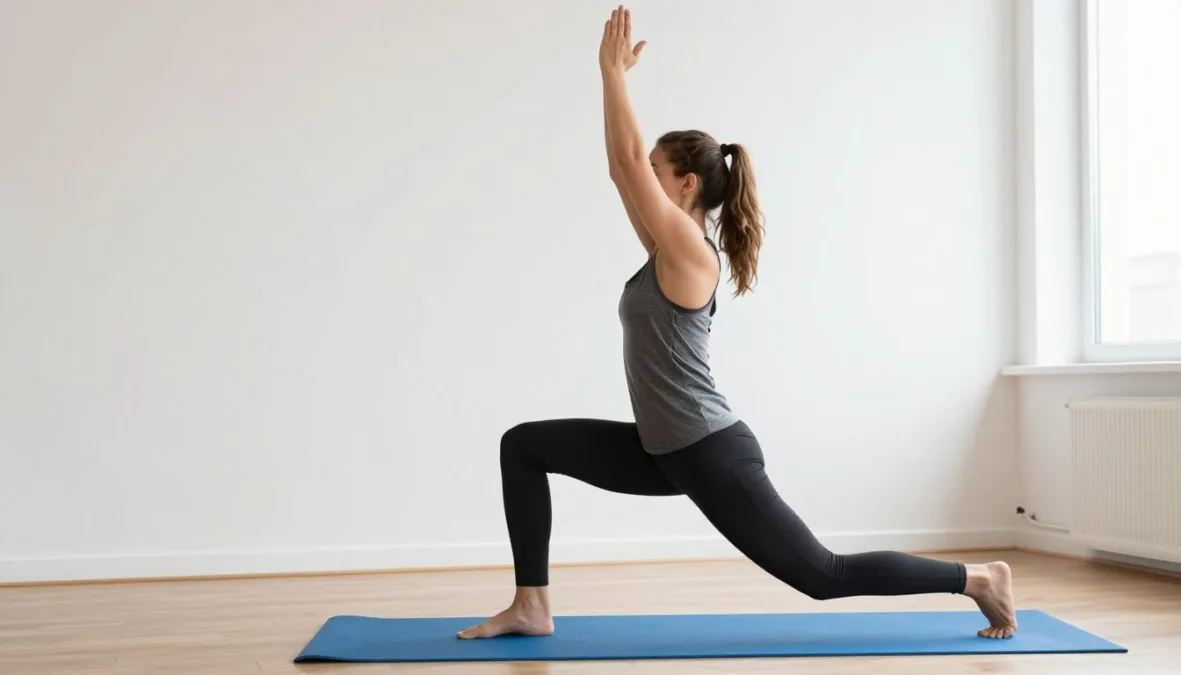
Stepping backward into a lunge places less stress on the patellar tendon than forward lunges and eliminates the loud foot strike common in dynamic lunging. This movement develops quadriceps strength, glute drive, hip mobility, and balance. It requires a clear path roughly the length of a body mat.
Stand tall with feet together, core engaged, and arms down at your sides. Step the left foot backward smoothly, landing lightly on the ball of the foot before lowering both knees into right angles. As the hips descend toward the floor, reach both arms upward toward the ceiling to open the hip flexor and latissimus dorsi. Push through the front right heel to step forward quietly to the starting position.
Complete several controlled repetitions on one leg before alternating to the opposite side. Avoid letting the back knee bang against the hardwood; hover it just above the mat before ascending.
Lower the rear knee under strict muscular control to avoid striking kneecaps against hard flooring surfaces.
7. Quiet Bear Crawl Isometric Holds
The static bear crawl hold delivers full-body isometric tension that demands intense effort while taking up a four-foot footprint. This exercise recruits the deep core, quadriceps, calves, deltoids, and serratus anterior. No equipment is necessary other than a carpeted floor or padded exercise mat.
Set up on hands and knees with wrists aligned directly under shoulders and knees positioned directly beneath hips. Tuck toes under, brace the abdominal wall, and press the palms firmly into the ground to elevate both knees two inches off the mat. Maintain a flat back resembling a tabletop and breathe deeply without allowing knees to drift upward.
Hold this suspended position for sustained intervals until the shoulders and thighs tremble from fatigue. Rest by quietly lowering the knees back to the floor for a brief pause before resuming.
- Check Knee Height: Keep knees hovering low to the ground to keep tension loaded directly onto the quadriceps and core.
- Stabilize the Spine: Place an empty plastic cup on the lower back to practice keeping the pelvis level during the hold.
- Relieve Wrist Pressure: Form fists with flat knuckles against the mat if open-palm positions cause wrist discomfort.
8. Floor Glute Bridge and Leg Extension Flow
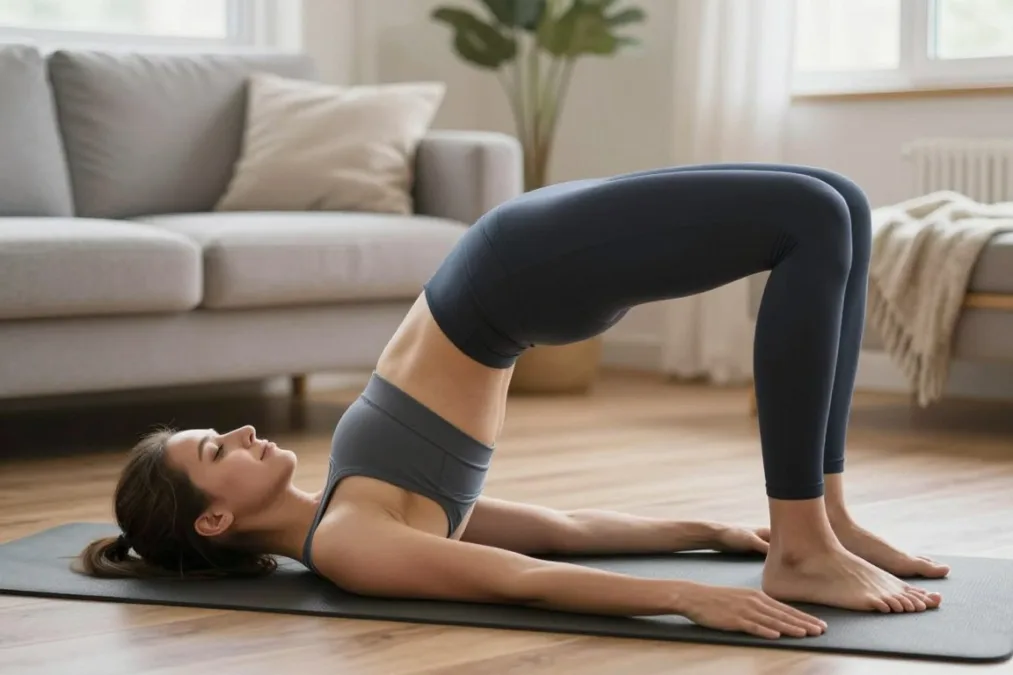
The glute bridge flow develops posterior chain power, targeting the gluteal complex, hamstrings, and lower back erectors without vertical impact. Because the body remains supine against the floor, acoustic transmission through the ceiling below is nonexistent. A cushioned mat or thick rug provides all the support required.
Lie on your back with knees bent, feet flat on the floor hip-width apart, and arms resting along your sides. Drive through both heels to lift hips upward until knees, hips, and shoulders form a straight line, squeezing the glutes at the peak. From this elevated bridge, slowly extend the right lower leg forward until straight, return the foot silently to the mat, and repeat with the left leg before lowering the hips.
Perform repeated bridge-and-extend sequences across multiple sets. Keep the pelvis level and prevent hips from dipping when one foot lifts off the ground.
Pressing upper arms firmly into the floor provides upper-body leverage and stabilizes the pelvis during single-leg reaches.
9. Incline Push-Ups on Sturdy Furniture
Incline push-ups against sturdy home furniture build upper-body pressing power while avoiding the wrist strain and acoustic floor drumming of floor-based push-ups. This movement strengthens the pectoral muscles, anterior deltoids, triceps, and abdominal wall. It utilizes a solid kitchen countertop, dining table, or stable desk.
Stand facing the chosen elevated surface and place hands slightly wider than shoulder width on the edge. Walk feet backward until the body forms a rigid plank line with heels elevated. Bend elbows to lower the chest toward the furniture edge with a steady count, pause briefly, then push firmly back to the starting plank without locking the elbows.
Complete several sets of smooth repetitions until pushing power diminishes. Choose higher surfaces like kitchen counters for a gentler angle, or lower surfaces like a coffee table to increase intensity.
Strengths
- Reduces shoulder compression compared to standard floor push-ups.
- Allows easy resistance adjustment by changing foot distance.
- Eliminates floor creaking caused by heavy palm contact.
Considerations
- Requires furniture with sufficient weight to prevent slipping during pushing.
- Hand placement can feel uncomfortable on sharp furniture edges without a towel.
10. Low-Impact Shadow Boxing and Duck
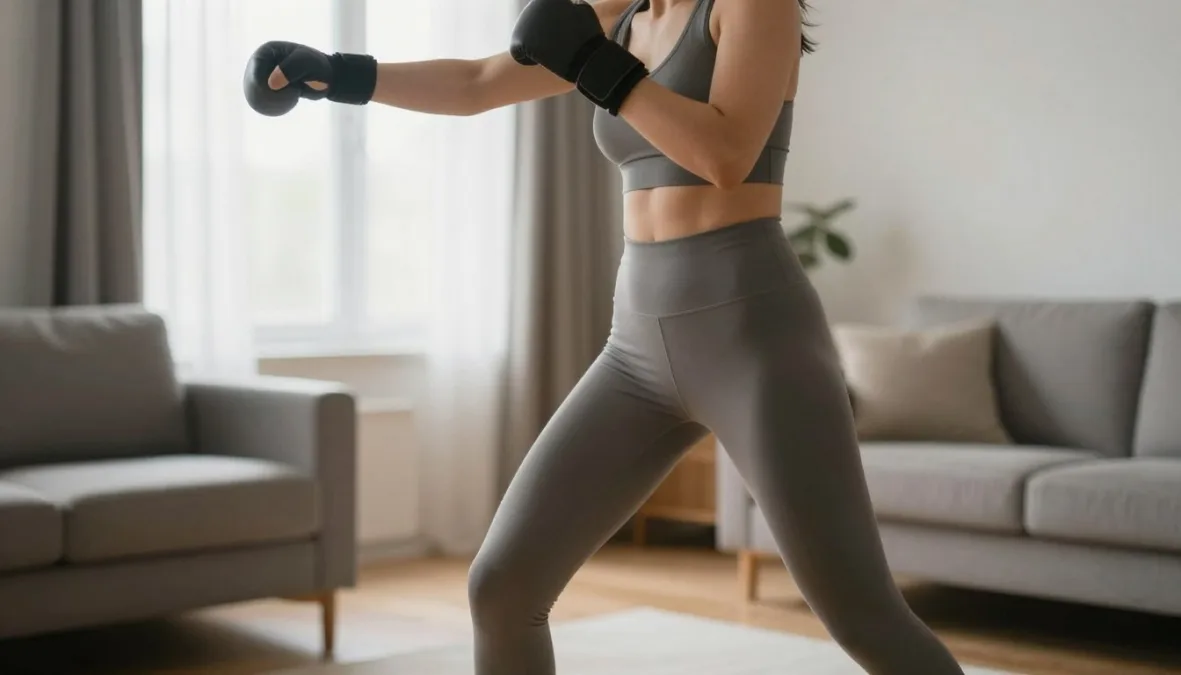
Low-impact shadow boxing combines upper-body rotational velocity with lower-body squat pulses for continuous cardiovascular conditioning. This dynamic sequence recruits the obliques, deltoids, latissimus dorsi, and quadriceps. It requires minimal floor space and zero apparatus, making it ideal for winter indoor exercise.
Adopt an athletic boxer stance with one foot slightly ahead of the other, knees soft, and fists protecting the chin. Throw two controlled punches into the air, such as a lead jab followed by a rear cross, extending arms without snapping elbow joints. Immediately sink into a smooth quarter-squat duck to simulate dodging an imaginary strike, rise back up, and throw another combination.
Maintain continuous fluid movement across multiple timed intervals to elevate heart rate. Keep footwork planted softly on the balls of the feet without bouncing or jumping.
Decelerate punches using upper-back and arm muscle control rather than hyperextending elbows at full extension.
Adapting No-Jump Apartment Workouts for Safety and Longevity
Adjusting movement difficulty protects joint health and makes winter indoor exercise productive for diverse fitness levels, including older adults and beginners. Modifying ranges of motion, utilizing wall supports, and slowing exercise tempo prevents unnecessary strain on hips and knees. Maintaining strict posture and body alignment delivers training benefits without requiring high-speed execution.
Conclude every indoor workout with gentle cool-down stretches to restore muscle resting length and ease heart rate. Focus on calf stretches, seated hamstring reaches, and open-chest doorway stretches that release tension accumulated during training. Stop immediately if you experience sharp pain, dizziness, or unusual joint discomfort, and consult a qualified healthcare professional before beginning or changing any strenuous exercise program.
| Workout Focus | Target Group | Adjustment Technique |
| Chair Squat | Older Adults | Use armrests for guided support during the descent. |
| Cardio March | Beginners | Limit knee elevation to shin height to safeguard balance. |
| Reverse Lunge | Joint Limits | Shorten step length to maintain comfortable knee angles. |
| Push-Up | Wrist Sensitivity | Place forearms against the wall to bypass hand extension. |
Frequently Asked Questions
Can no-jump workouts provide effective cardiovascular conditioning?
Yes, no-jump workouts elevate heart rate effectively by recruiting large muscle groups through continuous, rhythmic movement. Sustained effort and reduced rest intervals challenge the cardiovascular system without requiring airborne impact.
How can floor vibrations be minimized when working out in an apartment?
Floor vibrations decrease significantly when exercises focus on smooth heel-to-toe transitions and controlled decelerations. Placing a high-density equipment mat over problem floor areas absorbs contact forces before they reach the building frame.
Is special equipment necessary for low-impact apartment workouts?
No special equipment is required for these quiet bodyweight routines. Common household items such as dining chairs, kitchen counters, and smooth towels provide sufficient resistance and support.
What should someone do if an exercise causes joint discomfort?
Joint discomfort signals a need to pause the exercise and modify the movement range immediately. If sharp or lingering pain persists, stop the routine entirely and consult a qualified healthcare provider.
How often should these no-jump routines be performed during winter?
These workouts can be performed several times weekly, alternating between strength-focused flows and cardio-oriented movements. Scheduling rest days between demanding sessions supports joint recovery and steady physical progression.
Maintaining Winter Fitness Without Noise
Quiet, low-impact exercise provides a reliable pathway to strength, mobility, and cardiovascular health without disturbing surrounding neighbors. Focusing on deliberate movement mechanics, cushioned footing, and smart room setup allows apartment residents to stay active all winter long. Prioritizing consistency, proper form, and personal safety supports lasting physical wellbeing through the coldest months of the year.

Priyanka Pandey
Senior Research Editor · Top10Sense
Priyanka specializes in tech, consumer products, and digital trends. She combines hands-on testing, vendor interviews, and database research to create trustworthy “Top 10” rankings. Her work has been referenced by industry blogs and brand report pages.