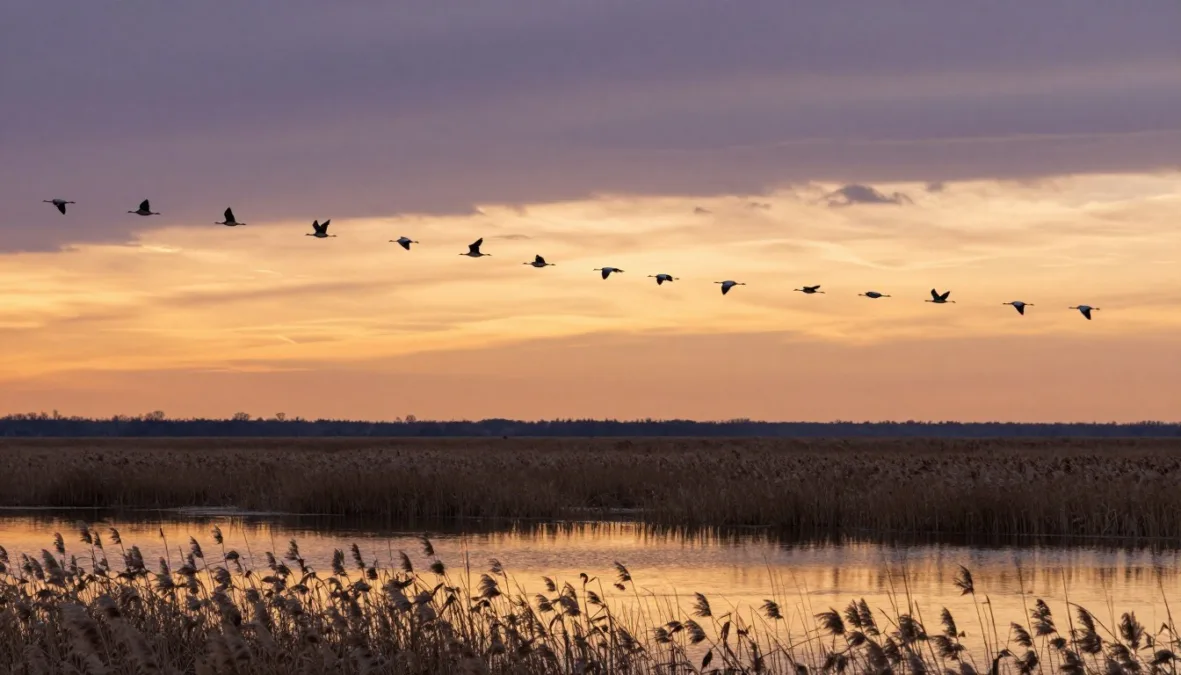
Animal migration represents one of the most dynamic ecological phenomena on Earth, driven by seasonal shifts in temperature, daylight, and resource availability. The species undertaking these journeys share specialized adaptations that enable continuous navigation across thousands of miles of land, sky, and ocean.
Ecological factors such as food supply, breeding opportunities, and physiological limits govern seasonal movement across North America. Understanding these patterns requires examining diverse animal groups that maintain ecological connectivity across the continent.
Defining Migration and North American Ecological Flyways
Migration involves the regular, seasonal movement of animal populations from one geographic region to another and back. Unlike nomadic roaming or permanent dispersal, migratory cycles respond to predictable shifts in seasonal resources, enabling wildlife to exploit transient feeding and breeding conditions.
North America provides an exceptional setting for migration because of its uninterrupted continental landmass extending from the Arctic polar circle to subtropical Central America. Vast north-south mountain corridors, major river basins, and long oceanic coastlines serve as primary navigation avenues for diverse species.
Migration routes and travel dates vary between distinct populations and across years, adapting to fluctuating climatic conditions, ocean currents, and local forage abundance.
Regional flyways funnel hundreds of bird species across central grasslands, coastal shores, and interior river channels. Marine mammals navigate temperate coastal shelf zones, while terrestrial ungulates follow seasonal plant green-up along alpine and tundra gradients.
Ranking the Notable Migratory Species
Classifying migratory animals across varied biological classes requires transparent, comparative criteria rather than subjective value judgments. The species featured here illustrate the sheer geographic scale and biological variety of North American wildlife movements.
No single metric captures the complex reality of wildlife journeys across the continent. Evaluative criteria used to select these species include:
- Total geographic distance covered between seasonal breeding grounds and wintering territories.
- Ecological significance and the transfer of biomass or nutrients across distinct ecosystems.
- Overall population scale and visible gathering dynamics along migration corridors.
- Public recognition and cultural prominence in North American wildlife conservation history.
The resulting ranking balances terrestrial mammals, marine species, birds, and insects to reflect the continent’s interconnected habitats.
1. Monarch Butterfly (Danaus plexippus)
The monarch butterfly performs one of the most intricate multi-generational migrations documented in the insect world. Millions of individual butterflies leave northern breeding grounds in southern Canada and the northern United States each autumn to journey toward high-altitude forests in central Mexico.
The southward leg covers up to three thousand miles, navigated by a single specialized generation entering reproductive diapause. In spring, these overwintered adults mate and fly northward into the southern United States, where successive generations lay eggs on native milkweed plants to continue the cycle.
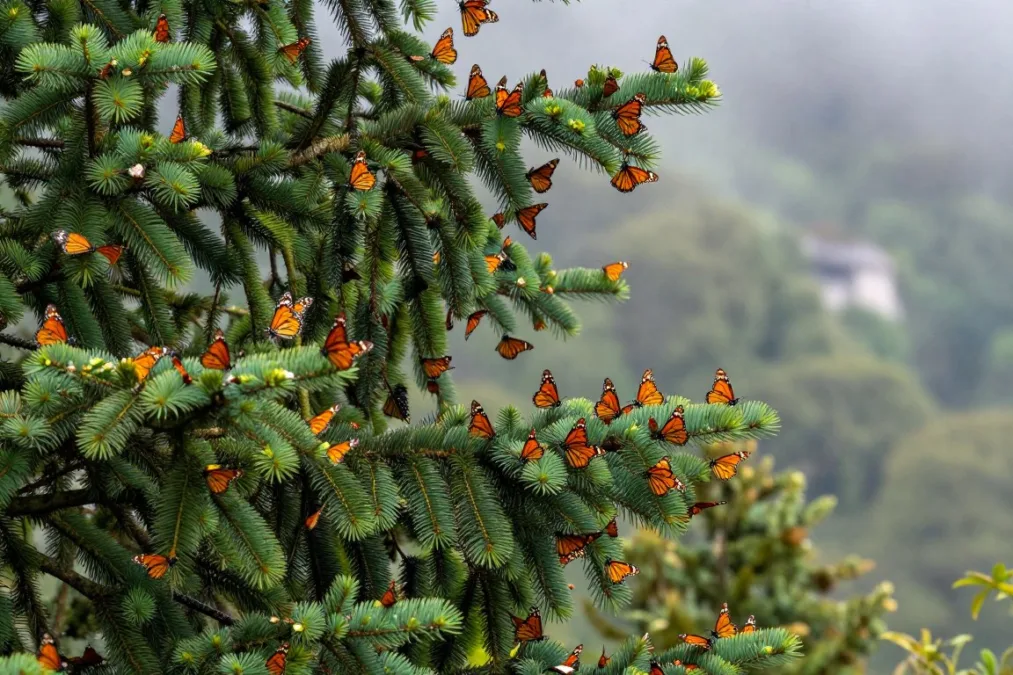
Monarchs gather in dense oyamel fir groves in Mexico to maintain critical thermal protection.
Monarch navigation relies on a time-compensated sun compass located in the antennae, paired with innate circadian clocks and sensitivity to geomagnetic fields.
This species remains ecologically vital as an herbivore, pollinator, and food source across temperate and subtropical floral communities. Loss of milkweed along central flight corridors directly limits breeding success.
2. Arctic Tern (Sterna paradisaea)
The Arctic tern completes the longest known annual migration of any animal on the planet. Breeding across northern Canada, Alaska, and Greenland, this medium-sized seabird travels southward across the Atlantic or Pacific oceans to spend the southern summer along the Antarctic pack ice.
Covering more than twenty-five thousand miles annually, Arctic terns experience more daylight than any other creature by alternating between polar summers. Their meandering global routes follow prevailing planetary wind patterns to conserve energy during trans-oceanic flight.
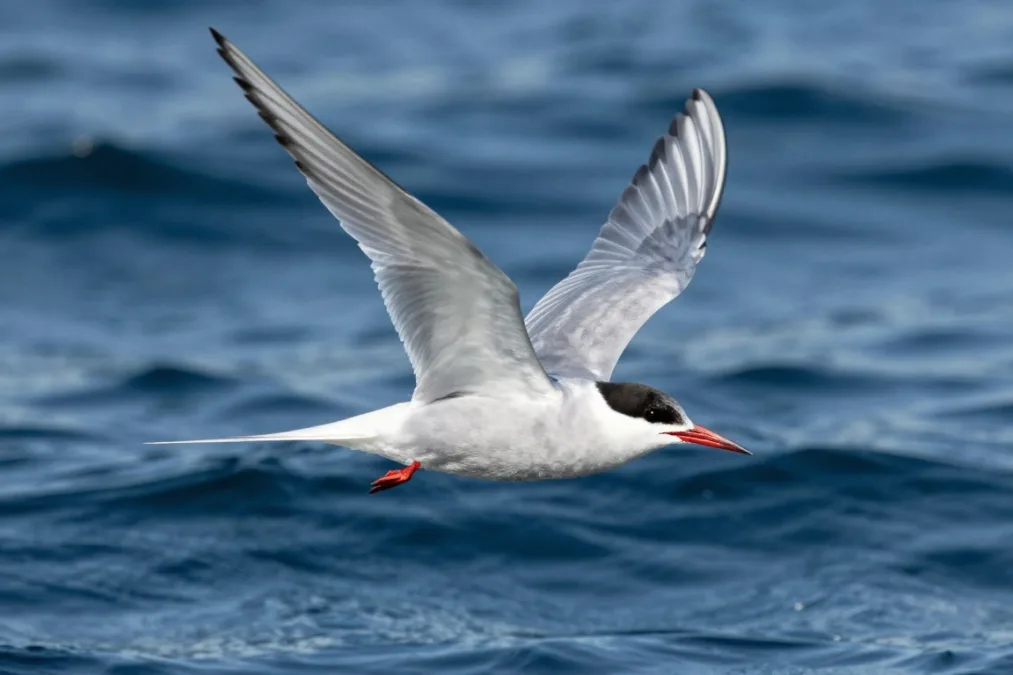
Arctic terns exploit prevailing global wind patterns to minimize energy expenditure across open ocean stretches.
By moving continually between polar regions, Arctic terns exploit peak seasonal productivity cycles in both hemispheres without remaining in freezing winter darkness.
Their light, aerodynamic wing structure enables continuous gliding over open pelagic waters where they plunge-dive for small fish and marine invertebrates.
3. Gray Whale (Eschrichtius robustus)
Gray whales make an exceptional mammalian journey along the western margin of North America. Each autumn, these baleen whales leave nutrient-rich feeding grounds in the cold Bering, Chukchi, and Beaufort seas to travel toward the warm coastal lagoons of Baja California, Mexico.
The round-trip voyage spans ten to twelve thousand miles along the Pacific coast of Canada and the United States. In the shallow Mexican lagoons, female gray whales give birth and nurse calves in sheltered, predator-reduced conditions before migrating north in early spring.
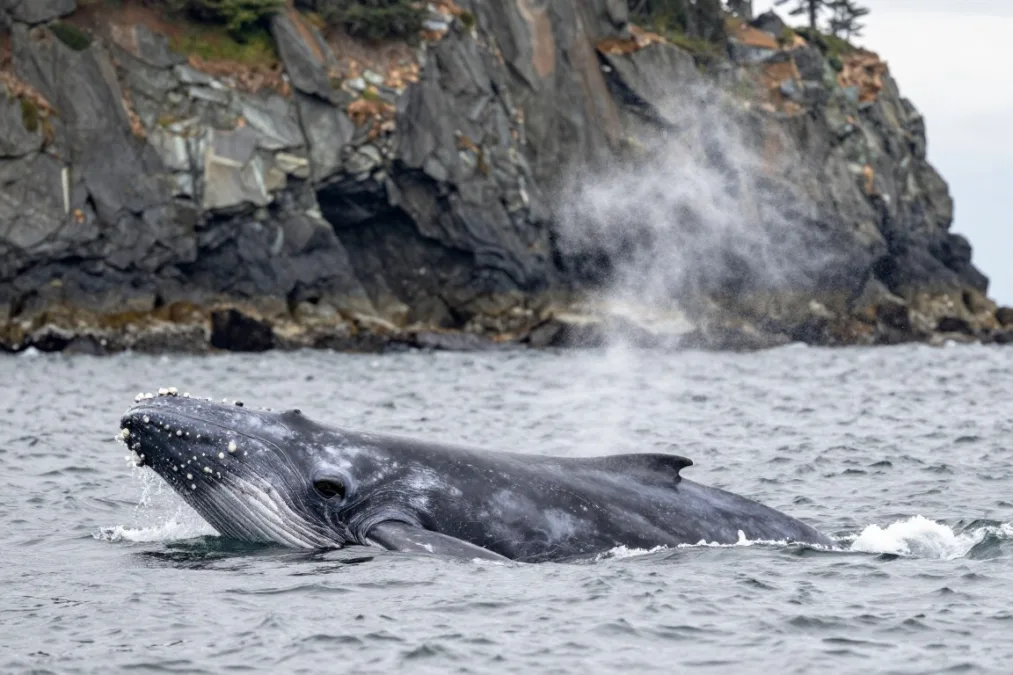
Gray whales navigate close to the shoreline, offering prominent sightings from coastal vantage points.
Commercial shipping lanes and coastal entanglement risks present persistent physical obstacles along shallow Pacific coastal migration pathways.
Gray whales feed by scooping up benthic sediment and filtering amphipods through coarse baleen plates, transferring marine nutrients between deep subpolar waters and shallow southern bays.
4. Barren-Ground Caribou (Rangifer tarandus groenlandicus)
Barren-ground caribou undertake the longest overland migrations of any terrestrial mammal in North America. Huge herds traverse hundreds of miles across northern Alaska and northern Canada, moving between wintering grounds within boreal forests and open tundra calving sites.
These ungulates follow traditional geographic corridors etched across permafrost landscapes over centuries. Calving grounds along Arctic coastal plains offer lower predator densities and emerging nutrient-rich vegetation during short sub-Arctic summers.
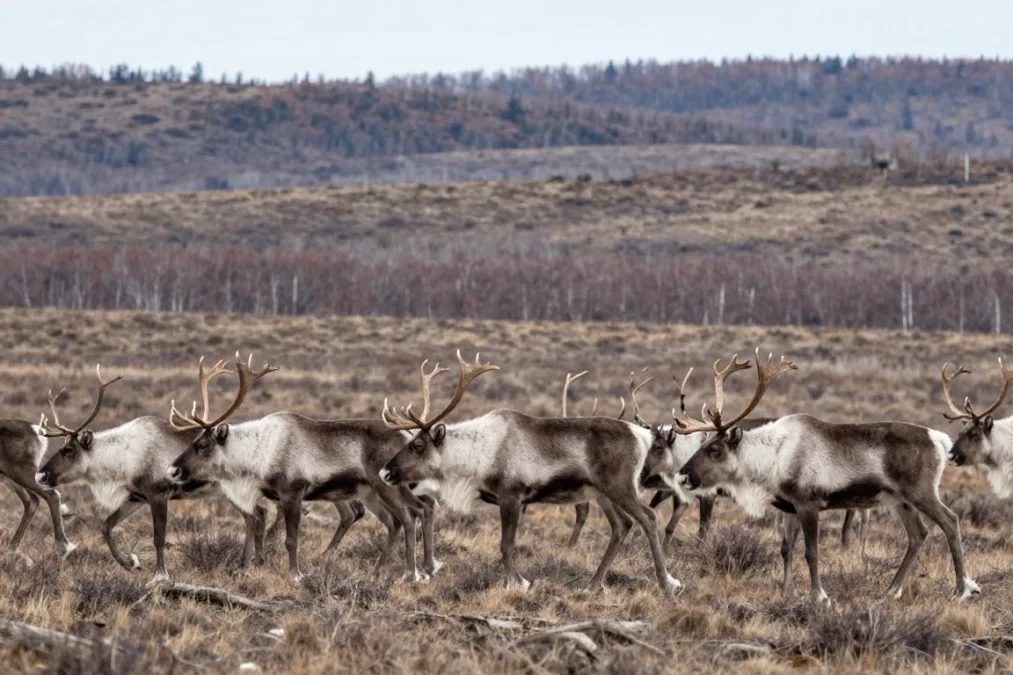
Caribou herds coordinate long-distance travel to reach open tundra calving sites before seasonal predator activity peaks.
Caribou possess specialized concave hooves that act as snowshoes in winter, functional paddles during broad river crossings, and ice scoops for finding ground lichens.
Herds shape tundra vegetation through grazing, while their calves and adults sustain primary Arctic carnivores including wolves, wolverines, and grizzly bears.
5. Humpback Whale (Megaptera novaeangliae)
Humpback whales represent another extraordinary marine migration spanning distinct ocean basins. Populations feeding in the subpolar waters of Alaska and British Columbia travel thousands of miles south to warm winter nurseries surrounding the Hawaiian Islands and coastal Mexico.
During the northern summer, these whales feed intensively on krill and schooling forage fish using sophisticated cooperative techniques such as bubble-net feeding. In tropical wintering waters, feeding ceases entirely as adults engage in complex vocal courtship and nurse newborn calves.
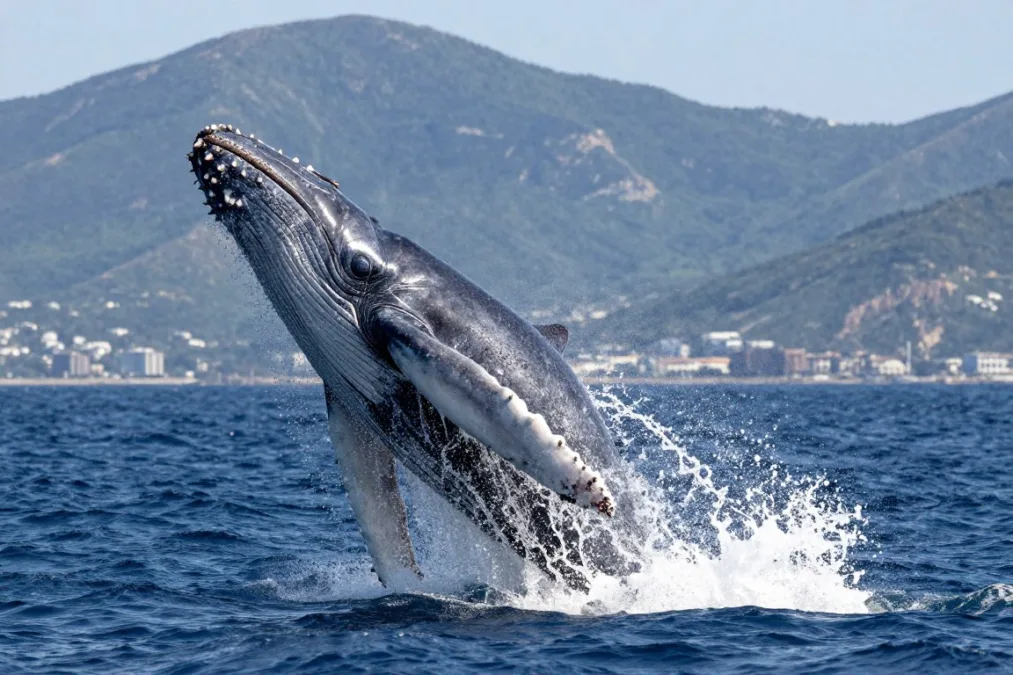
Humpback whales travel between subpolar feeding zones and tropical calving waters across seasonal cycles.
Humpbacks rely almost exclusively on accumulated blubber reserves during months spent in nutrient-poor tropical breeding waters.
Their complex acoustic communications and migratory corridors cross multiple national jurisdictions, requiring broad international coordination for maritime vessel management and acoustic noise reduction.
6. Pacific Salmon (Oncorhynchus spp.)
Pacific salmon encompass several anadromous species, including Chinook, sockeye, and coho, that connect oceanic and freshwater ecosystems. After hatching in cold inland headwaters, juvenile salmon migrate downstream toward the Pacific Ocean, where they spend several years maturing in open marine waters.
Upon reaching reproductive maturity, adult salmon travel thousands of miles back to their exact natal river channels to spawn and die. They navigate using celestial cues, geomagnetic orientation, and acute olfactory imprinting to locate their birthplace.
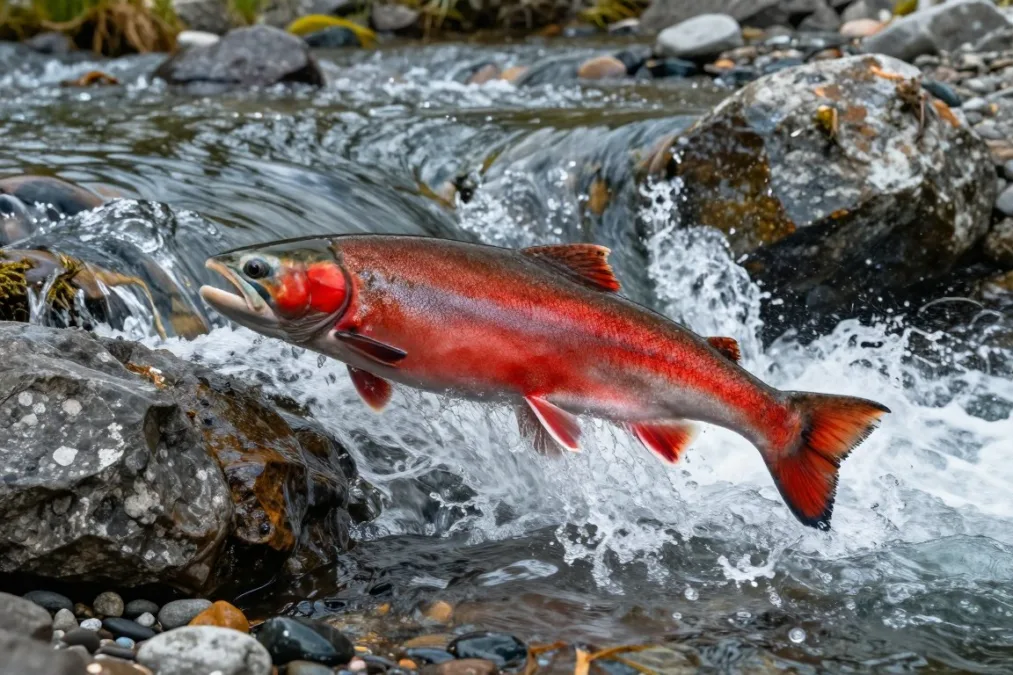
Adult salmon overcome powerful currents and cascades to return to their native spawning grounds.
Hydroelectric dams, habitat fragmentation, and rising water temperatures block access to traditional inland spawning beds, disrupting reproduction.
The post-spawning decomposition of adult salmon delivers essential marine-derived nitrogen and phosphorus to riparian forests, supporting riparian plant growth, insects, and mammals like coastal bears.
7. Snow Goose (Anser caerulescens)
Snow geese conduct massive aerial movements each spring and fall across North America’s interior flyways. Breeding in dense sub-Arctic and Arctic coastal tundra colonies, these waterfowl winter across agricultural landscapes and coastal marshes in the southern United States and northern Mexico.
Traveling in noisy flocks numbering in the tens of thousands, snow geese utilize distinct staging areas to rest and feed along their journey. Their powerful, coordinated flight formations allow individuals to conserve aerodynamic energy across long migratory distances.
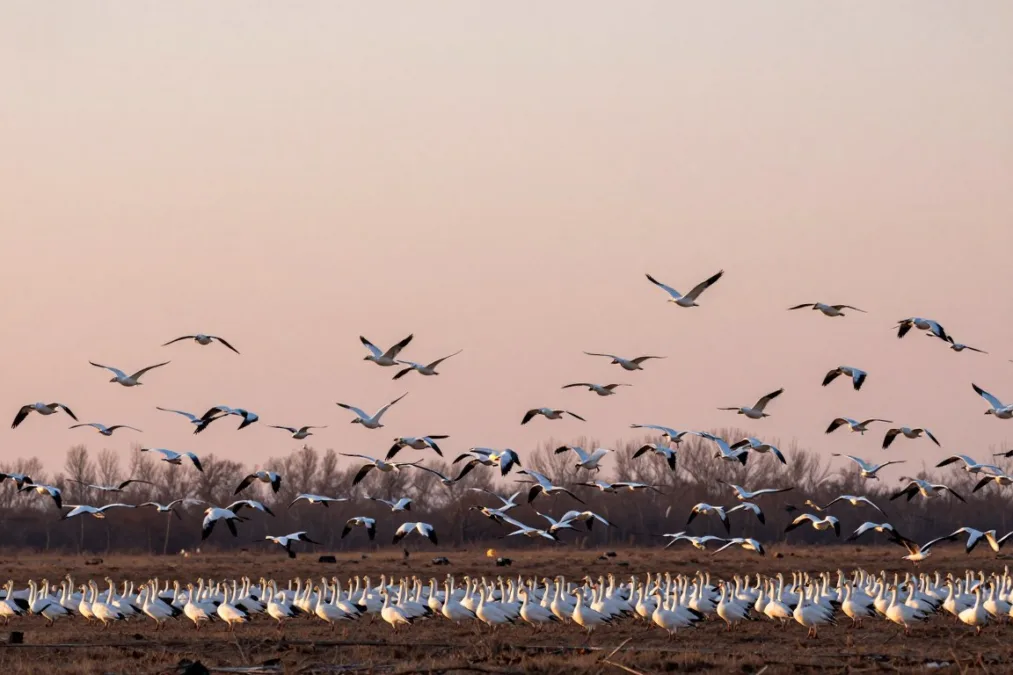
Large flock sizes enhance navigational accuracy and predator deterrence across continental flyways.
The expansion of agricultural food sources along migration routes has fueled dramatic population growth in recent decades. Key staging dynamics for snow geese include:
- Reliant use of agricultural waste grain to replenish metabolic fat reserves during stopovers.
- Intensive grazing on tundra roots and shoots that can alter vegetation structure at breeding colonies.
- Concentrated stopover windows in the Mississippi and Central flyways during late winter.
Coordinated management plans across state and provincial boundaries monitor their population dynamics to protect fragile northern breeding ecosystems.
8. American Bison (Bison bison)
The American bison once conducted the most extensive mammalian herd migrations across the Great Plains of North America. Millions of bison migrated in broad circular paths, following seasonal grass productivity and seeking sheltered river valleys during harsh winter storms.
While nineteenth-century commercial hunting and extensive fencing eliminated these continental treks, remaining wild herds exhibit significant regional migrations. Herds in modern protected reserves, such as Yellowstone National Park, descend from high-elevation summer pastures to lower-elevation geothermal basins and valleys each winter.
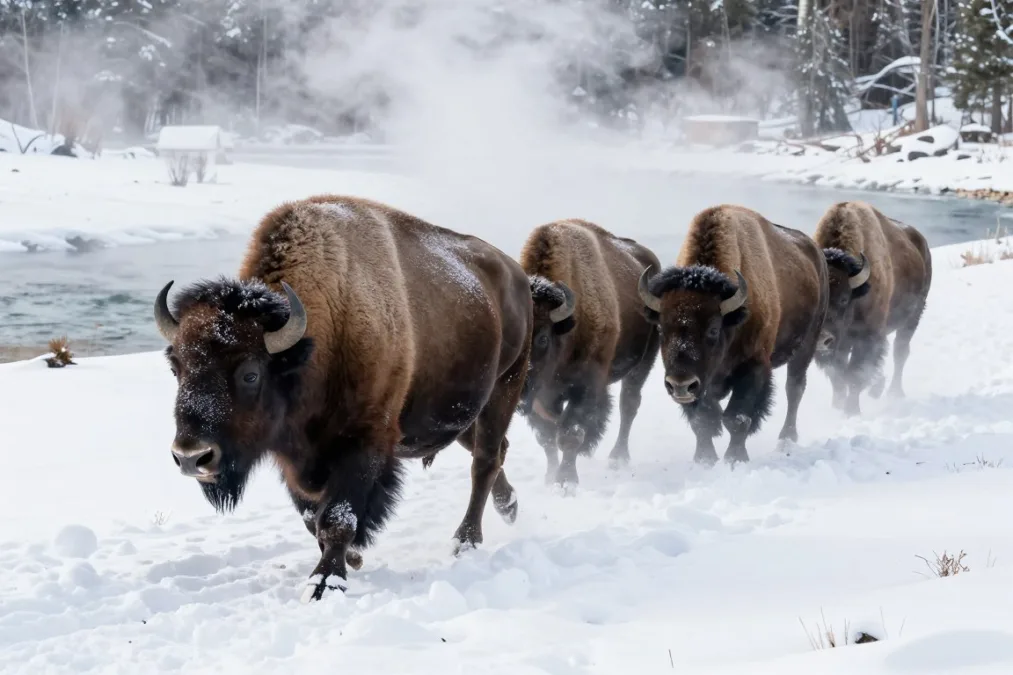
Contemporary wild bison herds continue ancestral seasonal shifts between high plateau pastures and low winter valleys.
Bison movement maintains shortgrass prairie ecosystems through cyclical grazing, wallowing, and targeted nutrient redistribution across broad rangelands.
Managing bison movements outside protected boundaries requires balancing ecological connectivity with livestock grazing concerns and regional fencing restrictions.
9. Canada Goose (Branta canadensis)
The Canada goose is among the most widely recognized migratory birds on the continent, known for its iconic V-formation flight and resonant calls. Migratory populations breed throughout boreal Canada and Alaska, flying south along major flyways to wintering areas in the contiguous United States and Mexico.
Flying in aerodynamic formations allows trailing birds to capitalize on the wingtip vortices created by leaders, reducing flight fatigue over hundreds of miles. Canada geese display high site fidelity, often returning to identical nesting and wintering locations across successive seasons.
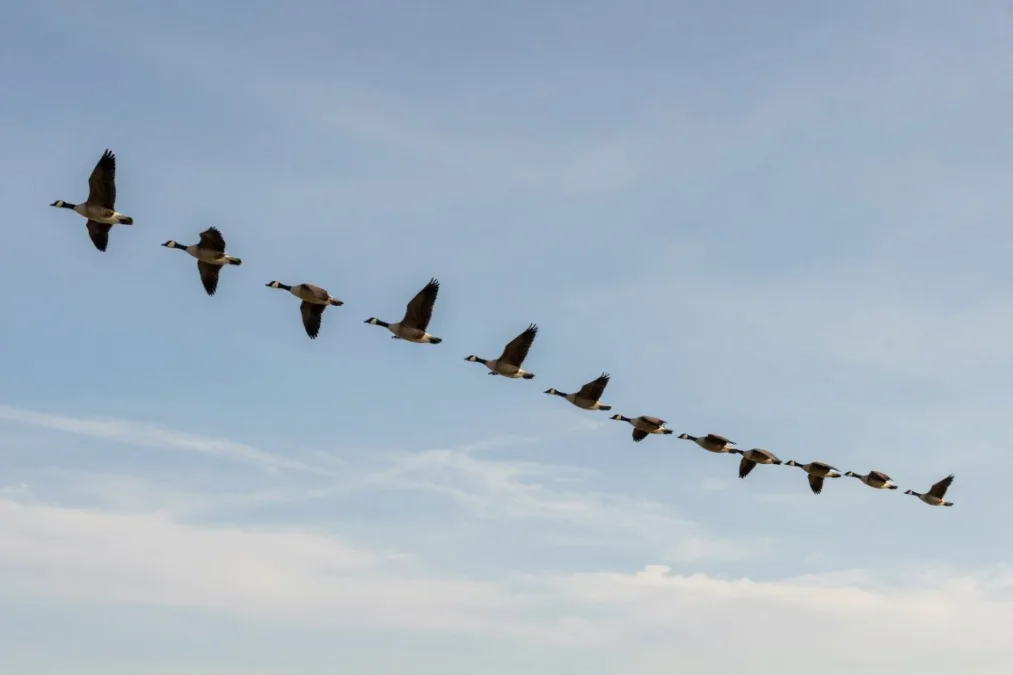
The classic V-formation minimizes individual energy expenditure during sustained continental flights.
While wild northern populations maintain strict seasonal migrations, abundant urban forage and retention ponds have fostered non-migratory resident populations in temperate regions.
This species demonstrates behavioral plasticity, adjusting migration timing and flight distances based on local freeze dates and open-water availability.
10. Ruby-Throated Hummingbird (Archilochus colubris)
The ruby-throated hummingbird demonstrates that extraordinary migratory endurance is not limited to large-bodied wildlife. Weighing less than a nickel, this minute bird breeds throughout eastern North America before migrating to wintering grounds in Central America.
Prior to departure, hummingbirds enter hyperphagia, feeding intensely on floral nectar and small insects to nearly double their body mass in stored fat. Many individuals undertake a nonstop flight across the Gulf of Mexico, remaining airborne for twenty continuous hours over five hundred miles of open water.
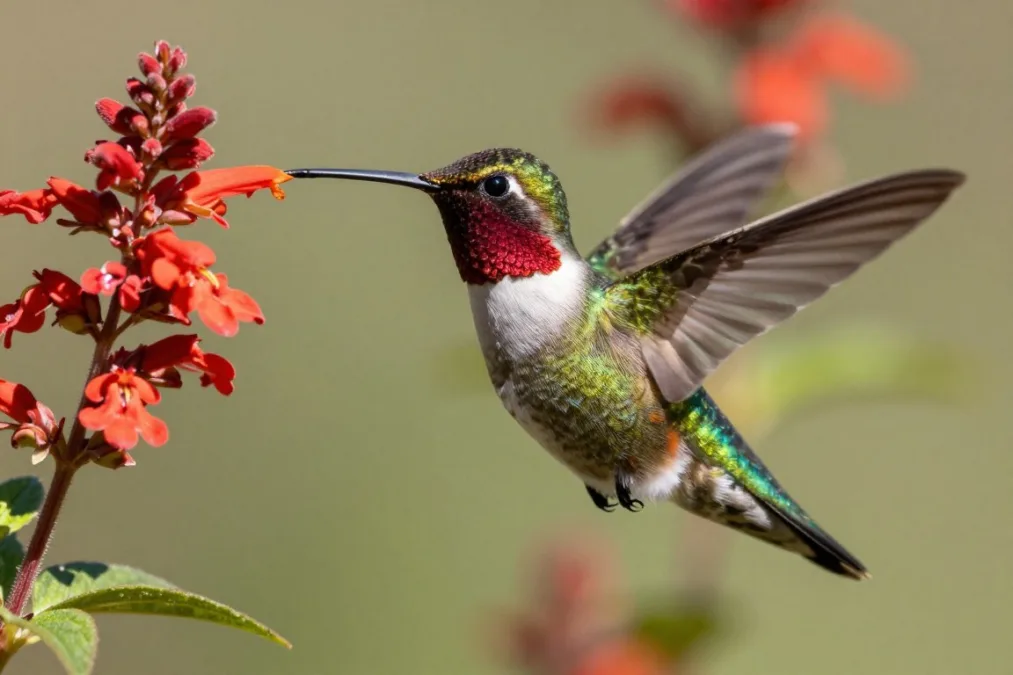
Hummingbirds double their lipid reserves before departing on non-stop ocean crossings.
Unlike flocking waterfowl, hummingbirds navigate migratory pathways entirely alone, traveling at low altitudes during daylight hours before roosting overnight.
Their seasonal arrival coincides with the sequential blooming of native nectar-bearing flowers, establishing essential pollination links across eastern forest biomes.
Environmental Pressures Along Migration Corridors
Migratory species depend on multiple healthy ecosystems separated by hundreds or thousands of miles. A breakdown in any single link along these continental travel chains can cause severe population declines across entire species.
Human development and environmental degradation place unprecedented stress on ancient migration networks across land, air, and marine habitats.
Terrestrial Obstacles
Highways, urban sprawl, and livestock fencing sever overland animal corridors, blocking access to traditional seasonal grazing and winter shelter.
Hydrological Barriers
Dams, river channelization, and water diversions impede upstream fish migration while altering downstream temperatures and flow cycles.
Climatic Disruption
Shifting seasonal temperatures cause timing mismatches between animal arrivals and peak food availability at northern breeding grounds.
Marine species face additional hazards, including commercial entanglement in fishing gear, ship strikes along coastal trade routes, and underwater acoustic noise pollution that disrupts acoustic communication.
Protecting Connected Corridors and Habitats
Preserving long-distance migration requires managing connected ecological corridors rather than isolated islands of protected wilderness. Because migratory wildlife regularly crosses state, provincial, and international borders, effective stewardship demands cross-jurisdictional collaboration.
Modern conservation initiatives increasingly focus on identifying and safeguarding key movement bottlenecks, stopover habitats, and transboundary corridors across North America.
- Engineering dedicated wildlife overpasses and underpasses that facilitate safe terrestrial road crossings over major transportation arteries.
- Establishing international marine protected areas and seasonal vessel speed restrictions along known whale migration routes.
- Restoring critical staging wetlands and riparian buffers that provide essential refueling stops for migrating waterfowl and shorebirds.
- Protecting native host plants and floral nectar corridors through citizen science planting networks and land management incentives.
- Harmonizing wildlife management treaties between Canada, the United States, and Mexico to safeguard shared migratory populations.
Data gathered through GPS telemetry, satellite tracking, and stable isotope analysis helps conservationists map movement corridors with unprecedented geographic precision.
Frequently Asked Questions About North American Migration
What is the primary factor that triggers seasonal animal migration?
Changing day length, known as photoperiod, serves as the primary environmental cue that stimulates hormonal shifts and migratory behavior in most species. Secondary local triggers include declining ambient temperatures and decreasing regional food supplies.
How do migratory animals navigate across thousands of miles without getting lost?
Animals utilize a combination of navigational tools, including celestial orientation using the sun and stars, geographic landmarks, and innate magnetic compasses sensitive to Earth’s geomagnetic field. Many marine and anadromous species also rely heavily on acute chemical and olfactory cues to identify specific natal waterways.
Do animal migration paths remain identical every single year?
Migration routes often vary between individual populations and can shift from year to year based on prevailing weather events, snowpack levels, and changing forage availability. Many bird species and marine mammals adjust their specific stopover points and departure dates in direct response to immediate seasonal conditions.
Why do some populations stop migrating and become permanent residents?
Certain populations, such as urban Canada geese, alter their migratory habits when human-modified landscapes provide continuous year-round food supplies and open water. When the energetic cost of traveling outweighs the local survival risks of wintering in place, resident behaviors often develop.
Which North American animal travels the longest distance during its annual migration?
The Arctic tern travels the longest distance of any animal, flying more than twenty-five thousand miles round trip each year between its Arctic breeding grounds and Antarctic wintering waters. Among North American marine mammals, the gray whale undertakes the longest regular journey, covering up to twelve thousand miles round trip along the Pacific coastline.
Preserving Continental Migratory Pathways
The survival of North America’s migratory wildlife depends on safeguarding interconnected landscapes that span the entire continent. Protecting vital travel corridors, seasonal feeding grounds, and secure breeding habitats supports biological diversity across national borders. Sustained collaborative stewardship helps maintain these extraordinary continental journeys for future generations.

Priyanka Pandey
Senior Research Editor · Top10Sense
Priyanka specializes in tech, consumer products, and digital trends. She combines hands-on testing, vendor interviews, and database research to create trustworthy “Top 10” rankings. Her work has been referenced by industry blogs and brand report pages.