
Chair exercises for seniors provide a safe, accessible method to build muscle strength, improve joint flexibility, and support daily balance without placing undue stress on sensitive joints. Seated movements stabilize the pelvic base while allowing the legs, core, and upper body to move through comfortable ranges of motion. Consistent seated training preserves mobility and functional independence for daily living.
Selecting the appropriate movements depends on individual joint comfort, baseline endurance, and postural stability. Starting with steady breathing and unweighted movements allows older adults to build foundational strength before adding gentle resistance. A well-constructed seated program targets every major muscle group while prioritizing personal comfort and stability.
Essential Chair Exercises for Seniors Safety and Setup
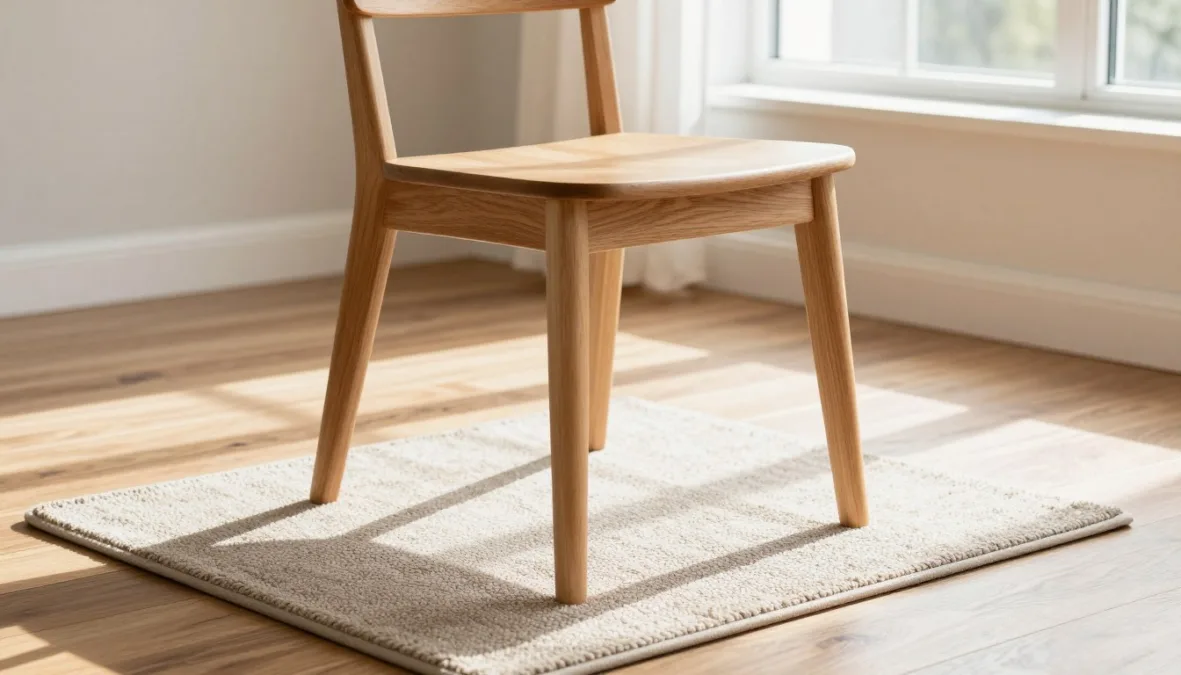
A secure environment provides the foundation for effective seated exercise. Practitioners must select a sturdy chair without wheels, swivel mechanisms, or folding hinges that could shift under body weight. A firm seat with a flat base and a solid backrest offers far better structural support than a soft, cushioned armchair.
Correct positioning requires placing the feet flat on the floor, aligned directly beneath the knees. The torso remains upright, lifting the crown of the head toward the ceiling while drawing the shoulders back and down. Maintaining steady, continuous breathing supports blood flow and helps prevent sudden spikes in blood pressure during physical exertion.
Participants should move smoothly within a pain-free range of motion rather than forcing stiff joints past natural limits. Exercise should stop immediately if dizziness, chest pain, nausea, or shortness of breath occurs. Older adults managing chronic health conditions, joint replacements, balance concerns, or recent injuries should consult a healthcare professional before beginning any new exercise routine.
Discontinue exercise and rest immediately if unusual joint pain, lightheadedness, or shortness of breath develops. Consulting a physician before starting protects individuals managing cardiovascular issues, osteopenia, or balance impairments.
1. Seated Marches
Seated marches warm up the hip flexors, activate the abdominal wall, and elevate the heart rate through rhythmic lower body motion. This movement simulates the mechanics of walking while eliminating the balance demands of single-leg standing. Regular marching also stimulates circulation throughout the legs and feet.
The movement begins by sitting upright toward the middle of the seat with the spine elongated and the hands resting lightly on the sides of the chair. Engaging the core muscles stabilizes the pelvis and prevents the lower back from rounding during the leg lift.
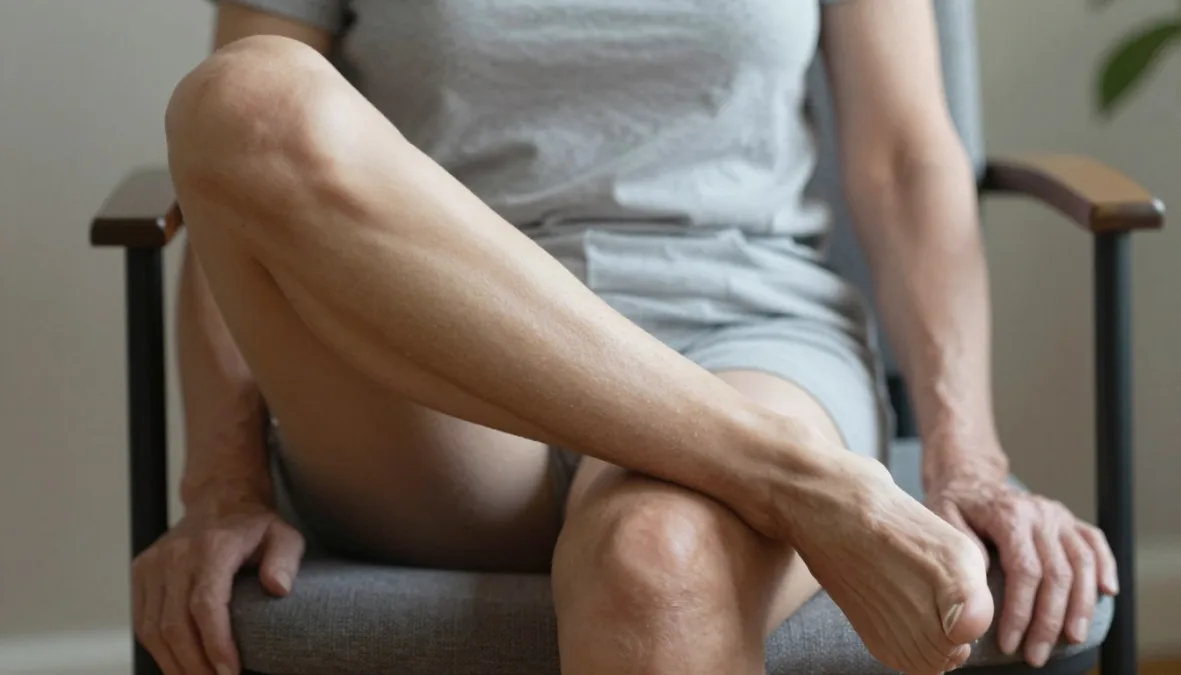
- Sit tall with feet flat on the floor, hip-width apart, and shoulders back.
- Lift the right knee upward toward the chest in a smooth, controlled motion while keeping the torso still.
- Lower the right foot softly to the floor and immediately lift the left knee to repeat the movement.
- Continue alternating legs at a steady, rhythmic pace for ten lifts on each side.
The primary benefits include improved hip mobility, stronger abdominal muscles, and elevated cardiovascular activity. Consistent practice assists in stepping over thresholds, ascending stairs, and maintaining walking stamina throughout the day.
2. Ankle Circles
Ankle circles target joint mobility, calf flexibility, and lower leg circulation through slow rotational movement. Sedentary periods often lead to stiffness around the ankles, which impairs walking cadence and balance reactions. Performing circular rotations restores synovial fluid distribution within the ankle joint.
The exercise begins with the practitioner seated back against the chair backrest, maintaining an elongated spine and relaxed shoulders. One foot lifts slightly off the floor, extending the lower leg just enough to allow full circular rotation without contacting the ground.
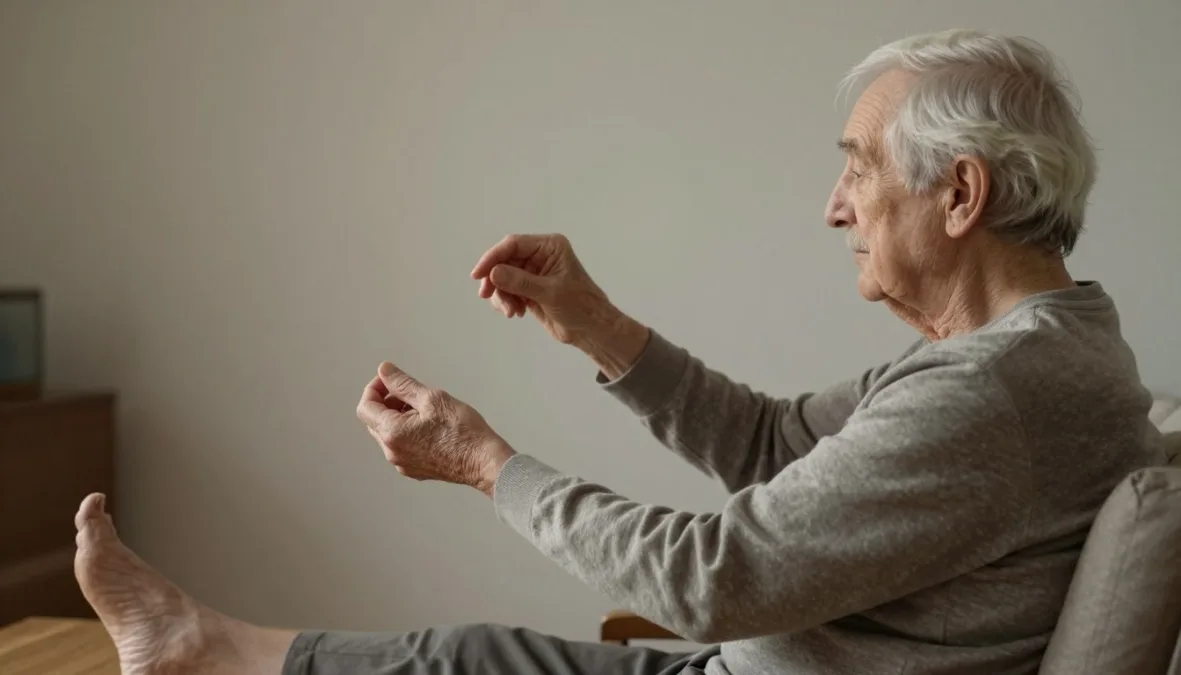
Rotating the foot slowly in clockwise circles releases tightness along the outer ligaments and the Achilles tendon. Reversing the motion counterclockwise engages the opposing tendon groups and strengthens the shin muscles. Completing ten circles in each direction per foot promotes fluid joint action.
Moving the ankle slowly through its complete perimeter delivers the greatest mobility benefit. Keeping the leg steady isolates movement to the ankle joint rather than rotating the entire thigh.
3. Leg Extensions
Seated leg extensions strengthen the quadriceps muscles on the front of the thighs, which are critical for standing up, climbing stairs, and stabilizing the knees. By strengthening the extensor mechanism of the knee joint, this movement reduces strain on cartilage and ligaments. It provides significant lower-body conditioning without loading the spinal column.
The starting position places the participant seated firmly with the back supported by the chair and the knees bent at right angles. The hands grip the side edges of the chair seat to provide additional upper-body stability and prevent shifting during the lift.
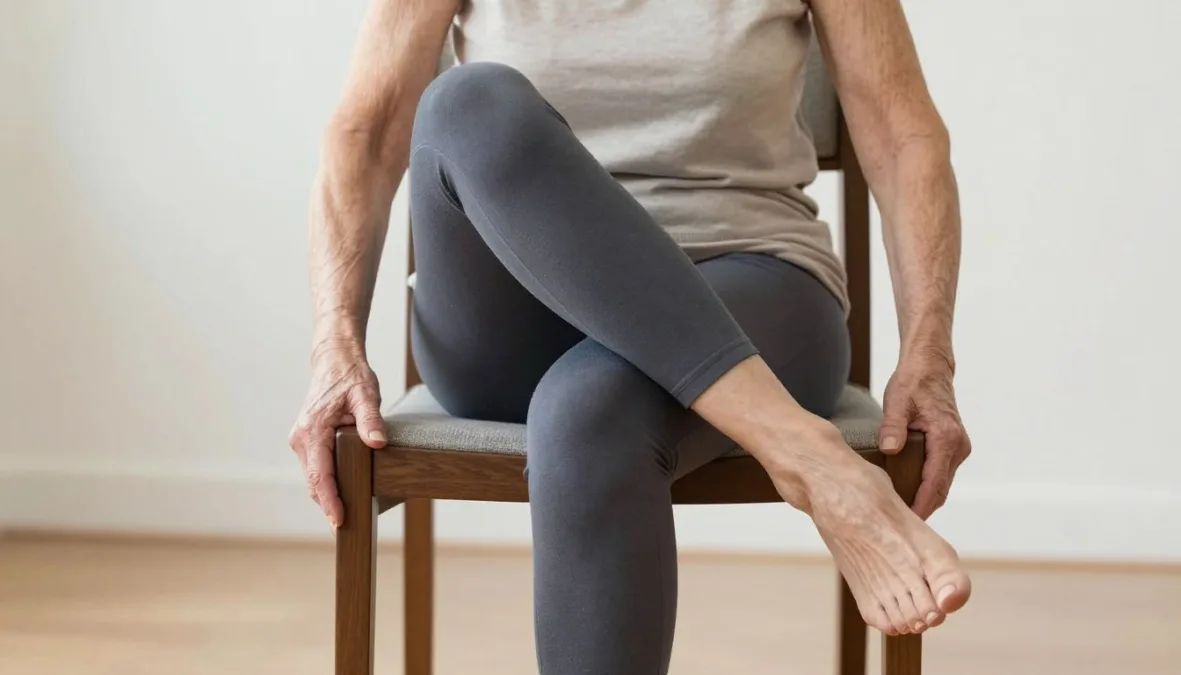
- Sit back with an upright posture, keeping the shoulders relaxed and both feet resting flat.
- Straighten the right leg forward until the knee is nearly straight, flexing the foot toward the shin.
- Pause briefly at the top of the extension while contracting the front thigh muscle.
- Lower the leg slowly back down to the floor under control, then perform ten repetitions before alternating to the left leg.
Primary benefits include enhanced quadriceps strength, improved knee tracking, and reduced joint stiffness. Stronger thigh muscles directly support confidence during household transfers, curb stepping, and prolonged standing tasks.
4. Heel-to-Toe Lifts
Heel-to-toe lifts build dynamic mobility in the lower legs by alternating between calf contraction and shin activation. This movement targets the gastrocnemius, soleus, and tibialis anterior muscles, which control foot clearance during walking. Enhancing strength in these lower leg muscles directly reduces the risk of tripping over uneven carpet or thresholds.
The starting posture requires sitting tall toward the front chair edge with both feet planted parallel to one another, hip-width apart. The hands rest comfortably on the thighs or on the chair frame for gentle support.
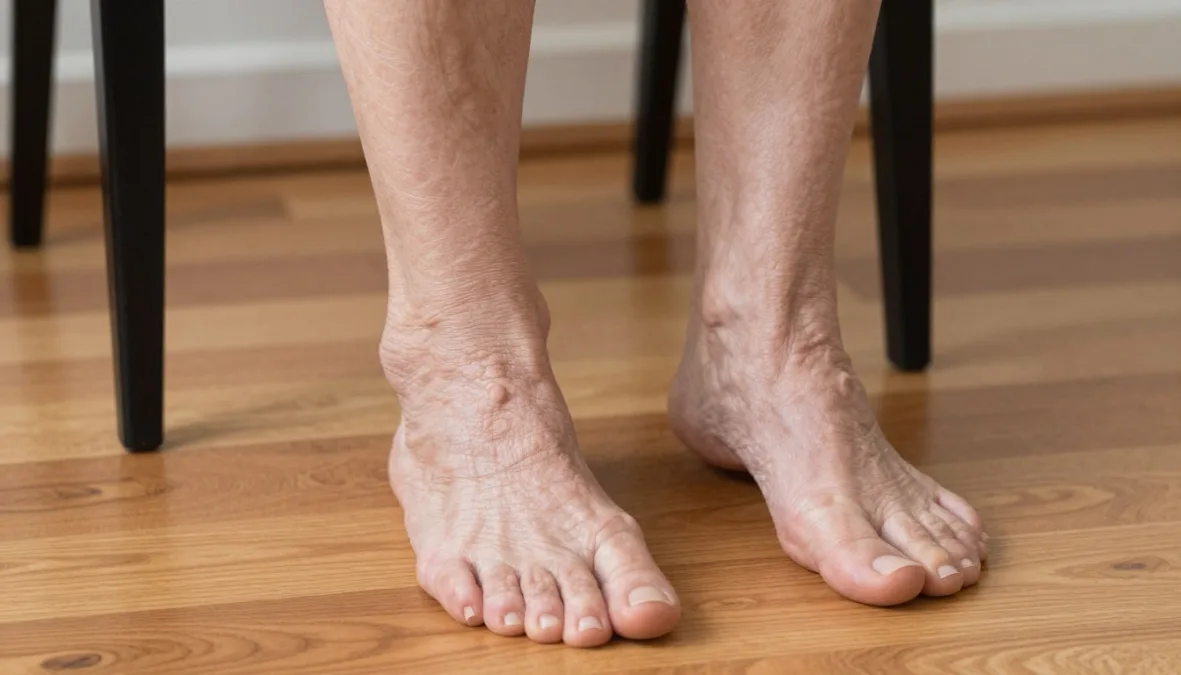
The exercise begins by lifting both heels high off the floor while pressing firmly through the balls of the feet to contract the calves. The heels then lower smoothly, and the toes immediately pull upward toward the shins while keeping the heels grounded. Alternating through this rocking sequence for ten to twelve repetitions restores lower leg elasticity.
Lifting the toes as high as possible activates the shin muscles, which are vital for clear foot placement during walking. Smooth transitions between heel lifts and toe lifts support healthy venous blood return from the feet.
5. Seated Knee Lifts
Seated knee lifts emphasize deep abdominal engagement and hip flexor development from a stabilized base. Unlike continuous marching, this exercise incorporates a deliberate pause at the apex of the lift to demand sustained muscle contraction. This static hold strengthens the lower abdominal wall and improves the muscular endurance needed for balance corrections.
The participant sits toward the front of the seat with the back straight and unsupported by the chair back. The hands hold the chair edges beside the hips, maintaining steady downward pressure to stabilize the torso.
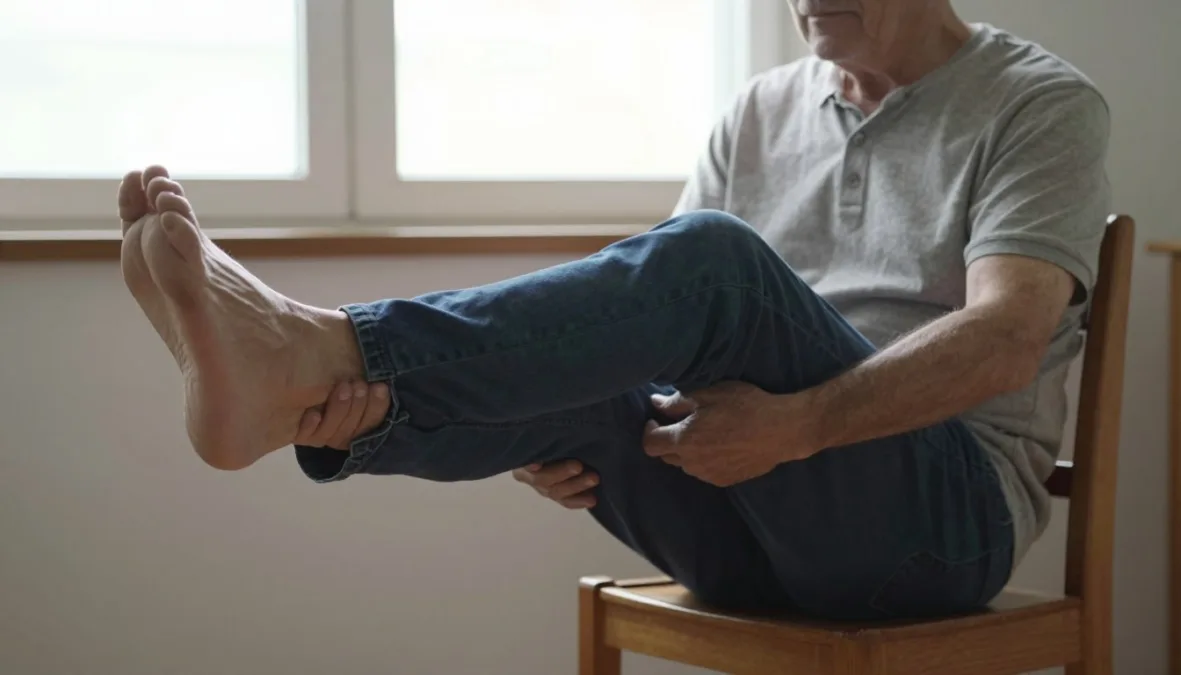
- Align the spine upright with the crown of the head reaching upward and the feet planted firmly.
- Inhale gently, then exhale while drawing the navel toward the spine to brace the core muscles.
- Lift one knee smoothly toward the chest, holding the position at the top for a full breath cycle.
- Return the foot to the floor with complete control, performing eight to ten repetitions per leg.
Key benefits encompass core stability, enhanced pelvic alignment, and greater strength in the primary hip flexors. Maintaining an unyielding torso throughout the lift reinforces good posture and prevents unnecessary lower back strain.
6. Arm Raises
Arm raises enhance shoulder mobility, expand chest capacity, and strengthen the upper back musculature. Many older adults experience restricted shoulder elevation, which complicates overhead reaching into high cupboards or putting on clothing. Performing controlled seated raises restores functional range of motion throughout the shoulder complex.
The starting position involves sitting tall in the chair with the feet flat, the abdomen gently engaged, and the arms resting naturally along the sides of the torso. The palms face inward toward the thighs, and the shoulder blades remain pulled back and down.
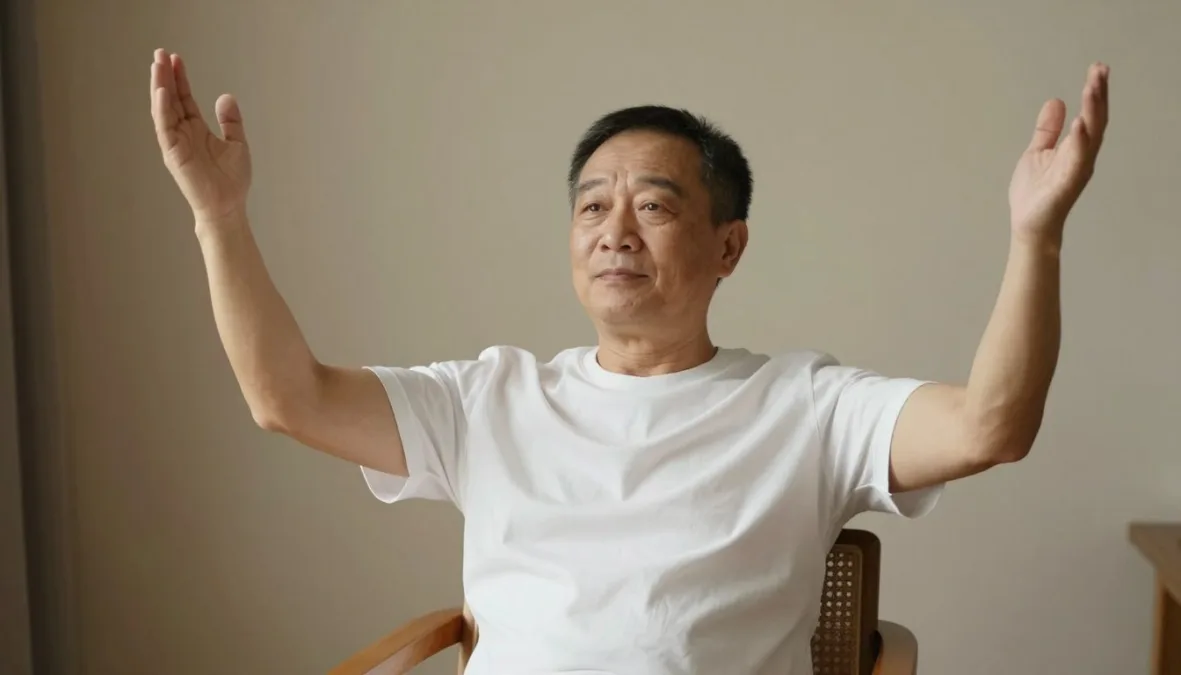
The arms elevate forward and upward to shoulder level or overhead, moving only within a comfortable, pain-free range. Lowering the arms slowly back down to the sides against resistance builds control throughout the shoulder girdle. Repeating the movement ten times strengthens the deltoids, upper back, and postural stabilizers.
Keep the neck relaxed and avoid shrugging the shoulders upward toward the ears during the raise. Raising the arms only to shoulder level is completely acceptable if overhead movement causes joint irritation.
7. Shoulder Rolls
Shoulder rolls release accumulated muscular tension in the upper trapezius, neck, and upper back while encouraging open chest posture. Prolonged sitting often causes the upper back to round and the head to project forward. Rolling the shoulders systematically reverses this slouching tendency and restores healthy scapular mechanics.
The participant sits comfortably with the spine tall and supported, resting the hands flat on the tops of the thighs. The chin remains level with the floor, preventing strain on the cervical vertebrae throughout the movement.

- Sit with a straight spine, relaxed neck, and hands resting gently on the thighs.
- Lift the shoulders smoothly upward toward the ears on a slow inhalation.
- Roll the shoulders backward, squeezing the shoulder blades gently together behind the rib cage.
- Drop the shoulders downward away from the ears on the exhalation, completing ten backward circles before reversing direction.
Primary benefits include diminished neck tension, improved thoracic extension, and greater shoulder flexibility. Performing this exercise daily helps counteract the postural fatigue caused by reading, computer work, or seated leisure.
8. Seated Torso Rotations
Seated torso rotations preserve rotational flexibility in the thoracic spine while strengthening the internal and external oblique muscles. Torso twisting is an essential functional motion required for looking behind while driving, reaching across a table, or dressing. Anchoring the pelvis to a chair allows the spine to rotate safely without placing torsional shear on the knees or hips.
The starting posture requires sitting tall toward the middle of the chair seat with both feet planted firmly on the floor, slightly wider than hip distance. Crossing the arms over the chest with hands resting on opposite shoulders keeps the movement centered in the trunk.

Rotating the upper torso slowly to the right brings the chest across the midline while keeping the hips and knees pointing straight forward. Pausing briefly at the end of the comfortable range allows the spine to adapt before gently returning to center. Completing eight to ten slow rotations to each side maintains rotational mobility throughout the torso.
Initiate rotation from the ribs and upper back rather than forcing the neck to twist excessively. Anchoring both sit bones firmly into the chair ensures that the rotation occurs safely through the mid-back.
9. Biceps Curls
Biceps curls build upper arm strength and elbow joint integrity, directly supporting lifting and pulling tasks in daily life. Everyday activities such as carrying grocery bags, picking up household objects, and pulling doors open require strong forearm and upper arm musculature. Performing curls in a seated position isolates the arms and protects the lower spine from compensatory swinging.
The starting setup places the exerciser seated upright, holding the arms extended downward along the sides of the chair. The exercise can be performed using light water bottles, small hand weights, or simply muscle contraction with closed fists.
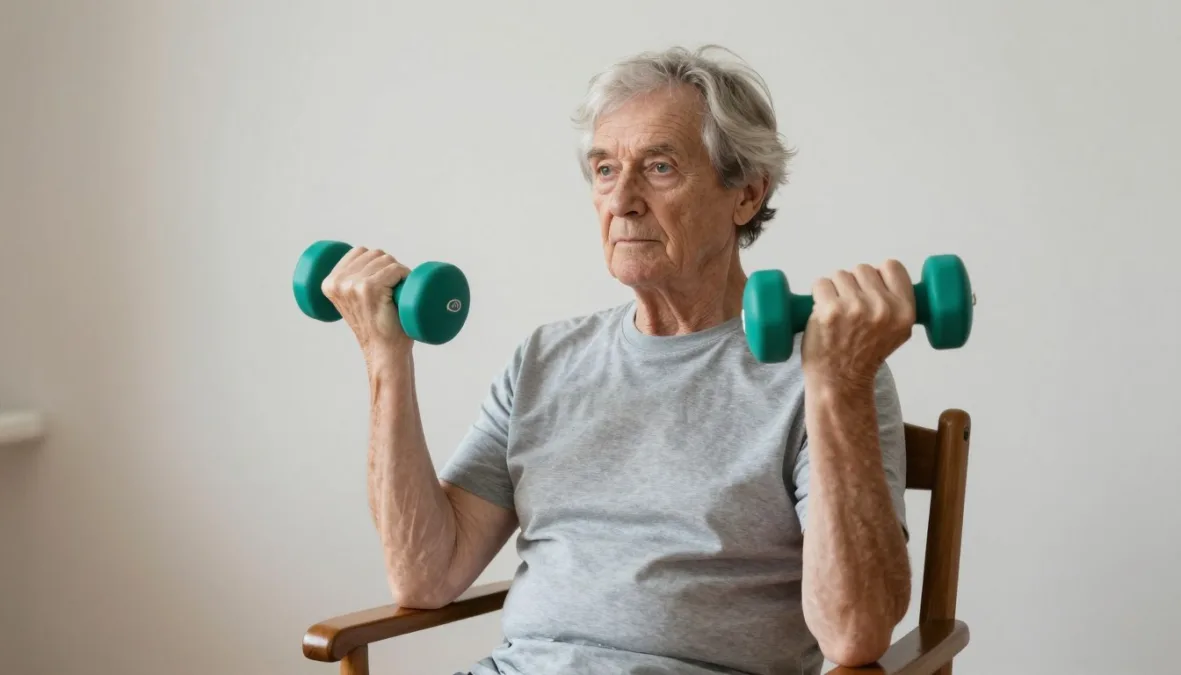
- Sit with an upright torso, shoulders retracted, and elbows kept close against the rib cage.
- Turn the palms forward while gripping light resistance or maintaining firm fists.
- Bend the elbows smoothly to curl the hands toward the front of the shoulders on an exhalation.
- Lower the hands slowly back down to the starting position on an inhalation, repeating for ten to twelve controlled repetitions.
The primary benefits encompass stronger biceps tendons, resilient elbow joints, and enhanced grip endurance. Controlling both the lifting and lowering phases builds balanced muscle tone without stressing sensitive joints.
10. Sit-to-Stand Exercises
Sit-to-stand exercises represent the cornerstone of functional lower body conditioning for older adults. This compound movement recruits the gluteal muscles, hamstrings, quadriceps, and core stabilizers in a natural standing pattern. Preserving the ability to rise unassisted from chairs, toilets, and car seats is fundamental to maintaining personal independence.
The setup begins by shifting forward onto the front half of the chair seat with feet positioned flat on the floor, slightly behind the knees. The arms can cross over the chest for an advanced challenge or reach forward for counterbalancing weight.
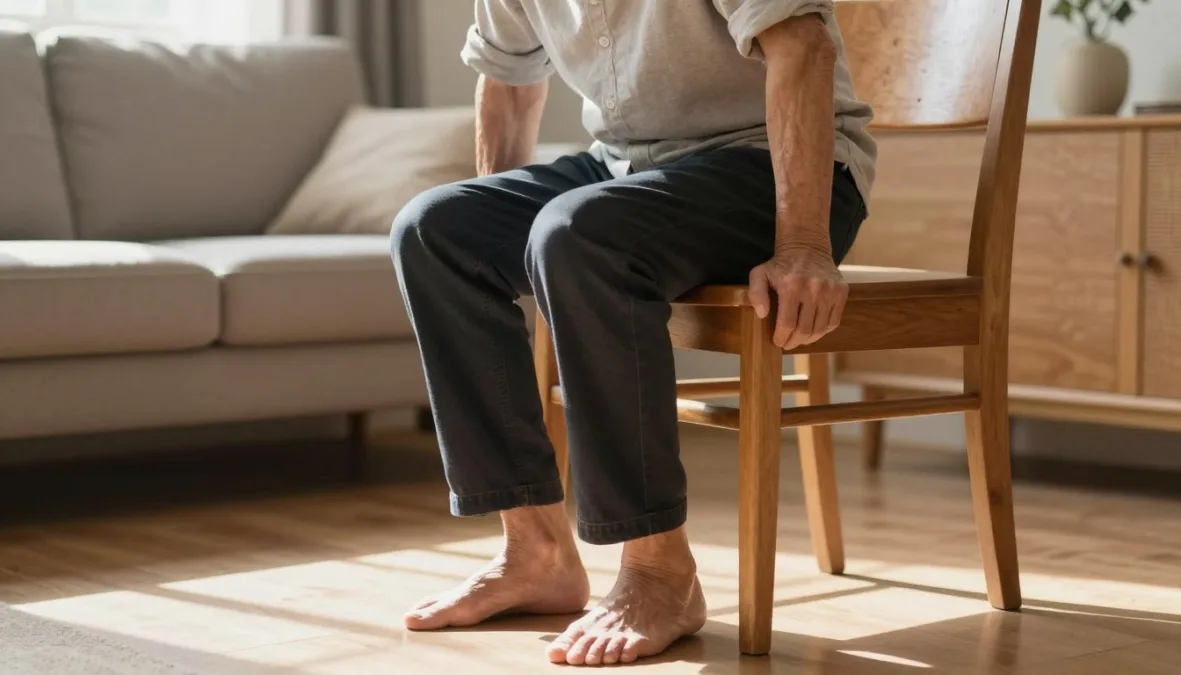
The movement proceeds by hinging forward at the hips to shift body weight over the feet, then pressing firmly through the heels to stand upright. Pausing momentarily at full standing height ensures balance before slowly bending the hips and knees to lower the body back into the seat. Performing six to eight repetitions builds lower-body power and transfer stamina.
Pressing firmly through the heels rather than the toes protects the knees during the upward push. Placing the hands lightly on the chair armrests provides extra stability if unassisted standing feels challenging.
Structuring a Balanced Weekly Chair Workout
Organizing seated movements into a regular routine promotes sustainable strength gains without causing excessive fatigue. Alternating between upper-body, core, and lower-body exercises prevents localized muscle exhaustion while keeping the cardiovascular system active. A balanced routine incorporates a brief warm-up, a focused exercise block, and a relaxing cool-down sequence.
Consistency matters far more than intensity when developing functional fitness in older age. Engaging in seated training three times each week allows muscle fibers and joint capsules adequate time to recover and adapt. Gradually increasing the number of repetitions or incorporating light resistance encourages progressive improvements in muscle tone.
| Exercise Category | Target Areas | Recommended Volume | Functional Focus |
| Cardio Moves | Hips & Heart | Ten Per Leg | Walking endurance and blood circulation |
| Lower Body | Thighs & Calves | Ten Repetitions | Standing balance and transfer strength |
| Upper Body | Arms & Back | Ten Repetitions | Reaching overhead and lifting household objects |
| Core & Spine | Abdomen & Torso | Eight Each Side | Postural alignment and rotational mobility |
Listening to internal body signals helps guide appropriate recovery intervals between movements. Ending each session with deep, diaphragmatic breathing and gentle neck stretches lowers the heart rate and relaxes the nervous system. Consistent seated physical activity supports overall well-being and daily physical resilience.
Frequently Asked Questions
How often should older adults perform chair exercises?
Older adults benefit most from performing chair routines two to three times each week on non-consecutive days. This schedule provides regular physical stimulation while allowing muscles and joints adequate time to recover between sessions. Light mobility work like ankle circles and shoulder rolls can be practiced daily.
Can weights be added to seated exercises?
Light hand weights, filled water bottles, or resistance bands can be introduced once movements are mastered with comfortable bodyweight control. Resistance should remain modest to protect joint capsules and maintain proper exercise form. Exercises should never cause joint aching or sharp discomfort.
What should be done if an exercise causes joint stiffness?
Reducing the range of motion or slowing the speed of movement often alleviates minor joint stiffness during exercise. Warm compresses applied before activity can also loosen tight ligaments and surrounding connective tissues. Any exercise that produces sharp or lingering pain should be stopped immediately.
Are chair exercises effective for improving standing balance?
Chair exercises build core stability, hip strength, and lower leg mobility, which are direct muscular prerequisites for standing balance. Strengthening the ankles and quadriceps helps the body respond effectively to unexpected shifts in posture. Sit-to-stand transitions specifically reinforce the dynamic balance needed during everyday movement.
How should breathing be coordinated during seated movements?
Breathing should remain steady, natural, and continuous without holding the breath during exertion. The general guideline is to exhale during the effort phase, such as lifting a leg or standing, and inhale while returning to the starting position. Continuous breathing supports stable blood pressure and delivers oxygen to active muscles.
Building Lifelong Strength from a Seat
Chair exercises provide a dependable, practical pathway to maintain muscle strength, preserve joint function, and enhance daily energy. Practicing these ten movements consistently builds physical resilience and supports confident independence at home. A sturdy chair and a few dedicated moments each day lay the groundwork for long-term health and vitality.

Priyanka Pandey
Senior Research Editor · Top10Sense
Priyanka specializes in tech, consumer products, and digital trends. She combines hands-on testing, vendor interviews, and database research to create trustworthy “Top 10” rankings. Her work has been referenced by industry blogs and brand report pages.