
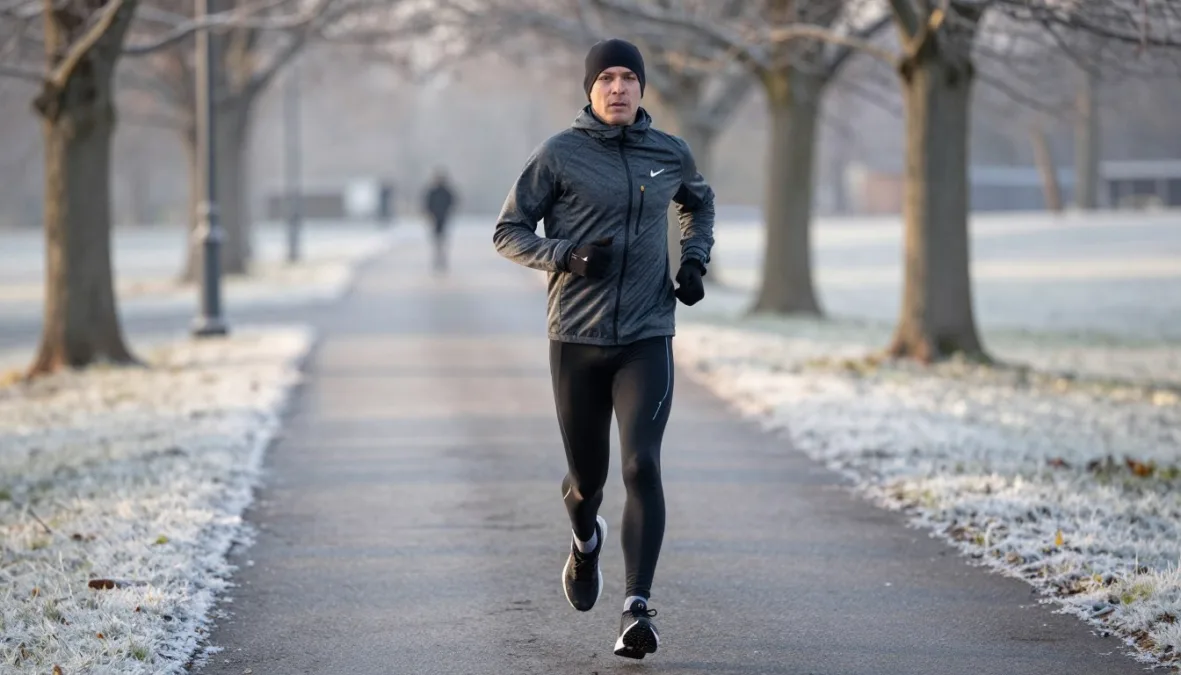
Winter running layering tips center on building an adaptable three-part clothing system that pulls sweat away from the body, traps warm air, and blocks harsh outdoor elements. Beginners stay comfortable by pairing a snug synthetic or wool base layer with an optional insulating mid-layer and a protective outer shell. This modular approach keeps the skin dry and maintains core temperature across varying weather patterns.
Selecting the right garments depends on ambient temperature, wind speed, moisture levels, and the physical intensity of the workout. When these factors change, runners swap or vent individual pieces to avoid dampness and cold-weather chills.
1. Start with a Moisture-Wicking Base Layer
The base layer sits directly against bare skin to pull moisture away from your body before sweat cools and causes a chill. When sweat remains trapped against the skin during cold weather running, wet fabric robs heat rapidly as soon as physical effort drops or wind picks up.
Synthetic technical fibers like polyester blends or natural merino wool create a dry microclimate by transporting perspiration toward the outer surfaces of the fabric. Merino wool provides natural thermal regulation and resists odors, while synthetic weaves dry fast and resist abrasion. Cotton shirts must stay out of winter apparel rotations because cotton fibers absorb moisture, hold onto cold dampness, and fail to insulate once saturated.
A snug fit allows the textile to maintain contact with the skin across the torso and arms. Loose-fitting shirts create air pockets where perspiration pools, which leads to chafing and unwanted shivering.
Choose seamless or flatlock-stitched base layers to prevent underarm chafing, and avoid wearing cotton tees next to bare skin under any circumstances.
2. Add Breathable Insulation to Retain Warm Air
The mid-layer functions as an insulating thermal barrier that traps warm air generated by muscles while permitting vapor to escape. Without an adequate mid-layer during deep freezes, body heat radiates away quickly into freezing ambient air.
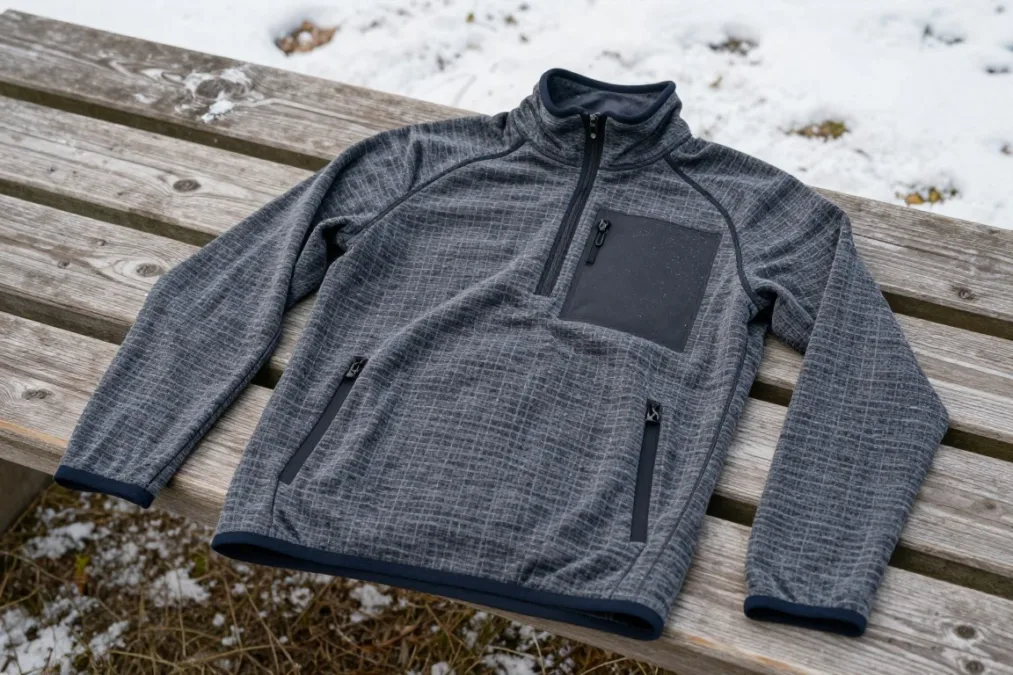
Grid-patterned technical fleece captures body heat while channeling moisture away from the torso.
Waffle-knit synthetics, lightweight grid fleece, and wool-blend sweaters offer balanced insulation without adding heavy bulk. These fabrics use lofted structures that hold pockets of dead air, slowing down thermal loss around the chest, back, and vital organs. The fabric must remain breathable so excessive moisture does not pool between clothing strata.
On mild winter days or during high-output sessions, runners often omit this layer entirely. In bitter freezes, pairing a fleece top with a thermal base layer establishes resilient core warmth.
Grid Fleece Mid-Layers
Open channels cut between fleece squares accelerate sweat evaporation during hard efforts while holding core warmth.
Merino Blend Tops
Natural wool knits retain thermal properties even when damp, making them suitable for long, steady-paced runs.
3. Select an Outer Shell for Wind and Weather Protection
An outer layer serves as an exterior shield that deflects cold wind, freezing fog, and falling precipitation. Even the warmest base and mid-layers lose effectiveness when blustery gusts penetrate porous knits and strip away the thin pocket of heated air beneath.
Wind-resistant shells are lighter and more breathable than heavy storm parkas, making them practical for dry, windy conditions. Water-resistant shells incorporate durable water-repellent treatments that cause light precipitation to bead up and roll away without restricting vapor transmission. Fully waterproof garments keep rain out, though their heavier membranes limit breathability during continuous aerobic exertion.
Look for jackets with high collars, adjustable cuffs, and drop-tail hems that cover the lower back when leaning forward into a running stride.
| Shell Type | Weather Match | Breathability | Primary Benefit |
| Windbreaker | Dry Winds | High | Blocks chilling gusts while venting sweat freely |
| Water-Resistant | Light Sleet | Moderate | Sheds flurries without causing rapid heat build-up |
| Waterproof Shell | Heavy Rain | Lower | Keeps soaking downpours from drenching internal insulation |
4. Master Ventilation to Avoid Overheating
Managing heat release while running keeps the inner clothing system dry and prevents sweat buildup that leads to post-workout chills. Beginning runners frequently overdress, begin to sweat heavily after warming up, and find themselves trapped in damp gear with no way to cool down gradually.

Adjusting zippers on the move prevents excessive perspiration before moisture soaks inner layers.
Clothing with two-way front zippers, underarm vents, and breathable back panels lets you regulate airflow on the fly. Dropping a neckline zipper by several inches dumps excess heat from the neck and upper chest without requiring a full wardrobe stop. Pushing up jacket sleeves cools blood vessels near the wrists, lowering overall perceived temperature quickly.
Plan ventilation changes early in a route before intense sweating begins. Opening vents when starting an uphill climb keeps the body dry before the descent.
- Unzip high collars halfway to flush hot air as heart rate climbs.
- Open zippered side or armpit vents when running with a tailwind to boost airflow.
- Push up forearm sleeves to expose wrists and shed heat rapidly.
- Close all zippers when turning directly into headbands of cold air.
5. Shield Vulnerable Extremities with Dedicated Accessories
Exposed fingers, ears, and toes suffer first when blood circulation prioritizes internal organs during freezing excursions. Cold extremities make a run miserable and reduce fine motor control needed for operating phone screens or keys.
Hands require lightweight liners in moderate cold or wind-blocking mittens when conditions turn severe. Mittens keep fingers grouped together, which traps collective heat much better than individual glove fingers. Headwear choices range from lightweight ear bands that let heat vent through the crown of the head to full beanies that retain maximum warmth.
A soft neck gaiter fills the cold gap between jacket collars and chin, and it can be pulled over the nose to warm up freezing inhaled air. Wool or synthetic running socks cushion the feet while pulling foot sweat into the shoe interior, preventing painful cold spots.
Hand Protection
Lightweight knit gloves suit cool mornings, while wind-resistant shell mittens protect fingers in biting cold.
Head and Neck
Fleece ear warmers prevent earache, while multi-functional tubes shield the throat from cold wind.
Footwear Layers
Seamless wool-blend running socks insulate damp feet without crowding toes inside road running shoes.
6. Prioritize Reflective Gear for Dim Winter Conditions
Shorter daylight hours, overcast skies, and roadside snowbanks reduce motorist awareness during winter outings. Wearing dark clothing during dawn, dusk, or nighttime miles makes it difficult for drivers to spot pedestrians in time.
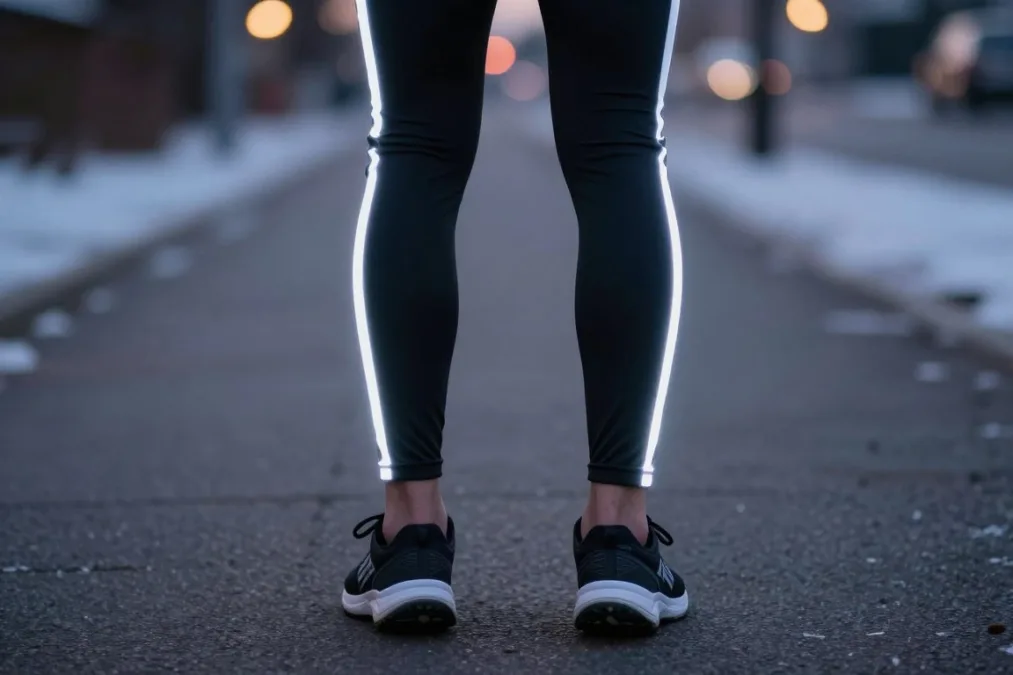
Reflective accents on moving limbs help motorists identify a runner in dim ambient light.
Outer jackets, thermal tights, and gloves featuring bright fluorescent tones stand out against gray asphalt and overcast skies. Reflective panels placed on moving body parts—such as ankles, wrists, and shoes—catch vehicle headlights and immediately signal a human form in motion. Static chest panels offer secondary visibility, but biomotion placement on limbs catches eyes much faster.
Clip-on flashing safety strobes and lightweight headlamps provide active illumination so you can navigate uneven pavement, frozen puddles, and snow piles safely.
Select winter apparel with 360-degree reflective patterns on the wrists and lower legs so headlights illuminate your movement from all directions.
7. Adapt the System for Bitter Wind Chill
Wind chill strips warmth away from uncovered skin and accelerates heat loss through porous clothing far faster than still air. A calm winter morning feels significantly milder than a windy afternoon at the exact same thermometer reading.
When wind speeds rise, standard knit leggings and porous shirts allow cold drafts to reach the skin, chilling damp base layers instantly. Runners combat wind penetration by deploying dense, tightly woven jackets with windproof front panels. Pairing wind-blocking running pants over base tights protects the thighs and quadriceps from numbness caused by sustained head drafts.
Planning routes so that the outbound leg faces directly into the wind allows you to run against resistance while fresh. Returning with the wind at your back prevents sweating heavily while battling a freezing headwind later.
- Standard thermal tights provide sufficient leg insulation.
- Porous mid-layers breathe freely without wind chilling the chest.
- Lightweight knit gloves keep hands comfortable.
Calm Winter Conditions
- Wind-blocking front panels shield thighs and pelvis.
- Tightly woven shells prevent gusts from cutting through fleece.
- Hardshell mittens prevent wind numbness in fingertips.
High Wind Chill Conditions
8. Defend Against Rain, Sleet, and Wet Conditions
Water conducts thermal energy away from the human body far faster than dry air, turning damp winter runs into hypothermia risks. Running through rain, melting slush, or wet snow demands clothing that deflects external precipitation while venting sweat.
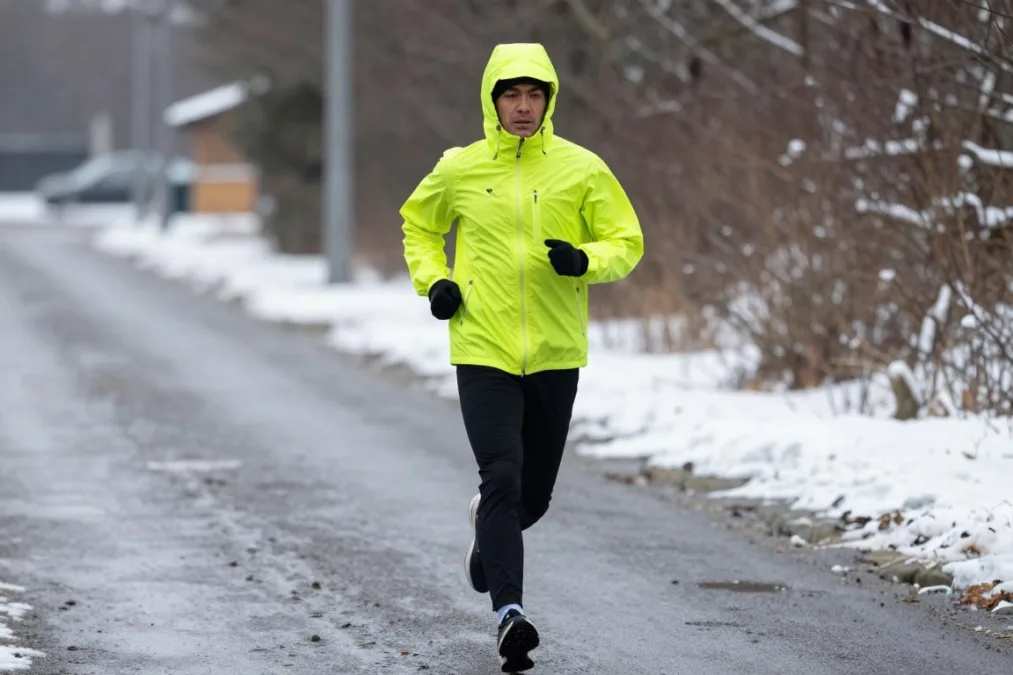
Water-resistant outerwear and brimmed hats keep slush and freezing drizzle out of eyes and off the neck.
A water-resistant jacket equipped with sealed seams keeps rain from soaking inner garments while maintaining enough breathability to let sweat escape. A running cap with a sturdy front brim worn underneath a hood keeps freezing raindrops and sleet out of your eyes and off your face. Thermal tights treated with water-repellent coatings shed tire spray and slush kicked up from shoes.
If outer layers become thoroughly drenched during an outing, cut the route short to avoid severe shivering once your movement stops.
Never continue a long winter run in thoroughly soaked garments; wet fabric combined with cold air drops core temperature quickly once running cadence slows.
9. Factor Workout Intensity into Clothing Choices
A runner’s muscular exertion dictates internal heat generation, meaning workout effort must directly influence clothing choices. Hard tempo runs, hill repeats, and interval intervals produce immense metabolic heat, whereas easy recovery runs demand more external insulation.
Wearing heavy clothing during speedwork causes heavy sweating early in the workout, followed by rapid cooling during recovery jogs between reps. For higher-intensity sessions, choose lighter base layers and omit the insulating mid-layer, trusting muscle output to supply necessary warmth. For gentle, long runs at relaxed conversational paces, prioritize thermal retention with cozy mid-layers and wind-protective tights.
Balancing clothing choices against workout goals maintains consistent body temperature throughout the workout.
High-Intensity Outfits
- Fewer total layers reduce bulk and unrestricted stride.
- Lighter fabrics reduce sweat buildup during fast intervals.
- Venting zippers dump heat quickly between repetitions.
Low-Intensity Outfits
- Extra mid-layer insulation keeps low-effort jogs comfortable.
- Thicker gloves prevent fingers from stiffening at easy paces.
- Tightly woven pants guard against sudden wind spikes.
10. Adjust Clothing Before, During, and After the Run
Body temperature fluctuates across the start, middle, and end of every winter session, requiring active layer management across each phase. Dressing so you feel warm and cozy while standing motionless indoors almost always leads to severe overheating after a few miles of movement.

Starting a winter run feeling slightly cool prevents rapid overheating once internal muscles generate warmth.
Step outside feeling slightly cool, knowing that heart rate increases will warm up your core within the opening miles. Perform dynamic stretches inside a mudroom or garage to get blood flowing before exposing skin to bitter air. If layers feel too warm along the route, peel off gloves, tuck a headband into a pocket, or tie an outer shell around the waist.
The post-run transition requires immediate action. Sweaty clothing turns icy within moments after you stop running, so change into dry garments as soon as you finish.
- Warm up your muscles indoors with dynamic leg swings and lunges before stepping outside.
- Start your run feeling slightly chilly, allowing metabolic heat to balance your comfort.
- Stow gloves, unfasten collars, or pack away windshells mid-run if body heat rises too high.
- Strip off damp base layers immediately upon finishing and change into warm dry apparel.
Winter Running Layering Checklist and Scenarios
Using predictable layering combinations tailored to specific conditions removes morning guesswork and builds confidence on freezing roads. Having pre-matched apparel sets ready for specific weather challenges speeds up preparation and avoids mistakes.
The profiles below match common winter conditions with proven clothing combinations that balance warmth and moisture management.
Dry and Bitter Cold
Pair a thermal synthetic base layer with a fleece mid-layer, wind-blocking tights, insulated mittens, and a full wool beanie.
Freezing Wind Chill
Combine a long-sleeve base layer with a windproof front-panel jacket, wind-resistant pants, a neck gaiter, and shell mittens.
Cold Rain and Slush
Wear a moisture-wicking synthetic top, a seam-sealed water-resistant jacket, water-repellent tights, and a brimmed cap under your hood.
Frequently Asked Questions About Winter Running Layering Tips
Why is cotton clothing bad for cold weather running?
Cotton fibers absorb and hold water rather than transporting it away from your body. When soaked with sweat in cold weather, cotton stays wet, clings to the skin, and causes rapid thermal loss that leads to shivering and chafing.
Should you feel warm the moment you step outside for a run?
No, you should feel slightly cool when you first step outside. Your running effort elevates your internal core temperature after a short period, which naturally provides the necessary warmth without making you sweat excessively.
How should you dress for running in freezing rain?
Layer a synthetic moisture-wicking base layer under a water-resistant, breathable shell jacket with a secure hood. Add a brimmed running hat to keep freezing precipitation off your face, and wear water-repellent tights to shed road slush.
Are running tights better than loose pants in winter?
Thermal running tights fit close to the skin, preventing cold drafts from sweeping across your legs and wicking perspiration efficiently. Loose wind pants work best as an outer layer layered over tights when facing severe wind gusts or wet snow.
Building Confidence on Cold Weather Roads
Mastering winter running layering tips turns frigid training days into comfortable, invigorating outdoor sessions. By pairing moisture-wicking base layers with breathable insulation and protective shells, runners adapt to wind, rain, and fluctuating workout intensities. Assemble your winter apparel system, test adjustments in local conditions, and enjoy consistent running all season long.

Priyanka Pandey
Senior Research Editor · Top10Sense
Priyanka specializes in tech, consumer products, and digital trends. She combines hands-on testing, vendor interviews, and database research to create trustworthy “Top 10” rankings. Her work has been referenced by industry blogs and brand report pages.