Regular physical stretching promotes joint mobility, lengthens shortened muscle fibers, and relieves chronic muscular stiffness throughout the entire body. The top 10 stretches for flexibility target major muscle groups across the upper and lower body to encourage balanced alignment and ease of movement. Consistent practice through controlled positions supports healthy circulation, reduces daily tension, and allows muscles to work through their natural functional range.
Individual movement history, daily posture habits, and existing joint limitations determine the most effective stretching selections. Adjusting the intensity, using stable props, and modifying body angles allow each movement to meet individual flexibility levels without triggering protective muscular guarding.
Understanding Dynamic and Static Stretching Principles
Stretching techniques fall into distinct categories that serve different purposes within a movement routine. Dynamic stretching uses controlled, continuous movement to take joints through an active range of motion, whereas static stretching involves lengthening a specific muscle and holding that position without movement.
Selecting the appropriate method depends on whether the body is preparing for physical exertion or recovering from activity. Dynamic exercises elevate tissue temperature and prepare joints for loaded movement, while static holds allow muscle spindles to relax and adapt to sustained length.
- Uses active joint movement through a complete path.
- Elevates internal tissue temperature before activity.
- Enhances nervous system coordination without fatiguing tissues.
Dynamic Stretching
- Maintains a stationary position under mild tension.
- Encourages lengthened soft tissues to settle comfortably.
- Calms heart rate and downregulates the nervous system.
Static Stretching
Matching the stretching style to the session goals supports steady mobility gains.
Combining both modalities creates a balanced foundation for physical longevity. Dynamic motions belong before training or strenuous daily tasks, while static holds deliver significant benefits when practiced after workouts or as a standalone evening recovery session.
Preparing Muscles with an Effective Warm-Up
Cold muscle fibers resist lengthening and demonstrate higher stiffness under tension. Introducing light aerobic activity prior to stretching raises core body temperature, increases blood flow, and enhances connective tissue elasticity.
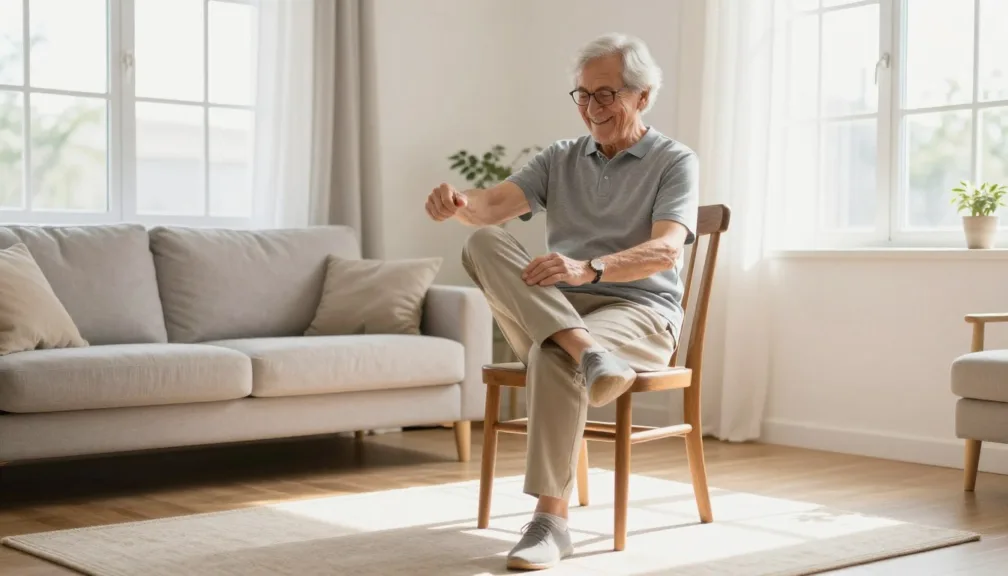
A simple warm-up requires no specialized equipment and can take place in any open living space. Low-impact movements such as arm circles, hip rotations, gentle torso twists, and brisk walking prepare joints for deeper positions.
Five minutes of continuous gentle movement brings oxygenated blood to major muscle groups. Cold tissues respond with reflex contractions when forced into deep holds, making progressive warming a fundamental step.
Once peripheral tissues feel warm and joints move without resistance, transitioning to focused stretches becomes safer and more productive. This preparatory phase primes neural pathways, reducing the protective reflexes that limit flexibility.
Standing Chest and Shoulder Opener
Prolonged sitting and computer use often pull the shoulders forward, shortening the pectoral muscles and upper body tissues. The standing chest and shoulder opener counters this inward collapse by expanding the rib cage and drawing the shoulder blades together.
This stretch targets the pectoralis major, pectoralis minor, and anterior deltoids while promoting thoracic spine extension. Releasing tension across the chest helps restore natural shoulder alignment and makes upright posture feel effortless.
- Stand tall with feet positioned hip-width apart and knees soft.
- Interlace hands behind the lower back, or hold a strap if the shoulders feel tight.
- Gently roll the shoulder blades down and back, opening the front chest wall.
- Lift the arms slightly away from the hips until feeling a comfortable pull across the collarbones.
- Hold the position for several deep breaths, keeping the chin parallel to the floor.
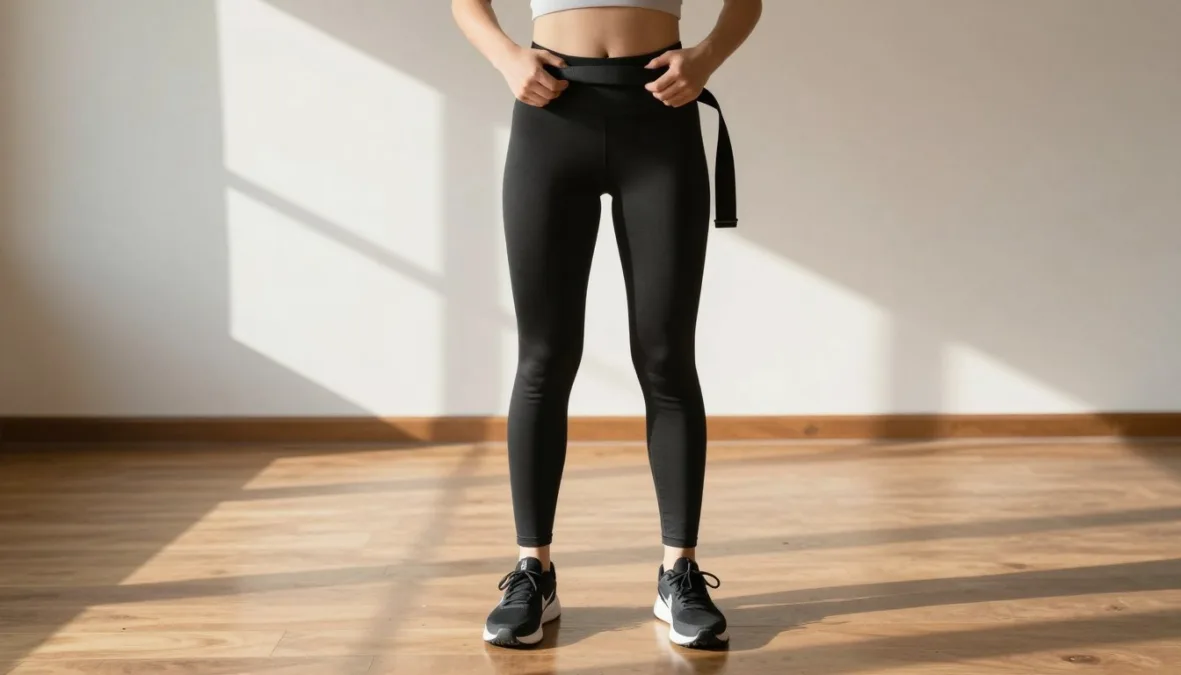
Using a strap or towel keeps the neck and lower back neutral during chest expansion.
Beginners can hold a towel or yoga strap between both hands rather than clasping fingers directly. Avoid thrusting the rib cage forward or arching the lower back to compensate for limited shoulder mobility.
Seated Side Neck Stretch
Tension in the upper neck and trapezius often builds from prolonged screen viewing and shallow breathing patterns. The seated side neck stretch isolates the lateral neck muscles, creating space between the ears and shoulders.
The primary muscles targeted include the upper trapezius, scalenes, and levator scapulae. Lengthening these fibers reduces tension headaches, improves rotational head checks, and relieves strain across the upper back.
Never wrench or forcefully pull the head downward during any cervical stretch. The weight of the hand provides sufficient assistance, allowing delicate neck ligaments to adapt without strain.
Sit upright on a stable chair with feet planted firmly on the floor. Lower the right ear toward the right shoulder, and place the right hand lightly on the side of the head to gently pull without forcing. Hold for several calm breaths, return the head to center, and repeat on the left side with the left hand guiding the movement.
Beginners can sit on their left hand to anchor the shoulder down, which intensifies the stretch without requiring any hand pressure on the skull. Keep the jaw unclenched and maintain an elongated spine throughout the hold.
Cat-Cow Flow for Spinal Mobility
The spine thrives on rhythmic, unloaded motion that alternates between flexion and extension. The Cat-Cow flow coordinates breath with movement to articulate each vertebra and release tension along the back.
This movement engages the erector spinae, rectus abdominis, thoracolumbar fascia, and neck flexors. It distributes synovial fluid throughout the spinal joints, relieving stiffness accumulated from static sitting or standing.
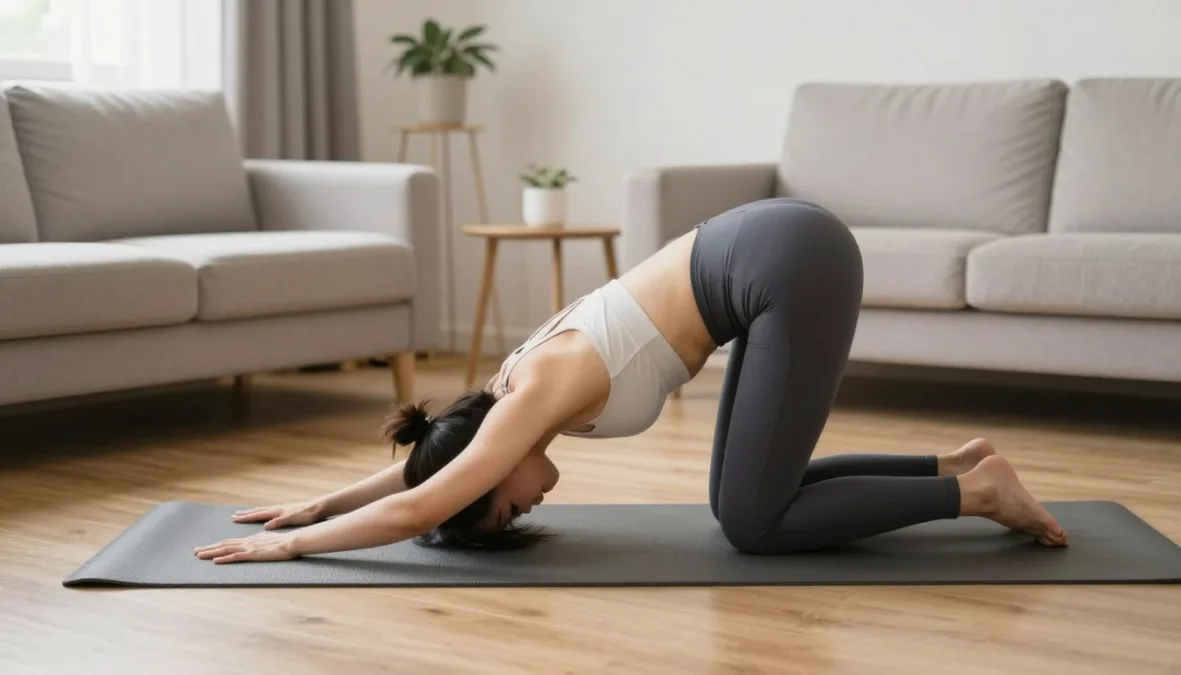
Coordinating movement with steady inhales and exhales creates smooth spinal articulation.
- Begin on all fours on a comfortable mat with hands under shoulders and knees under hips.
- Inhale slowly while dropping the belly toward the floor, lifting the chest and tailbone for Cow pose.
- Exhale fully while pressing into the palms, rounding the spine toward the ceiling for Cat pose.
- Tuck the chin gently toward the chest during the rounded phase to stretch the upper back.
- Continue moving between both shapes for several smooth, rhythmic breath cycles.
Individuals with sensitive wrists can make fists or rest their forearms on a sturdy chair. Those experiencing knee discomfort can place a folded blanket under both knees to cushion the joints against the hard floor.
Downward-Facing Dog for Posterior Chain Flexibility
Targeting multiple muscle groups simultaneously makes full-body integration efficient. Downward-Facing Dog creates active elongation through the calves, hamstrings, gluteals, and latissimus dorsi while strengthening the arms.
The calves and hamstrings bear the primary lengthen-and-hold stimulus, while the shoulder girdle stabilizes the upper body. Practicing this inverted posture decompresses the lower back and expands ankle range of motion.
Prioritize a long, neutral spine over straight legs or heels touching the floor. Keeping the knees slightly bent helps maintain pelvic tilt and protects the lumbar discs from rounding.
From hands and knees, tuck the toes and lift the hips upward to form an inverted V-shape on the ground. Press the floor away through flat hands, relax the head between the upper arms, and bend knees as much as needed to lengthen the spine. Hold the position for several deep breaths, pedaling the feet gently if desired to encourage calf mobility.
Beginners or individuals with tight hamstrings can place their hands on a raised bench or wall. Raising the contact point reduces the angle of hip flexion, enabling proper spinal alignment without excessive strain on the legs.
Kneeling Hip Flexor and Quad Stretch
Modern seated routines leave the front of the hips locked in a shortened state throughout the day. The kneeling hip flexor stretch opens the anterior hip complex, counteracting anterior pelvic tilt and relieving tension in the lower back.
This stretch directly isolates the iliopsoas, rectus femoris, and tensor fasciae latae. Unlocking the front of the hip allows the pelvis to return to a neutral orientation, reducing lumbar compression during walking and standing.
- Kneel on the floor, stepping the right leg forward so the right knee forms a square angle over the ankle.
- Rest the back knee on a soft pad, keeping the torso completely upright.
- Tuck the pelvis slightly under and shift weight forward until feeling mild tension in the front of the left hip.
- Place hands on the front knee or reach the left arm overhead for a deeper stretch.
- Hold the position for several steady breaths, then switch legs to stretch the opposite side.
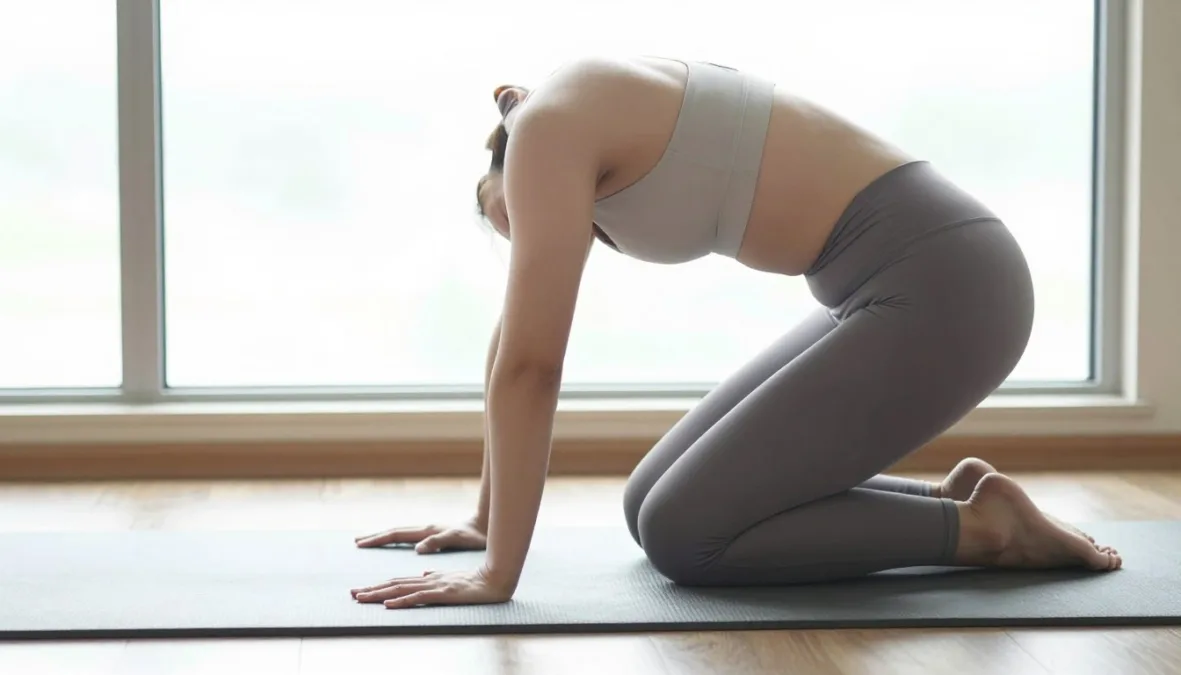
Tucking the pelvis slightly under targets the deep psoas muscle without arching the lower back.
If kneeling causes knee pain, perform the movement from a standing split-stance position with the back heel elevated. Keep the abdominal muscles lightly braced so the movement originates from the hip rather than bending through the lumbar spine.
Standing Quadriceps Stretch
The quadriceps muscle group dominates daily knee extension and leg power during stair climbing, running, and walking. Tight front thigh muscles can pull on the patellar tendon and tilt the pelvis forward, altering gait mechanics.
Targeting the rectus femoris, vastus lateralis, vastus medialis, and vastus intermedius restores elasticity across the knee joint. Regular quad flexibility supports smooth patellar tracking and relieves excess tension on the lower body.
Keep both knees aligned side by side rather than letting the bent leg flare outward. Aligning the thigh preserves balance and directs the stretch along the central quadriceps tendon.
Stand upright near a sturdy wall or chair for balance support. Bend the right knee, bringing the heel toward the glutes, and grasp the top of the right foot with the right hand. Maintain an upright torso, gently pull the heel close while keeping knees together, hold for several calm breaths, and switch sides to stretch the left leg with the left hand.
Beginners who cannot reach the foot comfortably can loop a strap or belt around the ankle to bridge the distance. Alternatively, place the top of the back foot on a chair behind the body while standing upright.
Seated Forward Bend for Hamstrings and Lower Back
Hamstrings running along the back of the thighs become chronically stiffened when sitting for long intervals. The seated forward bend lengthens the entire posterior thigh while gently unwinding connective tissues along the lower back.
This position addresses the biceps femoris, semitendinosus, semimembranosus, and erector spinae muscles. Releasing the hamstring complex permits fuller hip hinge mechanics, protecting the spine during lifting tasks.
| Element | Focus | Key Guidance |
| Target Area | Posterior Thigh | Isolates hamstrings and lumbar tissues without excessive strain. |
| Alignment | Neutral Spine | Hinge from hip sockets rather than rounding through the mid-back. |
| Modification | Bent Knees | Softening the knees protects the sciatic nerve and lower back. |
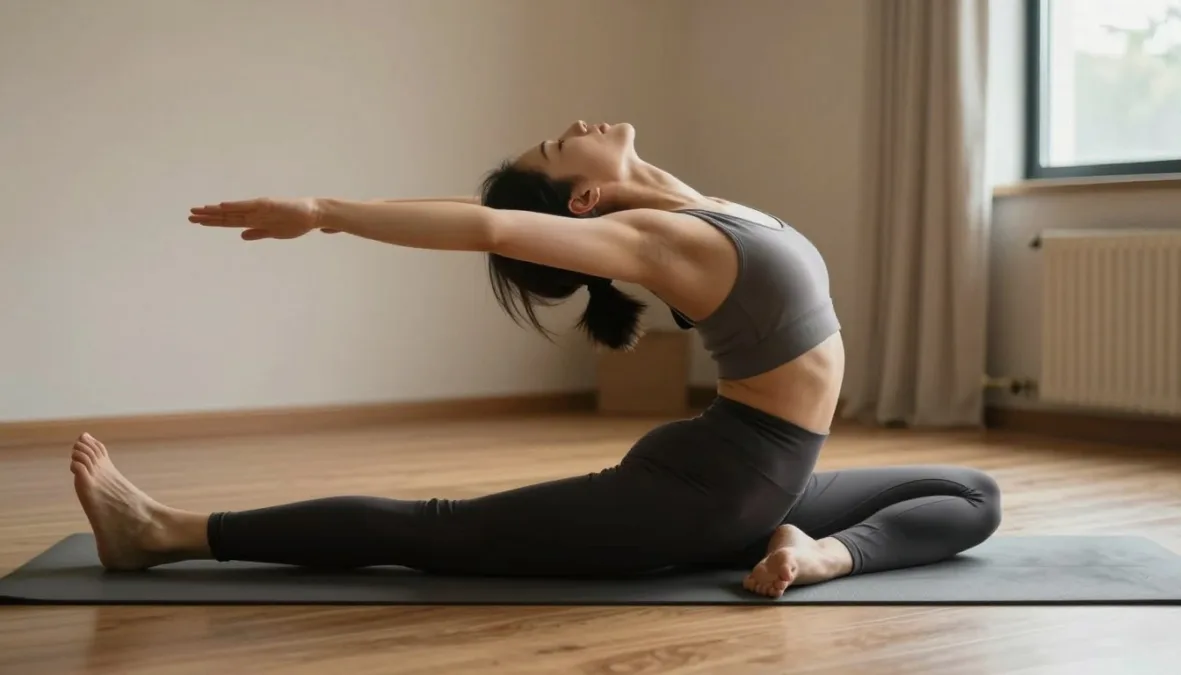
Hinging directly from the hip sockets allows the hamstrings to elongate without rounding the spine.
Sit tall on the floor with legs extended forward and toes pointing upward. Inhale to lengthen the torso, then hinge at the hips to walk the hands toward the shins or feet while keeping the chest lifted. Hold the stretch for several relaxed breaths, feeling the pull across the back of the legs rather than forcing the head to the knees.
Sitting on the edge of a folded blanket elevates the pelvis, making the forward tilt far easier for tight hips. Bend knees slightly throughout the hold if tension behind the knee joints feels sharp or pulling.
Seated Figure-Four Glute and Piriformis Stretch
Deep external hip rotators often clamp down from extended periods in chairs, contributing to localized hip soreness and nerve irritation. The seated figure-four stretch opens the lateral hips and gluteal tissues without requiring floor acrobatics.
This posture targets the piriformis, gluteus medius, and obturator internus. Mobilizing these deep stabilizers improves hip rotation, relieves outer hip tightness, and promotes comfortable pelvic mechanics.
Flexing the foot of the crossed leg protects the lateral knee ligaments. Keeping the ankle active maintains joint stability so the stretch remains focused inside the hip capsule.
Sit toward the front edge of a firm chair with feet flat on the ground and spine elongated. Cross the right ankle over the left knee, allowing the right knee to rest open toward the side. Lean forward from the hip crease with a straight back until feeling mild tension in the outer right hip, hold for several deep breaths, and switch sides.
For a floor-based variation, lie supine with knees bent and feet flat on the floor before crossing one ankle over the opposite thigh. Thread the hands behind the supporting hamstring and gently draw both legs toward the chest.
Standing Calf Stretch Against a Wall
The calf complex absorbs substantial forces during walking, running, and daily standing. Restricted lower leg muscles limit dorsiflexion at the ankle, causing compensations that travel upward into the knees, hips, and lower back.
This stretch targets the gastrocnemius, soleus, and Achilles tendon complex. Restoring ankle range improves squat depth, supports stable balance, and reduces excess load across the plantar fascia.
- Stand facing a wall, placing both hands flat against the surface at shoulder height.
- Step the left leg back into a straight-leg lunge, keeping the right knee bent in front.
- Press the back heel firmly into the ground with toes pointing directly forward.
- Lean the chest gently toward the wall until feeling a steady pull through the left calf.
- Maintain the stretch for several slow breaths, then switch legs to stretch the right calf.
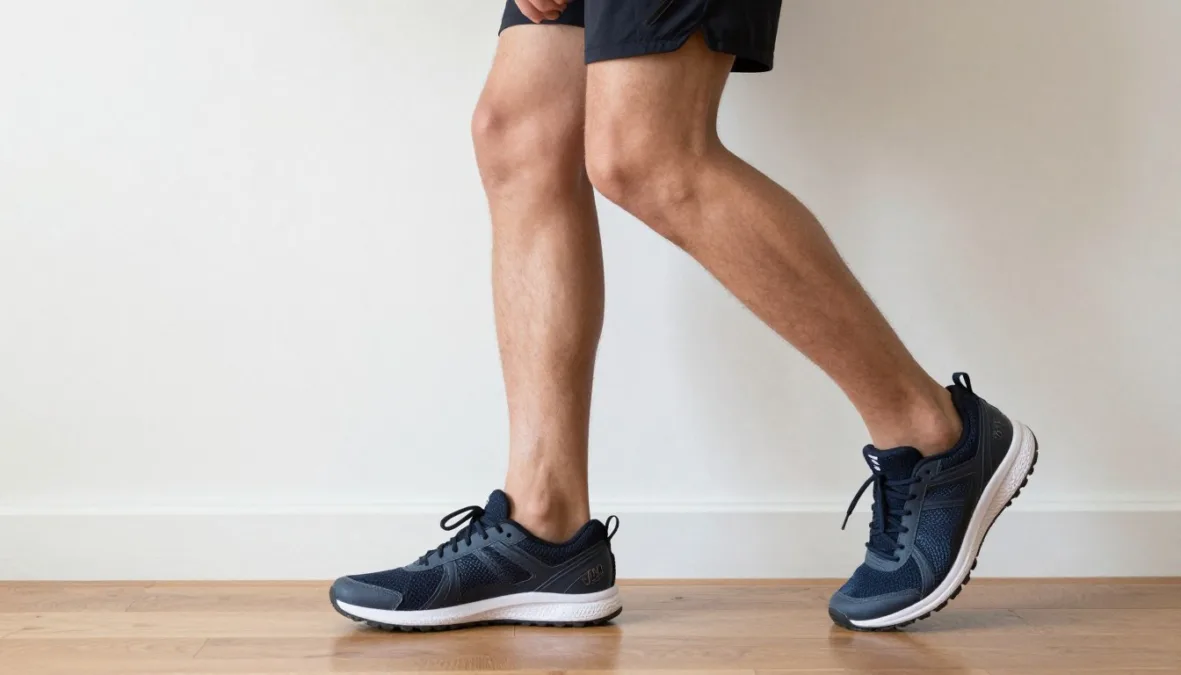
Keeping the back heel pressed flat onto the ground ensures effective calf elongation.
To target the deeper soleus muscle, bend the back knee slightly while keeping the heel anchored on the floor. Avoid turning the back foot outward at an angle, as straight foot alignment isolates the calf fibers correctly.
Reclining Supine Spinal Twist
Rotational mobility in the mid-to-lower spine often deteriorates when daily movement patterns remain strictly linear. The reclining supine spinal twist gently rotates the thoracic and lumbar segments while opening the outer hips and chest.
This position targets the gluteals, piriformis, obliques, and pectorals while mobilizing spinal facet joints. It promotes full diaphragmatic breathing and helps the nervous system transition into a calm, restorative state.
Keep both shoulder blades pinned to the floor throughout the rotation. If the opposite shoulder lifts into the air, place a pillow under the bent knee to reduce the twist angle.
Lie flat on the back with arms extended out to the sides in a T-shape on the floor. Draw the right knee toward the chest, then guide it across the torso toward the left floor with the left hand while turning the head softly to the right. Hold the position for several deep breaths, feeling the release across the spine and hip, then return to center and repeat on the opposite side.
Beginners can keep both knees bent together at square angles and drop them to the side as a single unit. This double-knee modification distributes the rotation evenly and prevents excessive twisting through the lumbar vertebrae.
Safety Guidelines for Sustainable Flexibility Training
Flexibility gains develop through patient, consistent habits rather than aggressive, forceful pushes. Approaching each stretch with mindful control protects delicate soft tissues and allows the body to become flexible over time.
Muscle tissues contain sensory receptors called muscle spindles that trigger reflex contractions when stretched too rapidly. Controlled holds that respect personal limits allow these receptors to quiet down, resulting in safe, lasting tissue adaptation.
Avoid Bouncing
Ballistic bouncing triggers defensive muscle tightening that increases strain. Maintain smooth, steady holds to let fibers relax gradually.
Breathe Steadily
Holding the breath creates internal tension that restricts movement. Slow, steady exhalations signal the nervous system to release muscular guarding.
Honor Pain Signals
Stretching should produce mild tension, never sharp, pinching, or burning pain. Stop immediately if numbness, tingling, or joint ache occurs.
Structure training sessions around consistent, moderate frequency rather than irregular marathons. Practicing a brief mobility session several days each week produces far superior results compared to an occasional exhaustive workout.
Warm clothing and a warm room environment further enhance soft tissue compliance during mobility practice. Always listen to body feedback, allowing flexibility to expand without force.
A Complete Daily Routine with the Top 10 Stretches for Flexibility
Integrating flexibility exercises into a cohesive daily routine turns physical maintenance into a manageable habit. Moving progressively from upper body positions down through the spine, hips, and lower legs ensures complete joint coverage.
This organized sequence takes minimal time and can be completed in an open room with a simple mat and chair. Repeating this structured flow supports joint health, daily mobility, and postural balance across every major muscle group.
| Phase | Selected Stretch | Target Purpose |
| Phase 1 | Chest & Neck | Opens the upper body and relieves computer-related neck stiffness. |
| Phase 2 | Cat-Cow Flow | Mobilizes spinal vertebrae and coordinates deep diaphragmatic breathing. |
| Phase 3 | Downward Dog | Elongates the full posterior chain from calves to upper back. |
| Phase 4 | Hip Flexor & Quad | Releases anterior hip tension to restore upright pelvic positioning. |
| Phase 5 | Hamstrings & Glute | Relieves tension in posterior thighs and deep lateral rotators. |
| Phase 6 | Calf & Twist | Restores ankle dorsiflexion and relaxes the rotational spinal muscles. |
Practice each position for several deep breaths on both sides of the body before transitioning smoothly to the next movement. Consistency across the week creates lasting adaptations that make everyday movement feel light and unrestricted.
Frequently Asked Questions
How often should flexibility stretches be performed each week?
Stretching is most effective when practiced regularly throughout the week. Engaging in short daily sessions or several focused weekly routines maintains supple connective tissues and prevents stiffness from returning.
How long should each static stretch be held?
Maintain each static stretch for several slow, controlled breaths without moving. This duration gives muscle spindles sufficient time to relax and allows soft tissues to adjust comfortably to the lengthened position.
Is it normal to feel slight muscle soreness after stretching?
Mild, diffuse muscular sensation can occur when tissues are introduced to new ranges of motion. Sharp, stabbing, or joint-centered pain is not normal and indicates that the stretch intensity was too aggressive.
Can stretching help relieve lower back stiffness?
Targeting the hip flexors, hamstrings, and gluteal muscles reduces compensatory pull on the lumbar spine. Mobilizing these surrounding lower body tissues often provides noticeable relief for daily lower back discomfort.
Should stretching be done before or after cardiovascular exercise?
Dynamic mobility exercises are best suited before cardiovascular training to warm tissues and prepare joints. Static stretching is most beneficial after workouts when muscles are warm and receptive to sustained lengthening.
What should be done if a stretch feels too intense?
Back out of the position immediately until only mild tension remains. Utilizing props such as chairs, yoga blocks, or straps reduces joint angles and provides stable support for comfortable adaptation.
Building Long-Term Mobility Through Consistent Practice
Developing lasting flexibility requires patience, gentle alignment, and regular practice rather than aggressive force. Incorporating these balanced stretches into a daily movement routine keeps joints mobile, supports proper posture, and protects physical well-being over time.

Priyanka Pandey
Senior Research Editor · Top10Sense
Priyanka specializes in tech, consumer products, and digital trends. She combines hands-on testing, vendor interviews, and database research to create trustworthy “Top 10” rankings. Her work has been referenced by industry blogs and brand report pages.