
The entertainment industry has transformed dramatically over recent years. Streaming platforms have revolutionized how consumers access content worldwide.
Global media companies now operate across multiple platforms. They deliver movies, television shows, music, and gaming experiences to billions of people.
This comprehensive guide examines the world’s largest entertainment companies. We’ll explore their business models, market dominance, and what distinguishes them from competitors.
Understanding the Global Entertainment Landscape
The entertainment industry generates hundreds of billions in annual revenue. Multiple business segments drive this massive economic impact.
Streaming services have become the dominant distribution model. Traditional television networks now compete with internet-based platforms for viewer attention.
Traditional Entertainment Sectors
- Broadcast television networks and cable channels
- Film production and theatrical distribution
- Music recording labels and live events
- Theme parks and consumer experiences
- Publishing and print media
Digital Entertainment Platforms
- Video streaming subscription services
- Gaming platforms and mobile applications
- Social media content networks
- Podcast and audio streaming technology
- Virtual reality entertainment experiences
Technology has reshaped content consumption patterns globally. Consumers now expect on-demand access across multiple devices and platforms.
How We Ranked These Entertainment Companies
Our ranking methodology evaluates multiple performance indicators. Financial data provides the foundation for these assessments.
Revenue Analysis
Total annual revenue across all business segments. We examine growth trends and market share performance over multiple years.
Market Influence
Brand recognition and consumer reach worldwide. Platform adoption rates and subscriber counts factor into overall rankings.
Content Portfolio
Quality and diversity of entertainment offerings. Original content production and intellectual property ownership create competitive advantages.
These criteria reflect the complex nature of modern entertainment. Companies must excel across traditional and digital platforms simultaneously.
The Top 10 Entertainment Companies Ranked
These entertainment giants shape global culture and consumer preferences. Their combined influence reaches billions of people worldwide daily.

1. Comcast Corporation

Company Overview
Comcast stands as the world’s largest entertainment company by revenue. The Philadelphia-based conglomerate operates through multiple high-value business segments.
NBCUniversal represents Comcast’s media and entertainment division. This subsidiary controls television networks, film studios, and theme parks around the world.
Key Business Segments
- Cable television and internet services across the United States
- NBCUniversal television networks including NBC, USA, and MSNBC
- Universal Pictures film production and distribution worldwide
- Peacock streaming service with growing subscriber base
- Universal theme parks in multiple countries
- Sky broadcasting services throughout Europe
Financial Performance
Comcast generates over $120 billion in annual revenue. The company serves more than 50 million customer relationships across its platforms.
Cable communications remains the largest revenue contributor. However, media and streaming services show the fastest growth rates currently.
Notable Achievements
Universal Pictures consistently ranks among top film studios globally. Blockbuster franchises include Jurassic World, Fast & Furious, and Minions properties.
The Peacock streaming platform launched successfully during pandemic conditions. It now competes directly with established streaming services for market share.
2. The Walt Disney Company
Company Overview
Disney represents the most recognizable entertainment brand worldwide. The company’s intellectual property portfolio includes beloved characters spanning generations.
Founded in 1923, Disney has evolved from animation studio to global media powerhouse. Strategic acquisitions expanded its content library and market reach significantly.
Major Acquisitions and Properties
- Pixar Animation Studios acquired for $7.4 billion in 2006
- Marvel Entertainment purchased for $4 billion in 2009
- Lucasfilm and Star Wars franchise bought for $4 billion in 2012
- 21st Century Fox assets acquired for $71 billion in 2019
- ESPN sports media network and programming rights
These acquisitions created an unmatched content portfolio. Disney now controls some of entertainment’s most valuable intellectual properties globally.

Streaming Services Leadership
Disney+ launched in November 2019 with immediate success. The streaming service reached 100 million subscribers within 16 months of operation.
The platform now exceeds 150 million global subscribers. Original content from Marvel, Star Wars, and Pixar drives subscriber acquisition and retention.
Revenue Streams
Disney generates revenue across diverse entertainment sectors. Annual revenue surpasses $80 billion from combined business operations.
Traditional Media
- Theatrical film releases worldwide
- Television network programming
- Licensed merchandise and consumer products
Experience and Digital
- Theme parks and resort properties globally
- Cruise line vacation experiences
- Streaming platform subscriptions and advertising
3. Netflix, Inc.
Company Overview
Netflix pioneered the streaming revolution that transformed entertainment consumption. The company evolved from DVD rental service to dominant streaming platform globally.
Headquartered in Los Gatos, California, Netflix operates in over 190 countries. The platform serves more than 230 million paid subscribers worldwide.
Original Content Production
Netflix invests billions annually in original content creation. This strategy reduces dependence on licensed programming from other studios.
- Award-winning series including Stranger Things and The Crown
- Feature films from acclaimed directors and major stars
- International productions in multiple languages and markets
- Documentary series and stand-up comedy specials
- Animated content for family audiences worldwide
Original programming now comprises the majority of viewing hours. This content creates competitive differentiation and brand loyalty among subscribers.
Business Model Innovation
Netflix operates on a subscription-based revenue model exclusively. The company recently introduced advertising-supported tiers in select markets.
The platform uses sophisticated data analytics for content decisions. Viewing patterns inform production investments and content recommendations algorithmically.
Market Position
Despite increasing competition, Netflix maintains streaming market leadership. The company generates over $30 billion in annual revenue from subscriptions.
Global expansion continues into emerging markets. International subscribers now exceed domestic U.S. membership significantly.
4. Sony Corporation

Company Overview
Sony represents a unique entertainment and technology conglomerate. The Japanese corporation excels in gaming, music, film, and consumer electronics simultaneously.
Founded in 1946, Sony has continuously innovated across entertainment sectors. The company’s diversified business model provides stability and growth opportunities.
Gaming Dominance
PlayStation gaming platforms generate significant revenue for Sony. The PlayStation 5 console continues selling exceptionally well worldwide despite supply constraints.
- Over 100 million PlayStation consoles sold globally
- Extensive library of exclusive gaming titles and franchises
- PlayStation Network subscription services with millions of active users
- Growing presence in mobile gaming markets
Gaming represents Sony’s most profitable entertainment segment currently. The division consistently delivers strong financial performance and subscriber growth.

Music and Film Operations
Sony Music Entertainment ranks among the world’s largest music companies. The label roster includes top artists across multiple genres worldwide.
Sony Pictures produces blockbuster films and television content. Popular franchises include Spider-Man, Jumanji, and various television series distributed globally.
Financial Performance
Sony’s entertainment divisions contribute substantially to corporate revenue. The company generates over $80 billion annually across all business segments.
The integrated business model creates synergies between divisions. Gaming soundtracks, film music, and cross-platform marketing amplify entertainment properties effectively.
5. AT&T Inc.
Company Overview
AT&T operates as a major telecommunications and media corporation. The company provides wireless services, internet connectivity, and entertainment content across the United States.
Headquartered in Dallas, Texas, AT&T serves millions of consumer and business customers. Recent strategic shifts have refocused the company on core telecommunications operations.
Warner Media Merger and Spin-off
AT&T acquired Time Warner in 2018 for $85 billion. This purchase added HBO, Warner Bros., and Turner networks to AT&T’s portfolio temporarily.
In 2022, AT&T merged WarnerMedia with Discovery to create Warner Bros. Discovery. This transaction allowed AT&T to focus on telecommunications while maintaining entertainment exposure.
Current Entertainment Assets
- DirecTV satellite television service partnership
- AT&T TV streaming television platform
- Content distribution through telecommunications networks
- Entertainment bundling with wireless and internet services
The company now emphasizes telecommunications infrastructure over content production. This strategic pivot reflects changing market dynamics and competitive pressures.
Market Position
AT&T remains one of the world’s largest telecommunications providers. Annual revenue exceeds $120 billion from wireless, broadband, and business services.
The company’s network infrastructure supports streaming and digital entertainment consumption. This positions AT&T as an essential platform for content delivery nationwide.
6. Amazon.com, Inc.
Company Overview
Amazon has emerged as a formidable entertainment competitor globally. The e-commerce giant leverages its technology infrastructure and customer base effectively.
Prime Video streaming service reaches over 200 million Amazon Prime members. The platform serves as both standalone entertainment service and Prime membership benefit.
Content Strategy
Amazon invests heavily in original programming and licensed content. The company acquired MGM Studios for $8.45 billion in 2022, expanding its content library substantially.
- Original series including The Boys, The Marvelous Mrs. Maisel, and Reacher
- Exclusive streaming rights to major sports events globally
- Thursday Night Football broadcasting in the United States
- Film production through Amazon Studios division
- Freevee ad-supported streaming service offering free content
The MGM acquisition added 4,000 films and 17,000 television episodes. This includes iconic franchises like James Bond, Rocky, and classic film libraries.

Technology Advantages
Amazon Web Services provides the technology backbone for Prime Video. This infrastructure supports global content delivery at massive scale efficiently.
The company uses advanced algorithms for personalized recommendations. Integration with Amazon’s broader ecosystem creates unique competitive advantages over traditional media companies.
Market Impact
Amazon’s entertainment spending exceeds $15 billion annually. The company uses content to drive Prime membership and ecosystem engagement strategically.
Unlike pure entertainment companies, Amazon can subsidize content through e-commerce profits. This financial flexibility allows aggressive bidding for premium content and sports rights.
Explore More Entertainment Industry Insights
Dive deeper into the business strategies, financial performance, and competitive dynamics shaping global media and entertainment.
7. Paramount Global
Company Overview
Paramount Global operates as a leading global media and entertainment company. Formerly ViacomCBS, the company rebranded in 2022 to emphasize its streaming focus.
The corporation controls premium cable networks and broadcast television. CBS remains one of America’s most-watched television networks consistently.
Media Properties
- CBS broadcast television network with extensive local station reach
- Paramount Pictures film studio with century-long Hollywood history
- Cable networks including MTV, Nickelodeon, and Comedy Central
- Paramount+ streaming service with live sports and original content
- Showtime premium cable and streaming platform
- International broadcasting operations across multiple continents
The company’s television networks reach hundreds of millions globally. Nickelodeon dominates children’s entertainment programming worldwide through multiple platforms.
Streaming Services Evolution
Paramount+ competes aggressively in the crowded streaming market. The platform combines live sports, news, and entertainment content uniquely.
Exclusive content includes Star Trek series, Yellowstone spinoffs, and original films. Live sports coverage differentiates Paramount+ from entertainment-only competitors effectively.

Financial Performance
Paramount Global generates over $30 billion in annual revenue. The company balances traditional television advertising with streaming subscription growth.
Cable networks face declining viewership but remain profitable. Streaming investments position the company for long-term digital transformation and growth.
8. Live Nation Entertainment

Company Overview
Live Nation represents the world’s largest live entertainment company. The corporation dominates concert promotion, ticketing, and venue operations globally.
Headquartered in Beverly Hills, California, Live Nation produces thousands of events annually. The company operates across more than 40 countries on six continents.
Business Segments
- Concert promotion and festival production worldwide
- Ticketmaster ticketing platform and distribution network
- Venue ownership and management operations globally
- Artist management and representation services
- Sponsorship and advertising sales programs
Ticketmaster processes hundreds of millions of tickets annually. The platform serves as the primary ticketing provider for major venues and events worldwide.
Market Dominance
Live Nation promotes over 40,000 events annually across platforms. The company’s events attract more than 600 million fans each year globally.
Major music festivals produced include Lollapalooza, Bonnaroo, and numerous international events. These large-scale productions generate significant revenue and brand visibility consistently.

Financial Performance
The company generates over $16 billion in annual revenue. Live events rebounded strongly following pandemic-related cancellations and restrictions.
Live Nation benefits from growing demand for in-person experiences. Concert attendance continues reaching record levels as fans prioritize live entertainment spending.
Industry Impact
Live Nation’s scale creates unmatched negotiating power with artists. The company offers comprehensive services from promotion through ticketing and venue operations.
This vertical integration generates efficiencies and maximizes revenue per event. However, market dominance has attracted regulatory scrutiny in multiple countries recently.
9. Tencent Holdings Limited

Company Overview
Tencent operates as China’s largest entertainment and technology conglomerate. The Shenzhen-based company dominates gaming, social media, and digital entertainment across Asia.
Founded in 1998, Tencent has grown into one of the world’s most valuable companies. Its diverse portfolio spans gaming platforms, streaming services, and social networks.
Gaming Leadership
Tencent stands as the world’s largest video games company by revenue. The company generates over $30 billion annually from gaming operations alone.
- WeChat messaging app with over 1 billion active users
- Tencent Games publishing platform with massive global reach
- Ownership stakes in Epic Games, Riot Games, and Supercell
- Mobile gaming dominance through Honor of Kings and PUBG Mobile
- PC gaming through League of Legends and other popular titles
The company’s gaming investments create a global entertainment network. Strategic acquisitions and partnerships extend Tencent’s influence worldwide continuously.
Entertainment Platforms
Tencent Video competes as China’s leading streaming service. The platform offers films, television series, and original programming to millions.
Tencent Music Entertainment operates multiple music streaming platforms. These services dominate Chinese music consumption with hundreds of millions of users.

Global Expansion
Tencent invests strategically in Western entertainment companies. The corporation holds significant stakes in Universal Music Group and Spotify.
These international partnerships provide access to global markets. Tencent combines Chinese market dominance with growing worldwide entertainment influence.
Financial Performance
Total annual revenue exceeds $80 billion across all divisions. Gaming remains the primary profit driver despite diversified business operations.
The company faces regulatory challenges in China currently. Government restrictions on gaming and technology companies create uncertainty for future growth.
10. Warner Bros. Discovery
Company Overview
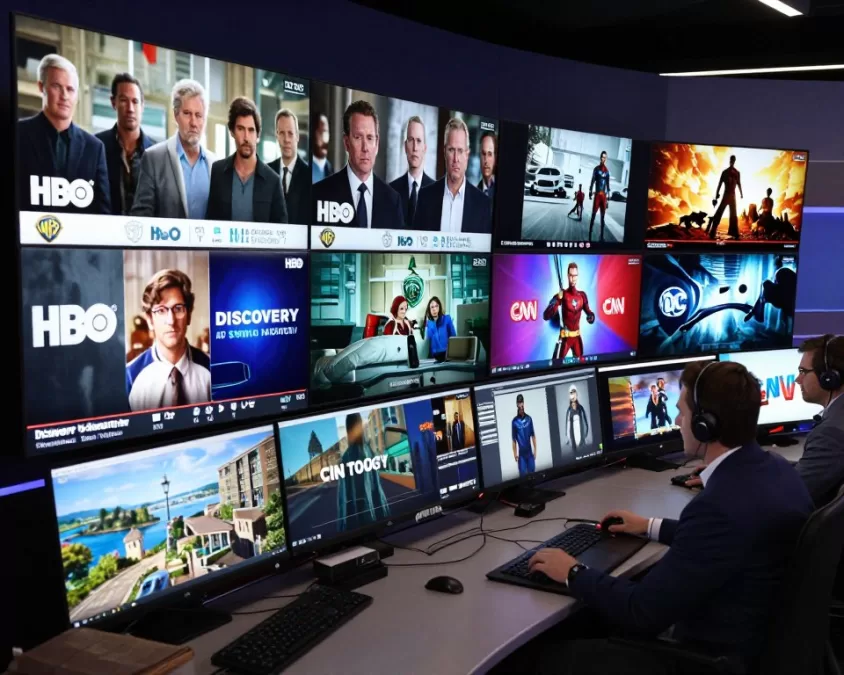
Warner Bros. Discovery formed in 2022 through a major media merger. The combination united WarnerMedia’s content assets with Discovery’s factual programming strength.
This newly created entertainment giant controls extensive intellectual property. The portfolio includes DC Comics characters, HBO programming, and Discovery’s reality content.
Content Portfolio
- Warner Bros. film studio with Batman, Superman, and Harry Potter franchises
- HBO premium programming including Game of Thrones and succession planning
- Discovery Channel, HGTV, Food Network, and lifestyle programming
- CNN news network and global journalism operations
- Cartoon Network and Adult Swim animation content
- DC Comics superhero universe across film and television
The combined company controls one of entertainment’s deepest content libraries. Classic films, television series, and franchises provide extensive monetization opportunities.
Streaming Strategy
Max streaming service combines HBO and Discovery content uniquely. The platform launched in 2023, replacing HBO Max with broader programming.
The service offers premium scripted dramas alongside reality programming. This combination targets diverse audience segments with varied content preferences simultaneously.
Market Position
Warner Bros. Discovery generates approximately $40 billion in annual revenue. The company operates globally across film, television, and streaming platforms.
Post-merger integration continues as the company streamlines operations. Cost reduction initiatives aim to improve profitability while maintaining content quality.
Future Outlook
The company faces intense streaming competition from larger rivals. However, premium content and established franchises provide competitive differentiation effectively.
International expansion remains a priority for growth. Warner Bros. Discovery seeks to expand its global streaming footprint aggressively.
Current Trends Shaping the Entertainment Industry
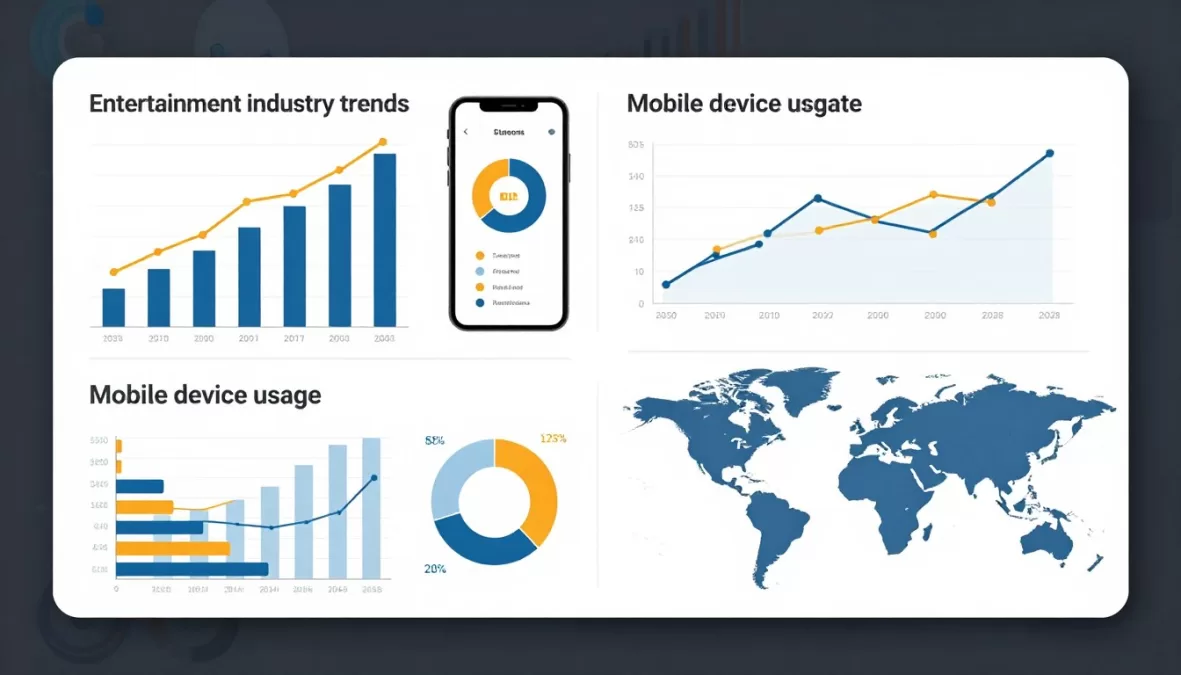
The entertainment industry continues evolving rapidly in response to technology. Consumer preferences shift constantly, forcing companies to adapt their strategies.
Streaming Service Consolidation
The streaming market has become increasingly crowded recently. Major entertainment companies now operate their own direct-to-consumer platforms.
Consumers face subscription fatigue from multiple services. This pressure may drive consolidation as smaller platforms struggle to compete effectively.
Growth Drivers
- International market expansion into emerging economies
- Original content production investment increases
- Technology improvements in streaming quality
- Mobile viewing and accessibility enhancements
Challenges
- Rising content production costs globally
- Increased competition for subscribers and attention
- Password sharing reducing effective subscriber counts
- Regulatory pressures in multiple markets
Gaming Integration
Video games represent the fastest-growing entertainment segment. Gaming revenue now exceeds film and music combined annually worldwide.
Traditional media companies increasingly invest in gaming. This convergence creates new storytelling opportunities and revenue streams for entertainment brands.
Technology Innovation
Artificial intelligence transforms content creation and recommendation systems. Machine learning algorithms personalize user experiences across platforms effectively.
Virtual reality and augmented reality technologies emerge slowly. These immersive formats may reshape entertainment consumption in coming years significantly.

The Future of Global Entertainment Companies
Entertainment companies face both opportunities and challenges ahead. Digital transformation will continue reshaping business models and consumer relationships.
Predictions for the Next Decade
Content Production
AI-assisted content creation will reduce production costs. However, human creativity remains essential for compelling storytelling and authentic audience connections.
Distribution Models
Hybrid distribution combining theatrical, streaming, and experiential elements. Companies will experiment with release windows and exclusive content strategies.
Global Markets
Emerging markets in Asia, Africa, and Latin America drive growth. Local content production increases as companies serve diverse cultural preferences.
Sustainability and Social Impact
Entertainment companies face increasing pressure for sustainable practices. Production processes, energy consumption, and environmental impact receive greater scrutiny constantly.
Content addressing social issues gains prominence and audience support. Companies balance entertainment value with meaningful storytelling around important topics.

Competitive Dynamics
Tech companies increasingly compete with traditional media. Apple, Amazon, and Google leverage technology platforms and financial resources effectively.
Traditional entertainment companies must innovate continuously. Those combining creative excellence with technology adoption will succeed most effectively.
- Personalization through data analytics and AI recommendations
- Interactive content allowing viewer participation and choices
- Cross-platform integration across gaming, film, and television
- Social viewing experiences connecting audiences globally
- Short-form content competing with traditional formats
Investment Perspectives on Entertainment Companies
Entertainment stocks attract investor attention due to growth potential. However, the sector presents unique risks and opportunities requiring careful analysis.

Financial Considerations
Streaming investments require substantial capital before profitability. Traditional revenue sources decline while digital businesses scale slowly initially.
Content costs continue rising as competition intensifies. Companies bid aggressively for talent, franchises, and sports rights globally.
Investment Advantages
- Growing global demand for entertainment content
- Recurring revenue from subscription services
- Valuable intellectual property and franchises
- Multiple revenue streams across platforms
- International expansion opportunities
Investment Risks
- Intense competition reducing profit margins
- High content production costs
- Changing consumer preferences and behaviors
- Regulatory challenges in multiple markets
- Technology disruption risks
Key Performance Indicators
Investors monitor subscriber growth and retention rates closely. These metrics indicate platform health and long-term revenue potential effectively.
Content spending efficiency determines profitability ultimately. Companies must balance investment with subscriber acquisition and engagement outcomes.
Career Opportunities in Entertainment Companies
The entertainment industry offers diverse career paths globally. Opportunities span creative, technical, business, and operational roles across companies.

Professional Services and Roles
Entertainment companies employ thousands of professionals in New York, Los Angeles, and globally. Major hubs include production centers, corporate headquarters, and technology offices.
Creative Positions
- Content creators and producers
- Writers and storytellers
- Directors and cinematographers
- Designers and artists
Technical Roles
- Software engineers and developers
- Data scientists and analysts
- Platform architects
- Production technology specialists
Business Functions
- Marketing and brand managers
- Financial services professionals
- Sales and distribution experts
- Strategic planning analysts
Industry Growth Areas
Streaming platforms continue hiring technology and content professionals. Data analytics roles grow as companies leverage consumer insights effectively.
Gaming divisions expand rapidly, creating numerous open jobs. This sector offers opportunities in development, marketing, and community management globally.
New York remains a major entertainment employment center. The city hosts corporate offices, production facilities, and digital media operations extensively.
Conclusion: The Entertainment Industry Landscape
The world’s top entertainment companies shape global culture profoundly. These corporations reach billions of consumers across multiple platforms daily.
Streaming services have fundamentally transformed content distribution. Traditional media companies adapt while technology giants enter entertainment aggressively.

Competition drives innovation and investment in quality content. Consumers benefit from unprecedented choice and accessibility worldwide.
The industry continues evolving as technology advances. Companies balancing creative excellence with business innovation will lead entertainment’s future.
Understanding these major entertainment companies provides valuable market insights. Their strategies influence consumer behavior, technology adoption, and cultural trends globally.
Continue Your Entertainment Industry Research
Access comprehensive analysis, company profiles, and industry reports. Stay informed about the rapidly changing world of global media and entertainment.

Priyanka Pandey
Senior Research Editor · Top10Sense
Priyanka specializes in tech, consumer products, and digital trends. She combines hands-on testing, vendor interviews, and database research to create trustworthy “Top 10” rankings. Her work has been referenced by industry blogs and brand report pages.