
The race to the sky continues as architectural marvels push the boundaries of engineering and design. In 2025, the world’s tallest buildings stand as testaments to human innovation, combining cutting-edge technology with artistic vision. These magnificent structures not only transform city skylines but also serve as multi-functional spaces where people live, work, and play. From the Middle East to East Asia and North America, let’s explore the top 10 tallest building in the world 2025 that are reshaping our urban landscapes.
Current Trends in Skyscraper Construction
Modern skyscraper design has evolved significantly, with sustainability, multi-functionality, and innovative structural solutions leading the way. Today’s tallest buildings incorporate wind-resistant designs, energy-efficient systems, and mixed-use spaces that combine residential, commercial, and leisure facilities.
Engineers now employ advanced materials like ultra-high-strength concrete and specialized steel alloys that allow buildings to reach unprecedented heights. Aerodynamic shapes reduce wind loads, while damping systems counteract building sway during storms or earthquakes. These technological advancements have enabled architects to design increasingly taller structures that remain safe and functional.
Stay Updated on Skyscraper Developments
Want to keep track of the latest developments in skyscraper construction and design? Subscribe to our newsletter for monthly updates on architectural innovations, construction milestones, and emerging trends.
Top 10 Tallest Building in the World 2025: At a Glance
Before diving into the details of each skyscraper, here’s a comprehensive comparison of the world’s tallest buildings as of 2025. This table highlights key specifications including height, location, and completion year.
| Rank | Building Name | Location | Height (m/ft) | Floors | Completion Year | Architect |
| 1 | Burj Khalifa | Dubai, UAE | 828m / 2,717ft | 163 | 2010 | Skidmore, Owings & Merrill |
| 2 | Merdeka 118 | Kuala Lumpur, Malaysia | 679m / 2,227ft | 118 | 2023 | Fender Katsalidis |
| 3 | Shanghai Tower | Shanghai, China | 632m / 2,073ft | 128 | 2015 | Gensler |
| 4 | Makkah Royal Clock Tower | Mecca, Saudi Arabia | 601m / 1,972ft | 120 | 2012 | SL Rasch |
| 5 | Ping An Finance Center | Shenzhen, China | 599m / 1,965ft | 115 | 2017 | Kohn Pedersen Fox |
| 6 | Lotte World Tower | Seoul, South Korea | 555m / 1,819ft | 123 | 2017 | Kohn Pedersen Fox |
| 7 | One World Trade Center | New York City, USA | 541m / 1,776ft | 94 | 2014 | Skidmore, Owings & Merrill |
| 8 | Guangzhou CTF Finance Centre | Guangzhou, China | 530m / 1,739ft | 111 | 2016 | Kohn Pedersen Fox |
| 9 | Tianjin CTF Finance Centre | Tianjin, China | 530m / 1,739ft | 97 | 2019 | Skidmore, Owings & Merrill |
| 10 | CITIC Tower | Beijing, China | 528m / 1,731ft | 109 | 2018 | Kohn Pedersen Fox |
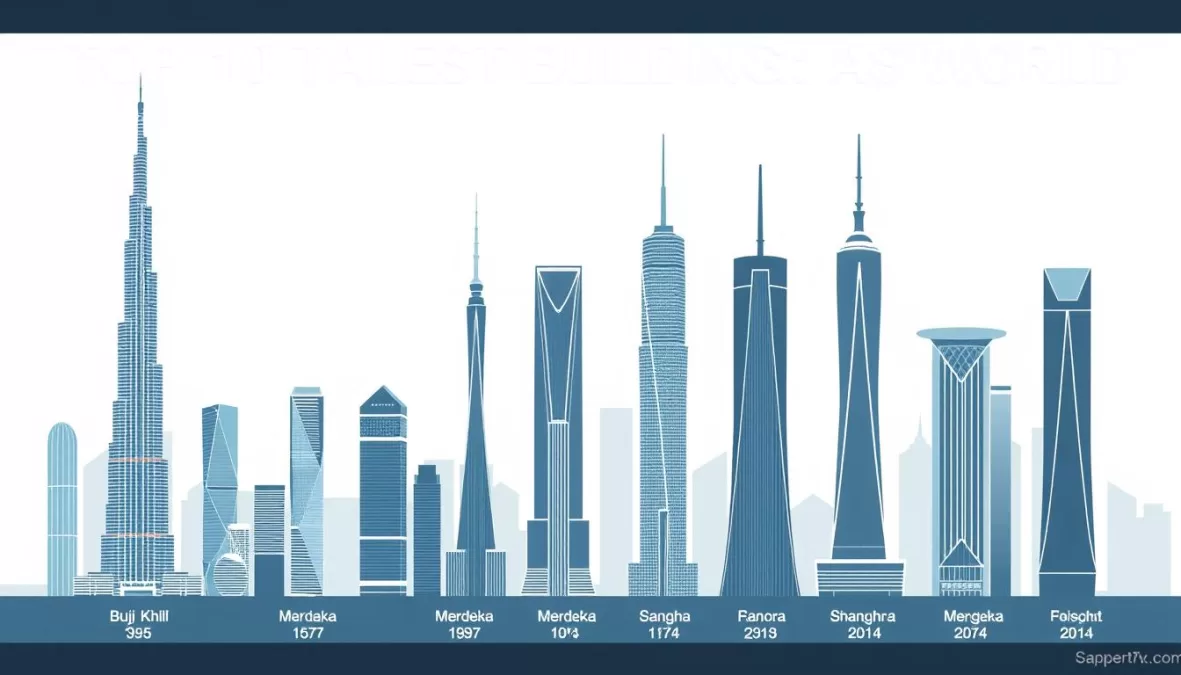
1. Burj Khalifa – Dubai, UAE

- Height: 828 meters (2,717 feet)
- Floors: 163
- Completion Year: 2010
- Architect: Skidmore, Owings & Merrill (Adrian Smith)
- Construction Time: 6 years (2004-2010)
- Cost: Approximately US $1.5 billion
Since its completion in 2010, the Burj Khalifa has maintained its status as the world’s tallest building. This architectural marvel draws inspiration from Islamic architecture, particularly the geometric patterns found in regional desert flowers. Its Y-shaped floor plan maximizes views of the Persian Gulf while providing structural stability.
The building houses a mix of residential apartments, corporate offices, the Armani Hotel, and multiple observation decks. Its exterior is covered with 26,000 glass panels, specially designed to withstand Dubai’s extreme desert temperatures. The Burj Khalifa utilizes a buttressed core structural system with a hexagonal core and wings, allowing it to reach unprecedented heights.

2. Merdeka 118 – Kuala Lumpur, Malaysia
- Height: 679 meters (2,227 feet)
- Floors: 118
- Completion Year: 2023
- Architect: Fender Katsalidis
- Construction Time: 9 years (2014-2023)
- Cost: Approximately US $1.2 billion
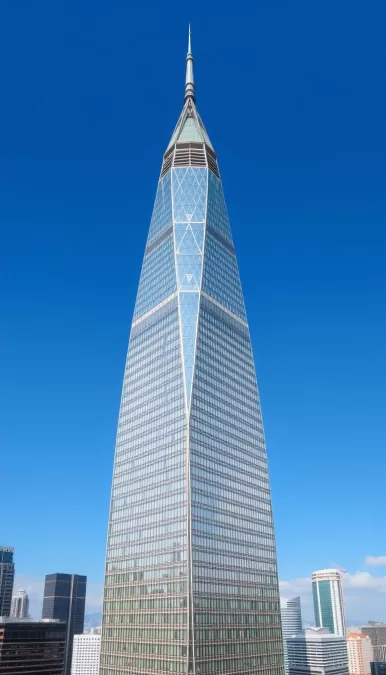
Completed in 2023, Merdeka 118 (also known as PNB 118) is the second tallest building in the world. Its name “Merdeka” means “independence” in Malay, reflecting its location near Merdeka Stadium where Malaysia declared independence in 1957. The tower’s design features a faceted glass façade inspired by traditional Malaysian patterns.
The building includes premium office space, a luxury hotel operated by Park Hyatt, and an observation deck offering 360-degree views of Kuala Lumpur. Its 160-meter spire resembles the outstretched hand gesture made by Malaysia’s first Prime Minister when declaring independence, symbolizing the nation’s aspirations and achievements.
Did You Know?
Merdeka 118’s diamond-shaped façade consists of triangular glass panels that optimize daylight while controlling internal temperature. The building is anchored by a structural core of reinforced concrete, allowing it to withstand high winds and seismic activity common in the region.
3. Shanghai Tower – Shanghai, China
- Height: 632 meters (2,073 feet)
- Floors: 128
- Completion Year: 2015
- Architect: Gensler
- Construction Time: 6 years (2008-2014)
- Cost: Approximately US $2.4 billion
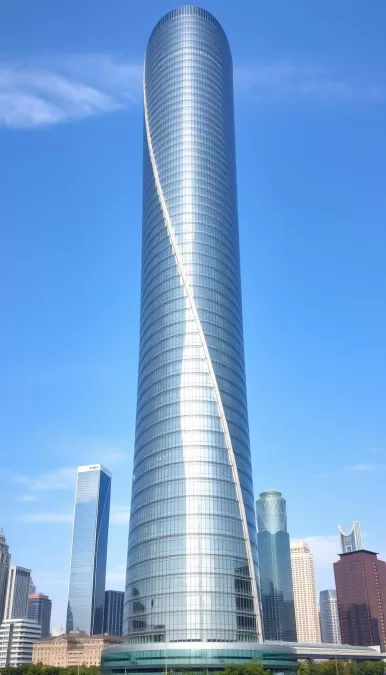
Shanghai Tower stands as China’s tallest building and the third tallest in the world. Its most distinctive feature is the twisted, glass façade that rotates 120 degrees as it rises, reducing wind loads by 24% and saving approximately $58 million in structural materials. This innovative design earned the building LEED Platinum certification for sustainability.
The tower consists of nine cylindrical buildings stacked on top of each other, enclosed by the glass façade. These inner buildings are divided into zones, with retail spaces at the bottom, offices in the middle, and hotels and observation decks at the top. Between the inner buildings and outer façade are sky gardens that provide public spaces and improve air quality.

Download Our Comprehensive Skyscraper Guide
Want to learn more about these architectural marvels? Download our free infographic with detailed specifications, construction techniques, and fascinating facts about the world’s tallest buildings.
4. Makkah Royal Clock Tower – Mecca, Saudi Arabia
- Height: 601 meters (1,972 feet)
- Floors: 120
- Completion Year: 2012
- Architect: SL Rasch Architecture
- Construction Time: 9 years (2002-2011)
- Cost: Approximately US $15 billion (entire complex)
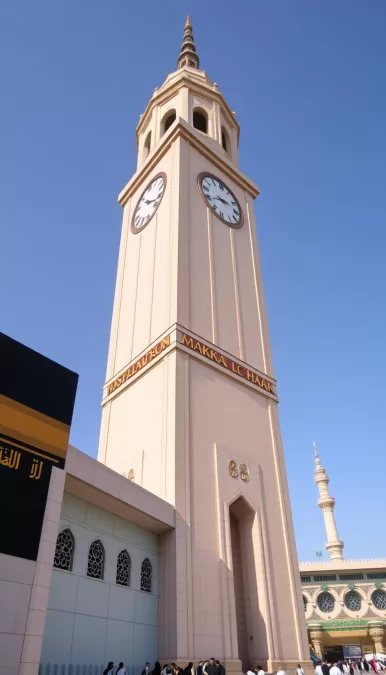
The Makkah Royal Clock Tower, also known as Abraj Al-Bait, stands adjacent to the Grand Mosque in Mecca. Its most distinctive feature is the enormous clock face on each side of the tower’s top section, measuring 43 meters in diameter. These clocks are visible from 25 kilometers away and are illuminated by one million LED lights.
The building serves primarily as accommodation for pilgrims visiting the Grand Mosque, with a capacity to house thousands of visitors. The complex includes a prayer room that can accommodate 10,000 worshippers, a five-story shopping mall, and a museum dedicated to Islamic astronomy and timekeeping. The tower is crowned by a 23-meter golden crescent, which houses a prayer room with views of the city.
5. Ping An Finance Center – Shenzhen, China
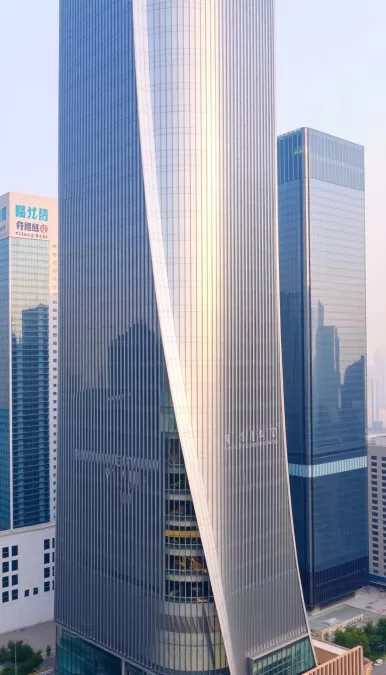
- Height: 599 meters (1,965 feet)
- Floors: 115
- Completion Year: 2017
- Architect: Kohn Pedersen Fox
- Construction Time: 7 years (2010-2017)
- Cost: Approximately US $1.5 billion
The Ping An Finance Center serves as the headquarters for Ping An Insurance in Shenzhen. Its sleek, tapered form is clad in stainless steel and glass, materials chosen specifically to withstand the city’s humid, coastal climate. The building’s eight composite mega-columns enhance its structural stability against typhoons and earthquakes.
The tower houses office space, a conference center, a high-end shopping mall, and a public observation deck called “Free Sky” on the 116th floor. Its aerodynamic shape reduces wind loads by 40%, while its sustainable features earned it LEED Gold certification. The building’s stainless steel façade is the largest of its kind in the world, requiring minimal maintenance despite exposure to salt air.
6. Lotte World Tower – Seoul, South Korea
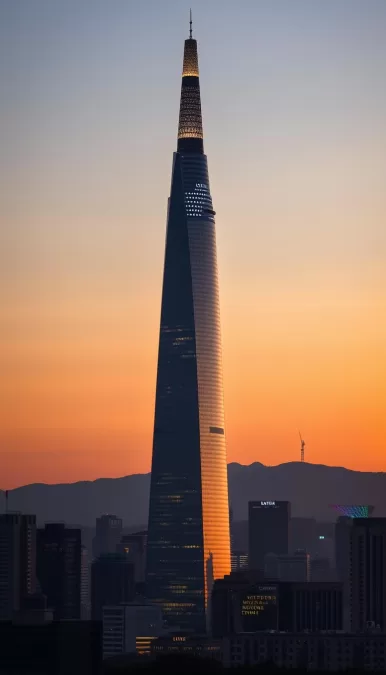
- Height: 555 meters (1,819 feet)
- Floors: 123
- Completion Year: 2017
- Architect: Kohn Pedersen Fox
- Construction Time: 6 years (2010-2016)
- Cost: Approximately US $3.4 billion
Lotte World Tower rises gracefully above Seoul’s skyline with a design inspired by traditional Korean ceramics and calligraphy. Its gently curved, tapered form minimizes wind resistance while referencing the country’s artistic heritage. The tower’s sleek glass-and-steel exterior reflects the changing sky, creating a dynamic presence in the city.
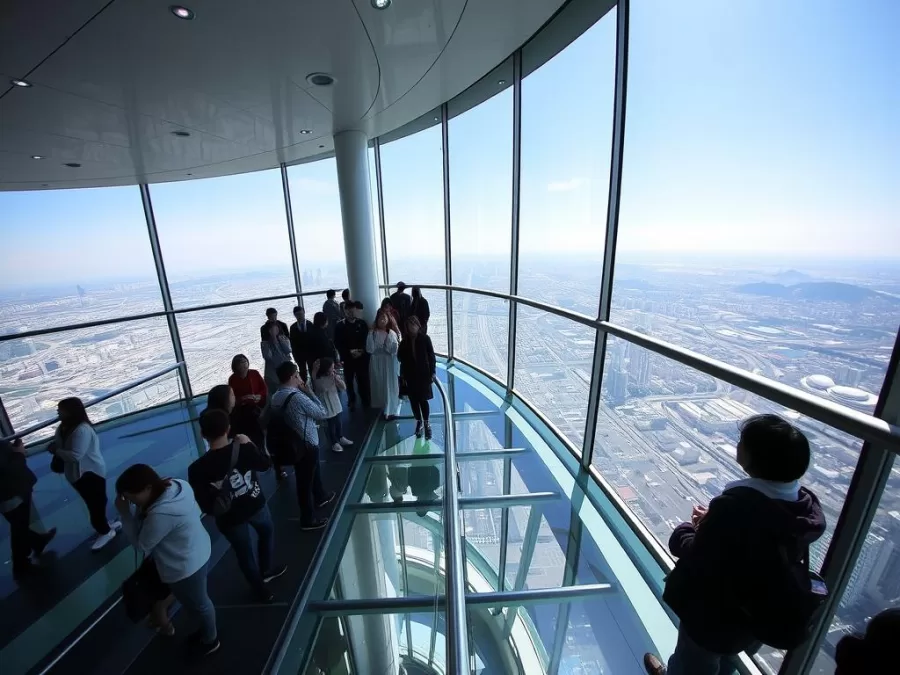
The building houses a diverse mix of spaces, including retail floors, office space, luxury residences, and a 7-star hotel. Its top floors feature “Seoul Sky,” an observation deck with glass-floored skywalk and the world’s highest glass-bottomed observation deck. The tower incorporates numerous sustainable features, including photovoltaic panels, wind turbines, and rainwater collection systems, earning it LEED Gold certification.
7. One World Trade Center – New York City, USA
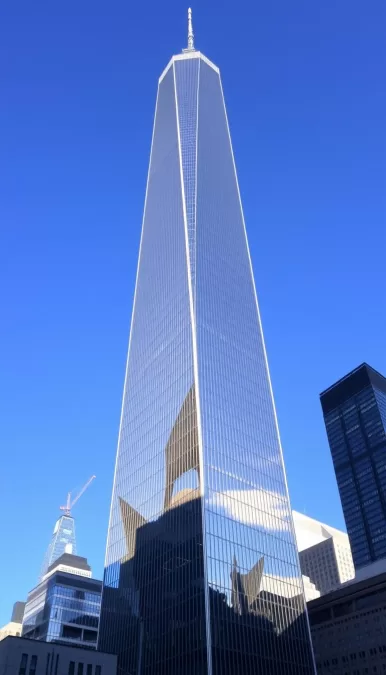
- Height: 541 meters (1,776 feet)
- Floors: 94
- Completion Year: 2014
- Architect: Skidmore, Owings & Merrill
- Construction Time: 8 years (2006-2014)
- Cost: Approximately US $3.9 billion
One World Trade Center stands as a symbol of resilience and renewal on the site of the original World Trade Center in Lower Manhattan. Its height of 1,776 feet was deliberately chosen to reference the year of American independence. The building’s design evolves from a square base to an octagon at its middle, and then to a square again but rotated 45 degrees from the base.
The tower features a prismatic glass façade that reflects changing light conditions throughout the day. Its structure incorporates unprecedented safety and security features, including extra-wide pressurized stairwells, extensive fireproofing, and a dedicated staircase for first responders. The building houses office space, restaurants, and the One World Observatory on floors 100-102, offering spectacular views of New York City.
Sustainability Features
One World Trade Center incorporates numerous sustainable elements, including rainwater collection, LED lights, and recycled materials. The building uses renewable energy sources and was constructed with 40% recycled materials. These features helped it earn LEED Gold certification.
8. Guangzhou CTF Finance Centre – Guangzhou, China
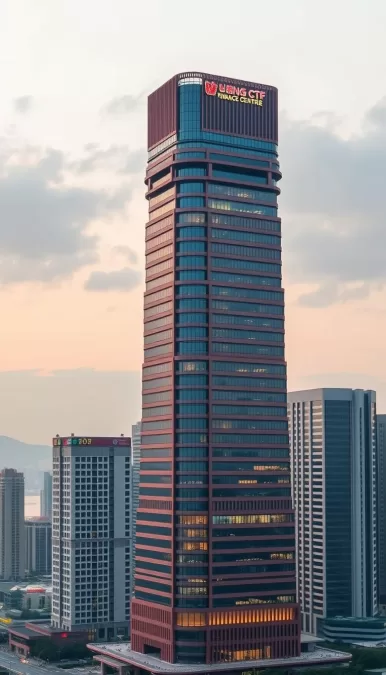
- Height: 530 meters (1,739 feet)
- Floors: 111
- Completion Year: 2016
- Architect: Kohn Pedersen Fox
- Construction Time: 6 years (2010-2016)
- Cost: Approximately US $1.5 billion
The Guangzhou CTF Finance Centre is a mixed-use skyscraper in Guangzhou’s Tianhe District. Its sleek, multi-tiered design optimizes the building for its various functions, with wider floors for office space and narrower floors for residential and hotel use. The tower’s exterior features terracotta mullions that provide shading and reference traditional Chinese architectural materials.
The building houses offices, serviced apartments, a hotel, and a shopping mall. One of its most remarkable features is its elevator system, which includes some of the world’s fastest elevators, capable of traveling at speeds up to 20 meters per second (45 mph). These high-speed elevators reduce travel time from the ground floor to the uppermost levels to just 43 seconds.
9. Tianjin CTF Finance Centre – Tianjin, China
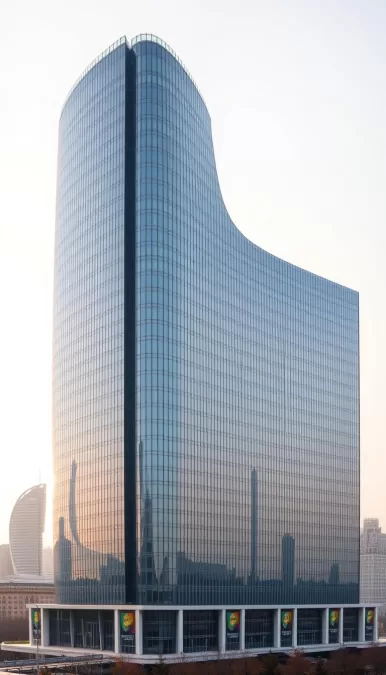
- Height: 530 meters (1,739 feet)
- Floors: 97
- Completion Year: 2019
- Architect: Skidmore, Owings & Merrill
- Construction Time: 6 years (2013-2019)
- Cost: Approximately US $1.2 billion
The Tianjin CTF Finance Centre features a distinctive curved glass form that elegantly tapers as it rises. This design not only creates an aesthetic statement but also serves a practical purpose by minimizing wind forces on the structure. The building’s rounded corners and smooth façade reduce vortex shedding, a phenomenon that can cause dangerous oscillations in tall buildings.
The tower houses office space, serviced apartments, and a luxury hotel operated by Rosewood. Its structural system includes eight sloping mega-columns that lie behind the primary curves of the façade, increasing the building’s rigidity against seismic forces. The amount of structural steel used in the building was significantly reduced through innovative engineering, saving material costs and reducing the structure’s overall weight.
10. CITIC Tower – Beijing, China
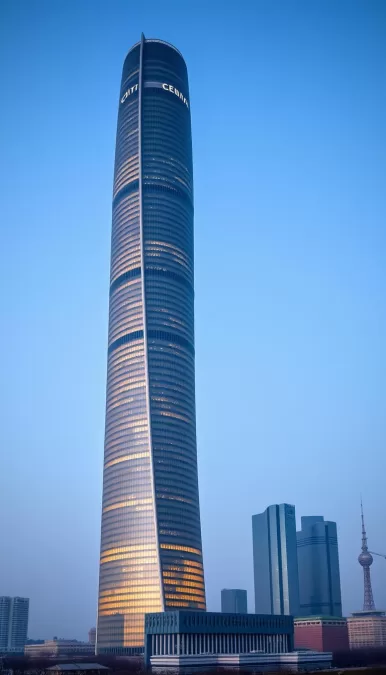
- Height: 528 meters (1,731 feet)
- Floors: 109
- Completion Year: 2018
- Architect: Kohn Pedersen Fox
- Construction Time: 7 years (2011-2018)
- Cost: Approximately US $3.8 billion
CITIC Tower, also known as China Zun, derives its name and form from the ancient Chinese ritual vessel “Zun.” The building features a distinctive shape that widens at the top and bottom while narrowing at the middle, creating an elegant silhouette that stands out in Beijing’s skyline. This unique form also provides structural benefits, with the wider base offering stability in a region prone to earthquakes.
The tower primarily serves as office space for CITIC Group and other tenants. Its façade consists of a curtain wall with integrated vertical fins that provide shading while maintaining transparency. The building incorporates numerous sustainable features, including energy-efficient systems and water conservation measures. As the tallest building in Beijing, China Zun has become an iconic landmark in the capital city’s Central Business District.

How the 2025 List Compares to Previous Years
The 2025 ranking of the world’s tallest buildings shows several notable changes compared to previous years. While Burj Khalifa maintains its top position, the completion of Merdeka 118 in 2023 introduced a new contender in the second position, pushing all other buildings down one rank.

China continues to dominate the list with five entries in the top ten, showcasing the country’s rapid urban development and economic growth. The United States maintains one entry with One World Trade Center, while the Middle East, Southeast Asia, and East Asia each have representation in the rankings.
Notably absent from the 2025 list is Jeddah Tower (previously known as Kingdom Tower) in Saudi Arabia, which was designed to reach over 1,000 meters but faced construction delays. Had it been completed as planned, it would have become the world’s tallest building, surpassing Burj Khalifa by a significant margin.
Key Trends in 2025
- Increased focus on sustainability and energy efficiency
- Multi-functional designs incorporating diverse spaces
- Advanced structural systems to withstand environmental forces
- Integration of smart building technologies
- Cultural symbolism in architectural expression
Regional Distribution
- East Asia: 5 buildings (all in China)
- Middle East: 2 buildings (UAE and Saudi Arabia)
- Southeast Asia: 1 building (Malaysia)
- North America: 1 building (USA)
- East Asia: 1 building (South Korea)
Future Projects That Could Disrupt the Rankings
Several ambitious skyscraper projects currently under development could significantly alter the world’s tallest buildings list in the coming years. These projects push the boundaries of engineering and design, potentially establishing new height records.

Jeddah Tower
Originally planned to exceed 1,000 meters, this project in Saudi Arabia has faced delays but remains a potential future contender for the world’s tallest building title. If completed as designed, it would be the first structure to break the one-kilometer barrier.
Dubai Creek Tower
This ambitious project by Emaar Properties aims to surpass Burj Khalifa with a proposed height of over 1,300 meters. Its unique design features a slender central spire supported by cable stays, inspired by the lily flower and traditional minarets.
Oblisco Capitale
Planned for Egypt’s New Administrative Capital, this obelisk-inspired tower is designed to reach 1,000 meters. If completed, it would become Africa’s tallest building and one of the tallest in the world, symbolizing Egypt’s ancient architectural heritage.
These projects face significant challenges, including financial constraints, technical complexities, and changing market conditions. However, they represent humanity’s continued ambition to push the boundaries of what’s possible in vertical construction. As engineering capabilities advance and new materials emerge, we may see even more impressive structures reaching for the sky in the decades to come.
Stay Updated on Future Skyscraper Developments
Want to be the first to know about new skyscraper projects, construction milestones, and changes to the world’s tallest buildings list? Join our newsletter community for exclusive updates and in-depth analysis.
Frequently Asked Questions About the World’s Tallest Buildings
What is currently the tallest building in the world in 2025?
As of 2025, the Burj Khalifa in Dubai, UAE remains the tallest building in the world, standing at 828 meters (2,717 feet) tall. It has held this record since its completion in 2010.
How tall will the next world’s tallest building be?
The next potential world’s tallest building, Jeddah Tower in Saudi Arabia, was designed to reach over 1,000 meters (3,281 feet), which would make it approximately 172 meters taller than Burj Khalifa. However, the project has faced construction delays, and its completion timeline remains uncertain.
What country has the most super-tall buildings?
China has the most super-tall buildings (defined as buildings over 300 meters tall), with more than 50 such structures across various cities. In the top 10 tallest buildings list alone, China claims five positions, demonstrating its dominance in skyscraper construction.
How do engineers ensure these tall buildings can withstand strong winds?
Engineers employ several strategies to make tall buildings wind-resistant, including aerodynamic shapes (like Shanghai Tower’s twisted form), tapered profiles, wind dampers (mechanical systems that counteract building sway), and strategic openings that allow wind to pass through. These buildings undergo extensive wind tunnel testing during the design phase.
What is the tallest building in the Western Hemisphere?
One World Trade Center in New York City is the tallest building in the Western Hemisphere, standing at 541 meters (1,776 feet). It ranks seventh on the global list of tallest buildings as of 2025.
Conclusion: The Future of Vertical Architecture
The top 10 tallest building in the world 2025 represent remarkable achievements in engineering, design, and human ambition. From the record-setting height of Burj Khalifa to the cultural symbolism of CITIC Tower, these structures push the boundaries of what’s possible while reshaping urban skylines across the globe.
As we look to the future, skyscraper design continues to evolve with greater emphasis on sustainability, resilience, and multi-functionality. The next generation of super-tall buildings will likely incorporate advanced technologies such as artificial intelligence for building management, renewable energy systems, and innovative materials that enhance structural performance while reducing environmental impact.
Whether these architectural marvels serve as corporate headquarters, luxury residences, tourist attractions, or mixed-use developments, they stand as testaments to human ingenuity and our ongoing fascination with reaching ever greater heights. As cities become more densely populated, vertical development will remain an essential strategy for sustainable urban growth, making these record-breaking structures not just impressive landmarks but vital components of our urban future.

Priyanka Pandey
Senior Research Editor · Top10Sense
Priyanka specializes in tech, consumer products, and digital trends. She combines hands-on testing, vendor interviews, and database research to create trustworthy “Top 10” rankings. Her work has been referenced by industry blogs and brand report pages.