Korean cuisine has exploded in global popularity, captivating food lovers with its bold flavors, colorful presentations, and perfect balance of sweet, spicy, sour, and umami elements. What makes Korean most famous dishes truly special is the artful use of fermentation techniques, creating complex flavors that have evolved over centuries. From sizzling barbecue grilled at your table to bubbling stews and vibrant street food, Korean cuisine offers a unique dining experience that celebrates communal eating and a harmony of flavors. Let’s explore the top 10 Korean dishes that have won hearts worldwide and deserve a place on your culinary bucket list.
#10: Japchae (잡채) – Sweet Potato Glass Noodles
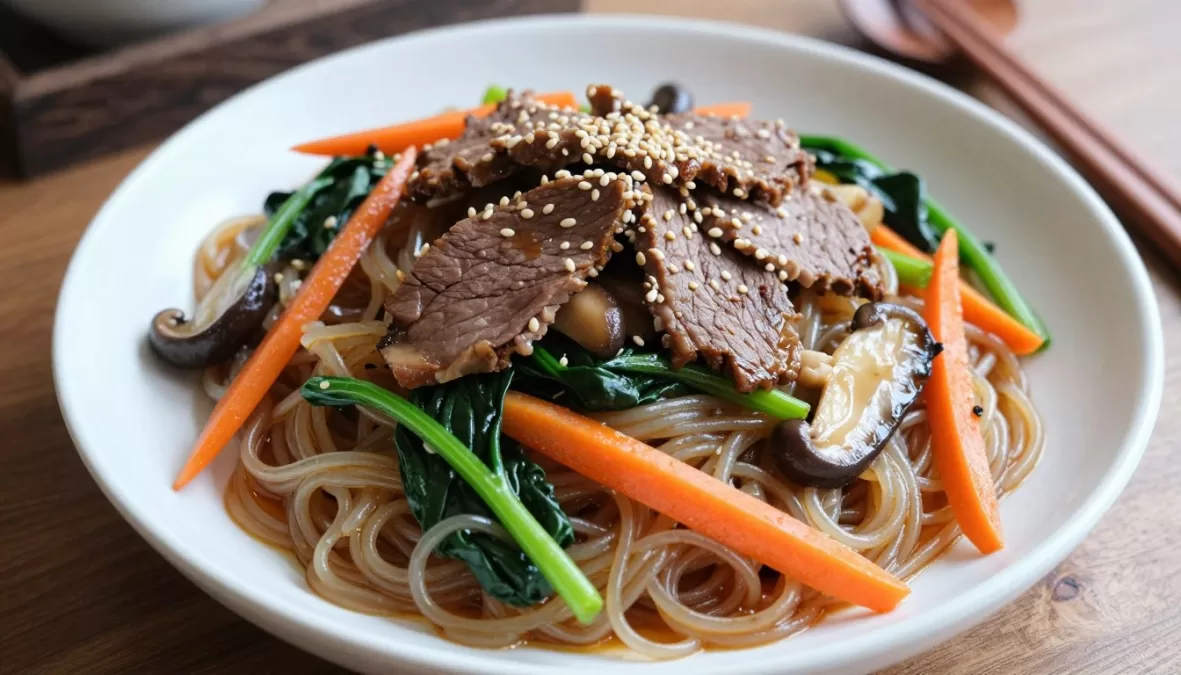
Japchae is a beloved Korean dish featuring translucent sweet potato glass noodles stir-fried with a colorful medley of vegetables and tender strips of beef. The noodles have a delightful chewy texture that absorbs the rich flavors of sesame oil, soy sauce, and garlic. What makes japchae special is its perfect balance of savory and slightly sweet notes, complemented by the earthy flavors of mushrooms and the freshness of vegetables like spinach, carrots, and bell peppers.
Originally created as a royal dish during the Joseon Dynasty, japchae has evolved from a vegetable-only dish to include meat and noodles. Today, it’s a staple at celebrations and family gatherings, symbolizing good fortune and prosperity. Japchae is often served as banchan (side dish) but can easily stand as a main course. Its popularity has spread globally as an approachable introduction to Korean flavors.
Traditionally served at room temperature, japchae pairs wonderfully with kimchi and other banchan. The dish is typically garnished with toasted sesame seeds and sometimes sliced egg. Whether enjoyed at a restaurant or prepared at home, japchae offers a delicious entry point into the world of Korean cuisine.
#9: Haemul Pajeon (해물파전) – Seafood Scallion Pancake
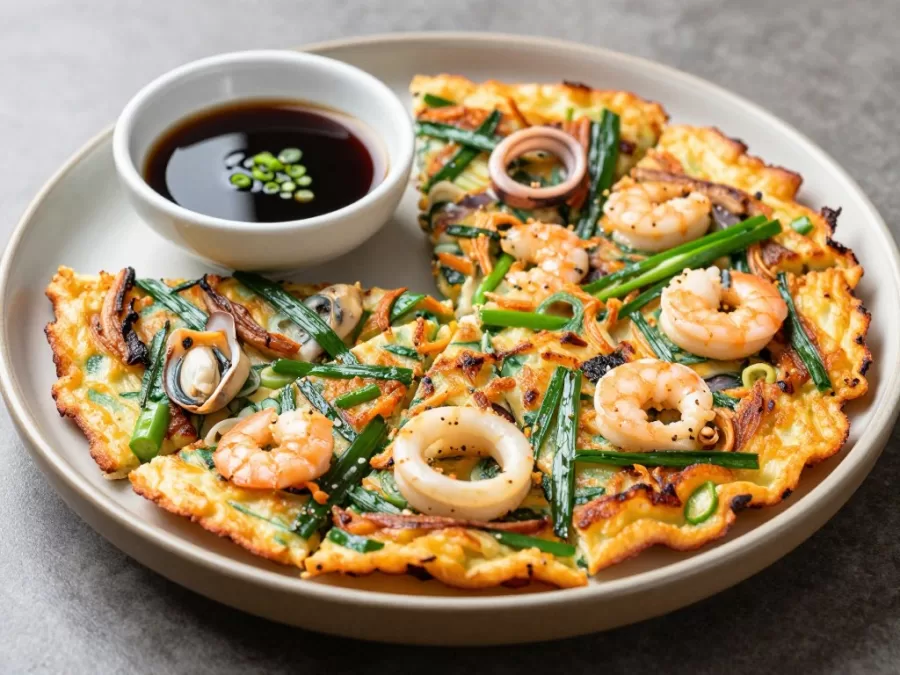
Haemul Pajeon is a savory Korean pancake filled with an assortment of seafood and green onions, creating a perfect harmony of crispy exterior and tender interior. This popular dish features a simple batter of flour, eggs, and water that’s studded with squid, shrimp, mussels, and an abundance of scallions. When fried to golden perfection, the pancake develops irresistible crispy edges while maintaining a soft center filled with juicy seafood.
In Korean culture, pajeon is particularly cherished on rainy days, as the sound of rain is said to resemble the sizzling of pancakes on a hot griddle. It’s a popular anju (food served with alcohol) and is often enjoyed with makgeolli (Korean rice wine) or soju. The dish is typically served with a simple dipping sauce made from soy sauce, vinegar, and sesame oil that enhances its savory profile.
Haemul Pajeon is commonly shared as an appetizer or side dish, though it can be substantial enough for a light meal. Its accessibility and crowd-pleasing nature make it a favorite at Korean restaurants worldwide. The combination of crispy texture, seafood flavors, and aromatic scallions creates an unforgettable taste experience that keeps people coming back for more.
#8: Samgyetang (삼계탕) – Ginseng Chicken Soup
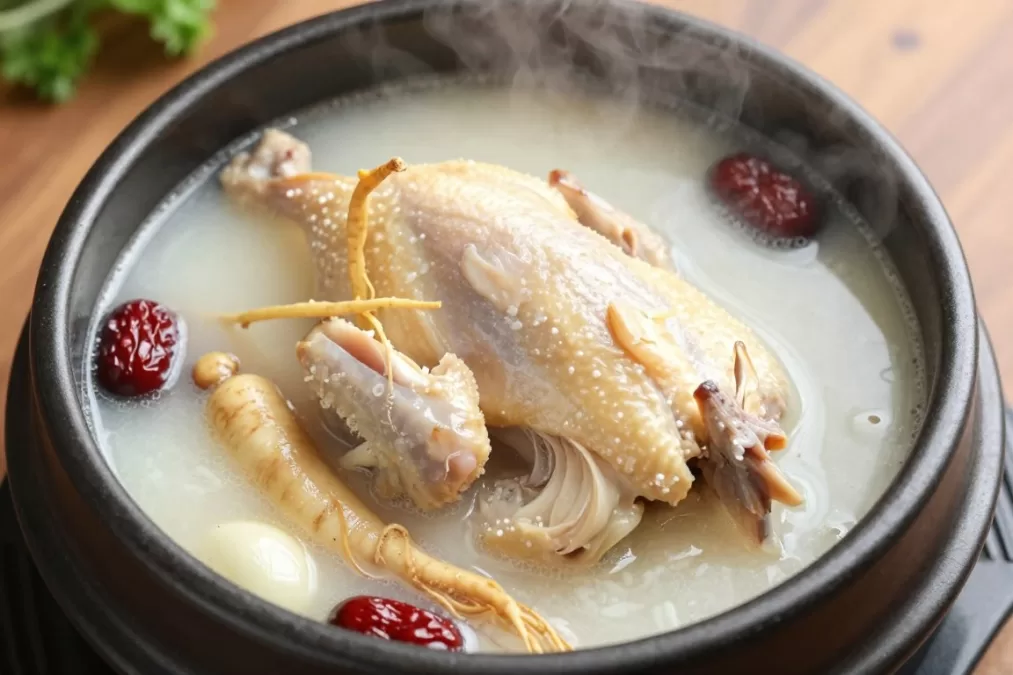
Samgyetang is a nourishing Korean soup featuring a whole young chicken stuffed with glutinous rice, ginseng, jujubes (Korean dates), garlic, and chestnuts, then simmered until the meat is tender and the broth becomes rich and milky. This medicinal soup is known for its gentle yet complex flavor profile, with the earthy notes of ginseng balanced by the natural sweetness of jujubes and the subtle richness of chicken.
Following the principle of “yi yeol chi yeol” (fighting heat with heat), Samgyetang is traditionally consumed during the hottest summer days, particularly during sambok (the three hottest days of summer according to the lunar calendar). Koreans believe this nutritious soup helps replenish energy and maintain stamina during sweltering weather. The inclusion of ginseng, considered a powerful immune-boosting ingredient in Korean medicine, makes this dish both delicious and functional.
Samgyetang is typically served with a small dish of salt for dipping the chicken meat and a side of kimchi. Some restaurants also offer ginseng wine as an accompaniment. The soup is meant to be eaten slowly, savoring both the tender chicken and the medicinal broth. It’s a perfect example of how Korean cuisine often blends culinary pleasure with health benefits.
#7: Sundubu Jjigae (순두부찌개) – Soft Tofu Stew
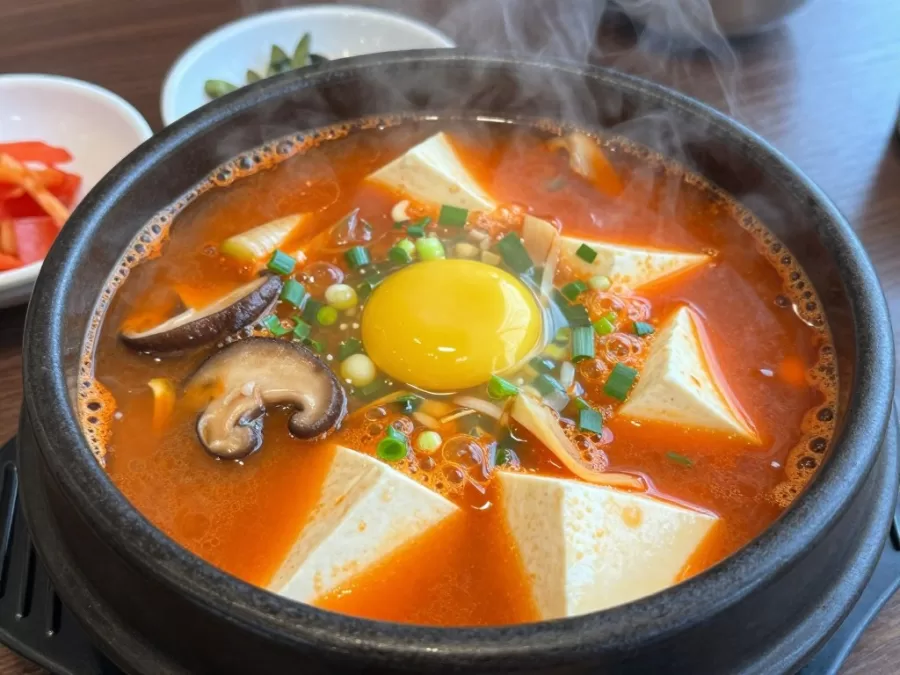
Sundubu Jjigae is a fiery Korean stew centered around silky soft tofu swimming in a spicy, robust broth. This comforting dish combines the delicate texture of freshly made tofu with a complex broth typically flavored with gochugaru (Korean chili flakes), seafood or meat, and various vegetables. The stew arrives at your table bubbling furiously in a traditional stone pot, often with a raw egg cracked on top that gently cooks in the residual heat.
This relatively modern dish gained popularity in the late 20th century and has become a staple in Korean restaurants worldwide. The contrast between the spicy, savory broth and the mild, creamy tofu creates a perfect balance that’s both satisfying and comforting. Sundubu Jjigae is especially popular during cold weather, though Koreans enjoy it year-round for its nourishing qualities.
Traditionally served with a bowl of rice and an array of banchan, this stew comes in various versions including seafood, beef, kimchi, or vegetarian options. The customary way to enjoy Sundubu Jjigae is to scoop some rice into the stew after you’ve eaten some of the tofu and broth. This allows the rice to absorb the flavorful liquid, creating a delicious finale to your meal.
#6: Tteokbokki (떡볶이) – Spicy Rice Cakes
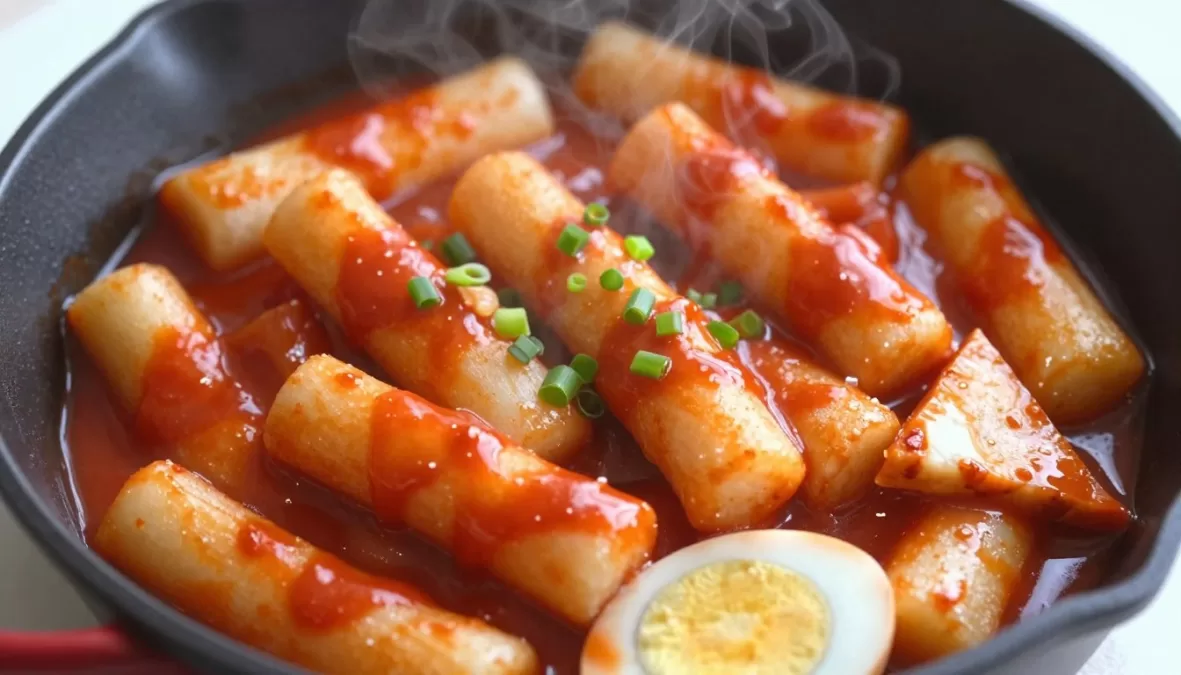
Tteokbokki is an iconic Korean street food featuring chewy cylindrical rice cakes (tteok) smothered in a sweet and spicy gochujang-based sauce. These glutinous rice cakes have a uniquely satisfying texture that’s both chewy and soft, perfectly complemented by the bold, vibrant sauce. Modern versions often include fish cakes (odeng), boiled eggs, and vegetables, creating a one-pot dish that’s as filling as it is flavorful.
Originally served in royal courts during the Joseon Dynasty as a non-spicy dish called “tteok jjim,” tteokbokki transformed into its current spicy incarnation in the 1950s after the Korean War when gochujang became more widely available. Today, it’s one of Korea’s most beloved street foods, with dedicated tteokbokki restaurants and countless street vendors selling this addictive snack throughout the country.
Tteokbokki is often enjoyed as a casual snack or light meal, particularly popular among students after school. It’s frequently paired with odeng (fish cake skewers) and eomuk guk (fish cake soup) at street food stalls. The dish’s popularity has led to numerous variations, including cream tteokbokki, seafood tteokbokki, and even cheese tteokbokki, which adds a layer of melted cheese for an indulgent twist on this classic street food.
#5: Kimchi Jjigae (김치찌개) – Kimchi Stew
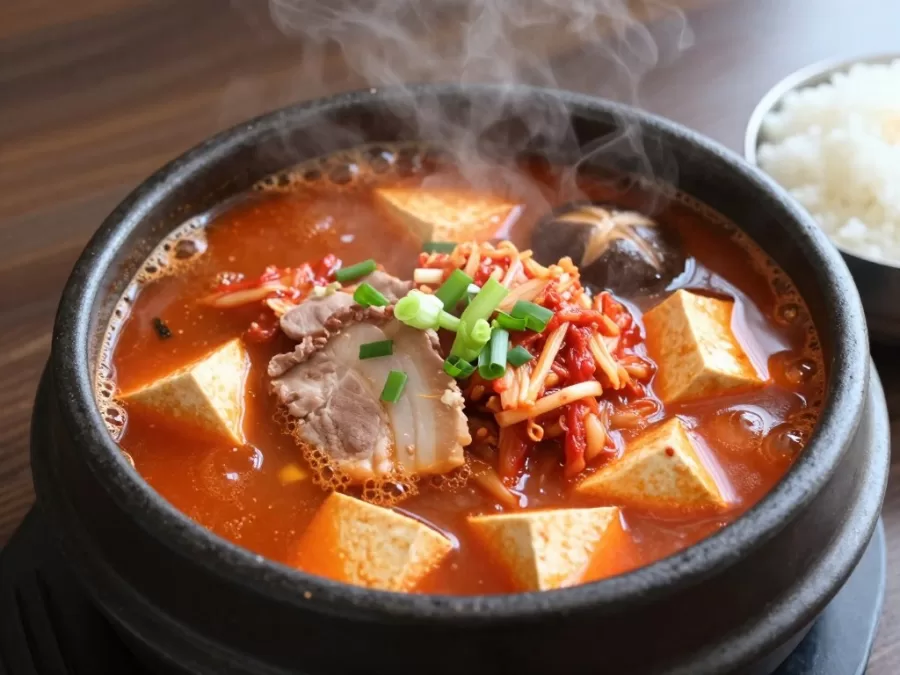
Kimchi Jjigae is a soul-warming Korean stew that transforms aged kimchi into a complex, deeply flavored dish. This hearty stew combines fermented kimchi with tofu, pork (though sometimes tuna or other proteins), and a rich broth that becomes infused with the tangy, spicy essence of well-fermented kimchi. The longer the kimchi has fermented, the more depth and character it brings to the stew, making this dish a perfect way to use kimchi that has become too sour to enjoy fresh.
Often described as Korea’s ultimate comfort food, Kimchi Jjigae holds a special place in Korean households as an everyday staple. The dish exemplifies the Korean philosophy of waste reduction, as it repurposes older kimchi into something even more delicious. During the cold Korean winters, this bubbling hot stew provides both physical and emotional warmth, making it a cornerstone of Korean home cooking.
Traditionally served directly from the cooking vessel to maintain its heat, Kimchi Jjigae is accompanied by rice and an assortment of banchan. The stew continues to develop flavor as it simmers at the table, with many Koreans believing it tastes even better the next day as leftovers. Its perfect balance of spicy, sour, and savory flavors, along with its comforting quality, has made it one of the most internationally recognized Korean dishes.
#4: Korean Fried Chicken (양념치킨) – Yangnyeom Chicken
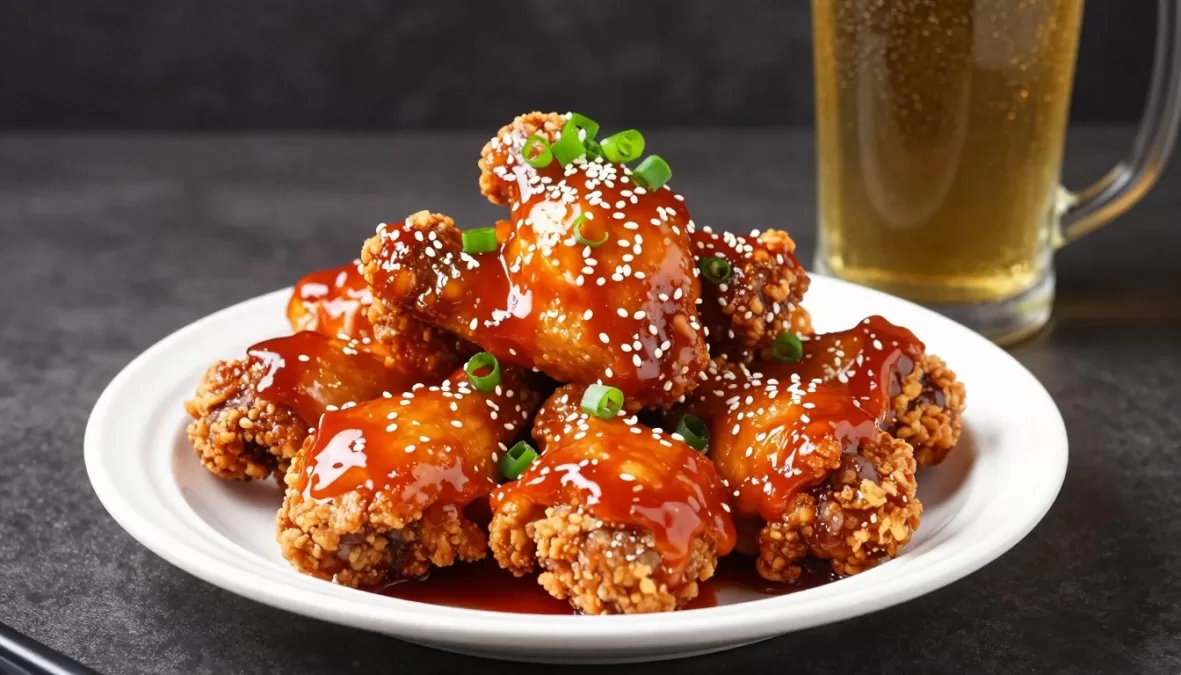
Korean Fried Chicken has revolutionized the fried chicken game with its impossibly crispy exterior and juicy interior, often glazed with a sticky, sweet-spicy sauce. What sets it apart from other fried chicken styles is the unique double-frying technique that renders out fat and creates an extraordinarily crunchy crust that stays crisp even when coated in sauce. The most popular variety, yangnyeom chicken, features a glossy red sauce that balances gochujang’s heat with honey or sugar’s sweetness.
Though a relatively recent addition to Korean cuisine (becoming popular in the 1970s), Korean Fried Chicken has quickly become a national obsession and a global sensation. The phenomenon of “chimaek” (chicken and maekju/beer) emerged in the early 2000s, creating a dining culture centered around this perfect pairing. During major sporting events, especially the World Cup, chimaek consumption skyrockets as friends gather to cheer on their teams.
Korean Fried Chicken is typically served as a shared dish, often as anju (food consumed with alcohol). Beyond the classic yangnyeom variety, popular variations include garlic soy sauce, sweet garlic, or even cheese-powder-dusted chicken. The chicken is usually accompanied by pickled radish cubes that provide a refreshing counterpoint to the rich, flavorful chicken. This dish exemplifies how Korean cuisine continues to evolve while maintaining its distinctive flavor principles.
#3: Japchae (잡채) – Sweet Potato Glass Noodles
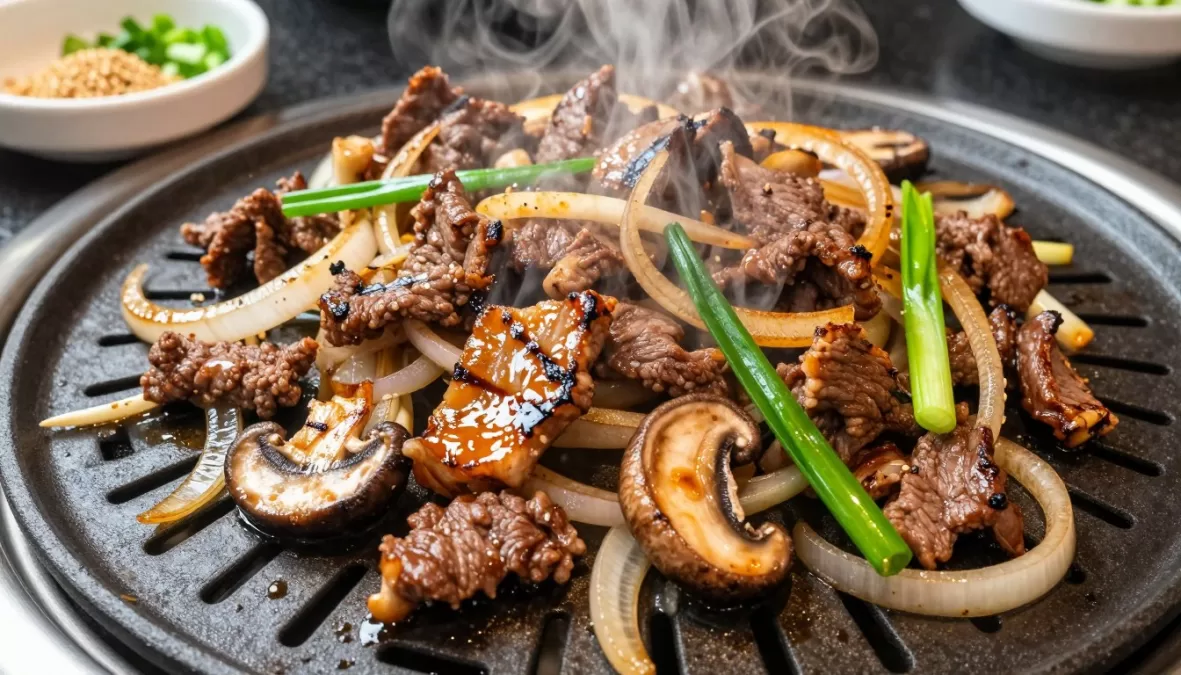
Bulgogi, which translates to “fire meat,” features thinly sliced beef marinated in a sweet and savory sauce before being grilled to perfection. The marinade typically combines soy sauce, sugar, sesame oil, garlic, and fruit (traditionally Korean pear) to tenderize the meat and infuse it with a complex flavor profile. The result is melt-in-your-mouth beef with a delightful caramelization that balances sweetness with umami depth.
With a history dating back over 2,000 years to the Goguryeo era, bulgogi has evolved from a skewered meat dish called maekjeok to become one of Korea’s most internationally recognized foods. It represents the sophisticated balance of flavors that characterizes Korean cuisine. During the Joseon Dynasty, it was considered royal cuisine, but today it’s enjoyed by people from all walks of life and has become a popular gateway dish for those new to Korean food.
Bulgogi is versatile in its presentation—it can be served on a sizzling plate, over a tabletop grill, or simply stir-fried with vegetables. It’s often enjoyed wrapped in lettuce leaves (ssam) with a dab of ssamjang (spicy paste), raw garlic, and green chili peppers. This creates a perfect bite that combines fresh, spicy, and savory elements. Bulgogi also appears in fusion dishes like bulgogi burgers, tacos, and pizza, showcasing its adaptability and universal appeal.
#2: Samgyeopsal (삼겹살) – Grilled Pork Belly
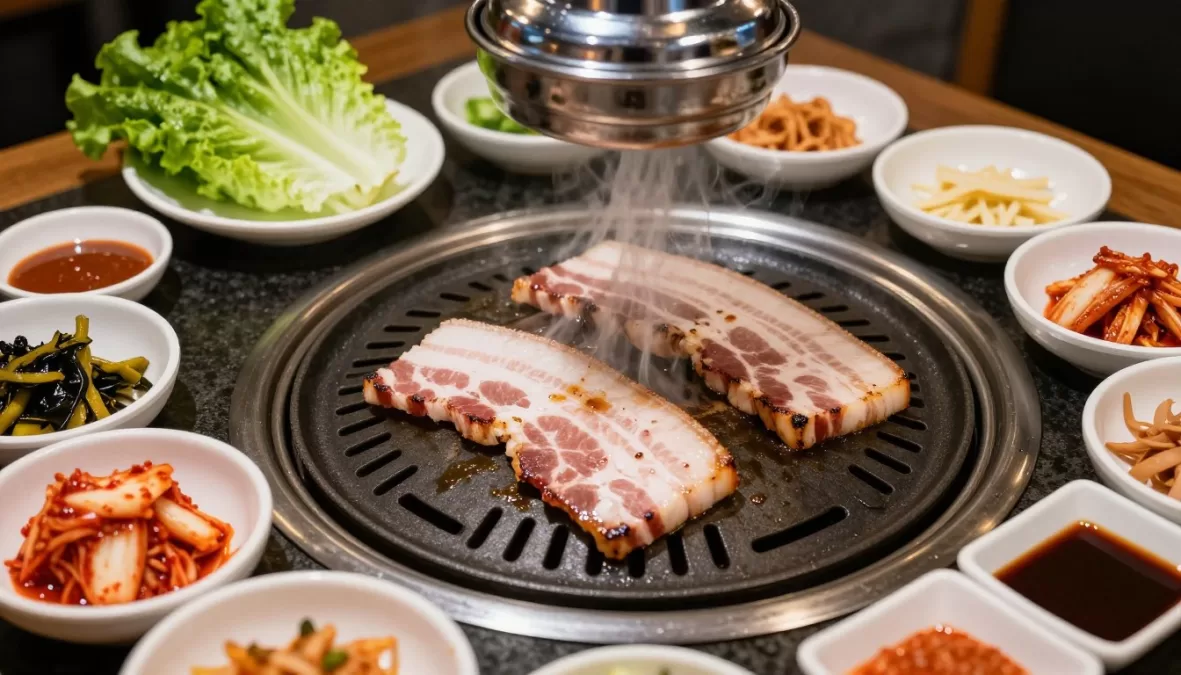
Samgyeopsal is the quintessential Korean BBQ experience featuring thick slices of unseasoned pork belly grilled right at your table. The name literally means “three-layer meat,” referring to the three layers of fat and meat visible in a good cut of pork belly. As it cooks, the fat renders slowly, creating irresistibly crispy edges while maintaining juicy, tender meat. The beauty of samgyeopsal lies in its simplicity—the natural flavor of the pork is the star, enhanced only by the caramelization from the grill.
This dish embodies the communal nature of Korean dining, as friends and family gather around a central grill, cooking and eating together. Samgyeopsal gained immense popularity in the 1970s and ’80s as Korea’s economy developed, and pork became more accessible. Today, it’s the centerpiece of countless social gatherings and is particularly popular on the 3rd of March (3-3), playfully designated as “Samgyeopsal Day” due to the visual similarity between the date and the three layers of pork belly.
The proper way to enjoy samgyeopsal is to wrap a piece of grilled pork in a lettuce or perilla leaf, adding kimchi, ssamjang (spicy paste), raw garlic, and green chili peppers before creating a perfect bite-sized package. This creates a harmony of flavors and textures—fatty, crispy pork balanced by fresh vegetables and punchy condiments. Samgyeopsal is typically accompanied by a parade of banchan and often paired with soju, creating a complete dining experience that can last for hours.
#1: Bibimbap (비빔밥) – Mixed Rice Bowl
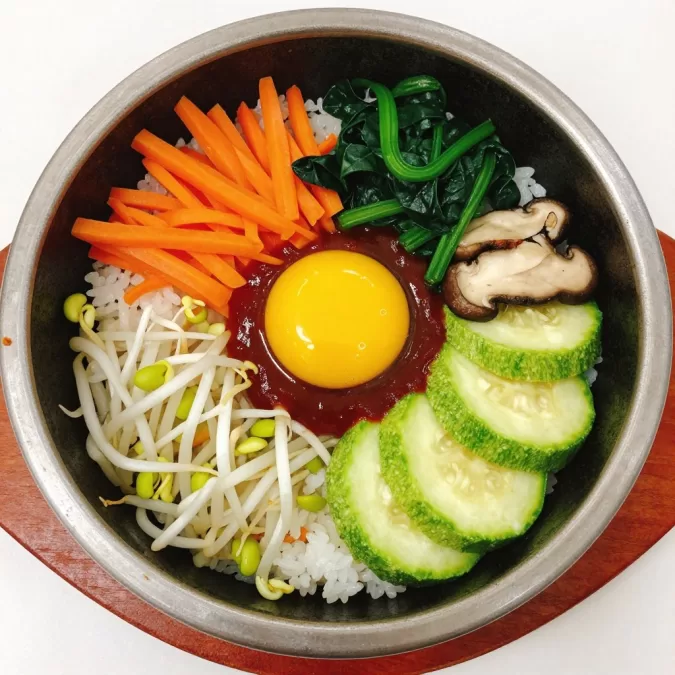
Bibimbap, which means “mixed rice,” is perhaps Korea’s most visually stunning and nutritionally balanced dish. This colorful bowl features a base of white rice topped with an artful arrangement of seasoned vegetables (namul), protein (typically beef or tofu), a sunny-side-up egg, and gochujang (chili pepper paste). Before eating, everything is mixed together, creating a harmonious blend of flavors and textures. The dolsot (stone bowl) version is particularly prized, as it creates a delicious crispy rice crust along the bottom.
Rooted in ancient Korean agricultural traditions, bibimbap originated as a way to use leftover vegetables and rice. Different regions developed their own variations, with Jeonju bibimbap being the most famous. The dish embodies the Korean philosophy of balanced nutrition through its colorful components representing different food groups. The five colors in traditional bibimbap—red, yellow, green, white, and black—correspond to the five elements in Korean philosophy, symbolizing a balanced meal that nourishes both body and spirit.
Bibimbap is the ultimate comfort food that can be both everyday fare and special occasion cuisine. It’s infinitely customizable, making it accessible to various dietary preferences. The ritual of mixing the components together creates a sensory experience that engages diners in the preparation of their meal. Its perfect balance of nutrition, flavor, and visual appeal has made bibimbap Korea’s most recognized culinary ambassador, appearing on international airline menus and in restaurants worldwide as the definitive introduction to Korean cuisine.
Special Mention: Kimchi (김치) – Korea’s National Dish
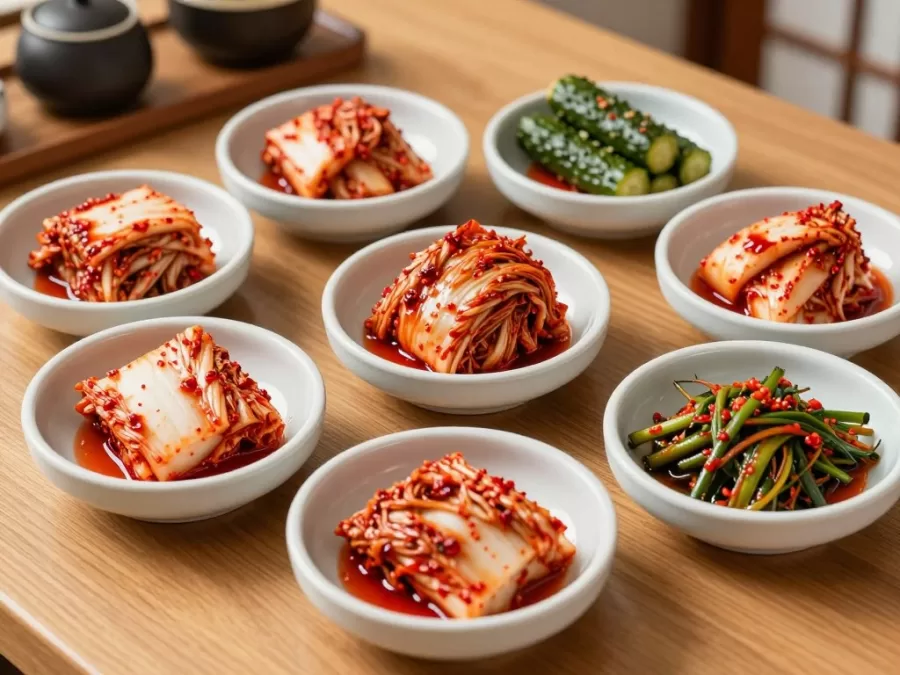
While not a standalone dish but rather a fundamental component of Korean cuisine, kimchi deserves special recognition as Korea’s most iconic food. This fermented vegetable preparation, most commonly made with napa cabbage and Korean radish, is seasoned with a mixture of gochugaru (chili powder), garlic, ginger, and jeotgal (salted seafood). The fermentation process creates a complex flavor profile that’s simultaneously sour, spicy, umami-rich, and refreshing.
Kimchi is more than food in Korea—it’s a cultural icon with a 3,000-year history. The traditional preparation of kimchi (kimjang) is recognized by UNESCO as an Intangible Cultural Heritage of Humanity. Historically, kimjang was a communal activity where families and neighbors would gather in late autumn to prepare large quantities of kimchi to last through the winter. This practice strengthened community bonds and ensured food security during the cold months when fresh vegetables were scarce.
Present at virtually every Korean meal as banchan, kimchi comes in hundreds of varieties depending on the main vegetable, region, and season. Beyond its culinary importance, kimchi is celebrated for its health benefits, including probiotics from fermentation and nutrients from vegetables and seasonings. It’s incredibly versatile in cooking, transforming into stews, pancakes, fried rice, and countless other dishes. As Korean cuisine has gained global popularity, kimchi has become a staple in health food stores and restaurant menus worldwide, cementing its status as Korea’s most famous culinary ambassador.
Explore the Vibrant World of Korean Cuisine
From the fiery depths of Kimchi Jjigae to the delicate balance of Bibimbap, Korean cuisine offers an incredible spectrum of flavors, textures, and dining experiences. These top 10 most famous Korean dishes represent just the beginning of a rich culinary tradition that continues to captivate food lovers worldwide. What makes Korean food truly special is not just its bold flavors and beautiful presentations, but the way it brings people together—whether gathering around a sizzling BBQ grill or sharing a bubbling pot of stew.
The beauty of Korean cuisine lies in its accessibility—many dishes can be adapted to different dietary preferences while maintaining their essential character. Whether you’re a seasoned Korean food enthusiast or just beginning to explore these flavors, there’s always something new to discover in this vibrant culinary landscape.
Ready to Begin Your Korean Food Journey?
Start by visiting a local Korean restaurant to sample these iconic dishes, or try your hand at preparing simpler options like Bibimbap or Bulgogi at home. Korean ingredients are increasingly available in international grocery stores and online, making authentic Korean cooking more accessible than ever.

Priyanka Pandey
Senior Research Editor · Top10Sense
Priyanka specializes in tech, consumer products, and digital trends. She combines hands-on testing, vendor interviews, and database research to create trustworthy “Top 10” rankings. Her work has been referenced by industry blogs and brand report pages.