
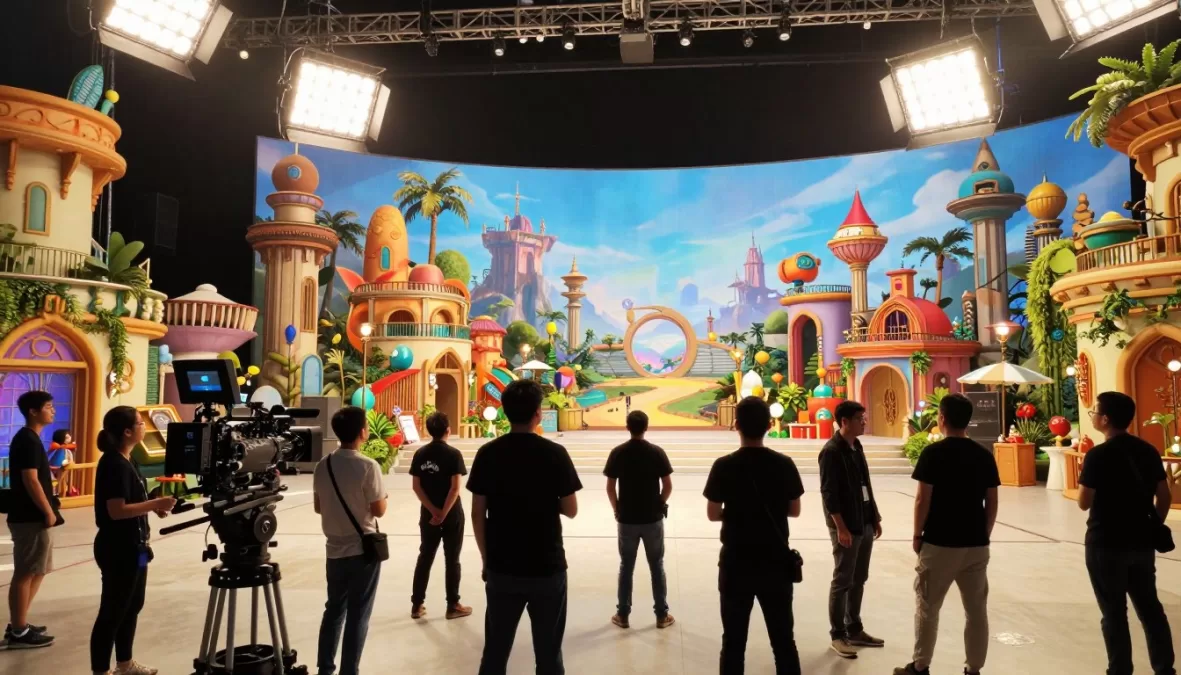
The film industry has witnessed numerous big-budget productions that have captivated audiences worldwide. The production of blockbuster films involves significant expenses, including CGI, talent fees, and marketing costs.
Understanding the costs associated with filmmaking is crucial, as it provides insight into the complexity and scale of these projects. The most expensive film ever made, Star Wars: The Rise of Skywalker, had a net budget of $490 million. Moreover, the production of the third and fourth Avengers films—Infinity War and Endgame—stands as the most expensive back-to-back film production, with a cost of over $1 billion.
Key Takeaways
- The film industry produces numerous big-budget productions each year.
- CGI, talent fees, and marketing expenses are significant contributors to movie production costs.
- Understanding filmmaking costs provides insight into the complexity and scale of film projects.
- Star Wars: The Rise of Skywalker is the most expensive film ever made, with a net budget of $490 million.
- The production of Avengers: Infinity War and Endgame is the most expensive back-to-back film production.
The High Stakes of Hollywood Blockbusters
The Hollywood film industry has witnessed a significant surge in production costs over the years, with blockbusters now frequently boasting budgets that rival small nations’ GDPs. This trend is not merely a reflection of inflation or the increasing costs of talent and technology; it represents a strategic shift in how studios approach big-budget productions.
The Evolution of Film Budgets Through the Decades
Film budgets have evolved significantly over the decades. The 1990s and 2000s saw a notable increase in production costs, largely due to the advent and refinement of CGI and the rise of blockbuster films. These technological advancements and changing audience expectations have driven studios to invest more heavily in their productions.
- The introduction of CGI in the 1990s revolutionized filmmaking, allowing for more complex and visually stunning productions.
- The success of blockbuster films in the 2000s further escalated budget expectations, as studios competed to create the most spectacular and engaging cinematic experiences.
Why Studios Invest Hundreds of Millions in Single Productions
Studios invest heavily in big-budget productions for several key reasons. The potential for high returns on investment is a significant factor, as successful blockbusters can generate substantial revenue through box office sales, merchandising, and streaming. Additionally, competing in the global market requires studios to produce films that are on par with or surpass their competitors in terms of quality and spectacle.
Key reasons for high investment include:
- The potential for high returns through box office and merchandising sales.
- The need to compete in the global market with high-quality productions.
- The importance of establishing a brand identity through significant and memorable films.
What Makes Movies So Expensive?
The cost of making a movie can be staggering, with several factors contributing to the final bill. The production of big-budget films involves a complex interplay of various costly elements, from visual effects and CGI to A-list actor salaries and extensive marketing campaigns.
Visual Effects and CGI Costs
One of the primary drivers of high production costs is the use of visual effects and CGI. Modern films often rely heavily on these technologies to create realistic and engaging cinematic experiences. For instance, movies like Avengers: Endgame and Avatar have pushed the boundaries of what is possible with CGI, resulting in significant expenses.
A-List Actor Salaries and Production Talent
A-list actors command high salaries, which can substantially increase the overall cost of a film. Additionally, other production talent, such as directors and producers, may also receive significant compensation. The cost of hiring top talent can be a major contributor to the overall budget of a movie.
Marketing, Distribution, and Hidden Expenses
Beyond production costs, marketing and distribution expenses play a crucial role in the total cost of a film. Studios often spend hundreds of millions on marketing campaigns to ensure a successful box office run. Furthermore, there are hidden expenses, such as insurance and contingency funds, that add to the overall expenditure.
In conclusion, the high costs associated with lavish film productions are driven by a combination of factors, including visual effects, talent salaries, and marketing expenses. Understanding these elements provides insight into why big-budget productions are so costly.
Understanding Film Budget Calculations
Calculating film budgets involves more than just adding up production costs. It’s a complex process that includes various expenses, from production and talent costs to marketing and distribution.
Production Budgets vs. Total Costs
The production budget refers to the costs directly associated with the making of the film, such as equipment, locations, and crew salaries. However, the total cost includes additional expenses like marketing, distribution, and overheads. For instance, a film with a production budget of $200 million might have a total cost of $300 million or more when these extra expenses are factored in.
Adjusting for Inflation: Why It Matters
When comparing the budgets of films made in different years, it’s crucial to adjust for inflation. A film that cost $100 million in 1990 would have a significantly different budget in today’s dollars. Adjusting for inflation gives a more accurate picture of a film’s expense relative to others. For example, the original “Avatar” (2009) had a budget that, when adjusted for inflation, is comparable to many modern blockbuster films.
Understanding these nuances is essential for accurately assessing the cost of high-budget films and blockbuster movie projects. By considering both production budgets and total costs, as well as adjusting for inflation, we can gain a clearer picture of the financial investments involved in costly movie projects.
The Top 10 Most Expensive Movies Ever Made
The world of Hollywood is known for its extravagant productions, with some films boasting budgets that rival small nations’ GDPs. The production costs of these films are staggering, involving complex calculations that include production budgets, marketing expenses, and talent salaries.
Methodology Behind Our Rankings
Our rankings of the top 10 most expensive movies ever made are based on the net production costs of films, adjusted for inflation. This approach provides a more accurate comparison across different years, as it accounts for changes in the value of money over time. The costs considered include production budgets, visual effects, and talent fees.
| Rank | Movie Title | Production Cost |
|---|---|---|
| 1 | Avatar | $478 Million |
| 2 | Avatar: The Way of Water | $460 Million |
| 3 | Avengers: Endgame | $400 Million |
The Financial Risk of Big-Budget Filmmaking
Big-budget filmmaking carries significant financial risks, as the potential for films to underperform at the box office is ever-present. A film that fails to recoup its production and marketing costs can lead to substantial financial losses for studios. This risk is exacerbated by the high costs associated with producing and marketing blockbuster films.
Movies Ranked 10-8: Breaking the $250 Million Barrier
The art of filmmaking is often a costly endeavor, as seen in the productions ranked 10-8 on our list. These films represent some of the most ambitious projects in recent cinematic history, with budgets that have pushed the boundaries of what is considered feasible in the industry.
10. Tangled – $260 Million
Disney’s Tangled is a prime example of a costly movie project that paid off. Released in 2010, this animated film reimagined the classic Rapunzel story with cutting-edge animation and a memorable soundtrack.
Disney’s Revolutionary Animation Technology
The production of Tangled involved significant investment in animation technology. Disney developed new software to create more realistic hair and clothing simulations, enhancing the visual quality of the film. As Tom MacDonald, an animation supervisor on the film, noted, “We wanted to make sure that Rapunzel’s hair was not just a passive element, but an active part of the storytelling.”
Financial Performance and Legacy
Tangled was a commercial success, grossing over $590 million worldwide. The film’s success can be attributed to its engaging storyline, memorable characters, and the innovative animation techniques that brought the world of Corona to life. The movie’s legacy continues with successful merchandising and a popular Disney franchise.
“Tangled is a great example of how Disney’s commitment to innovation and quality can lead to both critical and commercial success.”
9. Harry Potter and the Half-Blood Prince – $275 Million
The Harry Potter franchise is known for its lavish film productions, and Harry Potter and the Half-Blood Prince is no exception. This installment in the series continued the trend of increasing production costs, driven by the need for elaborate magical effects and the rising salaries of the cast.
Magical Effects and Production Challenges
The production team faced numerous challenges in bringing the magical world to life. The film’s visual effects were a key aspect, with the creation of complex scenes such as the cave sequence where Harry and Dumbledore attempt to destroy a Horcrux. The use of advanced CGI and meticulous set design helped to immerse viewers in the wizarding world.
Box Office Success and Franchise Impact
Despite the high production costs, Harry Potter and the Half-Blood Prince was a box office success, grossing over $934 million worldwide. The film’s performance ensured the continued viability of the franchise, paving the way for the final installments.
8. John Carter – $280 Million
John Carter was a sci-fi epic that aimed to launch a new franchise for Disney. The film’s production was marked by significant investment in visual effects and world-building.
What Went Wrong: Budget Overruns
Despite its ambitious scope, John Carter faced significant challenges, including budget overruns and marketing issues. The film’s production costs escalated due to the complexity of the visual effects and the need for extensive reshoots.
Disney’s Costly Lesson in Sci-Fi Filmmaking
The financial performance of John Carter was disappointing, grossing just over $211 million at the domestic box office, failing to match its production costs. The film’s underperformance served as a costly lesson for Disney in the risks associated with big-budget sci-fi filmmaking.
Movies Ranked 7-5: The $300+ Million Productions
With budgets soaring into the hundreds of millions, the films ranked 7-5 on our list showcase the financial risks and rewards of big-budget filmmaking. These Hollywood extravaganzas not only captivate audiences worldwide but also represent significant investments by studios looking to create the next blockbuster.
7. Justice League – $300 Million
Justice League, directed by Zack Snyder and later reshot by Joss Whedon, brought together some of DC’s most iconic superheroes in a battle against a formidable foe. The film’s budget was substantial, totaling $300 million.
Reshoots and Director Changes
A significant factor contributing to the film’s cost was the extensive reshoots and the change in directors. These reshoots not only added to the production expenses but also complicated the filmmaking process.
Box Office Performance vs. Expectations
Despite its star-studded cast and anticipated storyline, Justice League underperformed at the box office, failing to meet the high expectations set by its predecessors. The film’s worldwide gross was approximately $657 million, which, while substantial, was considered a disappointment given its massive budget and marketing costs.
6. Pirates of the Caribbean: At World’s End – $300 Million
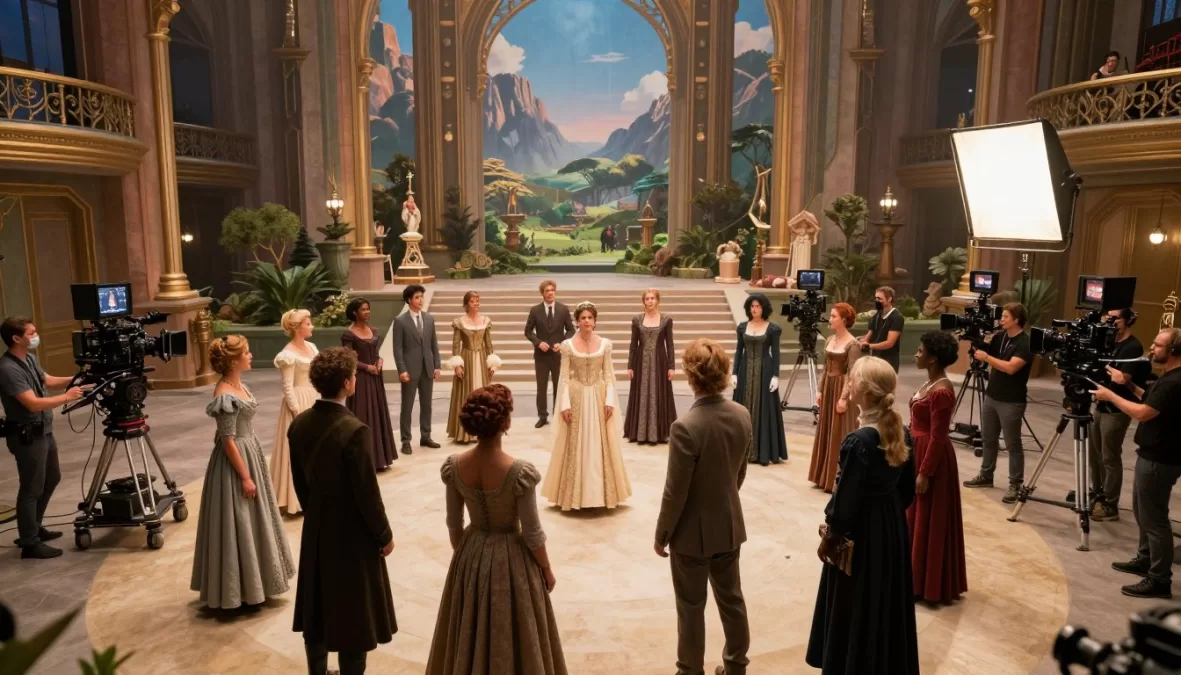
Pirates of the Caribbean: At World’s End, the third installment in the Pirates of the Caribbean franchise, was a spectacle of epic proportions, with a budget to match its grand scale. The film’s production costs totaled $300 million.
Elaborate Set Pieces and Location Shooting
The film featured elaborate set pieces and extensive location shooting, contributing to its high production costs. The filmmakers’ commitment to creating an immersive experience for viewers drove up expenses.
Commercial Success Despite the Cost
Despite its hefty budget, Pirates of the Caribbean: At World’s End was a commercial success, grossing over $963 million worldwide. The film’s success demonstrated that, with the right story and execution, even the most expensive films can yield significant returns.
5. Avengers: Age of Ultron – $365 Million
Avengers: Age of Ultron, Marvel’s sequel to The Avengers, boasted an even larger budget, totaling $365 million. The film expanded the Avengers universe, introducing new characters and plotlines.
Marvel’s Ambitious Sequel Strategy
Marvel’s strategy for Age of Ultron involved complex action sequences, extensive CGI, and a large cast, all of which contributed to the film’s high production costs. The studio’s ambition to create a richer, more complex universe drove the budget upward.
Global Box Office Dominance
Avengers: Age of Ultron was a global box office success, grossing over $1.4 billion worldwide. The film’s success underscored the financial potential of well-executed, high-budget films within the Marvel Cinematic Universe.
Movies Ranked 4-2: Pushing Budget Boundaries
With budgets that rival small nations’ GDPs, the movies ranked 4-2 on our list are truly cinematic spectacles. These lavish film productions have captivated audiences worldwide with their grandeur and visual effects.
4. Pirates of the Caribbean: On Stranger Tides – $379 Million
Pirates of the Caribbean: On Stranger Tides is a prime example of a big-budget production. The film’s budget was largely driven by the costs associated with Johnny Depp’s salary and the production’s extravagant demands.
Johnny Depp’s Salary and Production Extravagance
Johnny Depp’s salary for the film was reportedly around $55 million, a significant portion of the overall budget. The production was also known for its extravagance, with elaborate sets and special effects.
- Depp’s salary: $55 million
- Production costs: $324 million
Financial Results and Franchise Impact
Despite its high production costs, Pirates of the Caribbean: On Stranger Tides performed well at the box office, grossing over $1.046 billion worldwide. The film’s success helped to sustain the franchise, paving the way for future installments.
3. Avengers: Endgame – $400 Million
Avengers: Endgame is another example of a costly movie project that paid off at the box office. The film’s production costs were driven by the costs associated with its ensemble cast and complex visual effects.
Culminating the MCU: Cast Costs and Effects
The film’s cast, which included Robert Downey Jr., Chris Evans, and Scarlett Johansson, commanded high salaries, contributing to the overall cost. The film’s visual effects were also a major expense, with many scenes requiring complex CGI work.
Avengers: Endgame went on to break numerous box office records, grossing over $2.79 billion worldwide. The film’s success was a culmination of the Marvel Cinematic Universe’s (MCU) decade-long storytelling and character development.
2. Avatar: The Way of Water – $460 Million
Avatar: The Way of Water is one of the most expensive films ever made, with a budget of $460 million. The film’s production costs were driven by the costs associated with its innovative 3D technology and underwater filming.
James Cameron’s Underwater Filming Technology
Director James Cameron is known for pushing the boundaries of filmmaking technology, and Avatar: The Way of Water is no exception. The film’s underwater scenes were captured using specialized equipment and techniques.
Financial Gamble and Box Office Performance
Avatar: The Way of Water was a significant financial gamble, but it has performed well at the box office, grossing over $2.32 billion worldwide. The film’s success is a testament to the enduring popularity of the Avatar franchise.
The Most Expensive Film Ever Made: Avatar – $478 Million
Avatar, directed by James Cameron, is renowned for its massive $478 million production budget, making it the most expensive film ever made. This groundbreaking achievement in filmmaking was not just about the budget; it was about pushing the boundaries of what was possible on screen.

The film’s innovative use of technology was a key factor in its high production costs. As Cameron noted, “We were trying to create a believable, immersive world, and that required a lot of new technology.” This commitment to innovation led to significant advancements in filmmaking.
Revolutionary 3D Technology and Production Innovations
Avatar was at the forefront of 3D technology, utilizing motion capture and advanced CGI to create its immersive world. The production team developed new software and techniques to bring the film’s unique visuals to life.
The use of Simul-Cam technology allowed directors to see the actors’ performances in real-time, as if they were filming live-action scenes. This innovation was crucial in achieving the film’s desired visual effects.
How Avatar Changed Blockbuster Filmmaking Forever
Avatar’s success had a profound impact on the film industry, encouraging studios to invest in big-budget productions and Hollywood extravaganzas. The film’s use of 3D technology and immersive storytelling raised the bar for blockbuster films.
As
“Avatar redefined the possibilities of cinematic storytelling, influencing a generation of filmmakers.”
The film’s influence can still be seen in many modern blockbusters, with its legacy continuing to shape the industry.
Conclusion
The world of filmmaking is a complex and costly endeavor, with some productions boasting budgets that rival small nations’ GDPs. Our exploration of the top 10 most expensive movies ever made has shed light on the financial intricacies of blockbuster films and costly movie projects.
From the revolutionary 3D technology used in Avatar to the extensive marketing campaigns for Avengers: Endgame, the costs associated with filmmaking are multifaceted. Understanding these costs is crucial for studios and investors looking to navigate the high-stakes world of Hollywood blockbusters.
The top 10 most expensive movies ever made have not only pushed the boundaries of storytelling and visual effects but have also redefined the financial landscape of the film industry. As the demand for high-quality, big-budget productions continues to grow, it’s clear that the costly movie projects will remain a driving force in shaping the future of cinema.
FAQ
What are the top 10 most expensive movies ever made?
What drives the costs of movie production?
How do studios calculate film budgets?
Why is it important to adjust for inflation when comparing film budgets?
What are the financial risks associated with big-budget filmmaking?
How has the success of Avatar impacted the film industry?
What are some examples of costly movie projects?
How do high-budget films impact the global market?

Priyanka Pandey
Senior Research Editor · Top10Sense
Priyanka specializes in tech, consumer products, and digital trends. She combines hands-on testing, vendor interviews, and database research to create trustworthy “Top 10” rankings. Her work has been referenced by industry blogs and brand report pages.