

The artificial intelligence industry has reached an unprecedented scale in 2026. Companies across the globe compete fiercely for market dominance. This landscape shifts constantly as innovations emerge and business models evolve.
Understanding which AI companies lead the market matters for investors, business leaders, and technology professionals. These organizations shape how we work, communicate, and solve complex problems. Their influence extends far beyond software into infrastructure, healthcare, finance, and countless other sectors.
This comprehensive analysis examines the ten companies that have established clear leadership positions in 2026. We evaluate their technological innovations, market strategies, and competitive advantages. Subscribe to our AI industry newsletter to receive weekly insights about these market leaders and emerging trends.
Google DeepMind: Pioneering AI Research and Language Models
Google DeepMind stands as the undisputed leader in AI research and development. The company combines Google’s massive computing infrastructure with DeepMind’s groundbreaking research capabilities. This merger created a powerhouse that produces some of the most advanced AI models in the world.
Their flagship language model powers billions of searches daily. The company processes more data than any other organization on the planet. This data advantage gives them unique insights into human behavior and information needs.

Key Innovations and Products
Google DeepMind launched several breakthrough products this year. Their Gemini Ultra model demonstrates reasoning capabilities that rival human experts in specialized domains. The model handles multiple data types simultaneously including text, images, video, and code.
The company’s AI chips have revolutionized computing efficiency. These custom processors reduce energy consumption while increasing processing speed. Data centers worldwide now adopt this technology to lower operational costs.
- Gemini language models serving enterprise and consumer markets
- Custom TPU chips powering AI workloads globally
- AI-powered search enhancements processing billions of queries
- Healthcare diagnostics tools deployed in medical facilities
- Autonomous systems for transportation and logistics
Market Position and Strategy
Google DeepMind controls approximately thirty percent of the enterprise AI market. Their cloud platform attracts developers seeking powerful tools and infrastructure. The company invests billions annually in research and development.
Their strategy focuses on horizontal integration across industries. Rather than targeting specific verticals, they provide foundational models that others can customize. This approach creates network effects that strengthen their market position over time.
Competitive Advantages
- Unmatched data access and processing capabilities
- Decades of search algorithm optimization experience
- Global infrastructure spanning every continent
- Top AI researchers and engineering talent
Industry Impact
- Setting standards for language model development
- Driving down costs of AI infrastructure
- Enabling small businesses to access enterprise tools
- Accelerating research in healthcare and science
Explore Google DeepMind’s platform to see their latest innovations and enterprise solutions.
OpenAI: Transforming How People Work with AI
OpenAI has democratized access to advanced AI systems. Their ChatGPT platform reached one hundred million users faster than any technology product in history. The company transformed public perception of what AI can accomplish.
Microsoft’s multi-billion dollar investment provides OpenAI with computing resources and enterprise distribution. This partnership accelerates product development while expanding market reach. The collaboration reshapes both companies’ strategic positions.

Revolutionary Products and Services
ChatGPT Plus serves millions of paying subscribers globally. The platform handles everything from code generation to creative writing. Users report productivity gains ranging from twenty to fifty percent across various tasks.
GPT-4 Turbo powers applications across thousands of companies. The model demonstrates exceptional reasoning and can maintain context across lengthy conversations. Developers integrate these capabilities into countless business applications.
Enterprise Adoption
Fortune 500 companies increasingly rely on OpenAI’s enterprise solutions. Custom models trained on proprietary data deliver competitive advantages. The company maintains strict security protocols to protect sensitive business information.
- GPT-4 and GPT-4 Turbo serving millions of daily users
- DALL-E image generation used by creative professionals
- Whisper speech recognition deployed in accessibility tools
- Custom enterprise models for specific industry needs
- API access enabling thousands of third-party applications
Business Model Innovation
OpenAI pioneered the subscription model for AI services. Their tiered pricing accommodates everyone from individual users to large enterprises. This approach generates consistent revenue while expanding their user base.
The company balances open research with commercial products. They publish groundbreaking papers while maintaining competitive advantages through proprietary techniques. This strategy builds credibility in the research community while driving business growth.
“OpenAI’s mission to ensure artificial general intelligence benefits all of humanity shapes every product decision we make.”
Try ChatGPT for free or explore their enterprise solutions for business applications.
Anthropic: Leading AI Safety and Constitutional AI
Anthropic emerged as a major force by prioritizing AI safety and alignment. Their Constitutional AI approach builds systems that follow explicit ethical guidelines. This methodology appeals to enterprises concerned about responsible AI deployment.
The company raised billions from investors including Google and Salesforce. These partnerships provide both capital and distribution channels. Anthropic’s technology now powers customer service platforms used by millions of people daily.
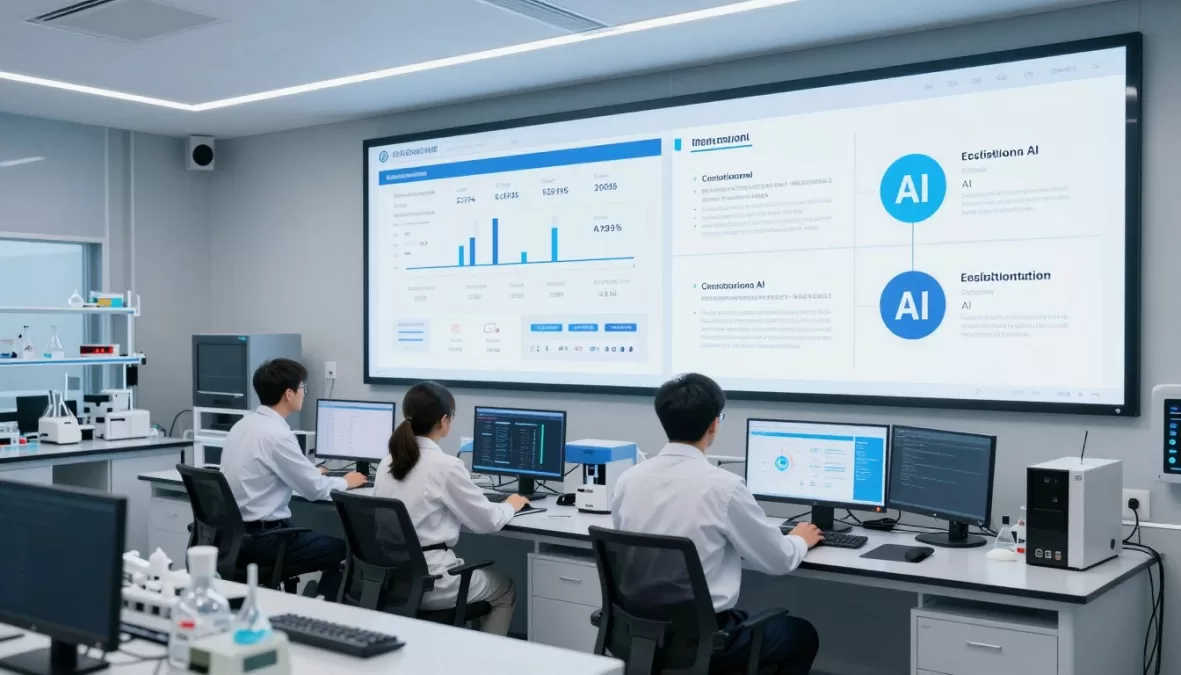
Claude AI Assistant
Claude represents Anthropic’s flagship product. The AI assistant demonstrates nuanced understanding of complex instructions. Users praise its ability to admit uncertainty rather than generate plausible-sounding incorrect information.
The system handles sensitive business data with enhanced privacy protections. Enterprise customers trust Claude for tasks involving confidential information. This reliability drives adoption in regulated industries like healthcare and finance.
Market Differentiation
Anthropic positions itself as the responsible AI company. While competitors race to add features, they focus on safety and reliability. This strategy attracts risk-averse customers and builds long-term trust.
Their research contributions advance the entire field. Published papers on AI alignment influence how other companies approach safety. This thought leadership enhances their reputation beyond their commercial products.
Access Anthropic’s Claude to experience their approach to safe, helpful AI assistance.
Compare All 10 AI Companies Side-by-Side
Download our comprehensive vendor comparison guide featuring detailed analysis of capabilities, pricing, use cases, and implementation requirements for each company.
Microsoft: Enterprise AI Infrastructure Leader
Microsoft transformed its business through aggressive AI integration. Azure AI services now generate tens of billions in annual revenue. The company leveraged existing enterprise relationships to rapidly deploy AI capabilities.
Their partnership with OpenAI created unique advantages. Microsoft embeds GPT models directly into productivity tools used by billions. This integration makes advanced AI accessible to everyday workers without technical expertise.
Copilot Revolution
Microsoft Copilot represents the company’s vision for AI-assisted work. The tool integrates across Office applications including Word, Excel, PowerPoint, and Teams. Users accomplish tasks in minutes that previously required hours.
Enterprise adoption accelerated throughout 2026. Companies report significant productivity improvements and employee satisfaction gains. The seamless integration reduces training time and change management challenges.
Azure AI Platform
Azure provides comprehensive AI infrastructure for developers and businesses. The platform offers pre-built models and custom training capabilities. Organizations can deploy AI applications globally with minimal infrastructure management.
- Copilot integrated across Microsoft 365 applications
- Azure AI Studio for custom model development
- GitHub Copilot transforming software development
- Dynamics 365 AI for sales and customer service
- Power Platform enabling citizen developers
Strategic Advantages
Microsoft’s existing enterprise presence provides immediate distribution. Most large organizations already use Microsoft products and services. Adding AI capabilities becomes a straightforward upgrade rather than a risky new vendor relationship.
The company invests billions in data center infrastructure. Their global network ensures low latency and high availability. These investments create barriers to entry that protect market position.
Strengths
- Deep enterprise customer relationships
- Integrated product ecosystem
- Massive infrastructure investments
- Strong developer community
- Multiple AI model options
Challenges
- Legacy system integration complexity
- Premium pricing for advanced features
- Competition from cloud rivals
- Regulatory scrutiny on bundling
Discover Microsoft Azure AI solutions for enterprise deployment.
Amazon Web Services: Cloud AI Infrastructure at Scale
AWS dominates cloud infrastructure with comprehensive AI services. The platform serves millions of developers and thousands of enterprises. Their extensive service catalog covers every stage of the AI development lifecycle.
Amazon invested heavily in custom AI chips. Trainium and Inferentia processors deliver cost-effective performance for training and inference. These innovations help customers reduce AI infrastructure expenses by up to forty percent.
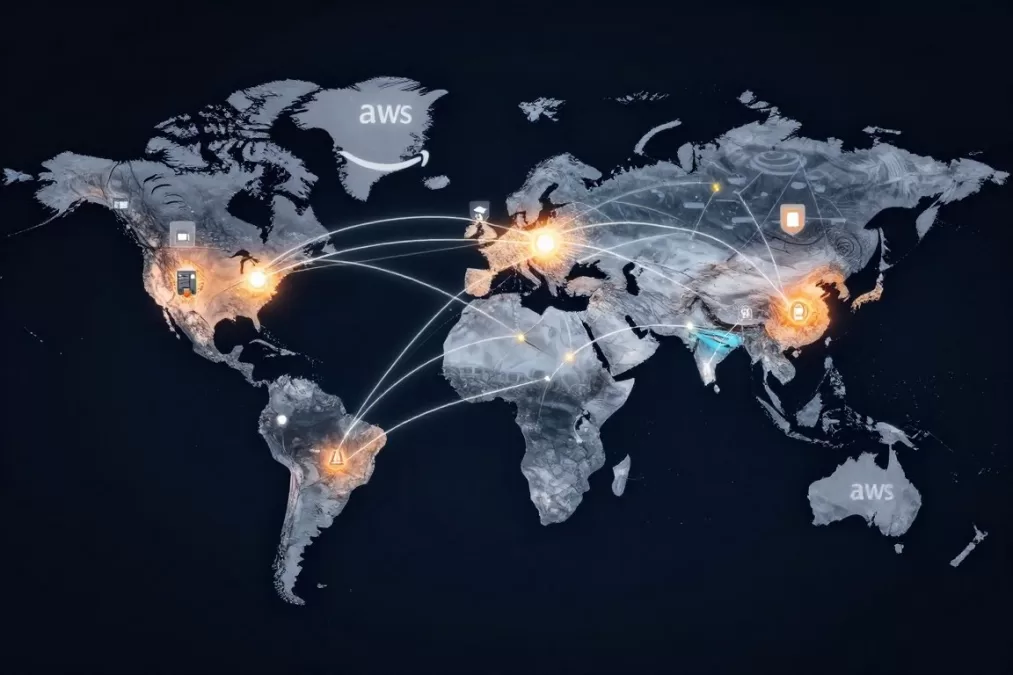
Comprehensive AI Service Portfolio
SageMaker provides end-to-end machine learning capabilities. Data scientists build, train, and deploy models without managing infrastructure. The platform has become the industry standard for ML operations.
AWS offers dozens of AI services for specific use cases. Text analysis, computer vision, speech recognition, and forecasting come pre-built. Developers integrate these capabilities into applications with minimal code.
Bedrock Foundation Models
Amazon Bedrock gives access to multiple foundation models through a single API. Customers choose between models from Anthropic, AI21 Labs, Stability AI, and Amazon’s own Titan models. This flexibility prevents vendor lock-in while simplifying deployment.
- SageMaker for complete ML workflow management
- Bedrock providing access to multiple foundation models
- Custom Trainium and Inferentia chips for cost efficiency
- CodeWhisperer for AI-assisted programming
- Dozens of specialized AI services for common tasks
Market Leadership
AWS maintains the largest cloud market share globally. Their infrastructure spans more geographic regions than any competitor. This global presence ensures compliance with local data regulations.
The company processes tremendous amounts of data daily. This scale provides insights into infrastructure optimization and performance. AWS continually refines services based on real-world usage patterns across diverse workloads.
Enterprise customers value AWS’s proven reliability. The platform maintains exceptional uptime records across services. This track record makes AWS the default choice for mission-critical AI applications.
Explore AWS AI services to build and deploy machine learning solutions at scale.
NVIDIA: Powering AI Computing Infrastructure
NVIDIA transformed from a graphics card company into the AI hardware leader. Their GPUs became essential infrastructure for training large AI models. The company’s chips power virtually every major AI breakthrough.
Market capitalization grew to exceed two trillion dollars in 2026. This valuation reflects NVIDIA’s central position in the AI ecosystem. Every cloud provider, research lab, and AI company depends on their technology.
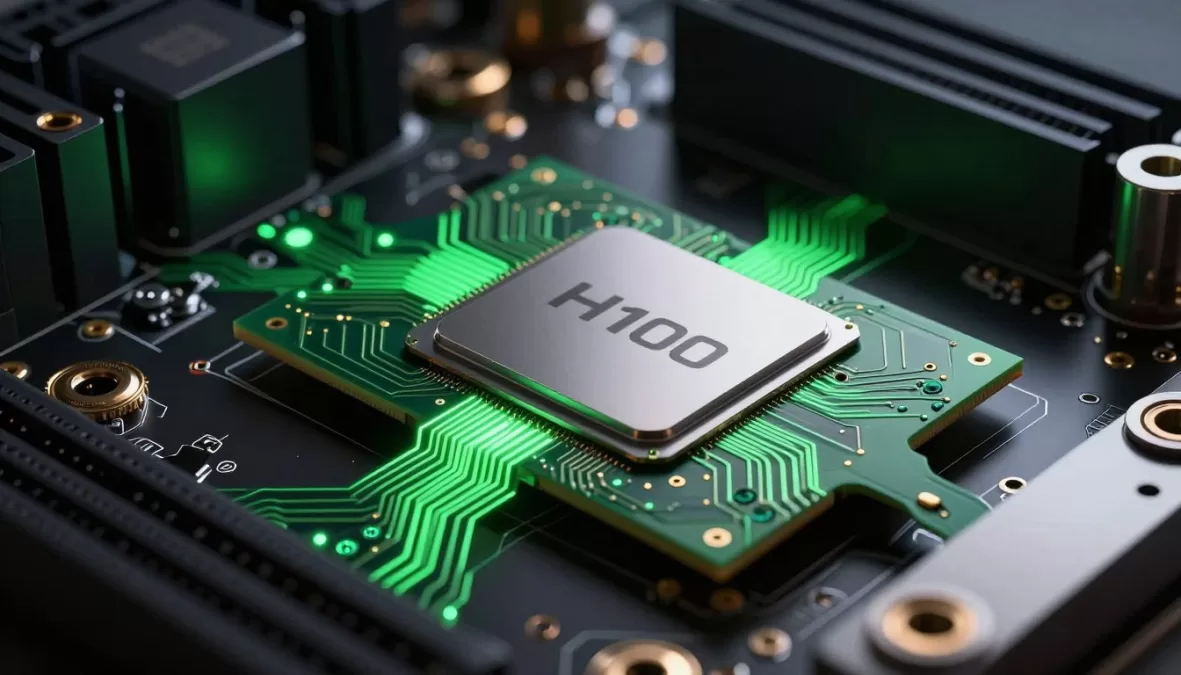
Revolutionary Hardware Platforms
The H100 GPU set new standards for AI training performance. These chips reduce training time for large models from months to weeks. Researchers accomplish in days what previously required extensive computing resources.
NVIDIA’s software ecosystem complements their hardware advantages. CUDA programming platform has become the standard for GPU computing. This software moat protects their market position as effectively as their hardware leadership.
Data Center Dominance
Major cloud providers purchase billions of dollars worth of NVIDIA hardware annually. Data centers worldwide upgrade infrastructure to support AI workloads. This massive capital deployment creates sustained demand for years to come.
- H100 and A100 GPUs dominating AI training workloads
- Grace CPU for AI-optimized server platforms
- DGX systems providing turnkey AI infrastructure
- CUDA software platform with millions of developers
- Omniverse platform for industrial simulation
Ecosystem Strategy
NVIDIA builds partnerships across the entire AI industry. They collaborate with software companies, cloud providers, and research institutions. This ecosystem approach amplifies their influence beyond hardware sales.
The company invests in startups through NVIDIA Inception. This program supports thousands of AI companies globally. These relationships create future customers while accelerating AI adoption across industries.
| GPU Model | Target Use Case | Performance Gain | Market Segment |
| H100 | Large model training | 9x vs previous gen | Cloud & Enterprise |
| A100 | General AI workloads | 6x vs previous gen | Enterprise & Research |
| L40S | Inference & graphics | 4x vs previous gen | Cloud & Edge |
| RTX 6000 | Professional workstations | 3x vs previous gen | Professional users |
Learn more about NVIDIA’s AI computing platforms and infrastructure solutions.
Meta: Advancing Open AI Research and Social Applications
Meta pursues an open-source AI strategy that differentiates them from competitors. Their LLaMA language models are freely available to researchers and developers. This approach builds goodwill while driving innovation across the industry.
The company applies AI extensively across their social platforms. Billions of people interact with Meta’s AI systems daily through content recommendations and moderation. This massive scale provides unmatched real-world testing environments.

LLaMA and Open Source Leadership
LLaMA 3 matches or exceeds many proprietary models in performance. Meta released the model with permissive licensing for research and commercial use. Thousands of developers built applications and improvements on this foundation.
This strategy accelerates innovation while reducing Meta’s own development costs. The community identifies issues and creates enhancements faster than any internal team could. Meta benefits from these improvements while maintaining thought leadership.
AI-Powered Social Platforms
Instagram and Facebook leverage AI for content discovery and creator tools. The systems analyze billions of posts daily to surface relevant content. Users spend more time on platform thanks to improved personalization.
- LLaMA open-source language models used globally
- AI content moderation protecting billions of users
- Recommendation systems driving engagement
- Creator tools powered by generative AI
- Virtual reality AI for metaverse applications
Business Applications
Meta Business Suite incorporates AI for advertisers and business users. Automated ad creation reduces the time required to launch campaigns. Small businesses access enterprise-grade marketing tools previously available only to large corporations.
The company’s advertising platform processes trillions of data points. AI optimization increases return on ad spend for millions of businesses. This effectiveness makes Meta’s platforms essential for digital marketing strategies.
“Our commitment to open source AI accelerates innovation across the industry while giving us valuable feedback on our technology.”
Access Meta AI research and explore their open-source models and tools.
Need Help Choosing the Right AI Solution?
Our AI strategy consultants help businesses evaluate vendors, plan implementation, and maximize ROI from AI investments. Schedule a free consultation to discuss your specific requirements.
Tesla: AI for Autonomous Systems and Robotics
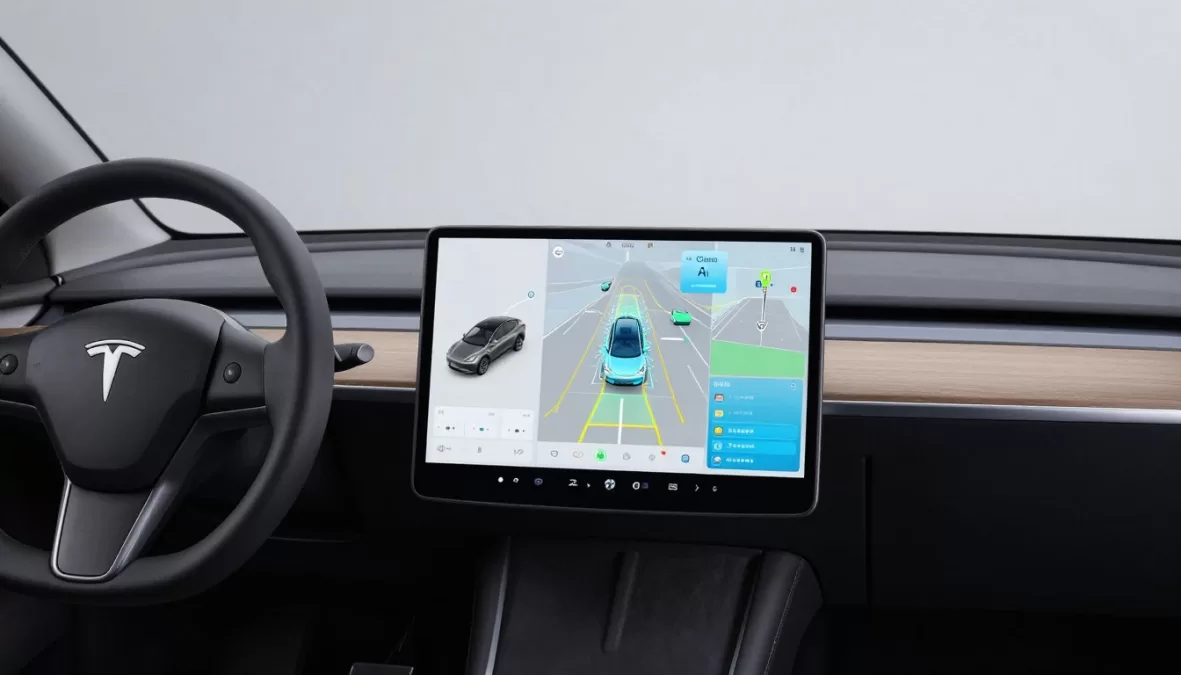
Tesla leads in applying AI to physical systems. Their Full Self-Driving technology processes vast amounts of real-world driving data. The company built custom AI chips specifically optimized for autonomous vehicle inference.
Over five million Tesla vehicles collect data continuously. This fleet provides unprecedented training data for autonomous systems. No competitor comes close to matching this data advantage in the automotive sector.
Full Self-Driving Technology
FSD Beta demonstrates impressive capabilities in complex urban environments. The system handles intersections, construction zones, and unexpected situations. Tesla’s approach uses vision-only systems rather than expensive LIDAR sensors.
The company iterates rapidly based on real-world performance. Software updates improve capability every few weeks. This continuous improvement model transforms vehicles into appreciating assets rather than depreciating commodities.
Dojo Supercomputer
Tesla built custom AI training infrastructure called Dojo. This supercomputer processes petabytes of driving video footage. The system trains neural networks faster and more efficiently than traditional approaches.
- Full Self-Driving capability in millions of vehicles
- Dojo supercomputer for AI training at scale
- Custom AI chips designed for automotive inference
- Optimus humanoid robot development program
- Manufacturing automation using computer vision
Robotics and Manufacturing
Tesla applies AI throughout their manufacturing processes. Computer vision systems inspect parts and assemblies with superhuman accuracy. Robots learn new tasks through demonstration rather than traditional programming.
The Optimus humanoid robot project leverages automotive AI expertise. Tesla aims to solve general-purpose robotics using similar approaches to autonomous driving. Early prototypes demonstrate promising capabilities in controlled environments.
Technical Innovations
- Vision-only autonomous driving approach
- Neural network architectures for real-time processing
- End-to-end learning from human demonstrations
- Custom silicon optimized for inference workloads
Market Impact
- Advancing autonomous vehicle technology adoption
- Proving viability of camera-only systems
- Democratizing access to self-driving capability
- Accelerating robotics development timelines
Explore Tesla’s AI initiatives in autonomous vehicles and robotics.
IBM: Enterprise AI and Hybrid Cloud Solutions
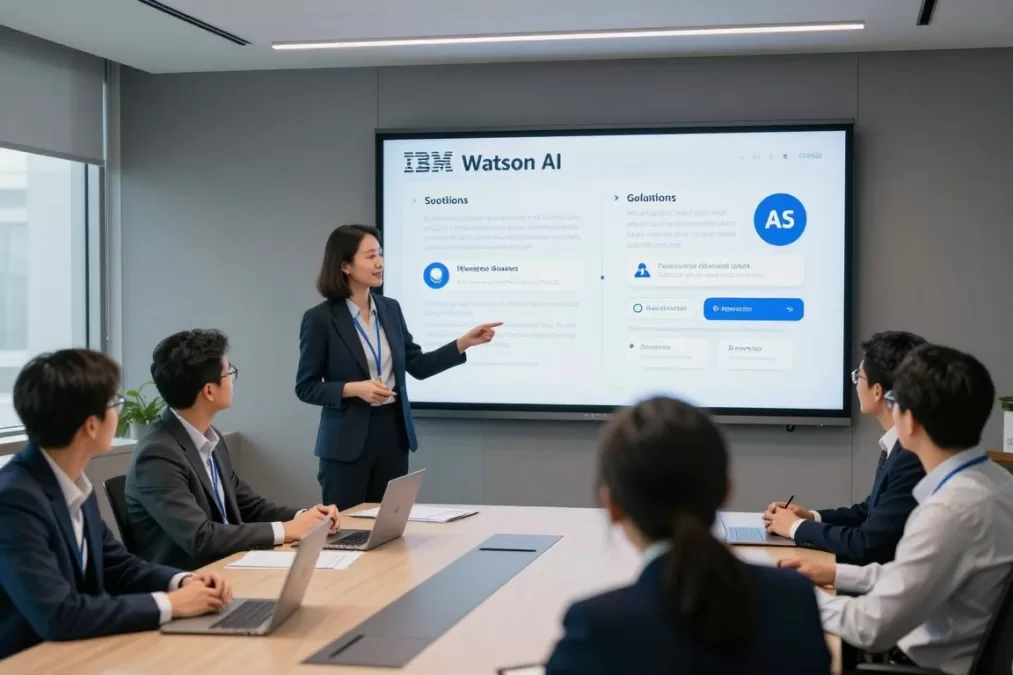
IBM focuses on enterprise AI deployments with an emphasis on security and compliance. Their Watson platform serves regulated industries including healthcare, finance, and government. The company’s hybrid cloud approach addresses data sovereignty and security concerns.
Decades of enterprise relationships provide IBM with deep industry expertise. They understand the specific challenges facing large organizations. This knowledge informs product development and go-to-market strategies.
Watson AI Platform
Watson provides specialized AI tools for business applications. Natural language processing powers customer service chatbots and document analysis. The platform integrates with existing enterprise systems and workflows.
IBM emphasizes explainable AI that meets regulatory requirements. Organizations in healthcare and finance need to understand how AI systems make decisions. Watson provides transparency that black-box systems cannot match.
Industry-Specific Solutions
IBM develops tailored AI solutions for specific sectors. Healthcare providers use Watson for clinical decision support. Financial institutions deploy it for fraud detection and risk management. These specialized applications deliver measurable business value.
- Watson AI platform for enterprise applications
- Industry-specific AI solutions and consulting
- Hybrid cloud infrastructure with Red Hat OpenShift
- Quantum computing for advanced AI research
- Watsonx for foundation model development
Hybrid Cloud Strategy
IBM’s acquisition of Red Hat strengthened their hybrid cloud position. Many enterprises cannot move all workloads to public cloud due to regulations or technical constraints. IBM provides solutions that work across on-premises and cloud environments.
This flexibility appeals to conservative organizations with complex IT environments. They can adopt AI gradually without wholesale infrastructure changes. IBM supports these transition journeys with extensive consulting services.
The company invests in quantum computing research. While practical applications remain years away, IBM positions itself for the next computing paradigm. Their quantum systems already demonstrate capabilities beyond classical computers for specific problems.
Discover IBM Watson enterprise AI solutions and industry applications.
Stability AI: Democratizing Generative AI Technology
Stability AI champions open-source generative models. Their Stable Diffusion image generation technology reached millions of users. The company believes AI should be accessible to everyone rather than controlled by a few corporations.
The open-source approach created a massive developer community. Thousands of applications and services built on Stability AI’s foundations. This ecosystem amplifies their impact far beyond their direct commercial products.

Stable Diffusion and Beyond
Stable Diffusion enables anyone to generate high-quality images from text descriptions. Artists, designers, and marketers use it daily for creative work. The model runs on consumer hardware, unlike competitors requiring cloud access.
Stability AI expanded beyond images into video, audio, and 3D generation. Their models support creative professionals across media types. This comprehensive approach positions them as infrastructure for the creative economy.
Community and Ecosystem
Tens of thousands of developers contribute to the Stability AI ecosystem. They create improvements, tools, and applications that benefit everyone. This collaborative model accelerates innovation faster than closed development could achieve.
- Stable Diffusion for image generation and editing
- Stable Video for video synthesis and manipulation
- Stable Audio for music and sound generation
- Enterprise API for commercial deployments
- Open-source models with permissive licensing
Market Position
Stability AI carved out a unique niche in the generative AI market. While others focus on proprietary systems, they enable a thousand flowers to bloom. This strategy sacrifices some direct revenue for broader impact and influence.
The company monetizes through enterprise licensing and cloud services. Businesses that built on open-source models often upgrade to commercial licenses. This freemium approach converts community adoption into sustainable revenue.
Open Source Benefits
- Runs on consumer hardware
- No ongoing usage costs
- Community improvements
- Full customization freedom
Enterprise Features
- Commercial licensing
- Dedicated support
- Custom model training
- API access and hosting
Developer Tools
- Model fine-tuning kits
- Integration libraries
- Training datasets
- API documentation
Visit Stability AI to explore their generative AI models and tools.
AI Market Trends and Future Outlook
The AI industry continues its explosive growth trajectory. Global spending on AI systems exceeds five hundred billion dollars annually. This investment flows into infrastructure, software, and specialized chips at unprecedented rates.
Competition intensifies as companies race to establish market positions. Startups emerge constantly with innovative approaches. Established tech giants leverage existing advantages while adapting to rapid change.

Investment and Consolidation
Venture capital pours billions into AI startups each quarter. Investors bet on companies solving specific industry problems. Some will achieve unicorn status while others get acquired by larger platforms.
Tech giants acquire smaller companies to fill capability gaps. These acquisitions bring talent and technology under one roof. Market consolidation accelerates as economies of scale become more important.
Infrastructure Demands
Data center construction reaches historic levels. Cloud providers invest tens of billions in new facilities. Energy consumption concerns drive innovation in efficient computing and cooling systems.
The chip shortage impacts AI development timelines. Companies compete for limited GPU supply. This constraint favors organizations with existing infrastructure and supplier relationships.
Technology Trends
- Multimodal AI handling diverse data types
- Edge computing for real-time processing
- Smaller, more efficient models
- Improved reasoning capabilities
- Better AI safety measures
Business Trends
- AI-first product strategies
- Subscription and usage-based pricing
- Industry-specific solutions
- Focus on ROI and productivity
- Partnerships and ecosystems
Regulatory Trends
- Government AI frameworks emerging
- Data privacy requirements increasing
- Transparency and explainability demands
- Industry-specific compliance rules
- International cooperation efforts
Industry Transformation
AI reshapes industries from healthcare to manufacturing. Early adopters gain competitive advantages that compound over time. Organizations that delay AI adoption risk falling permanently behind.
The technology workforce evolves rapidly. Demand for AI engineers far exceeds supply. Companies invest heavily in training and retention to secure talent.
Challenges Ahead
Ethical concerns about AI bias and fairness require ongoing attention. Systems trained on historical data can perpetuate societal biases. Companies must actively work to identify and mitigate these issues.
Energy consumption of AI systems raises sustainability questions. Training large models requires massive amounts of electricity. The industry must balance capability improvements with environmental responsibility.
Key Insight: The AI companies dominating 2026 share common traits: massive data access, significant infrastructure investment, strong talent acquisition, and clear strategic focus. These factors create competitive moats that smaller players struggle to overcome.
Looking Forward
Artificial general intelligence remains years away despite rapid progress. Current systems excel at specific tasks but lack general reasoning. Achieving AGI requires fundamental breakthroughs in architecture and training approaches.
The competitive landscape will continue evolving. New technologies and business models emerge constantly. Companies that stay flexible and invest in research maintain their positions at the industry forefront.
Partnerships between companies accelerate innovation. No single organization can advance AI alone. Collaboration on standards, safety, and infrastructure benefits the entire ecosystem.
How to Choose the Right AI Partner
Selecting an AI vendor requires careful evaluation of multiple factors. Different companies excel in different areas. Your specific needs should drive the selection process rather than vendor reputation alone.
Consider your organization’s technical capabilities and resources. Some platforms require extensive expertise while others offer user-friendly interfaces. Match the vendor’s approach to your team’s skill level.

Key Evaluation Criteria
Data security and privacy policies vary significantly between vendors. Organizations handling sensitive information need robust protections. Review compliance certifications and data handling practices carefully.
Total cost of ownership extends beyond licensing fees. Consider infrastructure requirements, integration costs, and ongoing maintenance. Some solutions appear cheaper initially but become expensive at scale.
- Security and compliance capabilities
- Integration with existing systems
- Scalability and performance
- Support and training resources
- Total cost of ownership
- Vendor stability and roadmap
For Enterprises
- API quality and documentation
- Model performance and accuracy
- Customization flexibility
- Developer community size
- Pricing and rate limits
- Technology stack compatibility
For Developers
- Time to market speed
- Free tier availability
- Startup program benefits
- Ease of implementation
- Scalability potential
- Investor credibility boost
For Startups
Implementation Considerations
Successful AI deployment requires more than selecting technology. Change management and training determine whether teams actually use new capabilities. Plan for user adoption as carefully as technical integration.
Start with pilot projects that demonstrate value quickly. Early wins build momentum and justify broader investment. Choose use cases with clear metrics and meaningful business impact.
Vendor Support and Partnership
Evaluate the level of support vendors provide. Some offer extensive consulting and training services. Others provide self-service tools with limited direct assistance. Match support levels to your internal capabilities.
- Define specific use cases and success metrics before vendor selection
- Evaluate technical capabilities against your requirements
- Consider vendor financial stability and long-term viability
- Review customer references from similar organizations
- Test platforms through trials before committing
- Negotiate favorable terms including exit provisions
Pro Tip: Multi-vendor strategies reduce risk but increase complexity. Consider whether your organization can manage multiple AI platforms effectively. Sometimes consolidating with fewer vendors delivers better results despite less feature coverage.
Building Internal Capabilities
Invest in developing your team’s AI literacy. Understanding capabilities and limitations helps make better decisions. Training programs and hands-on experimentation build competence over time.
Consider hiring specialized talent to complement vendor solutions. In-house expertise enables better vendor management and custom development. This investment pays dividends across multiple projects and vendors.
The Future of AI Leadership
The AI companies dominating 2026 earned their positions through sustained investment and execution. They built infrastructure, developed talent, and created products that deliver real value. These advantages will not disappear overnight.
However, the AI landscape remains dynamic. New companies emerge with innovative approaches. Breakthroughs in research can shift competitive positions rapidly. Maintaining market leadership requires continuous innovation and adaptation.

Organizations worldwide incorporate AI into their operations. This technology transforms how we work, create, and solve problems. The companies profiled here shape this transformation through their products and platforms.
Understanding these market leaders helps businesses make informed decisions. Whether you seek AI tools for your organization or investment opportunities, knowing the landscape proves essential. These ten companies represent the current state of AI excellence.
The pace of AI development shows no signs of slowing. Each year brings capabilities that seemed impossible before. Companies that stay at the forefront of this progress will define the next decade of technology.
Final Thought: Success in AI requires more than technology. These leading companies combine technical excellence with business acumen, strategic partnerships, and long-term vision. Organizations looking to compete or collaborate must address all these dimensions.
The AI revolution continues accelerating. Companies across industries must determine their AI strategy. Whether building in-house capabilities or partnering with established vendors, action becomes increasingly urgent. Those who master AI will thrive in the coming decades.
Stay Ahead of AI Industry Developments
Get weekly insights about AI companies, market trends, and technology developments delivered to your inbox. Join thousands of professionals staying informed about the AI landscape.
Frequently Asked Questions
Which AI company is best for enterprise deployment?
The best AI company for enterprises depends on specific requirements. Microsoft excels for organizations already using Office 365 and Azure. AWS leads for cloud-native companies needing extensive customization. IBM serves regulated industries requiring explainable AI and hybrid cloud.
How much does enterprise AI implementation cost?
Enterprise AI costs vary dramatically based on scale and complexity. Small deployments might cost tens of thousands annually. Large implementations at Fortune 500 companies often exceed millions in licensing, infrastructure, and integration costs. Most organizations see ROI within twelve to eighteen months.
Are open-source AI models reliable for business use?
Open-source AI models from reputable sources like Meta’s LLaMA and Stability AI prove reliable for many business applications. They offer customization freedom and lower costs. However, proprietary models from OpenAI and Anthropic often provide superior performance and dedicated support for mission-critical applications.
What AI skills should businesses develop internally?
Essential AI skills include prompt engineering, model evaluation, data preparation, and integration development. Business teams need AI literacy to identify use cases and measure results. Technical teams require skills in API integration, fine-tuning, and monitoring. Most organizations benefit from hiring at least one AI specialist.
How do AI companies protect data privacy?
Leading AI companies implement multiple privacy protections including encryption, access controls, and data isolation. Enterprise customers typically negotiate specific data handling terms. Some vendors offer on-premises deployment options for maximum control. Always review privacy policies and compliance certifications before sharing sensitive data.

Priyanka Pandey
Senior Research Editor · Top10Sense
Priyanka specializes in tech, consumer products, and digital trends. She combines hands-on testing, vendor interviews, and database research to create trustworthy “Top 10” rankings. Her work has been referenced by industry blogs and brand report pages.