Our planet is home to an astonishing variety of creatures, from microscopic organisms to colossal giants that inspire awe and wonder. The largest animals on Earth have evolved remarkable adaptations that allow their enormous bodies to thrive in diverse habitats across land and sea. Join us on an extraordinary journey as we explore these magnificent giants, their impressive dimensions, unique characteristics, and the conservation challenges they face in our changing world.
1. Blue Whale: The Undisputed Giant of Our Planet
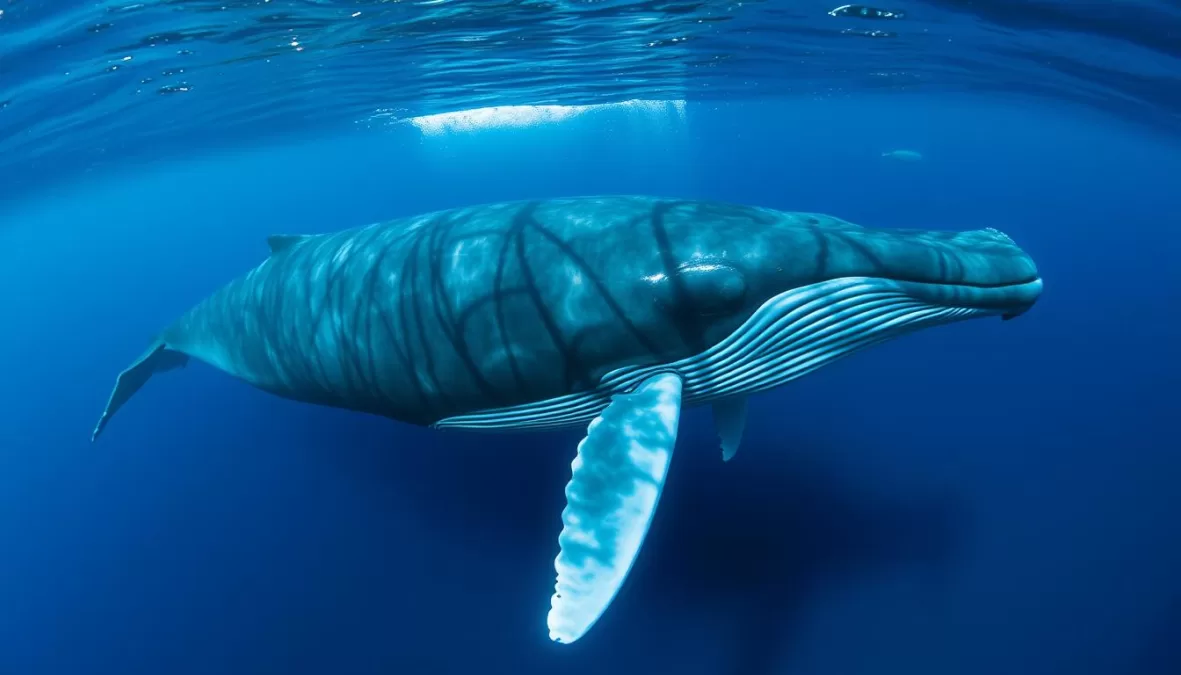
The blue whale is the largest animal to have ever existed on Earth
The blue whale (Balaenoptera musculus) stands as the undisputed champion of size in the animal kingdom, both in our modern world and throughout Earth’s history. These marine mammals reach staggering dimensions that are difficult to comprehend:
- Length: Up to 98 feet (30 meters) – longer than a basketball court
- Weight: Up to 200 tons (400,000 pounds) – equivalent to about 33 elephants
- Heart: The size of a small car, weighing up to 400 pounds
- Tongue: Can weigh as much as an elephant
Despite their enormous size, blue whales feed primarily on tiny krill, consuming up to 8,000 pounds of these small crustaceans per day. They accomplish this through a feeding method called filter feeding, using their baleen plates to strain food from seawater.
Blue whales inhabit all of the world’s oceans, though they prefer colder waters rich in their krill prey. Their population was devastated by commercial whaling in the 20th century, and despite international protection since 1966, they remain endangered with only 10,000-25,000 individuals estimated to exist in the wild.
2. African Elephant: The Largest Land Animal
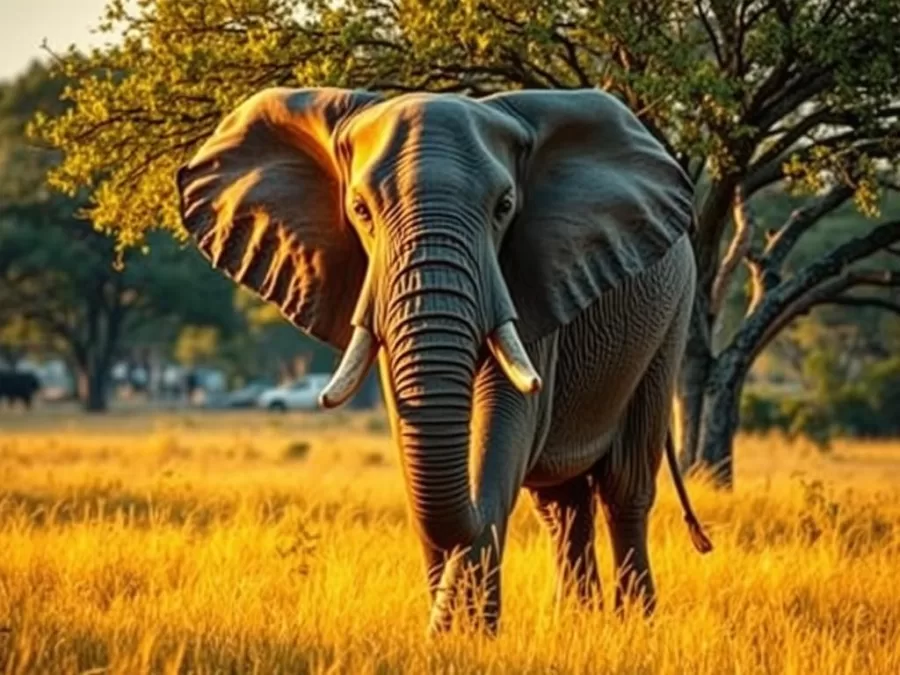
African elephants can weigh up to 7 tons and stand 13 feet tall at the shoulder
When it comes to land animals, nothing surpasses the African elephant (Loxodonta africana) in terms of sheer mass and presence. These magnificent creatures dominate the African landscapes with their impressive statistics:
- Height: Up to 13 feet (4 meters) at the shoulder
- Weight: 10,000-14,000 pounds (5-7 tons)
- Tusks: Can grow up to 10 feet long and weigh 200 pounds each
- Consumption: Eats up to 300 pounds of vegetation daily
African elephants are highly intelligent social animals that live in matriarchal family groups. Their remarkable memory and problem-solving abilities have been well-documented by researchers. These herbivores play a crucial role in their ecosystems, modifying habitats by uprooting trees and creating clearings that benefit other species.
Unfortunately, African elephant populations have declined dramatically due to habitat loss and poaching for ivory. They are currently listed as vulnerable on the IUCN Red List, with ongoing conservation efforts focused on protecting their remaining habitats and combating illegal wildlife trafficking.
3. Whale Shark: The Ocean’s Gentle Giant
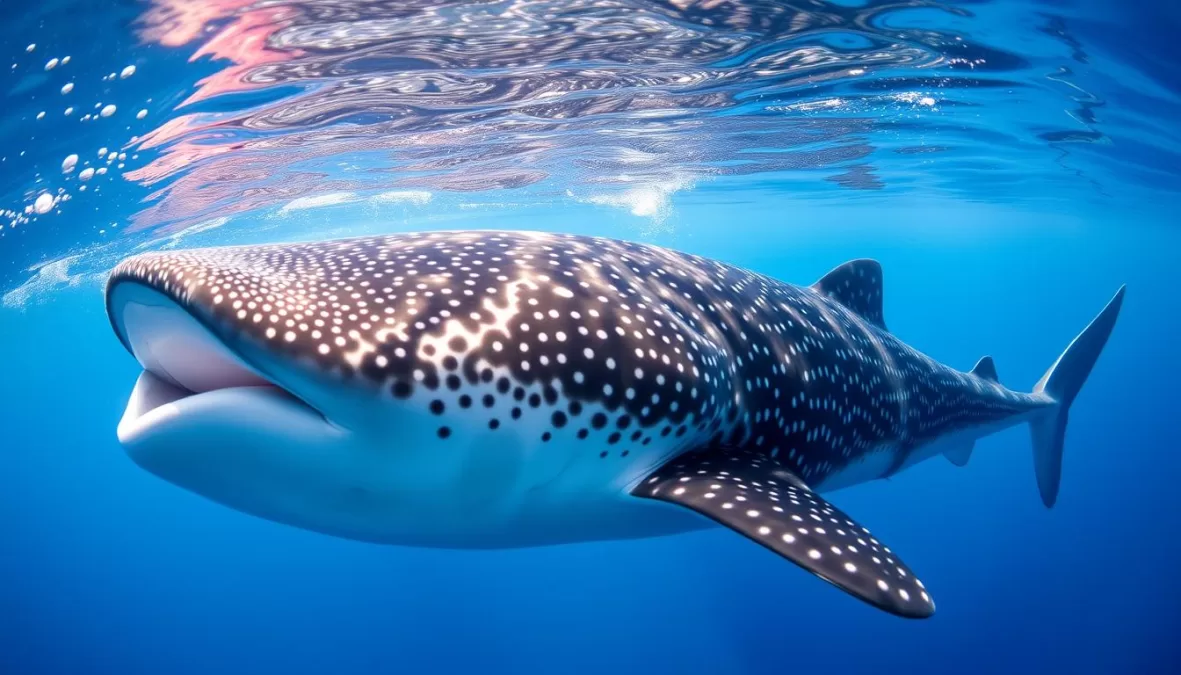
Despite their enormous size, whale sharks feed primarily on plankton and small fish
The whale shark (Rhincodon typus) holds the title of the largest fish in the world. Despite the “shark” in its name and its impressive dimensions, this giant is a gentle filter feeder that poses no threat to humans:
- Length: Up to 40 feet (12 meters)
- Weight: Up to 20 tons (40,000 pounds)
- Mouth: Can be 5 feet wide with over 300 rows of tiny teeth
- Lifespan: Estimated to live 70-100 years
Whale sharks are easily recognizable by their distinctive pattern of white spots and stripes on a dark background. They inhabit warm tropical and subtropical oceans worldwide, often gathering in areas with seasonal food abundance. These gentle giants filter feed by opening their enormous mouths and sucking in water filled with plankton, small fish, and squid.
These magnificent creatures face significant threats from fishing, vessel strikes, and habitat degradation. Currently classified as endangered on the IUCN Red List, whale sharks are protected in many countries, though illegal fishing continues to threaten their populations.
4. Giraffe: The Tallest Living Animal

Giraffes can reach heights of up to 18 feet, making them the tallest land animals
The giraffe (Giraffa camelopardalis) stands as the tallest living animal on Earth, with its remarkable height allowing it to browse on vegetation that other herbivores cannot reach:
- Height: Up to 18 feet (5.5 meters) tall
- Weight: 1,800-2,800 pounds (800-1,300 kg)
- Neck: Can be up to 8 feet long, containing only 7 vertebrae (the same number as humans)
- Heart: Weighs up to 24 pounds to pump blood up the long neck
Giraffes are native to the savannas, grasslands, and open woodlands of sub-Saharan Africa. Their incredible height is an evolutionary adaptation that allows them to feed on leaves from the tops of acacia trees, avoiding competition with other herbivores. Their distinctive spotted pattern provides camouflage among the dappled light of trees.
These remarkable animals face significant threats from habitat loss, poaching, and civil unrest in their native ranges. Giraffe populations have declined by nearly 40% over the past three decades, leading to their classification as vulnerable on the IUCN Red List.
5. Saltwater Crocodile: The Largest Reptile
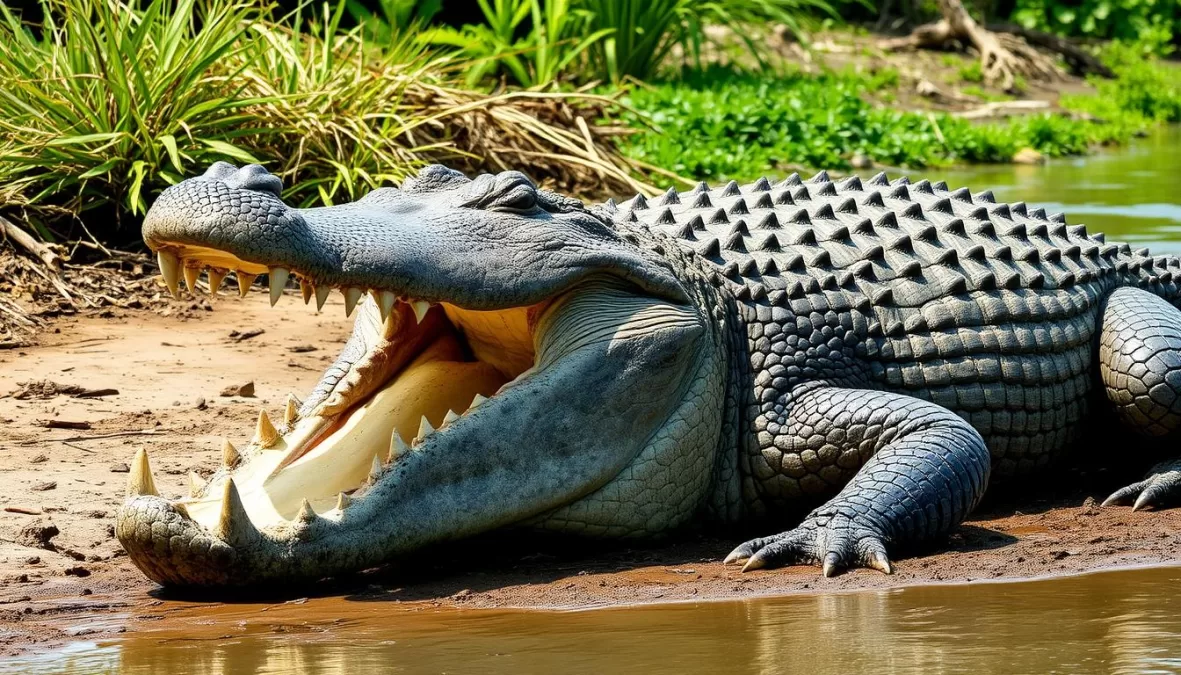
Saltwater crocodiles can grow over 20 feet long and weigh more than a ton
The saltwater crocodile (Crocodylus porosus) reigns as the largest living reptile and one of the most formidable predators on the planet:
- Length: Up to 23 feet (7 meters)
- Weight: Up to 2,200 pounds (1,000 kg)
- Bite Force: The strongest of any animal at 3,700 pounds per square inch
- Lifespan: 70+ years in the wild
These massive reptiles inhabit the brackish and freshwater regions of eastern India, Southeast Asia, and northern Australia. Highly territorial and aggressive, saltwater crocodiles are apex predators in their ecosystems, capable of taking down prey as large as water buffalo and even sharks.
While saltwater crocodile populations were once threatened by hunting for their valuable skins, protection measures in many countries have allowed their numbers to recover. However, they still face challenges from habitat loss and conflict with humans as development encroaches on their territories.
6. Ostrich: The Largest Bird
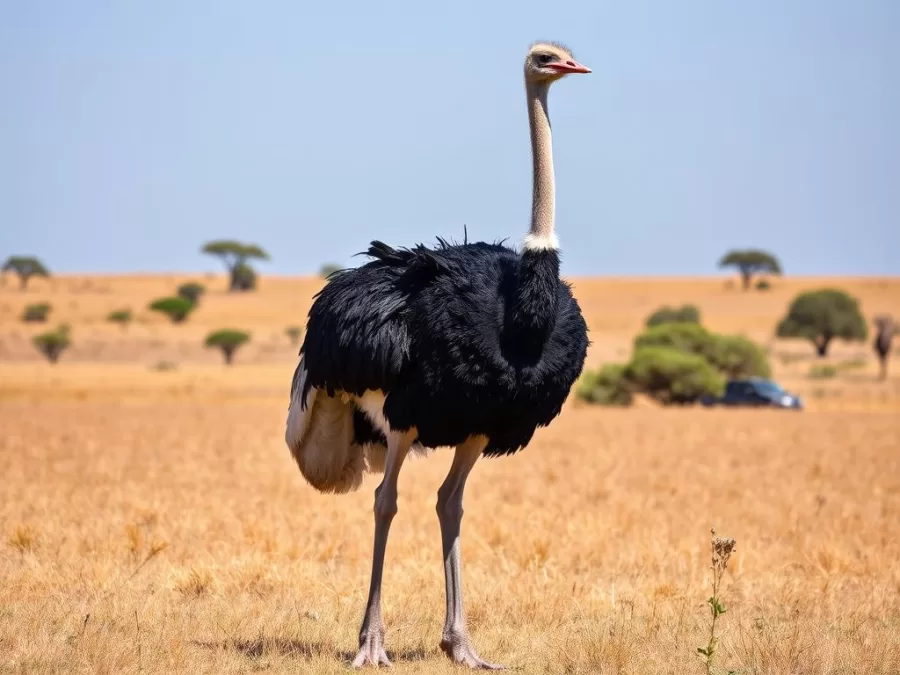
Ostriches can run at speeds up to 45 mph and weigh up to 350 pounds
The ostrich (Struthio camelus) stands as the largest and heaviest living bird, unable to fly but compensating with remarkable running abilities:
- Height: Up to 9 feet (2.7 meters) tall
- Weight: Up to 350 pounds (160 kg)
- Speed: Can run up to 45 mph (70 km/h)
- Eyes: The largest of any land animal at 2 inches in diameter
Native to the savannas and deserts of Africa, ostriches are well-adapted to harsh environments. Their powerful legs serve not only for running but also as formidable weapons capable of delivering lethal kicks to predators. Contrary to popular myth, ostriches do not bury their heads in sand—when threatened, they either run or lie flat against the ground to become less visible.
While not globally threatened, ostrich populations have declined in some regions due to hunting for their feathers, meat, and leather. Commercial ostrich farming has become common in many countries, reducing pressure on wild populations.
7. Polar Bear: The Largest Land Carnivore
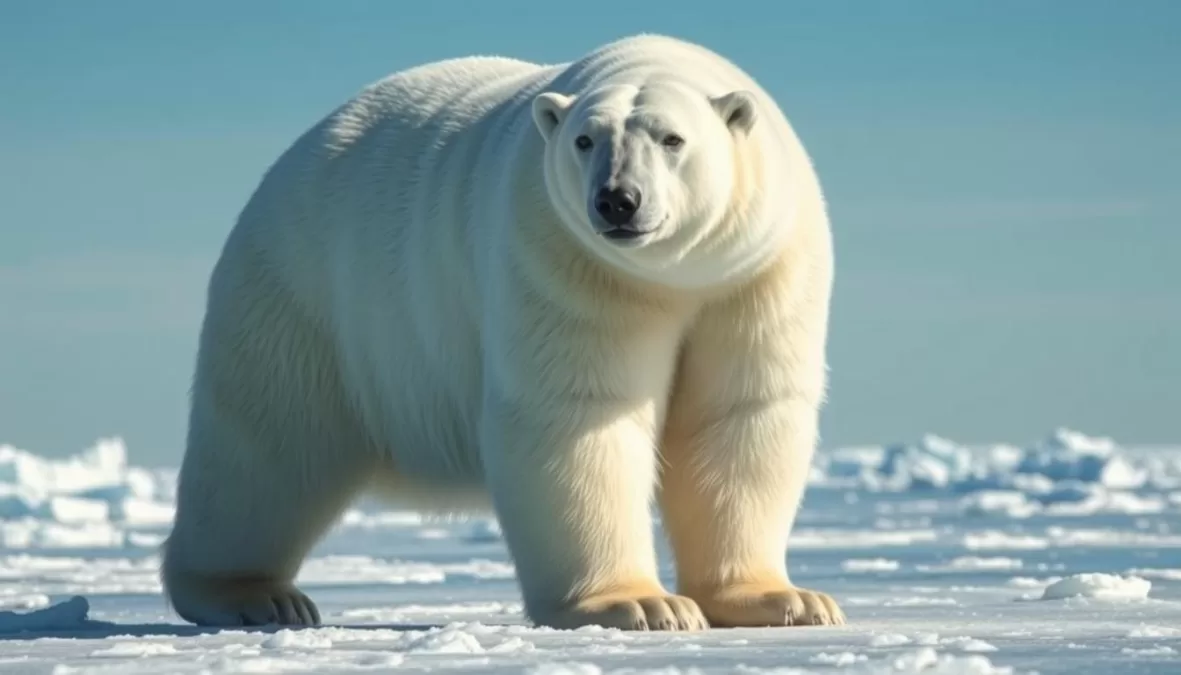
Polar bears can weigh up to 1,600 pounds and stand 10 feet tall on their hind legs
The polar bear (Ursus maritimus) holds the distinction of being the largest terrestrial carnivore, perfectly adapted to life in the harsh Arctic environment:
- Height: Up to 10 feet (3 meters) when standing on hind legs
- Weight: Males can reach 1,600 pounds (725 kg)
- Paws: Up to 12 inches wide, acting as snowshoes and swimming paddles
- Fur: Not actually white but transparent with a hollow core that insulates and appears white
Polar bears are superbly adapted to the Arctic’s extreme conditions. Their thick layer of blubber and water-repellent fur provide insulation in freezing temperatures. These magnificent predators primarily hunt seals, often waiting patiently by breathing holes in the ice for hours.
Climate change poses the greatest threat to polar bears as Arctic sea ice—their primary hunting platform—continues to diminish. Currently listed as vulnerable on the IUCN Red List, polar bears have become a symbol of the impacts of global warming on wildlife.
8. Hippopotamus: The River Giant
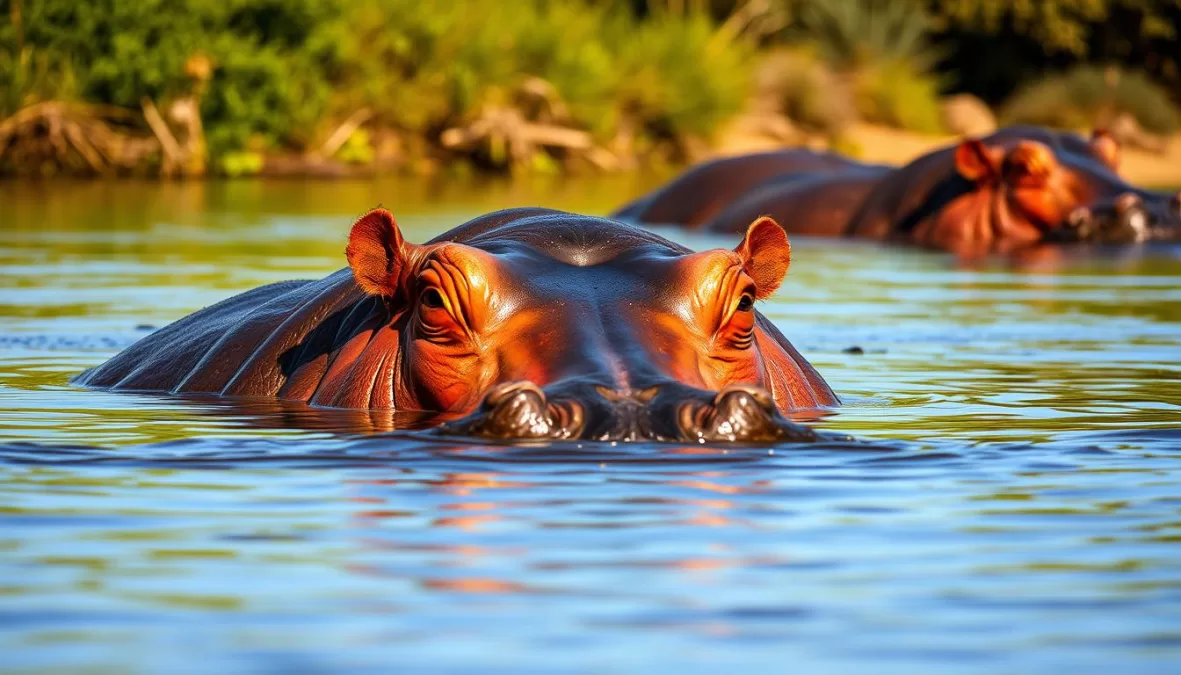
Despite their bulk, hippos can run up to 30 mph on land and are highly aggressive
The hippopotamus (Hippopotamus amphibius) may appear docile while lounging in water, but these semi-aquatic giants are among the most dangerous animals in Africa:
- Length: Up to 16 feet (5 meters)
- Weight: Up to 9,900 pounds (4,500 kg)
- Mouth: Can open 150 degrees wide with tusks up to 20 inches long
- Speed: Despite their bulk, can run up to 30 mph on land
Hippos spend most of their days submerged in rivers and lakes to stay cool and protect their sensitive skin from the sun. At night, they emerge to graze, consuming up to 88 pounds of grass per day. Their massive size and aggressive territorial nature make them responsible for more human fatalities in Africa than any other large animal.
Hippo populations face threats from habitat loss as wetlands are converted for agriculture, as well as poaching for their meat and ivory tusks. They are currently listed as vulnerable on the IUCN Red List.
9. Giant Squid: The Deep-Sea Mystery

Giant squid can reach lengths of up to 43 feet and remain one of the ocean’s most mysterious creatures
The giant squid (Architeuthis dux) represents one of the ocean’s most elusive and fascinating creatures, rarely seen alive by humans:
- Length: Up to 43 feet (13 meters), including tentacles
- Weight: Up to 600 pounds (275 kg)
- Eyes: The largest in the animal kingdom at up to 10 inches in diameter
- Habitat: Deep ocean waters, typically 1,000-3,000 feet below the surface
These mysterious cephalopods inhabit the deep waters of all the world’s oceans but are rarely observed in their natural habitat. Most of our knowledge comes from specimens washed ashore or caught in fishing nets. Giant squid have the largest eyes of any animal, an adaptation for detecting light in the dark depths where they hunt.
While not considered endangered, giant squid populations are difficult to assess due to their deep-sea habitat. They face potential threats from deep-sea fishing operations and ocean pollution, though their remote habitat provides some natural protection.
10. Asian Elephant: The Gentle Forest Giant
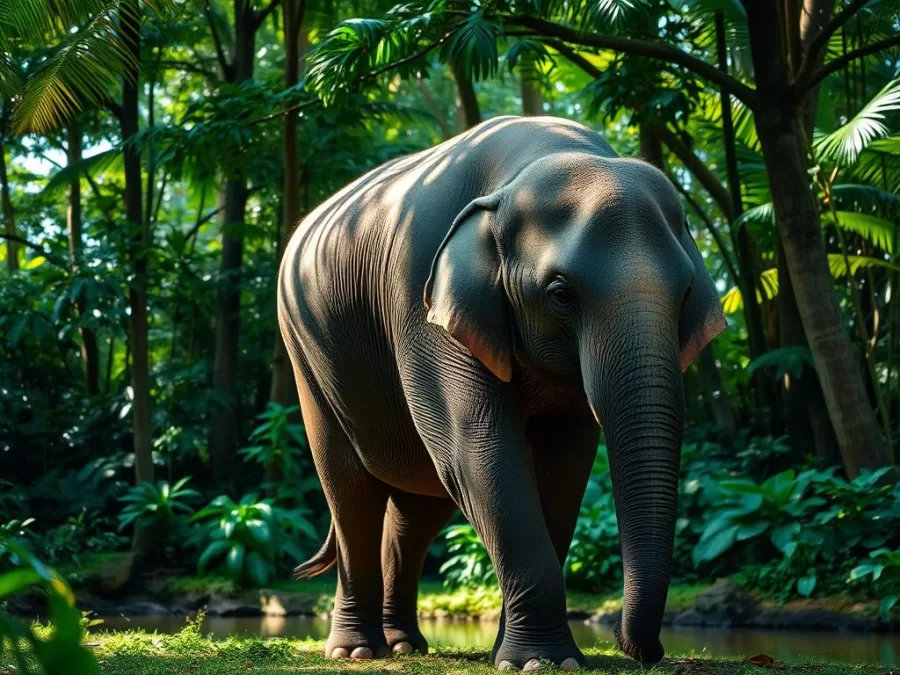
Asian elephants are slightly smaller than their African cousins but still rank among Earth’s largest land animals
The Asian elephant (Elephas maximus) completes our list as one of the world’s largest land mammals, second only to its African cousin:
- Height: Up to 10 feet (3 meters) at the shoulder
- Weight: Up to 11,000 pounds (5,000 kg)
- Tusks: Only male Asian elephants typically develop tusks
- Intelligence: Highly developed brain with excellent memory and problem-solving abilities
Asian elephants inhabit the forests and grasslands of South and Southeast Asia. They play crucial roles in their ecosystems as seed dispersers and habitat engineers. These intelligent animals have complex social structures and communicate through a variety of vocalizations, some below the range of human hearing.
Sadly, Asian elephants are classified as endangered, with fewer than 50,000 remaining in the wild. They face severe threats from habitat loss, fragmentation, and human-elephant conflict as human populations expand into their traditional ranges. Conservation efforts focus on protecting remaining habitat and creating wildlife corridors to connect isolated populations.
Conservation Challenges for Earth’s Giants
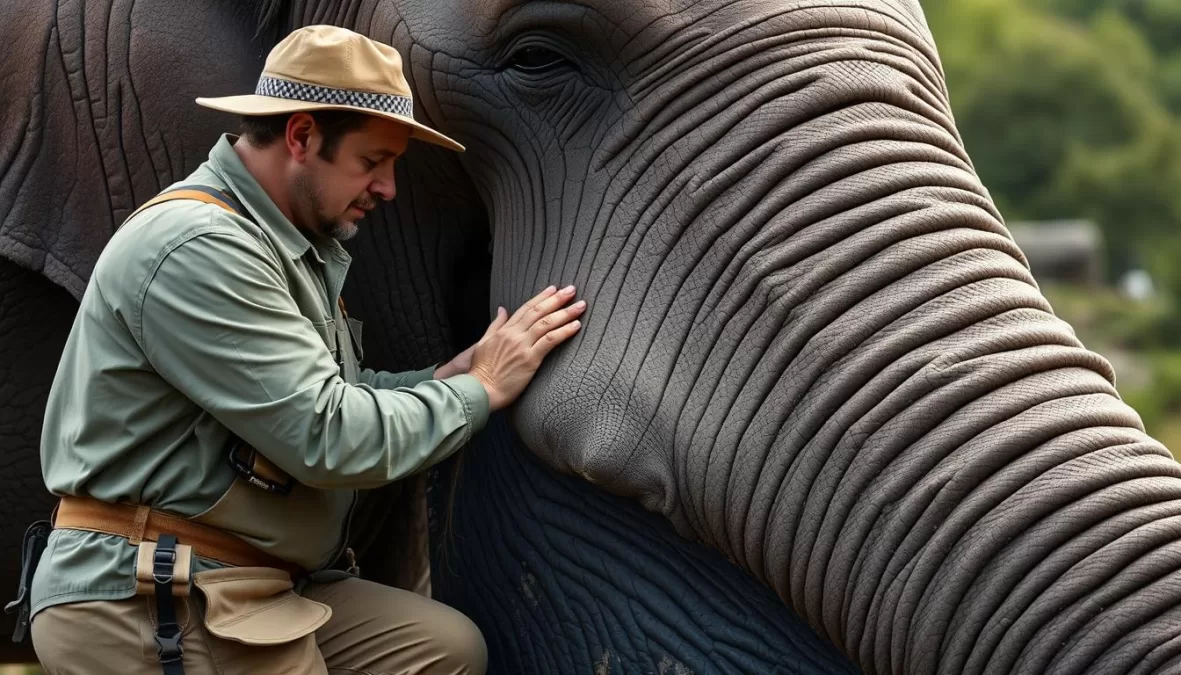
Many of the world’s largest animals face significant conservation challenges
Many of the largest animals on Earth face significant conservation challenges in our rapidly changing world. Their enormous size, which evolved over millions of years, can become a liability in landscapes increasingly dominated by human activity:
Major Threats
- Habitat Loss: Large animals require extensive territories that are increasingly fragmented by human development
- Climate Change: Altering ecosystems and food availability, particularly affecting polar bears and marine species
- Poaching: Targeting elephants for ivory, rhinos for horns, and other species for traditional medicines
- Human-Wildlife Conflict: As human populations expand into wildlife habitats
Conservation Approaches
- Protected Areas: Establishing and enforcing wildlife reserves and marine protected areas
- Anti-Poaching Efforts: Ranger patrols, community involvement, and international enforcement
- Habitat Corridors: Creating connections between isolated populations
- Community-Based Conservation: Involving local communities in protection efforts
The largest animals often serve as umbrella species—by protecting them and their habitats, we simultaneously conserve countless other species that share their ecosystems. Their size and charisma also make them powerful ambassadors for conservation, helping to raise awareness and funding for broader environmental protection.
Why Size Matters: The Ecological Importance of Earth’s Giants
The largest animals on Earth are not merely curiosities or record-holders—they are vital components of healthy ecosystems. Their size influences everything from their metabolic requirements to their ecological roles:
- Ecosystem Engineers: Large animals like elephants modify habitats, creating opportunities for other species
- Nutrient Cycling: Whales transport nutrients through ocean depths and across vast distances
- Seed Dispersal: Large herbivores spread plant seeds across wide areas, maintaining biodiversity
- Population Control: Top predators like saltwater crocodiles and polar bears regulate prey populations
As we marvel at these magnificent giants, we must also recognize our responsibility to ensure their survival. Many of these species evolved their impressive dimensions over millions of years, yet they face unprecedented challenges in the modern world. Their continued existence depends on our commitment to conservation, sustainable development, and addressing climate change.
Help Protect Earth’s Magnificent Giants
The largest animals on Earth face growing threats from habitat loss, climate change, and human activities. Your support can make a difference in protecting these incredible creatures for future generations.
Support Wildlife Conservation
Learn About Conservation Efforts

Priyanka Pandey
Senior Research Editor · Top10Sense
Priyanka specializes in tech, consumer products, and digital trends. She combines hands-on testing, vendor interviews, and database research to create trustworthy “Top 10” rankings. Her work has been referenced by industry blogs and brand report pages.