
For entrepreneurs looking to launch or expand their ventures, choosing the right country can be as crucial as the business idea itself. The best countries for entrepreneurs offer favorable tax systems, streamlined regulations, robust startup ecosystems, and policies designed to nurture innovation and growth. Whether you’re a tech startup founder, a digital nomad entrepreneur, or an established business owner seeking global expansion, understanding which countries provide the most supportive business environments can give you a significant competitive advantage.
Based on recent data from the World Bank’s Ease of Doing Business Index, Global Entrepreneurship Monitor, and World Economic Forum reports, we’ve compiled this comprehensive guide to the top 10 countries with the best business environment for entrepreneurs in 2025. Each country offers unique advantages, from tax incentives and regulatory ease to innovation support and access to funding.
What Makes a Great Business Environment for Entrepreneurs?
Before diving into our country rankings, it’s important to understand what constitutes an ideal business environment. The most entrepreneur-friendly countries typically excel in several key areas:
- Favorable tax system – Low corporate tax rates, tax incentives for startups, and simplified tax filing procedures
- Streamlined regulations – Minimal bureaucracy, fast business registration processes, and clear legal frameworks
- Access to capital – Robust venture capital presence, government grants, and supportive banking systems
- Innovation infrastructure – Research institutions, tech hubs, and government-backed innovation initiatives
- Talent availability – Skilled workforce, favorable immigration policies for skilled workers, and quality education systems
- Market access – Strategic location, trade agreements, and digital infrastructure
- Quality of life – Work-life balance, healthcare, safety, and overall living standards
With these factors in mind, let’s explore the top 10 countries that offer the best business environments for entrepreneurs in 2025.
1. Estonia
Estonia has revolutionized what it means to be a digital nation, positioning itself as one of Europe’s most forward-thinking countries for entrepreneurs. Its groundbreaking e-Residency program allows digital entrepreneurs to establish and manage an EU-based business entirely online, regardless of their physical location.
Key Business Advantages
- Digital-first governance – 99% of government services available online, with business registration taking just 3 hours
- Favorable tax system – 0% corporate tax on retained and reinvested profits
- EU market access – Full access to the European Union market of 450 million consumers
- Advanced digital infrastructure – Ranked #1 in Europe for internet freedom by Freedom House
- Startup visa program – Simplified immigration for non-EU founders
Estonia’s commitment to digital innovation has created a thriving startup ecosystem, particularly for tech, SaaS, and creative services. The country’s Startup Estonia initiative provides mentorship, funding, and networking opportunities for early-stage companies. According to the World Economic Forum, Estonia ranks among the top 3 countries globally for entrepreneurial culture and startup support.
Pros
- Full online incorporation process
- 0% tax on retained profits
- Trusted by global investors
- Minimal bureaucracy
Cons
- Banking setup can be challenging for non-EU residents
- Small domestic market
- Limited local networking opportunities for remote entrepreneurs
2. Singapore

Singapore consistently ranks among the world’s most business-friendly nations, offering a perfect blend of strategic location, political stability, and forward-thinking policies. As Asia’s premier financial hub, Singapore provides entrepreneurs with unparalleled access to Asian markets while maintaining strong connections to Western economies.
Key Business Advantages
- Strategic location – Gateway to the fast-growing ASEAN market of 650 million consumers
- Robust legal system – Strong intellectual property protection and contract enforcement
- Attractive tax incentives – 17% corporate tax rate with numerous exemptions for new businesses
- World-class infrastructure – Ranked #1 in Asia for digital infrastructure by the IMD World Competitiveness Center
- Government support – Extensive grants and incentives through Enterprise Singapore
Singapore’s startup ecosystem is particularly strong in fintech, biotech, and advanced manufacturing. The government’s $19 billion Research, Innovation and Enterprise 2025 Plan demonstrates its commitment to fostering innovation. According to the Global Innovation Index, Singapore ranks 8th worldwide for innovation, making it the top Asian country on the list.
Pros
- No capital gains tax
- Quick and simple registration process
- Excellent digital infrastructure
- English-speaking business environment
Cons
- High cost of living and office space
- Competitive talent market
- Strict regulatory compliance
3. United Arab Emirates

The United Arab Emirates, particularly Dubai and Abu Dhabi, has transformed itself into a global business hub by offering tax advantages, strategic location, and business-friendly policies. The country’s free zones allow 100% foreign ownership and provide entrepreneurs with significant operational freedom.
Key Business Advantages
- Tax benefits – 0% corporate and personal income tax in most free zones
- Strategic location – Positioned between European, Asian, and African markets with excellent connectivity
- Free zones – Over 40 specialized free zones catering to different industries
- Golden Visa program – Long-term residency options for entrepreneurs and investors
- Modern infrastructure – World-class facilities and digital connectivity
The UAE has made significant strides in diversifying beyond oil, with strong government support for technology, finance, and creative industries. Dubai’s 2033 Economic Agenda aims to double the size of its economy and establish the city among the top three global economic hubs. According to the World Bank, the UAE ranks 16th globally for ease of doing business, the highest in the Middle East region.
Pros
- 0% corporate tax in most free zones
- Business-friendly visa policies
- Access to global markets
- English widely spoken
Cons
- Licensing can be confusing depending on the free zone
- High setup costs in premium locations
- Cultural business differences
4. New Zealand

New Zealand consistently ranks at the top of global ease of doing business indexes, thanks to its transparent regulations, political stability, and straightforward processes. The country offers entrepreneurs a corruption-free environment with strong legal protections and a high quality of life.
Key Business Advantages
- Streamlined business formation – Company registration can be completed in less than a day
- Transparent regulations – Clear legal framework and minimal bureaucracy
- Strong IP protection – Robust intellectual property laws and enforcement
- No capital gains tax – Favorable tax treatment for business investments
- Government initiatives – Support programs like Callaghan Innovation grants
New Zealand’s business environment is particularly conducive to innovation in agritech, clean energy, and digital services. The country’s stable political climate and strong rule of law provide entrepreneurs with confidence and security. According to the World Bank’s Doing Business Report, New Zealand ranks 1st globally for ease of starting a business, with the process taking just 0.5 days on average.
Pros
- Incorporation can be done in a day
- No capital gains tax
- Strong IP protection laws
- Excellent work-life balance
Cons
- Geographic isolation from major markets
- Small domestic market
- Higher shipping costs for physical products
5. Denmark

Denmark combines a strong welfare system with a dynamic business environment, creating an ideal balance for entrepreneurs. The country’s “flexicurity” model provides flexibility in hiring and managing employees while maintaining social security, making it easier to scale teams as needed.
Key Business Advantages
- Flexible labor laws – Easy to hire and adjust workforce as business needs change
- Digital efficiency – Advanced digital infrastructure and e-government services
- Innovation focus – Strong R&D incentives and university collaborations
- EU market access – Gateway to the European single market
- Quality of life – Consistently ranked among the world’s happiest countries
Denmark excels in cleantech, life sciences, and digital innovation. The country’s commitment to sustainability creates opportunities for green businesses and circular economy ventures. According to the European Innovation Scoreboard, Denmark ranks 2nd in the EU for innovation performance, with particularly strong scores in human resources and research systems.
Pros
- Flexible labor laws
- No notarial deed required
- Digital filing and registration
- Strong work-life balance culture
Cons
- High income taxes for residents
- Higher business costs
- Smaller talent pool than larger countries
6. Switzerland

Switzerland offers entrepreneurs a unique combination of political stability, financial strength, and innovation capacity. With its strategic location in the heart of Europe, multilingual workforce, and strong banking system, Switzerland provides an excellent foundation for global business operations.
Key Business Advantages
- Political and economic stability – One of the world’s most stable economies
- Competitive tax system – Effective corporate tax rates as low as 12% depending on the canton
- Strong legal protections – Robust intellectual property and privacy laws
- Access to talent – World-class universities and favorable immigration for skilled workers
- Innovation ecosystem – Home to research institutions like CERN and ETH Zurich
Switzerland excels in fintech, biotech, and precision industries. The country’s reputation for quality and reliability extends to its business environment, providing entrepreneurs with a solid foundation for growth. According to the Global Innovation Index, Switzerland has ranked 1st globally for innovation for 12 consecutive years, demonstrating its consistent support for innovative businesses.
Pros
- Strong legal and IP systems
- Excellent infrastructure
- Global investment reputation
- Multiple business entity options
Cons
- High cost of living and setup
- Complex cantonal regulations
- Challenging work permit process for non-EU citizens
7. Ireland

Ireland has transformed itself into one of Europe’s most dynamic startup hubs, attracting major tech companies and innovative startups alike. With its competitive tax rates, English-speaking workforce, and access to EU markets, Ireland offers entrepreneurs a strategic European base.
Key Business Advantages
- Competitive corporate tax – 12.5% corporate tax rate, one of the lowest in Europe
- R&D incentives – 25% tax credit for qualifying research and development expenses
- EU market access – Only English-speaking country in the Eurozone post-Brexit
- Talent pool – Young, educated workforce with strong technical skills
- Government support – Enterprise Ireland provides funding and mentorship
Ireland’s business environment is particularly strong for technology, pharmaceuticals, and financial services. The country’s pro-business policies have attracted major global companies, creating a rich ecosystem for startups and scale-ups. According to IDA Ireland, the country hosts European headquarters for over 1,000 multinational corporations, including 9 of the world’s top 10 tech companies.
Pros
- Low 12.5% corporate tax rate
- Strong tech and innovation ecosystem
- English-speaking EU member
- Supportive startup community
Cons
- High cost of living in Dublin
- Housing challenges
- Competitive talent market
8. Cyprus

Cyprus offers entrepreneurs a unique combination of EU membership, strategic location between Europe, Asia, and Africa, and one of Europe’s most favorable tax regimes. The island nation has positioned itself as a business-friendly jurisdiction with strong legal protections and modern infrastructure.
Key Business Advantages
- Competitive tax system – 12.5% corporate tax rate with extensive double tax treaties
- Strategic location – Bridge between Europe, Middle East, and North Africa
- EU membership – Full access to European markets
- Non-dom residency – Favorable tax treatment for foreign income
- Legal framework – Based on English common law, familiar to international businesses
Cyprus excels in financial services, shipping, and increasingly in technology and innovation. The government has implemented initiatives to attract tech companies and startups, including innovation hubs and digital nomad visas. According to the Cyprus Investment Promotion Agency, the country has seen a 9.2% increase in new company registrations in 2024, reflecting its growing appeal to international entrepreneurs.
Pros
- 12.5% corporate tax
- Low VAT rates
- EU member state
- Non-dom residency program
Cons
- Some banking restrictions for non-residents
- Smaller domestic market
- Limited venture capital availability
9. Portugal

Portugal has emerged as one of Europe’s most exciting startup destinations, combining affordable costs, quality of life, and entrepreneur-friendly policies. The country’s Golden Visa and Non-Habitual Resident programs have attracted international entrepreneurs seeking a European base with tax advantages.
Key Business Advantages
- Startup visa – Dedicated immigration pathway for entrepreneurs
- Tax incentives – Non-Habitual Resident program offers tax benefits for new residents
- Lower costs – Affordable living and operating costs compared to other EU countries
- Quality of life – Consistently ranked among the world’s safest countries with excellent climate
- Government support – Programs like Startup Portugal provide funding and resources
Portugal’s startup ecosystem is particularly strong in web technologies, tourism tech, and renewable energy. Cities like Lisbon and Porto have developed vibrant innovation districts with accelerators, incubators, and coworking spaces. According to the European Digital City Index, Lisbon ranks among the top 20 European cities for startups and scale-ups, with particularly strong scores for lifestyle and cost of operations.
Pros
- Entrepreneur-friendly visa options
- Lower business costs than Western Europe
- High quality of life
- Growing tech ecosystem
Cons
- Bureaucracy can be slow
- Limited venture capital compared to major hubs
- Smaller talent pool for specialized roles
10. Malta

Malta, the smallest EU member state, has positioned itself as a nimble, innovative jurisdiction for entrepreneurs, particularly in emerging technologies. The island nation offers tax advantages, regulatory clarity for new industries like blockchain, and a strategic Mediterranean location.
Key Business Advantages
- Tax efficiency – Effective corporate tax rates as low as 5% through refund systems
- Regulatory innovation – First country to establish comprehensive blockchain and cryptocurrency regulations
- EU membership – Full access to European markets
- English-speaking – English is an official language, simplifying business operations
- Strategic location – Gateway between Europe and North Africa
Malta excels in financial services, gaming, and blockchain technologies. The government actively supports innovation through initiatives like the Malta Digital Innovation Authority. According to Finance Malta, the country’s financial services sector has grown by 15% annually over the past five years, demonstrating its appeal to international businesses.
Pros
- Cryptocurrency-friendly regulations
- Low effective corporate tax rates
- Multilingual workforce
- Favorable licensing opportunities
Cons
- Limited domestic market
- Higher competition in key sectors
- Limited funding opportunities
Common Trends Among the Best Countries for Entrepreneurs
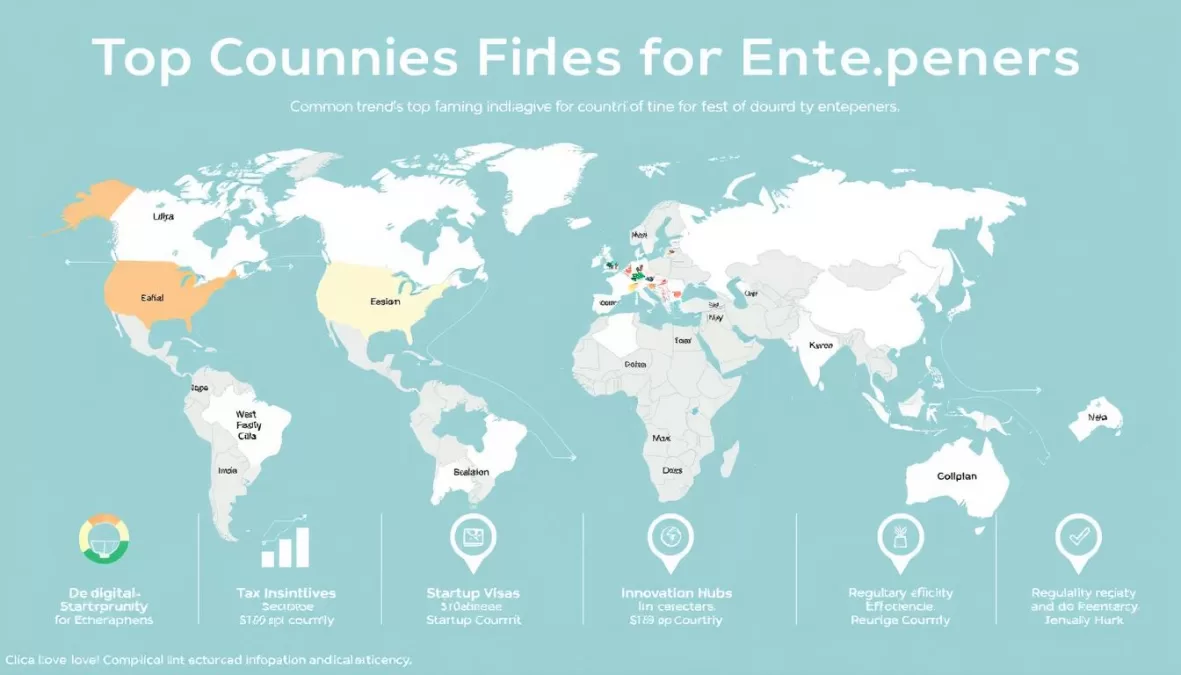
Analyzing the top 10 countries with the best business environment for entrepreneurs reveals several common trends that contribute to their success:
Digital-First Approach
The leading countries have embraced digital transformation in government services, allowing entrepreneurs to register businesses, file taxes, and comply with regulations online. Estonia’s e-Residency program and New Zealand’s online business registration exemplify this trend.
Competitive Tax Systems
Low corporate tax rates, tax incentives for startups, and favorable treatment of innovation activities are common across the top countries. From Estonia’s 0% tax on retained profits to Singapore’s targeted tax incentives, these nations use tax policy as a tool to attract entrepreneurs.
Entrepreneur-Friendly Immigration
Startup visa programs have become increasingly common, allowing founders to relocate to business-friendly jurisdictions. Countries like Portugal, Estonia, and the UAE have created specific immigration pathways for entrepreneurs and digital nomads.
Government-Backed Innovation
The most successful countries actively support innovation through grants, incubators, and public-private partnerships. Ireland’s Enterprise Ireland, Singapore’s Enterprise Singapore, and Denmark’s innovation centers demonstrate this commitment.
Regulatory Clarity
Clear, transparent regulations with minimal bureaucracy characterize the top entrepreneurial destinations. These countries continuously work to streamline processes and reduce administrative burdens on businesses.
Challenges Entrepreneurs May Still Face

Despite the favorable conditions in these top countries, entrepreneurs should be aware of potential challenges:
Banking and Financial Services
Opening business bank accounts as a non-resident can be challenging in some jurisdictions, particularly with increased global banking regulations. Even in digital-forward Estonia, non-EU entrepreneurs may face hurdles with banking setup.
Cultural and Language Barriers
While many of these countries use English in business, cultural differences can impact operations, marketing, and team management. Understanding local business customs remains important for success.
Talent Acquisition
Smaller countries may have limited talent pools for specialized roles. While immigration policies can help, building teams across borders brings its own complexity in terms of compliance and management.
Market Size Limitations
Many of the most business-friendly countries have relatively small domestic markets. Entrepreneurs must often think globally from day one, which requires additional resources and strategy.
Cost Considerations
Some of the top business environments, like Singapore and Switzerland, come with high operating costs. Entrepreneurs must weigh tax benefits against the overall cost of doing business.
Conclusion: Choosing the Right Country for Your Business
The top 10 countries with the best business environment for entrepreneurs offer diverse advantages depending on your industry, business model, and personal preferences. When selecting the ideal location for your venture, consider these actionable steps:
- Align with your industry – Choose a country with a strong ecosystem in your sector, whether it’s fintech in Singapore, digital services in Estonia, or clean energy in Denmark
- Consider your growth stage – Early-stage startups might benefit from lower-cost environments like Portugal, while scale-ups might leverage Singapore’s access to Asian markets
- Evaluate tax implications – Consult with international tax experts to understand how different jurisdictions will impact your specific business structure
- Test before committing – Many countries offer entrepreneur visas that allow you to explore the business environment before making a permanent move
- Think beyond taxes – While tax rates are important, also consider quality of life, talent access, and long-term stability
The global landscape for entrepreneurs continues to evolve, with countries increasingly competing to attract innovative businesses. By understanding the unique advantages of each jurisdiction, you can position your venture for success in the global marketplace.
Ready to Expand Your Business Internationally?
Get our comprehensive guide to international business setup, including country-specific checklists, tax considerations, and expert insights from successful global entrepreneurs.

Priyanka Pandey
Senior Research Editor · Top10Sense
Priyanka specializes in tech, consumer products, and digital trends. She combines hands-on testing, vendor interviews, and database research to create trustworthy “Top 10” rankings. Her work has been referenced by industry blogs and brand report pages.